• العربية
  • فارسی
Brand
  • Iran Insight
  • Politics
  • Economy
  • Analysis
  • Special Report
  • Opinion
  • Podcast
  • Iran Insight
  • Politics
  • Economy
  • Analysis
  • Special Report
  • Opinion
  • Podcast
  • Theme
  • Language
    • العربية
    • فارسی
  • Iran Insight
  • Politics
  • Economy
  • Analysis
  • Special Report
  • Opinion
  • Podcast
All rights reserved for Volant Media UK Limited
volant media logo

US Still Committed To Iran Diplomacy But Has Options If It Fails -Biden Aide
Oct 5, 2021, 22:16 GMT+1
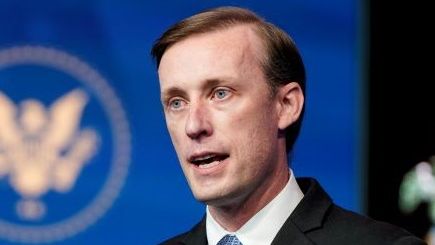
US National Security Advisor Jake Sullivan. FILE PHOTO

President Joe Biden's national security adviser told his Israeli counterpart on Tuesday that diplomacy is the best way to rein in Iran's nuclear program.

Biden senior aide Jake Sullivan also reaffirmed Biden's warning to Tehran that Washington could turn to other options if negotiations fail.

Sullivan hosted Israeli national security adviser Eyal Hulata for talks which, according to a US official, gave the two allies a chance to share intelligence and develop a "baseline assessment" of how far Tehran's nuclear program has advanced.

Under a 2015 deal, Iran curbed its uranium enrichment program, a possible pathway to nuclear arms, in return for the lifting of economic sanctions. Then-US President Donald Trump quit the deal in 2018 and the Israeli government opposes US efforts to revive it.

US experts believe the time it would take Iran to achieve nuclear "breakout" – enough enriched uranium to build a nuclear bomb – has "gone from about 12 months down to a period of about a few months" since Trump pulled out of the pact, the US official said earlier, speaking on condition of anonymity.

Iran, Israel's regional arch-foe, has consistently denied it is developing a nuclear bomb.

Sullivan in Tuesday's talks "emphasized President Biden’s fundamental commitment to Israel’s security and to ensuring that Iran never gets a nuclear weapon," the White House said in a statement.

"Mr. Sullivan explained that this administration believes diplomacy is the best path to achieve that goal, while also noting that the president has made clear that if diplomacy fails, the United States is prepared to turn to other options," it added.

Sullivan's words echoed the message that Biden gave Israeli Prime Minister Naftali Bennett during a White House meeting in August.

Tuesday's meeting of the US-Israel Strategic Consultative Group included military, intelligence and diplomatic officials and came amid stalled international diplomacy with Iran.

Western powers have been trying for weeks to get Tehran to commit to resume indirect negotiations with the United States in Vienna. The talks have been on hold since June, after hardline cleric Ebrahim Raisi was elected Iran's president, and Tehran has been vague about when it might return to the table.

US officials have declined to specify what actions are under consideration if diplomacy with Iran collapses.

Asked whether that includes military options, the senior US official, who briefed reporters ahead of Tuesday's talks, said only that "we'll be prepared to take measures that are necessary."

Behind Tehran's stalling is an attempt to gain leverage to extract more concessions when negotiations do eventually resume, some officials and analysts have said, including by advancing its uranium enrichment program.

Bennett, a far-right politician who ended Benjamin Netanyahu's 12-year run as prime minister in June, has made clear he wants Biden to harden his stance against Iran, which Israel considers an existential threat.


Most Viewed

Ideology may be fading in Iran, but not in Kashmir's ‘Mini Iran'
1
INSIGHT

Ideology may be fading in Iran, but not in Kashmir's ‘Mini Iran'

2
INSIGHT

Hardliners push Hormuz ‘red line’ as US blockade tests Iran’s leverage

3
VOICES FROM IRAN

Hope and anger in Iran as fragile ceasefire persists

4

Iran International says it won’t be silenced after London arson attack

5

US sanctions oil network tied to Iranian tycoon Shamkhani

Banner
Banner

Spotlight

  • Hardliners push Hormuz ‘red line’ as US blockade tests Iran’s leverage
    INSIGHT

    Hardliners push Hormuz ‘red line’ as US blockade tests Iran’s leverage

  • Ideology may be fading in Iran, but not in Kashmir's ‘Mini Iran'
    INSIGHT

    Ideology may be fading in Iran, but not in Kashmir's ‘Mini Iran'

  • War damage amounts to $3,000 per Iranian, with blockade set to add to losses
    INSIGHT

    War damage amounts to $3,000 per Iranian, with blockade set to add to losses

  • Why the $100 billion Hormuz toll revenue is a myth
    ANALYSIS

    Why the $100 billion Hormuz toll revenue is a myth

  • US blockade targets Iran oil boom amid regional disruption
    ANALYSIS

    US blockade targets Iran oil boom amid regional disruption

  • Iran's digital economy battered by prolonged blackout
    INSIGHT

    Iran's digital economy battered by prolonged blackout

•
•
•

More Stories

Iran Spokesman Says No Preconditions For Returning To Talks

Oct 5, 2021, 17:00 GMT+1

Spokesman of Iran’s foreign ministry has reiterated Tuesday that Iran has no preconditions for returning to nuclear talks and will do so when ready.

Saeed Khatibzadeh tweeted that “We will return to Vienna as soon as our internal review process is concluded. No preconditions.”

This has been Tehran’s position for the last few weeks as the United States and its European allies have been urging Iran to return to the talks aimed at restoring the 2015 nuclear agreement, JCPOA.

Khatibzadeh on Monday had told France24 channel in an interview that Iran was reviewing all issues related to six rounds of talks held from April to June in Vienna and would return to talks when it was ready.

On Saturday, Iran’s foreign minister Hossein Amir-Abdollahian had said that while in New York in September he refused to meet with US officials telling intermediaries that Washington should first unfreeze $10 billion of Iran’s funds.

However, Kharibzadeh said in his interview that "800 new unilateral and illegal" sanctions imposed on Iran after Donald Trump withdrew from the JCPOA should be removed.

Quest For More Leverage Drives Iran's Nuclear Stalling Tactic, Analysts Say

Oct 5, 2021, 14:00 GMT+1

Western powers have been trying for weeks to get Tehran's answer to one question - when will it return to nuclear talks that have been on hold since June.

Iran's response has been a simple "soon", even at one point saying that 'soon' has a different connotation in Iran.

Behind Tehran's stalling is an attempt to gain leverage to extract more concessions when negotiations do eventually resume, officials and analysts said, including by advancing its uranium enrichment program, a possible pathway to a nuclear bomb.

Iran has long denied seeking to weaponize nuclear energy.

The talks, which aim to bring both Washington and Tehran back into compliance with a 2015 nuclear pact aimed at curbing the Iranian enrichment program, were adjourned in June after hardliner cleric Ebrahim Raisi was elected Iran's president.

"Iran will eventually return to the talks in Vienna. But we are in no rush to do so because time is on our side. Our nuclear advances further every day," a senior Iranian official said on condition of anonymity.

Ali Vaez, senior Iran analyst at the International Crisis Group, said "more time equals more leverage, given the exponential growth of Iran’s nuclear program".

While China and Russia, closer trading partners of Iran, are more restrained, Western parties to the pact can scarcely conceal their frustration. The United States and European powers have urged Iran to resume talks, saying the diplomatic window would not stay open forever as Tehran's nuclear program is advancing well beyond the limits set by the 2015 pact.

The nuclear agreement limited Iran’s uranium enrichment activity to make it harder for Tehran to develop nuclear arms, in return for lifting international sanctions.

But former U.S. President Donald Trump ditched the deal in 2018, saying it did not do enough to curb Iran’s nuclear activities, ballistic missile program and regional influence, and reimposed sanctions that have crippled Iran’s economy.

In response, Tehran breached the deal by rebuilding stockpiles of enriched uranium, refining it to higher fissile purity and installing advanced centrifuges to speed up output.

"They (Iran) keep saying they are going to come back to the table. But when they say soon ... it means absolutely nothing," said a senior European diplomat.

"That doesn't mean we think they don't want to come back, but we think they want their cake and to eat it. They want to create a fait accompli on the ground - technical and nuclear - and preserve the possibility of a negotiation."

MORE FOR LESS

Emboldened by the chaotic U.S. withdrawal from Afghanistan, Iran's rulers are confident their stalling strategy will not bring serious repercussions, analysts said, especially when U.S. President Joe Biden is embroiled in a growing rivalry with China and battling a COVID-19 crisis at home.

In contrast, the Biden administration is signaling that Iran should take nothing for granted.

Top US officials will tell visiting Israeli counterparts in Washington on Tuesday they are committed to diplomacy but would be prepared to pursue "other avenues" to ensure Tehran does not acquire a nuclear weapon, a senior U.S. official said.

Israel says it will not allow Tehran to get a nuclear bomb.

The man with ultimate authority in Iran, Supreme Leader Ayatollah Ali Khamenei, has blamed the United States for the pause in the talks.

"Ayatollah Khamenei seems to believe that by waiting, he can get a better deal from Washington. That time is on his side," said Meir Javedanfar, Iran lecturer at Israel's Reichman University.

Tehran and Washington still disagree on which steps need to be taken and when, with the key issues being what nuclear limits Tehran will accept and what sanctions Washington will remove.

The fact that indirect talks between Tehran and Washington paused after the election of Raisi was a sign of Tehran's plan "to press for major concessions" from the United States, said a former Iranian official.

"The establishment is also weighing different tactics to get more and give less in return. It takes time to determine their strategy," he said.

Naming Ali Bagheri Kani, an ardent critic of the 2015 pact, to replace former pragmatist chief nuclear negotiator Abbas Araghchi, signals Tehran will take an uncompromising approach when the talks resume, Eurasia Group analyst Henry Rome said.

ECONOMIC RISK

In addition to seeking the lifting of Trump-era sanctions in a verifiable process, Tehran also wants Washington to remove Iran's Revolutionary Guards from a terrorism blacklist. It also wants Europe to guarantee foreign investors will return, and assurances that Washington will not renege on the deal again.

For his part, Biden wants to restore the pact's nuclear limits and, if possible, extend them while pushing back against what he has called Iran's other destabilizing activities.

Sanam Vakil, deputy director of Chatham House’s Middle East and North Africa Program, said Iran would 'win' if it gained further concessions from Washington, but should the deal collapse Iran's rulers sense that they could survive through "maximum resistance", a reference to economic self-reliance.

However, Iran's foot-dragging strategy could weaken the country's clerical rulers by further hurting an economy already grappling with squeezed oil revenues.

The authorities fear a re-eruption of unrest among its core supporters lower-income Iranians - whose periodic bouts of protest in recent years reminded them how vulnerable they could be to popular anger over economic hardships.

"A failure to revive the nuclear deal entails real economic risk for Iran ... but politics trumps economics right now," Rome said.

Analysis by Parisa Hafezi and John Irish, Reuters

US To Tell Israelis It Will Pursue 'Other Avenues' If Iran Diplomacy Fails

Oct 5, 2021, 07:05 GMT+1

Top US officials will tell their Israeli counterparts on Tuesday that the Biden administration remains committed to diplomacy with Iran, but if necessary would be prepared to pursue "other avenues" to ensure Tehran does not acquire a nuclear weapon, a senior US official said.

A visit to Washington by Israel's national security adviser, Eyal Hulata, will allow the two allies to share intelligence and develop a "baseline assessment" of how far Tehran's nuclear program has advanced, the official said.

Under a 2015 deal, Iran curbed its uranium enrichment program, a possible pathway to nuclear arms, in return for the lifting of economic sanctions. Then-President Donald Trump quit the deal in 2018 and the Israeli government opposes US efforts to revive it.

In broad terms, US experts believe the time it would take Iran to achieve nuclear "breakout" – enough enriched uranium to build a nuclear bomb – has "gone from about 12 months down to a period of about a few months" since Trump pulled out of the pact, the official said, speaking on condition of anonymity.

"Obviously that is quite alarming," the official told reporters ahead of Hulata's talks with US national security adviser Jake Sullivan.

Iran has consistently denied it is developing nuclear weapons.

Echoing President Joe Biden's comments in a White House meeting with Israeli Prime Minister Naftali Bennett in August, the official said: "We of course remain committed to a diplomatic path."

"But obviously if that doesn't work there are other avenues to pursue, and we are fully committed to ensuring that Iran never develops a nuclear weapon."

Asked what actions were under consideration and whether that included military options, the official said "we'll be prepared to take measures that are necessary" but did not elaborate.

The official said that Iran was "sending indications to a number of parties that they are preparing to come back to Vienna," where the United States and Iran held indirect talks earlier this year that stalled.

But signaling that obstacles remain, Iran's foreign minister said on Saturday that the United States must first release $10 billion of Tehran's frozen funds as a sign of good will, something the Biden administration has shown no willingness to do.

Bennett, a far-right politician who ended Benjamin Netanyahu's 12-year run as prime minister in June, has made clear he wants Biden to harden his stance against Iran, Israel's regional arch-foe.

There is also disagreement over Biden's opposition to further expansion of Jewish settlements on occupied land that the Palestinians want for a future state.

Asked whether the issue would be part of Tuesday's talks, the U.S. official said Israel was well aware of the administration's view of the need to refrain from actions that could be seen as "provocative" and undermine efforts to achieve a two-state solution between Israel and the Palestinians.

Iran Spokesman Asks: What’s The Hurry Over The Nuclear Deal?

Oct 4, 2021, 17:32 GMT+1

Insisting there was “no substitute” for Iran’s 2015 nuclear deal, the foreign ministry spokesman Monday dismissed any urgency in restarting talks to revive it.

Saeed Khatibzadeh pointed out that United States president Joe Biden had been in office for three months before talks began in Vienna on renewing the agreement, the JCPOA (Joint Comprehensive Plan of Action).

Some reporters read this as a signal that talks would resume in early November. But Khatibzadeh was far from specific.

With new Iranian president Ebrahim Raisi (Raeesi) in office “for less than 55 days,” said the spokesman, “a new negotiation team may have their own views” while other parties to the Vienna talks were realizing they needed to be more flexible.

Studying the issue

The new team, the spokesman said, were studying “all the issues” in the six past rounds of Vienna talks, which formally involve remaining JCPOA signatories − China, France, Germany, Iran, Russia and the United Kingdom − as well as indirectly the United States, which under former US president Donald Trump left the deal in 2018 and imposed stringent sanctions on Tehran that remain in place.

The European signatories, while calling on both the US and Iran to abide by the JCPOA, have become increasingly uneasy at the expertise Iran is gaining with steps taken since 2019 expanding the nuclear program beyond JCPOA limits. The Europeans also sense that the Raisi administration may believe it is in stronger position with some signs of recovery in the Iranian economy.

The German foreign ministry Monday issued a statement that Iran could not “set further conditions for resuming the talks,” which should “resume as soon a possible.” Berlin’s statement followed a suggestion from Iran’s foreign minister Hossein Amir-Abdollahian Saturday, that while in New York last month for the United Nations general assembly he told US officials through intermediaries that he would accept their request for a meeting if Washington as a good-will gesture released $10 billion of Iran’s assets frozen abroad.

Asked about this Monday, Khatibzadeh said the US should release funds “to show they mean what they say.” The spokesman referred to reports that the US wanted the Vienna talks to include Iran’s missile defence by stressing there was “no substitute for the JCPOA,” and that “if all sanctions in an effective way are removed, Iran will stop all [nuclear] actions in reducing its commitments.”

Plans B and C

Asked about a ‘plan B’ should the Vienna talks fail, Khatibzadeh said that while any government in the world would have a ‘plan B and C,’ all should focus on plan A.

The Vienna talks, which began in April and were suspended in June pending the Iranian presidential election and subsequent transition, struggled to agree which US sanctions were incompatible with the JCPOA and exactly how the Iranian nuclear program would be returned to JCPOA limits.

The Biden administration has said it is willing to lift all ‘non-nuclear’ sanctions, but the Trump administration made no secret that sanctions introduced ostensibly on other grounds were intended to stymie subsequent efforts at reviving the JCPOA. Tehran also highlights a general commitment in the deal to allow it access to world markets.

While some aspects of the JCPOA limits on Iran’s nuclear program are relatively clear-cut − for example enriching uranium to just 3.67 per cent rather than levels now reaching 60 percent − Tehran is constantly gaining experience and technical knowledge. It has also replaced older centrifuges, the devices used to enrichment, with more advanced ones barred by the JCPOA, in some cases because of attacks on nuclear sites widely attributed to Israel.

Iran Cannot Set New Conditions For Resuming Nuclear Talks - Germany

Oct 4, 2021, 12:40 GMT+1

Germany rejects Iran's demands for the US to release frozen Iranian assets as a condition for nuclear talks to resume, German foreign ministry said on Monday.

"Iran cannot set any further conditions for resuming the talks," a German foreign ministry spokesman said after Iranian foreign minister Hossein Amir-Abdollahian's demand for assets worth 10 billion dollars to be released as a goodwill gesture.

Under President Donald Trump, the United States unilaterally withdrew from the 2015 agreement with Iran, Britain, France, China, Russia and Germany aimed at stopping Iran from developing a nuclear weapon.

President Joe Biden aims to restore the deal, but the sides disagree on which steps need to be taken and when, with the key issues being what constraints Tehran will accept and what sanctions Washington will remove.

"We call on Iran to resume talks as soon as possible," the German foreign ministry spokesman said, adding he expects an agreement on a specific date.

Report by Reuters