• العربية
  • فارسی
Brand
  • Iran Insight
  • Politics
  • Economy
  • Analysis
  • Special Report
  • Opinion
  • Podcast
  • Iran Insight
  • Politics
  • Economy
  • Analysis
  • Special Report
  • Opinion
  • Podcast
  • Theme
  • Language
    • العربية
    • فارسی
  • Iran Insight
  • Politics
  • Economy
  • Analysis
  • Special Report
  • Opinion
  • Podcast
All rights reserved for Volant Media UK Limited
volant media logo

US jets strike IRGC boats near Bandar Abbas - Al Jazeera

May 25, 2026, 23:23 GMT+1

Al Jazeera correspondent Ali Hashem says an Iranian source claimed heavy gunfire heard near Bandar Abbas began after the IRGC targeted a vessel at sea, followed by US fighter jets striking IRGC naval boats in the Gulf.

According to the source, several IRGC Navy personnel were killed.

“The situation is still unfolding,” the source said.

Most Viewed

Hardliners accuse negotiating team of ignoring Supreme Leader's objections
1

Hardliners accuse negotiating team of ignoring Supreme Leader's objections

2

Hardliner reveals ‘top-secret’ Khamenei objections to US talks on state TV

3
ANALYSIS

Iran may get a lifeline, but major obstacles remain

4

Israel reveals Iranian-designed Hezbollah ‘terror tunnel’ with large drone cache

5

Iran’s legal drug market is being hollowed out as shortages feed illicit channels

Banner
Banner
Banner

Spotlight

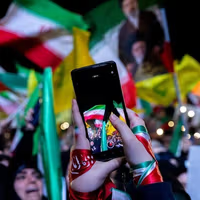
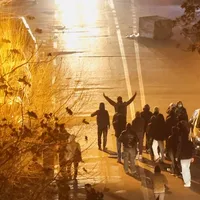
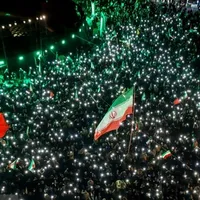
  • Iran's postwar rallies become flashpoint in diplomacy debate
    INSIGHT

    Iran's postwar rallies become flashpoint in diplomacy debate

  • MoU's forgotten casualty is the Iranian people
    OPINION

    MoU's forgotten casualty is the Iranian people

  • Iran may get a lifeline, but major obstacles remain
    ANALYSIS

    Iran may get a lifeline, but major obstacles remain

  • Can Iran rebuild ties with Arab neighbours without a US deal?
    INSIGHT

    Can Iran rebuild ties with Arab neighbours without a US deal?

  • Trump says Iran is 'finished', experts say Tehran won big
    PODCAST

    Trump says Iran is 'finished', experts say Tehran won big

  • A US-Iran deal alone won't rescue Iran's oil economy
    ANALYSIS

    A US-Iran deal alone won't rescue Iran's oil economy

•
•
•

More Stories

Trump says Iran’s enriched uranium must be destroyed or handed over to US

May 25, 2026, 23:10 GMT+1
Trump says Iran’s enriched uranium must be destroyed or handed over to US
100%

US President Donald Trump said Iran’s enriched uranium stockpile must either be handed over to the United States for destruction or eliminated under international supervision.

“The Enriched Uranium (Nuclear Dust!) will either be immediately turned over to the United States to be brought home and destroyed or, preferably, in conjunction and coordination with the Islamic Republic of Iran, destroyed in place or, at another acceptable location,” Trump wrote on Truth Social.

He added that the process should take place in the presence of the “Atomic Energy Commission, or its equivalent,” as negotiations between Tehran and Washington continue through regional mediators.

Conflicting reports emerge after explosions near Bandar Abbas

May 25, 2026, 22:26 GMT+1

Conflicting reports emerged from southern Iran on Monday after explosions were reported east of Bandar Abbas, a key port city overlooking the Strait of Hormuz.

Iranian outlet Tabnak reported that the runway at Bandar Abbas airport had been struck by a missile, though no official confirmation was immediately issued.

Shortly afterward, Iran’s Mehr News Agency said the situation in Bandar Abbas was “under control” and there was “no cause for concern” following the explosions.

No further details on the cause or extent of the reported incident were immediately available.

IRGC-linked outlet backs Pezeshkian move to restore internet access

May 25, 2026, 22:06 GMT+1

Iran’s IRGC-linked Fars News Agency has voiced support for President Masoud Pezeshkian’s decision to restore international internet access, describing the move as a necessary “technical and security” step that would have happened “sooner or later” as cyber conditions improved.

The outlet said restrictions had originally been imposed to prevent cyber espionage and protect critical infrastructure during wartime conditions and an unprecedented wave of cyberattacks.

Fars also pushed back against criticism over how the decision was made, dismissing accusations that officials bypassed legal procedures or created a “parallel council” outside the Supreme National Security Council.

In unusually direct language, the agency accused some reformist media outlets of trying to exploit the issue for political gain instead of promoting “national unity” during what it described as a “full-scale war.”

Qatar emerges as key broker in US-Iran frozen funds dispute

May 25, 2026, 21:35 GMT+1
•
Maryam Sinaiee
Qatar emerges as key broker in US-Iran frozen funds dispute
100%
US and Qatar flags are seen on a lamppost ahead of the arrival of U.S. President Donald Trump in Doha, Qatar May 13, 2025.

The release of frozen Iranian assets has emerged as the main sticking point in talks between Iran and the United States, with officials in Tehran insisting that guaranteed access to funds must come before any preliminary agreement can move forward.

Several commentators and state-linked outlets have suggested Qatar may be exploring financial mechanisms that would give Tehran access to some of its frozen assets without requiring direct US cash transfers to Iran.

Parliament Speaker Mohammad Bagher Ghalibaf, Foreign Minister Abbas Araghchi and Central Bank Governor Abdolnaser Hemmati paid a highly publicized visit to Doha on Monday, fueling speculation that talks focused heavily on the frozen assets issue.

Iranian media widely linked Hemmati’s presence to negotiations over financial guarantees, though no official details of the discussions have been released.

CNN reported on Monday that Intense talks were ongoing in Doha in coordination with the United States, focusing on the Strait of Hormuz, Iran’s highly enriched uranium and frozen funds.

A day earlier, an informed source with direct knowledge of the negotiations told Iran International that Tehran has demanded guaranteed access to $12 billion in frozen assets during the first phase of any arrangement.

Iranian officials continue to insist that the country’s nuclear program and stockpile of highly enriched uranium should only be addressed in later stages of a broader agreement.

The current focus appears to center on roughly $6 billion in Iranian assets transferred from South Korea to Qatar in 2023 under a US-Iran prisoner exchange deal.

The funds were later re-frozen following the October 7 Hamas attack on Israel and the subsequent deterioration in relations between Tehran and Washington.

Mohammad Marandi, a commentator close to the Iranian government, suggested in a televised interview Sunday that Qatar could initially transfer the money to Iran before later being reimbursed by the United States.

Political analyst Shahir Shahidsaless wrote on X that such an arrangement would allow Washington to avoid directly paying Tehran while still meeting one of Iran’s principal demands.

Reuters previously reported, citing senior Iranian sources, that Washington had agreed in principle to release some frozen Iranian assets as part of efforts to secure safe passage through the Strait of Hormuz, though US officials later denied that any final agreement had been reached.

The IRGC-linked Tasnim news agency, citing what it described as an informed source, reported Sunday that Tehran had made clear it would reject any preliminary arrangement lacking a concrete first step by Washington on the assets issue.

“Iran has emphasized that without the release of a specific portion of the blocked assets in the very first step, and without a clear and guaranteed mechanism for the release of all frozen assets, no agreement will be possible,” the source told Tasnim.

Tasnim also claimed US officials were backtracking on earlier signals delivered through intermediaries regarding the funds.

“Based on past experiences of repeated American violations and obstruction,” the source said, “Iran will not allow the issue of asset release to be reduced to vague and unreal promises.”

Despite the tensions, Mashallah Shamsolvaezin, a member of President Masoud Pezeshkian’s Media Council, expressed cautious optimism, describing the frozen-assets dispute as “a small problem” in remarks to Fars News Agency.

He said the disagreement could be resolved within 48 hours and suggested future negotiations might move from Doha to Geneva or another location more accessible to the American delegation.

At the same time, hardline figures continue to insist on preserving what they describe as “Iran’s management” of the Strait of Hormuz.

Foreign Ministry spokesperson Esmaeil Baghaei denied Monday that Tehran was seeking to impose tolls on ships passing through the waterway, but said providing navigation and environmental protection services would require fees.

Hossein Shariatmadari, editor-in-chief of the hardline Kayhan newspaper, criticized reports suggesting Iran could agree to reopen the Strait of Hormuz under a broader understanding with Washington.

“If this news is true,” he wrote, “the real meaning of opening the Strait of Hormuz is the disarmament of Iran against military, economic and political attacks by enemies.”

The comments highlighted the enduring influence of hardliners advocating maximalist demands, a dynamic critics say has repeatedly helped sink fragile diplomatic openings between Tehran and Washington.


Doha talks with Iran continue in coordination with US - CNN

May 25, 2026, 21:24 GMT+1

Intense talks between Qatari mediators and a senior Iranian delegation are ongoing in Doha in coordination with the United States, focusing on the Strait of Hormuz, Iran’s highly enriched uranium and frozen funds, CNN reported, citing a diplomatic source.

Iran’s frozen funds are being discussed as part of the memorandum of understanding under negotiation between Tehran and Washington, and could be included in any final agreement, the source said.

The talks are taking place between Qatari mediators and the Iranian delegation in coordination with the United States, according to CNN.