Filming targeted sites punishable by death, Iran judiciary says


Anyone endangering national security by providing intelligence to the adversaries, including through photography or filming, can face execution and seizure of assets, Iran’s judiciary spokesperson said on Tuesday.
"People who take photos or videos of damaged sites and share them are effectively confirming whether strikes hit their targets," Asghar Jahangir said, describing the move as intelligence cooperation with the enemy.
Meanwhile, police intelligence in Khuzestan, southern Iran, said 138 people were arrested over the past 72 hours on accusations of links to what authorities describe as “hostile media” outlets.
Authorities said the detainees had allegedly made phone calls, taken photos and videos of targeted sites, and sent the material to outlets including Iran International.


The head of US Central Command met Israel’s military chief during a visit on March 29-30, the command said in a readout.
Commander Brad Cooper held talks with Eyal Zamir on operations aimed at limiting Iran’s ability to project power beyond its borders and stressed continued US-Israel coordination.
Cooper also visited US troops deployed in support of Operation Epic Fury and awarded more than 40 service members for their performance, the statement said.
A 2025 satellite image suggests Iran may have moved highly enriched uranium into an underground site near Isfahan shortly before Israeli and US strikes, Le Monde reported.
Experts said the convoy seen outside the tunnel complex could be carrying nuclear material, with one saying it showed “something being taken into the tunnels just before the start of the June war.”
Another said, “the best match is that the barrels contain 60% enriched uranium,” though analysts noted it was not possible to confirm the cargo with certainty.
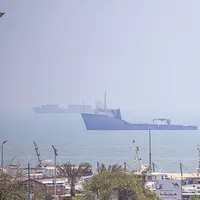
Iran’s Islamic Revolutionary Guard Corps said on Tuesday its naval forces struck a container ship it identified as Israeli-linked, named Express Halfong, in the Persian Gulf as part of a series of operations.
In a statement, the IRGC said the vessel was hit by ballistic missiles in waters of the Persian Gulf during early morning attacks. There was no independent confirmation of the strike or the ship’s ownership.
It said four operations were carried out, including drone strikes on what it described as a gathering of US forces on the coast of the United Arab Emirates.
The IRGC also said it targeted US-linked air defense systems near Manama and radar systems at a US base in Kuwait.
It said its forces had “full control” of the Strait of Hormuz and warned that any movement by its enemies would be targeted.
An Iranian man whose viral plea for Donald Trump’s help drew millions of views says he was forced to flee the country after being targeted by the Revolutionary Guard, warning from exile that negotiating with Tehran would allow its repression to continue.
Ali Rezaei Majd still looks toward the rugged peaks of the Zagros Mountains — just beyond them now, across the border in Iraqi territory.
More than six feet tall, with a muscular build, tattoos etched across his body, and long, thick, curly hair, Majd is a presence that’s hard to ignore.
He looks like a fighter. The truth is — he is one.
A proud Lor from Iran’s tribal province of Lorestan, Majd comes from a people known for their deep connection to their land — and for their resilience. The Lors are an Iranian ethnic group rooted in the Zagros region, with a long history shaped by life in the mountains and a culture that values strength, independence and loyalty.
His life has been on the run since early January, when he posted a video from his hometown that would soon be seen around the world.
In it, holding up his Iranian ID, he made a direct plea to then-President Donald Trump and the American people:
“I’m speaking to you from inside Iran… not as a politician, not as a soldier, but as a human being living under fear and oppression every single day… Please don’t forget us.”
The video struck a nerve — garnering over nine million views on Instagram. The English version was also viewed nearly two million times.
But it also made him a target.
Majd says the Islamic Revolutionary Guard Corps (IRGC) began searching for him. With operatives closing in, he fled — crossing mountainous terrain with the help of Kurdish people.
“I was in a prison for 30 years. Iran was like a prison for me,” he told the Eye for Iran podcast.
“When you grow up in a prison, you risk everything for freedom — even for one day.”
Today, his safety remains uncertain, with threats from a regime never far behind.
Now in exile, he is speaking out — with one message above all:
“We cannot make a deal with them. Dealing with them means letting this cancer continue.”
Majd says many of his friends were killed when the regime unleashed force — including heavily armed units — against what he describes as a largely defenseless population.
“When you come to the streets in Iran, you’re going to die,” he said. “They don’t shoot to stop you — they shoot to kill.”
He also has a message for the West — and for the media.
Watching coverage from abroad, Majd says he is frustrated by calls to halt military operations, arguing they misunderstand the reality inside Iran.
“I see many channels trying to stop this operation… saying this is the wrong way,” he said. “But this regime is a threat to the whole world.”
For him, this moment represents something else — a rare opportunity.
“This is the best chance to stop this regime,” he said. “If you don’t stop them, they will become more dangerous.”
He considers himself lucky to be alive.
And now, he says, it is his responsibility to carry the voices of those who can no longer speak.
“The best of us — the bravest — they are gone. So I have to speak for them.”
Majd described the violence he witnessed in chilling terms: “It was like a video game. They were just shooting people — so easily.”
Despite the danger and despite what he says are ongoing threats from regime operatives — Majd continues to speak publicly.
Because for him — and for those who can no longer speak — silence is not an option.
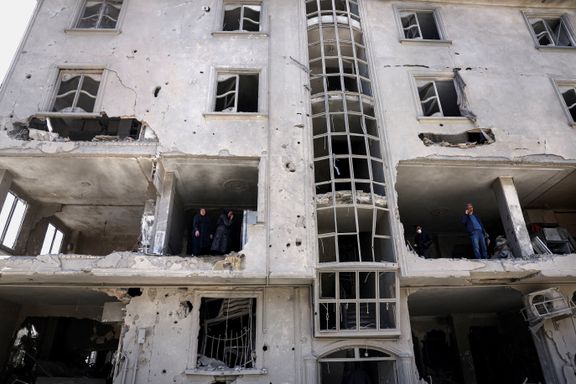
Iran executed political prisoners Babak Alipour and Pouya Ghobadi on Tuesday, a day after two other prisoners in the same case were hanged.
Alipour and Ghobadi had been sentenced to death in 2024 by Tehran’s Revolutionary Court.
On Monday, Akbar Daneshvarkar and Mohammad Taghavi Sangdehi, who had also been convicted in the same case, were executed.