• العربية
  • فارسی
Brand
  • Iran Insight
  • Politics
  • Economy
  • Analysis
  • Special Report
  • Opinion
  • Podcast
  • Iran Insight
  • Politics
  • Economy
  • Analysis
  • Special Report
  • Opinion
  • Podcast
  • Theme
  • Language
    • العربية
    • فارسی
  • Iran Insight
  • Politics
  • Economy
  • Analysis
  • Special Report
  • Opinion
  • Podcast
All rights reserved for Volant Media UK Limited
volant media logo

Pezeshkian says regional publics condemning US, Israel over Iran war

Mar 24, 2026, 17:00 GMT+0

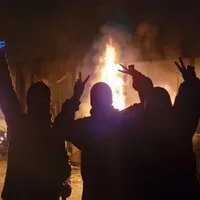
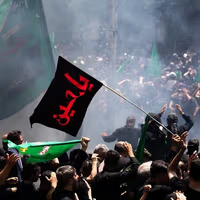
Iran’s President Masoud Pezeshkian said people across several countries in the region and beyond are expressing anger toward the United States and Israel over the war.

“The people of Pakistan, Turkey, Iraq, Lebanon, Egypt, and Arab countries are loudly expressing their disgust for America, Israel, and their crimes,” Pezeshkian said in a social media post.

“The hearts of the free people of the world are not with the Zionists,” he added.

Pezeshkian said lasting stability in the region would be possible only through “cooperation and respect for the will of the nations.”

Most Viewed

Behind Tehran’s unity show: The secret letter to the shadow king
1
INSIGHT

Behind Tehran’s unity show: The secret letter to the shadow king

2

Iran executes protester over January uprising

3
PODCAST

US should use Iran talks leverage to help Iranian people, veteran journalist says

4

Iranian national charged in US over migrant smuggling scheme

5

Iran officials project unity after Trump leadership remarks

Banner
Banner

Spotlight

  • US should use Iran talks leverage to help Iranian people, veteran journalist says
    PODCAST

    US should use Iran talks leverage to help Iranian people, veteran journalist says

  • Iran’s economy after the March war: how bad can it get?
    ANALYSIS

    Iran’s economy after the March war: how bad can it get?

  • Behind Tehran’s unity show: The secret letter to the shadow king
    INSIGHT

    Behind Tehran’s unity show: The secret letter to the shadow king

  • Rapid deterioration of Iran-UAE ties threatens a critical trade lifeline
    ANALYSIS

    Rapid deterioration of Iran-UAE ties threatens a critical trade lifeline

  • Tehran stocks head for reopening, but it risks triggering a new crisis
    ANALYSIS

    Tehran stocks head for reopening, but it risks triggering a new crisis

  • Power vacuum in Tehran emboldens hardliners
    INSIGHT

    Power vacuum in Tehran emboldens hardliners

  • Inflation spikes, basic goods slip out of reach for Iranians, citizens say
    VOICES FROM IRAN

    Inflation spikes, basic goods slip out of reach for Iranians, citizens say

•
•
•

More Stories

Pakistan offers to host US-Iran talks: what to know

Mar 24, 2026, 16:53 GMT+0

Pakistan has offered to host talks between the United States and Iran aimed at ending a war that has rattled global energy markets. Here’s why Islamabad is involved—and whether it could work.

Prime Minister Shehbaz Sharif said Tuesday that Islamabad was “ready and honoured to be the host” for direct or indirect negotiations if both sides agree.

The proposal comes amid reports that Pakistan has been relaying messages between the two sides and could potentially host discussions if they progress to that stage.

Pakistan’s army chief, Field Marshal Asim Munir, spoke with President Donald Trump on March 23, while Sharif held a phone call with Iranian President Masoud Pezeshkian the following day as part of a push for de-escalation.

Trump announced a five-day pause in planned strikes on Iranian energy infrastructure on Monday, saying there had been “productive conversations” about potential diplomacy. Iranian officials, however, insist no direct negotiations with Washington have taken place.

Pakistan is one of several countries—alongside Turkey and Egypt—that appear to be passing messages between Washington and Tehran while encouraging diplomatic contacts.

What role is Pakistan playing?

Pakistan is positioning itself as both messenger and potential host.

Its prime minister and army chief have spoken with leaders in Washington and Tehran while publicly offering Islamabad as a venue should talks take place.

Pakistani officials describe the effort as part of broader back-channel diplomacy aimed at reducing tensions.

Why Pakistan?

Pakistan maintains working relationships with both Iran and the United States, giving it unusual access to the two governments.

Since 1992, Iran’s interests section in Washington—which handles limited diplomatic matters after the two countries severed relations in 1980—has operated under the protection of the Pakistani embassy.

Pakistan also has political and military ties with the United States. That combination allows Islamabad to communicate with both sides while avoiding the perception that it is fully aligned with either.

Has Pakistan tried this before?

Yes, though usually behind the scenes.

In 2019, then-Prime Minister Imran Khan publicly offered to mediate during a period of heightened US-Iran tensions after speaking with leaders in both countries.

Pakistan has periodically offered to help ease regional tensions, though mediation efforts have rarely moved beyond preliminary diplomacy.

Will it actually lead to negotiations?

That remains uncertain.

Iranian officials have publicly insisted that no negotiations with Washington are taking place. The White House has also avoided confirming any talks, saying it will not negotiate through the media.

Israel has meanwhile signaled that its military operations against Iran will continue regardless of diplomatic developments.

Pakistan’s proposal therefore represents a potential diplomatic channel rather than a confirmed breakthrough. Whether talks materialize will depend on whether Washington and Tehran conclude that diplomacy offers a way to limit the conflict.


Qatar says it is working closely with US to end Iran war

Mar 24, 2026, 16:43 GMT+0

Qatar is working “very closely” with the United States to help bring about an end to the war with Iran, foreign ministry spokesperson Majed Al-Ansari said.

Speaking at a press briefing in Doha, Al-Ansari said Qatar remains in close contact with Washington and is focused on supporting diplomatic efforts to end the conflict.

He added that Doha is not directly mediating between the United States and Iran but supports “all formal and informal diplomatic channels” aimed at ending the war.

Erdogan says Turkey will do everything to establish peace in Iran

Mar 24, 2026, 16:20 GMT+0

Turkey’s President Recep Tayyip Erdogan said Ankara will “continue to work with all its might” to help establish peace in Iran as the regional conflict intensifies.

Erdoğan has repeatedly called for diplomacy to end the war, warning that the fighting risks dragging the wider Middle East into conflict and urging negotiations to resolve the crisis.

Turkey has also been engaging with multiple countries as part of broader diplomatic efforts to encourage talks and prevent further escalation.

Tehran says Hormuz closed to vessels linked to US, Israel

Mar 24, 2026, 16:04 GMT+0

Iran’s Foreign Minister Abbas Araghchi said the Strait of Hormuz remains closed to vessels owned by or associated with the United States, Israel, or countries assisting their military campaign against Iran.

In a phone call with Malaysia’s Foreign Minister Mohamad bin Hassan on Tuesday, Araghchi said other ships could still transit the strategic waterway if they coordinated with Iranian authorities, according to a readout released by Iran’s foreign ministry.

The statement said Araghchi described Iran’s de facto closure of the shipping lane — a move that has driven a sharp rise in global oil and gas prices — as “a direct result of American and Israeli military aggression.”

He said the measure was aimed at defending Iran’s “sovereignty and territorial integrity.”

Baghdad condemns attacks on PMF and Kurdish forces

Mar 24, 2026, 15:52 GMT+0

Iraq’s presidency has condemned separate attacks targeting both the Popular Mobilization Forces (PMF) and Kurdish Peshmerga units on Iraqi territory.

The presidency described the strike on the PMF headquarters as a “criminal attack” and a “violation of the country’s sovereignty,” while denouncing the targeting of the Peshmerga - which it described as a “fundamental pillar of the national defence system.”

A US airstrike on the PMF’s command headquarters in Anbar killed at least 14 people on Monday.

Separately, Iraq’s autonomous Kurdish region accused Iran of launching two ballistic missile attacks against Kurdish forces, killing six people and wounding 30 others.