• العربية
  • فارسی
Brand
  • Iran Insight
  • Politics
  • Economy
  • Analysis
  • Special Report
  • Opinion
  • Podcast
  • Iran Insight
  • Politics
  • Economy
  • Analysis
  • Special Report
  • Opinion
  • Podcast
  • Theme
  • Language
    • العربية
    • فارسی
  • Iran Insight
  • Politics
  • Economy
  • Analysis
  • Special Report
  • Opinion
  • Podcast
All rights reserved for Volant Media UK Limited
volant media logo

Tehran not interested in talks with US, MP says
Dec 5, 2025, 10:20 GMT+0
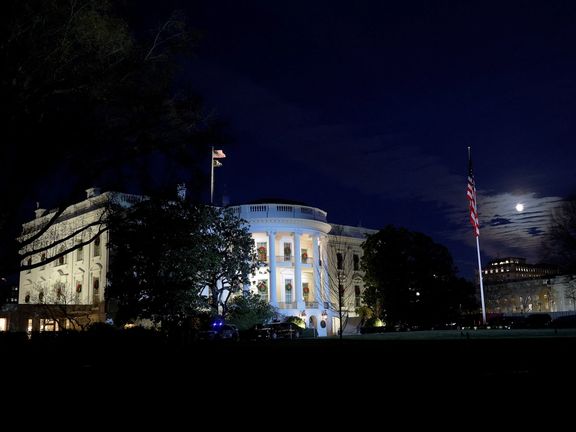
The moon rises next to the White House in Washington, D.C., U.S., December 4, 2025.

Iranian lawmaker Fada-Hossein Maleki said on Friday that the United States has sent messages indicating interest in negotiations, but Tehran has no plans to engage.

He told the outlet Didban Iran that “the remarks of the Supreme Leader about negotiations with the US are the final word,” adding that “we tried every path, but in the end it led to war and the wall of distrust only grew higher.”

Maleki said messages had arrived “through different channels,” but insisted Iran does not view Washington as a reliable counterpart. “The Americans want to dictate their positions. We want negotiations that secure our rights, not talks that follow their script,” he said.

Preconditions at the heart of the standoff

Maleki said one key reason for Iran’s rejection of talks is Washington’s insistence on sweeping concessions, including halting uranium enrichment. “Zero enrichment is something Iran will never accept,” he said, describing the demand as outside international norms. He added that “no IAEA member state accepts such limits on its own soil.”

Iran International reported last month that President Donald Trump reiterated three preconditions for talks via Saudi Crown Prince Mohammed bin Salman: an end to enrichment, curbs on Iran’s missile program, and halting support for armed allies in the region. Tehran rejects all three as non-starters.

Supreme Leader Ali Khamenei last week denied that Iran had asked Saudi Arabia to mediate, calling reports of outreach “pure lies.” Maleki said lawmakers and Foreign Minister Abbas Araghchi have agreed that Iran should stay aligned with Khamenei’s guidance.

Araghchi had said earlier that Iran remains open to negotiation “when it is real,” but added that Washington is currently “dictating, not negotiating.”

Regional risks and warnings

Maleki said there is a possibility of US or Israeli attacks on armed groups aligned with Iran in Lebanon, Iraq and Yemen, describing Washington and Tel Aviv as increasingly isolated. “They are cornered, and they may act out of desperation,” he said.

He argued that some Arab governments no longer view US guarantees as dependable. “Many in the region see that the American rope is rotten, and those who cling to it will fall to the bottom of the well,” he said.

Maleki said Iran is ready for any escalation. “We are far more prepared than before,” he said, adding that although Iran suffered losses in the opening hours of the recent twelve-day conflict, “the enemy knows our readiness now.”

He said Tehran’s position remains unchanged: “Whenever the Americans enter real negotiations — give and take — and prove good faith, we have no problem. But imposing preconditions will never be acceptable.”

Most Viewed

Ghalibaf defends Iran-US talks amid hardline backlash
1
INSIGHT

Ghalibaf defends Iran-US talks amid hardline backlash

2
ANALYSIS

From instability to influence: Pakistan’s pivotal role in US-Iran diplomacy

3
ANALYSIS

100 days on: why Iran’s January protests spread across social classes

4

War-hit homeowners feel abandoned as Iran’s reconstruction aid fades

5

Iran says no decision yet on talks as Pakistan prepares to host US team

Banner
Banner

Spotlight

  • Iran diplomacy wobbles as factions compete to avoid looking soft on US
    INSIGHT

    Iran diplomacy wobbles as factions compete to avoid looking soft on US

  • The politics of pink: how Iran uses cuteness to rebrand violence
    ANALYSIS

    The politics of pink: how Iran uses cuteness to rebrand violence

  • Bread shortages, soaring prices strain households in Iran, residents say
    VOICES FROM IRAN

    Bread shortages, soaring prices strain households in Iran, residents say

  • 100 days on: the anatomy of Iran’s January crackdown
    INSIGHT

    100 days on: the anatomy of Iran’s January crackdown

  • Ghalibaf defends Iran-US talks amid hardline backlash
    INSIGHT

    Ghalibaf defends Iran-US talks amid hardline backlash

  • From instability to influence: Pakistan’s pivotal role in US-Iran diplomacy
    ANALYSIS

    From instability to influence: Pakistan’s pivotal role in US-Iran diplomacy

•
•
•

More Stories

Iconic singer Googoosh says new work awaits Islamic Republic's fall

Dec 5, 2025, 09:25 GMT+0

Googoosh, a towering figure in Iranian pop music history, told the Associated Press in an interview published on Friday she would not produce new work until after the fall of the Islamic Republic.

“I prefer to leave my artistic work for a day when the Islamic Republic no longer exists in my country,” she said.

Embarking on a farewell tour, she framed her decision within the wider social shifts unfolding in Iran, particularly the growing rejection of the compulsory hijab and the generational frustration she believes now defines the country.

“We are seeing our youth, especially women, fighting for their most basic rights,” she said, describing a society confronting economic strain, political repression and demands for ordinary freedoms.

Defiance of compulsory veiling is now widespread in Iran as women and girls appear in public without headscarves in one of the most visible social shifts since Mahsa Amini’s death in 2022.

The pressures facing a new generation, Googoosh said, have accelerated her own sense of responsibility as an artist.

“People in my country are struggling to give their families an ordinary life. They struggle for clean water, clean air, and land where they can live. Our young people grew old without ever enjoying their youth. Our people must end this painful cycle and gain the freedoms every human being deserves.”

Iran’s rulers have long relied on strict hijab enforcement by police and Basij forces. The current situation comes amid persistent power cuts, water shortages and a weakened economy, all of which risk fueling further anger.

Iranian iconic pop singer Googoosh
100%
Iranian iconic pop singer Googoosh

A life shaped by stardom and silence

Born Faegheh Atashin, she entered the spotlight as a child performer and quickly became one of pre-revolution Iran’s most recognizable cultural figures. Her look, voice and stage presence shaped an entire era of Iranian pop culture.

After the 1979 revolution, she remained in Iran and spent two decades barred from performing under the new theocracy, facing surveillance, harassment and a period of imprisonment. When authorities finally allowed her to leave in 2000, she resumed her career abroad, launching a revival that connected her with Iranians who had long been cut off from her music.

“After the revolution, the pressure on me grew,” Googoosh said. “Since Farsi is my mother tongue and I grew up in Iran, I could not adjust to living outside my country. I did not want that life. I hoped I could somehow continue performing for my own people, inside my own country.”

Iran seizes 2,800-year-old artifacts, arrests four

Dec 5, 2025, 08:27 GMT+0

Iranian officials said a large haul of ancient artifacts estimated to be about 2,800 years old has been seized in the northern town of Fereydunkenar in Mazandaran Province and four main suspects have been detained.

Local prosecutor Gholamhossein Asghari said police acted “immediately” after receiving a report about suspected illegal activity involving historical objects. He said a joint team with cultural heritage experts and the economic security police uncovered “a considerable number of prohibited and historical items that belong to the cultural heritage of the country.” Initial assessments put their value at around one thousand billion tomans (8.4 million USD). Three vehicles tied to the case were also impounded, he said.

Iran continues to face extensive trafficking of antiquities despite laws that classify such items as national heritage and ban their sale or export without official approval. Smuggling networks operate across the region, taking advantage of high demand. In one case reported by the outlet SedayeMiras, Achaemenid era gold artifacts smuggled out of Iran were sold on the black market in Dubai for about 1.1 million dollars, far below their estimated value of three million dollars. The report said the pieces included a gold pendant depicting Darius I, gold armlets, Achaemenid era jewelry and a 2,500 year old gold diadem.

Heritage experts say inadequate maintenance, limited protection and environmental damage have left many historical sites vulnerable. Asghari said cultural heritage is central to Iran’s identity and that any harm to it amounts to an attack on the nation’s history.

Khamenei post on Western income inequality raises hackles on X

Dec 5, 2025, 01:55 GMT+0

A post on X by Iran's Supreme Leader Ali Khamenei's highlighting income inequality between women and men in the West stoked criticism by users who pointed to the Islamic theocracy's record on women's rights.

“In many Western countries today, women are paid less than men for doing the same work." Khamenei’s official English-language account posted on Wednesday. "That’s how they are today, which is totally unjust.”

The message echoed parts of a speech he delivered the same day to an audience of women and girls, in which he defended the compulsory Islamic veil and criticized the treatment of women in the West.

A "readers added context" note under his post, a feature introduced under the platform's new owner Elon Musk which collates users' responses, said bluntly:
"Iran has a greater gender inequality than the entire west."

X user Guney Yazar quipped: "So the guy who jails women for not covering their hair now lectures the West on pay equity. The irony’s richer than any oil field."

One user prompted Grok, the artificial intelligence feature on X, to describe the punishment for defying the hijab under the 86-year-old theocrat.

"Under Iran's 2024 Hijab and Chastity law, women not wearing the hijab face fines from 15 million to 500 million rials ($24–$790), escalating to up to 1.5 billion rials, travel/online bans, and prison up to 5-15 years for repeats," it said.

"Severe cases may invoke the death penalty under 'corruption on earth.' A recent Supreme Leader directive calls for stricter enforcement, though many women continue to defy it."

'Enslaving not liberating'

The nearly 50-year-old system over which Khamenei presides views the veil as an emblem of Islamic identity and chastity.

One of the gravest sins of Western capitalist logic and culture is that they deceitfully label corruption and promiscuity as 'freedom,' he added in another post. "And when they try to spread that culture, they say, 'We're liberating you!' But in fact, they're enslaving people."

Other users cited data from the US Bureau of Labor Statistics and the Organization for Economic Co-operation and Development (OECD) appearing to confirm an element of Khamenei's assertion.

The bodies found that, adjusted for experience and hours, the gender pay gap in Western countries stands at around 1-4%.

But both the World Bank and the International Labor Organization (ILO) list Iran’s gender pay gap for identical roles at 35%, fueled by laws requiring male guardian permission for women to travel, work or study.

Gender rights record

Users also replied with pre-1979 Islamic Revolution photos of unveiled Iranian women, images of morality police violence and memorials to a young woman named Mahsa Amini whose death in morality police custody stoked mass protests in 2022.

The demonstrations were quashed with deadly force.

Iran ranks 143 out of 146 countries in the latest World Economic Forum Global Gender Gap Report.

Amnesty International has documented systemic gender discrimination in Iran in its 2024 report, including up to 74 lashes for defying hijab rules and frequent impunity for honor killings.

New poll finds 60% of Americans approved of Trump’s Iran attack

Dec 4, 2025, 20:20 GMT+0

A poll by the Ronald Reagan Institute released on Thursday indicated broad public support for air strikes launched by the administration of President Donald Trump on three major Iranian nuclear sites on June 22.

“With respect to Iran, the public is not only supportive of the airstrikes conducted last summer, they are keen on several forceful responses to preventing Iran from developing a nuclear device,” the Washington DC-based organization, which is dedicated to advancing the late Republican president's ideals, said in its findings.

The Reagan National Defense Survey, conducted in the last week of October and first week of November by Beacon Research and Shaw & Company, examines American views on threats and US military posture toward allies and adversaries.

“Americans back further economic sanctions 73%, deploying US cyber capabilities 70%, renegotiating the Iranian nuclear deal 66% and even using US military force 54% in the service of thwarting Iran’s nuclear weapons program,” the findings added.

Iran denies seeking a nuclear weapon but Israel, the United States and other Western powers doubt its intentions.

China remains the top perceived US threat 29%," the poll added, "followed by Russia 21% and North Korea 9%, with Iran at 3%."

77% Republican respondents supported the June strikes compared to 39% of Democrats.

“This year’s survey underscores a clear message: Americans believe US leadership is indispensable to global security and peace,” said Roger Zakheim, Director of the Ronald Reagan Institute, said in a statement.

The United States held five rounds of negotiations with Tehran over its disputed nuclear program earlier this year after President Donald Trump set a 60-day ultimatum.

When no agreement was reached, Israel launched a surprise offensive on June 13, followed by US strikes on June 22 targeting key nuclear facilities in Isfahan, Natanz and Fordow.

Filmmaker Jafar Panahi vows Iran homecoming despite new prison sentence

Dec 4, 2025, 19:35 GMT+0

Dissident Iranian filmmaker Jafar Panahi said he will return to Iran after completing the Oscar campaign for his latest film, despite being sentenced in absentia this week to one year in prison on charges of propaganda against the state.

“This sentence happened in the middle of this process, but I will finish this campaign and go back to Iran as soon as possible after,” Variety magazine quoted Panahi as saying at the Marrakech Film Festival in Morocco.

“I have only one passport … the passport of my country, and I wish to keep it,” Panahi added. “Although I was given the opportunity, even in the hardest years, I never considered leaving my country and being a refugee elsewhere.”

Panahi’s remarks come after his lawyer, Mostafa Nili, announced the prison sentence issued against the filmmaker in absentia earlier this week.

Nili said the sentence includes a two-year travel ban and bars him from membership in political or social groups, adding that they plan to appeal.

Panahi, whose movies have repeatedly brought him into conflict with Iranian authorities, said he is aware of the risks of returning.

“I know my films don’t please the government,” he said. “But that’s not a reason for me not to go back to my country.”

100%

Panahi’s latest film, It Was Just an Accident, inspired by his experience as a political prisoner, is France’s submission for the Oscars and screened at the Marrakech festival on Thursday.

It was filmed in secret in Iran and follows the moral journey of a group of former political prisoners who believe they have captured their torturer.

In May, Panahi received the Palme d’Or at the 78th Cannes Film Festival for the film.

Panahi has faced restrictions and arrests for more than a decade.

He was sentenced in 2010 to six years in prison and a 20-year ban on filmmaking, travel and giving interviews, though he continued to work in secret. In 2022, he was detained again and spent seven months in prison before launching a hunger strike that led to his release in early 2023.