• العربية
  • فارسی
Brand
  • Iran Insight
  • Politics
  • Economy
  • Analysis
  • Special Report
  • Opinion
  • Podcast
  • Iran Insight
  • Politics
  • Economy
  • Analysis
  • Special Report
  • Opinion
  • Podcast
  • Theme
  • Language
    • العربية
    • فارسی
  • Iran Insight
  • Politics
  • Economy
  • Analysis
  • Special Report
  • Opinion
  • Podcast
All rights reserved for Volant Media UK Limited
volant media logo
ANALYSIS

How Iran's theocratic rule takes hits but persists

Ata Mohamed Tabriz
Ata Mohamed Tabriz

Iran analyst

Dec 3, 2025, 18:04 GMT+0Updated: 23:47 GMT+0
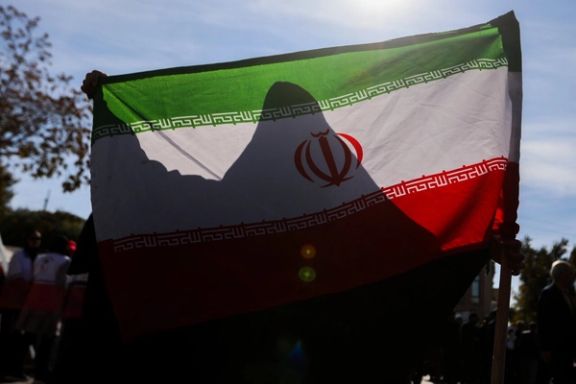
A woman holds up an Iranian flag in a state-sponsored rally in Tabriz, Iran, November 4, 2025

A lopsided war with Israel and the United States in June rattled Iran’s political order, but it survives through smarter coercion and the disarray of forces that might otherwise bring it down.

Internal contestation is harsher than at any time in recent memory, with competing factions trying to preserve or redefine their place in a system that has lost the capacity for reform or institutional expansion.

Yet Iran's nearly 50-year-old theocracy persists, compensating for poor governance with stiff security control and the careful redistribution of shrinking resources.

Just as authorities have slackened enforcement of Islamic social rules, allowing unveiled women and open-air concerts in public, it has stepped up a crackdown on political dissent and alleged spies.

Opposing this order are three forces whose interaction with the securitized state produces neither fundamental change nor imminent collapse, but something closer to endurance through erosion.

Those are: people inside Iran fighting localized economic and professional battles without organized networks, an exiled opposition adept at narrative and symbolism but detached from lived realities inside Iran and foreign actors committed to curbing Tehran’s nuclear and regional strength but not to toppling it.

One system, many channels

The Islamic Republic is structured around the Supreme Leader, whose authority ultimately resolves all major decisions. Around this axis sits an intricate constellation of parallel institutions, security councils, loyalty networks and overlapping hierarchies.

Policymaking is multi-layered. But decision-making is ultimately his sole prerogative.

President Masoud Pezeshkian recently issued a telling statement that unmanageable infighting would ensure should Ali Khamenei somehow exit the scene. It underscores a basic fear: without the Leader’s centrality, the power networks would drift apart.

Nothing illustrates this better than the way “system” is used interchangeably for both the political order and the leader himself.

Khamenei functions less as the manager of a unified apparatus than as the referee of internal conflicts. The state bureaucracy is not the engine of governance but one node among political, security and economic bodies each pursuing their own interests.

The 12-day war intensified these fissures. The removal of influential IRGC figures disrupted long-standing balances and sharpened factional sensitivities.

The Babak Zanjani affair illuminates the power politics at play.

Sprung with little explanation from a death sentence for corruption, the disgraced tycoon now not only walks free but weighs in regularly on politics, even appearing to threaten former President Hassan Rouhani with death in a tweet this week.

Such a rapid rehabilitation could not occur without powerful establishment backing.

Unorganized discontent

The war’s economic toll—passed on to society through inflationary policies—has deepened hardship and widened discontent. Iran’s society today is in ferment but unorganized: protests erupt across workplaces and cities, but without intermediary institutions they remain local and short-lived.

A recent nurses’ strike in Mashhad, much like the truck drivers’ strike before it this spring, showed the pattern clearly: strong anger, weak connective tissue.

The labor market’s collapse into unstable, platform-based work illustrates a society living in permanent emergency. Eight million rideshare drivers do not prove total collapse, but they reveal a mass shift toward insecure livelihoods.

Economic stress drains the psychological capacity for sustained organization; survival overrides solidarity.

Provincial centers skew toward economic protests, while peripheral regions experience conflict mainly through security confrontation.

The recurring demolition of homes in Baluchistan in southeastern Iran is one example of a strategy that provokes local resistance but rarely ratchets up because no networks link periphery grievances to central demands.

Inside Iran, opposition forces function like isolated islands. Outside, the opposition produces abundant media output but struggles to translate daily grievances into a shared political language.

The gap between “voice” abroad and “life” inside has produced an opposition that amplifies frustrations but does not alter the balance of power.

Survival on the edge

The Islamic Republic continues not as an effective state but as a mechanism that defers crises day by day. Security has replaced policy; the cost of maintaining power rises constantly as the quality of governance decays.

The system persists because no countervailing power with organizational depth has yet emerged.

European-triggered international sanctions and intermittent threats from the United States and Israel show that containment—not internal transformation—may be the ultimate priority from outside powers.

External pressure accelerates economic and infrastructural decay but cannot substitute for domestic political change.

For the West, Iran remains a security file, not a political project.

Foreign actors may accelerate or intensify pressure, but the indispensable condition for change is alignment between internal and external forces around a shared language and objective.

Until such convergence forms, the Islamic Republic will remain in a state of endurance through erosion—able to enforce the status quo even as it becomes less capable of maintaining stability or basic services.

Most Viewed

Ghalibaf defends Iran-US talks amid hardline backlash
1
INSIGHT

Ghalibaf defends Iran-US talks amid hardline backlash

2
ANALYSIS

From instability to influence: Pakistan’s pivotal role in US-Iran diplomacy

3
ANALYSIS

100 days on: why Iran’s January protests spread across social classes

4

War-hit homeowners feel abandoned as Iran’s reconstruction aid fades

5
INSIGHT

100 days on: the anatomy of Iran’s January crackdown

Banner
Banner

Spotlight

  • The politics of pink: how Iran uses cuteness to rebrand violence
    ANALYSIS

    The politics of pink: how Iran uses cuteness to rebrand violence

  • Bread shortages, soaring prices strain households in Iran, residents say
    VOICES FROM IRAN

    Bread shortages, soaring prices strain households in Iran, residents say

  • War-hit homeowners feel abandoned as Iran’s reconstruction aid fades

    War-hit homeowners feel abandoned as Iran’s reconstruction aid fades

  • 100 days on: the anatomy of Iran’s January crackdown
    INSIGHT

    100 days on: the anatomy of Iran’s January crackdown

  • Ghalibaf defends Iran-US talks amid hardline backlash
    INSIGHT

    Ghalibaf defends Iran-US talks amid hardline backlash

  • From instability to influence: Pakistan’s pivotal role in US-Iran diplomacy
    ANALYSIS

    From instability to influence: Pakistan’s pivotal role in US-Iran diplomacy

•
•
•

More Stories

Copies of Iranian Shaheds, US suicide drones set to be deployed to Mideast

Dec 3, 2025, 16:32 GMT+0

The US military has created a task force to field its first squadron of new kamikaze attack drones in the Middle East, US Central Command (CENTCOM) said on Wednesday.

US arms developers reverse-engineered a captured Shahed drone from Iran to produce the new model, CNN reported citing a US defense official.

The unit, called Task Force Scorpion Strike, was formed after Defense Secretary Pete Hegseth ordered the Pentagon to speed up the delivery of low-cost drone technology to troops.

“This new task force sets the conditions for using innovation as a deterrent,” CENTCOM commander Admiral Brad Cooper said in a statement.

“Equipping our skilled warfighters faster with cutting-edge drone capabilities showcases US military innovation and strength, which deters bad actors.”

CENTCOM said the task force has already built a squadron using what it calls Low-cost Unmanned Combat Attack System drones, or LUCAS, developed by the Arizona-based company SpektreWorks.

'Flipping the script'

The drones can fly long distances, operate autonomously and be launched by catapult, rocket-assisted systems or mobile vehicles.

The LUCAS drones were created after developers reverse-engineered a Shahed drone from Iran, which the US captured a few years ago, CNN reported citing a US defense official.

CNN's report said the defense official acknowledged that the US military’s focus on larger and more expensive precision systems had “put our forces at a disadvantage” against cheap drones like those used by Iran.

“But now we’re flipping the script,” the official added.

The official declined to say how many drones the new squadron has, saying only there were “many” and more would be added. Each drone costs about $35,000, the official said.

'Low-cost option'

The official also told CNN that a damaged Iranian Shahed drone captured by the United States several years ago was examined by US companies, which worked to reverse-engineer elements of the system and use those findings in the development of LUCAS.

The official described the result as a US-produced, low-cost attack drone built to meet the needs of current conflicts.

Task Force Scorpion Strike, which helped lead the development of the drones, consists of nearly two dozen personnel, led by service members from Special Operations Command Central.

Not all of the personnel are based in the Middle East, CNN's report said citing the official.

Tehran blood stocks dip as smog, remote work cut donations

Dec 3, 2025, 11:25 GMT+0

Blood reserves supplying 180 hospitals across Tehran have dropped after two weeks of heavy smog and widespread remote working reduced donor turnout, provincial officials said, warning the shortfall is beginning to affect daily supply plans.

Mohammadreza Mahdizadeh, head of Tehran Province Blood Transfusion, said the capital needs about 1,500 units a day but donations have slipped to roughly 1,100–1,200, creating a daily gap that erodes inventories.

He said mobile teams that previously collected at government offices cannot operate effectively because many staff are working from home, and even where teams can visit, “only one-third of employees are on site,” limiting volunteers.

He added that expected rain later this week typically depresses visits further.

Nationwide stocks stand at about 33,000 units – equal to 4.8 days of supply – but Tehran’s cover has fallen to 3.4 days, according to Babak Yektaperast, acting social affairs deputy at the national blood service.

He said advances in surgery and routine organ transplants have raised structural demand for blood products, widening the impact when donor turnout dips.

Yektaperast said air pollution is not, by itself, a barrier to giving blood, adding that high-risk groups such as children, the elderly, pregnant women and people with underlying diseases are already exempt from donating under blood service protocols.

“Some people may experience throat or eye irritation or chest pain from pollution, and we advise them not to donate,” he said, adding that most healthy adults remain eligible.

He said smog still depresses visits because residents prefer to stay home, while polluted days also bring more hospital admissions for conditions such as cardiac problems, upsetting the balance between donations and demand.

Daily, about 7,500 units are donated nationwide and 7,000 distributed, he said.

Mahdizadeh urged residents – “especially women and young people” – to treat donation as an essential errand during smog alerts and to check the provincial website for collection site hours.

Other provinces report pressure too. In Mazandaran, influenza and seasonal colds have sharply reduced donor turnout across all blood groups, the provincial blood service chief said on Wednesday.

Structural needs also weigh in the southeast. Sistan-Baluchestan has around 3,400 thalassemia patients who together require roughly 8,000 units a month, Yektaperast said, adding that accidents and other emergencies further strain local stocks.

Prices soar, basics scarce: Iranians struggle to fill the cart

Dec 3, 2025, 10:14 GMT+0

Iranians report rising prices and sporadic shortages of everyday goods and groceries, making it harder to cover basic needs and put food on the table, according to messages sent to Iran International.

Iran International asked ordinary shoppers in Iran to share their experiences of price hikes, the falling value of money, and the daily affordability challenges they face. A series of videos, audio clips, and text messages show mounting hardships.

Relentless price increases and runaway inflation have pushed families to the brink, forcing many to fight to survive rather than live any kind of normal life.

Their messages describe thinning shelves, collapsing purchasing power, and a growing sense that while ordinary people sink deeper into hardship, only profiteers and those connected to power continue to thrive.

“Everything is expensive and people are exhausted from all this inflation. There are no sales, businesses are dead. Only a miracle can save us from this situation,” one message said.

“In Iran, the government doesn’t care about these problems. Right now there is no business. Even if you work 24 hours a day, you’ll still come up short at the end of the month – unless you earn 3 million tomans (about $25) a day, which almost no one does, perhaps only 10% of the population,” another message said. Average Iranian income is about 100 to $150 per month.

Purchasing power

Local media tracking shows that in the past year, food prices in Iran have risen by an average of more than 66%.

Bread and grains are up 100%, fruits and nuts 108%, vegetables 69%, beverages 68%, fish and seafood 52%, and dairy products like milk, cheese and eggs 48%.

“Small retailers are either shut down or semi-closed because prices rise daily and the purchasing power of the middle class and the poor has completely collapsed. Only profiteers and those connected to the corrupt government benefit,” one message said.

“Prices for food, clothing, medicine, doctor visits, car parts – everything – are extremely high. Ninety percent of people fight just to survive, not to live.”

Daily rise

Other messages said conditions worsened after the 12-day war with Israel in June and the subsequent return of UN sanctions.

“I swear I haven’t bought red meat for a year. Same with chicken. After the 12-day war, I lost my job and my wife and children left me,” one message said.

Based on the accounts, some families have eliminated dairy except for cheese, stopped buying seasonal clothing, and cut out snacks entirely.

Dining out, visiting coffee shops, and even holding family gatherings have all but disappeared. For many, buying birthday gifts for children is no longer possible.

“This is our situation as a semi-affluent family above the poverty line. I can’t even imagine what life is like for those below it,” another message said.

Iran taekwondo athlete quits tournament to avoid Israeli rival

Dec 3, 2025, 09:24 GMT+0

An Iranian taekwondo athlete withdrew from the world under 21 championships in Kenya after the competition draw placed her against an Israeli opponent in the first round.

Rozhan Goudarzi, who won a bronze medal last month in the women’s under 51 kilogram category at the Islamic Solidarity Games in Riyadh, pulled out in line with Iran’s long standing policy that bars its athletes from competing against Israelis.

Iran’s Supreme Leader Ali Khamenei repeated in a speech last year that athletes must not face Israeli opponents and called on sports bodies to compensate those who withdraw, describing such decisions as a “sacrifice” for national and religious ideals.

He said “we must not neglect the well being of this athlete,” urging officials to support competitors who refuse to take part.

The policy has been in place since 1979 and has led to athletes forfeiting matches or intentionally losing to avoid Israeli rivals. Authorities have punished athletes who violate it, including a lifetime ban issued against a weightlifter who shook hands with an Israeli competitor at an event in Poland.

Rights groups and sports analysts say the stance has contributed to a rise in Iranian athletes leaving the country in recent years, with several competing abroad under new flags or joining the International Olympic Committee’s Refugee Team.

Iran-linked hackers target infrastructure in Israel, cyber firm says

Dec 3, 2025, 08:52 GMT+0

Cybersecurity firm ESET said it found new activity by the Iran aligned MuddyWater group that targeted critical infrastructure in Israel and one organization in Egypt.

MuddyWater, also known as Mango Sandstorm or TA450, has links to Iran’s Ministry of Intelligence and National Security and has targeted government and infrastructure in the Middle East and beyond since at least 2017.

Researchers said victims in Israel included technology, engineering, manufacturing, local government and education sectors. They said the group used new custom tools to improve its ability to hide and stay active inside networks, including a backdoor called MuddyViper that can gather system data, run commands, move files and steal Windows credentials and browser data.

  • US offers reward for information on two Iran-linked cyber actors

    US offers reward for information on two Iran-linked cyber actors

The report said the attackers used Fooder, a loader that reflects malware into memory and at times imitates the classic Snake game, to deploy MuddyViper. It said the group also used several credential stealers and avoided interactive sessions to reduce detection.

Researchers said the campaign relied on spearphishing emails that sent victims to installers for remote monitoring tools hosted on free file sharing sites. They said the operators used a range of malware, including VAX One, which imitates products such as Veeam and AnyDesk.

Past MuddyWater operations include attacks in Saudi Arabia and campaigns that overlapped with Lyceum, suggesting the group may serve as an initial access broker for other Iran linked actors.