• العربية
  • فارسی
Brand
  • Iran Insight
  • Politics
  • Economy
  • Analysis
  • Special Report
  • Opinion
  • Podcast
  • Iran Insight
  • Politics
  • Economy
  • Analysis
  • Special Report
  • Opinion
  • Podcast
  • Theme
  • Language
    • العربية
    • فارسی
  • Iran Insight
  • Politics
  • Economy
  • Analysis
  • Special Report
  • Opinion
  • Podcast
All rights reserved for Volant Media UK Limited
volant media logo
INSIGHT

Tehran media debate merits of new ‘armed negotiations’ doctrine

Behrouz Turani
Behrouz Turani

Iran International

Nov 18, 2025, 15:19 GMT+0Updated: 23:54 GMT+0
A cleric sits among models of Iranian missiles and centrifuges, on display on the sidelines of a state-rally to mark the day the US embassy in Tehran was seized in 1979, November 3, 2025

Iran’s strategy post-war and post-UN sanctions appears to have taken shape into what some in Tehran media have called “armed negotiations,” warning that it could make a thaw with Washington less likely.

Under the doctrine, officials say diplomacy is still possible—but only from a position of maximum strength and full military readiness, especially if talks were to resume under a second Trump administration.

Conservative outlets including Hamshahri, Jam-e Jam and Tabnak stressed that Iran would enter any talks “without trust, and ready to defend its red lines by force if necessary.”

In recent days, government spokeswoman Fatemeh Mohajerani and Deputy Foreign Minister Saeed Khatibzadeh confirmed that several countries had passed messages from Washington about reopening nuclear talks.

Tehran’s answer, they said, is that no negotiations will occur unless Iran enters them with demonstrated deterrent power.

Battlefield diplomacy

Other developments point to escalation as well. Iran’s seizure of a foreign oil tanker in international waters last week underscored its willingness to court confrontation, testing the limits of U.S. patience.

The state-broadcaster daily Jam-e Jam made its case by citing Foreign Minister Abbas Araghchi: “What you failed to take on the battlefield, you cannot impose at the negotiating table.” A

raghchi said on Sunday that Tehran was prepared for renewed conflict and was halting nuclear talks with the E3 (Britain, France and Germany) after they triggered the mechanism that returned UN sanctions on Iran.

The message, or the “doctrine” as it is described in Tehran, is that the Islamic Republic remains open to diplomacy, but only with weapons at the ready.

‘Armed negotiation’

On Monday, moderate outlets questioned both the logic behind the doctrine and what they see as conflicting signals from those in power.

“One day Iran strictly rules out any negotiation and a few days later the media say the other side has called for talks,” Ham Mihan wrote in an editorial. “This only makes sense if officials clarify what has changed in the other side’s conditions.”

The paper warned that the public is tired of “news that leads nowhere” and wants something new.

Even the conservative outlet Rokna—aligned with the security establishment—challenged the efficacy of Tehran’s approach, especially on the nuclear file.

“Iran’s nuclear ambiguity and the IAEA report have only symbolic value,” it asserted, reflecting the widely held view that Tehran is deliberately keeping its nuclear stockpile’s status unclear to deter the United States and Israel.

The moderate daily Setareh Sobh mocked the new doctrine as “armed negotiation,” arguing that it is less a show of strength than a “product of mounting economic pressures, the snapback of sanctions, and a series of regional developments.”

Most Viewed

100 days after carnage: Iran economy reels from war, inflation, unemployment
1
INSIGHT

100 days after carnage: Iran economy reels from war, inflation, unemployment

2
INSIGHT

Ghalibaf defends Iran-US talks amid hardline backlash

3
INSIGHT

A nation in limbo: 100 days after the massacre, has the world moved on?

4
ANALYSIS

From instability to influence: Pakistan’s pivotal role in US-Iran diplomacy

5
ANALYSIS

100 days on: why Iran’s January protests spread across social classes

Banner
Banner

Spotlight

  • War-hit homeowners feel abandoned as Iran’s reconstruction aid fades

    War-hit homeowners feel abandoned as Iran’s reconstruction aid fades

  • 100 days on: the anatomy of Iran’s January crackdown
    INSIGHT

    100 days on: the anatomy of Iran’s January crackdown

  • Ghalibaf defends Iran-US talks amid hardline backlash
    INSIGHT

    Ghalibaf defends Iran-US talks amid hardline backlash

  • 100 days on: why Iran’s January protests spread across social classes
    ANALYSIS

    100 days on: why Iran’s January protests spread across social classes

  • From instability to influence: Pakistan’s pivotal role in US-Iran diplomacy
    ANALYSIS

    From instability to influence: Pakistan’s pivotal role in US-Iran diplomacy

  • A nation in limbo: 100 days after the massacre, has the world moved on?
    INSIGHT

    A nation in limbo: 100 days after the massacre, has the world moved on?

•
•
•

More Stories

Iran lawmaker links June war assassinations to Mossad network in Iran

Nov 18, 2025, 13:55 GMT+0

An Iranian lawmaker said on Tuesday that Israeli intelligence operations during the June war were likely aided by a Mossad network operating inside Iran that leaked information on the movements of senior officials.

Ahmad Bakhshayesh Ardestani, a member of parliament’s national security and foreign policy committee, said it appeared the network helped identify Iranian targets on the ground rather than relying on intelligence gathered from Israel.

“It seems that the Mossad network formed inside Iran leaked information showing our officials were targeted, not that there was a center in Israel obtaining it,” Bakhshayesh said, according to Iranian media.

He said Iran’s counterintelligence services had already detained and executed several people accused of cooperating with Israeli intelligence.

Bakhshayesh added that Israel, the United States, and NATO acted together during the June conflict, but said the attacks failed to weaken Iran.

Iran says price of imported gasoline far outstrips subsidized rate

Nov 18, 2025, 09:21 GMT+0

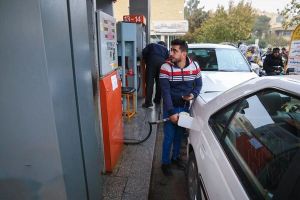
Iran’s government said on Tuesday that the real cost of importing gasoline has climbed to 700,000 rials per liter (about $0.62), far above the heavily subsidized pump prices that remain unchanged.

Government spokesperson Fatemeh Mohajerani said on Tuesday that fuel quotas will stay in place for now, with monthly allocations of 60 liters at 15,000 rials ($0.013) and 100 liters at 30,000 rials ($0.027) continuing as before. 

But she said Iran is being forced to spend $6 billion on gasoline imports this year as consumption soars past domestic output.

“It is natural that when foreign currency that should be used for other priorities is instead spent on gasoline – and some of this gasoline is smuggled – the government is obliged to act,” she said.

Mohajerani added that ministers must protect both the public’s livelihood and the country’s health and safety.

She said the government is preparing “serious programs” to curb fuel smuggling and added that the president has ordered automakers to expand production of low-consumption vehicles. “He made it clear they are required to manufacture more fuel-efficient cars,” she said.

  • Iran’s president says gasoline price hike inevitable, warns of social risks

    Iran’s president says gasoline price hike inevitable, warns of social risks

  • Iran MP warns of four-fold gasoline price rise amid fuel reform debate

    Iran MP warns of four-fold gasoline price rise amid fuel reform debate

  • Iran gearing up for gasoline price hike despite risk of domestic backlash

    Iran gearing up for gasoline price hike despite risk of domestic backlash

Mohajerani also said that officials have examined the inflationary impact of potential adjustments but stressed that no final decision has been made on introducing a third pricing tier, one of several fuel-reform scenarios under discussion.

Her comments come as President Masoud Pezeshkian and senior lawmakers warn that the country cannot maintain ultra-cheap fuel indefinitely. Energy officials say domestic consumption has surged well beyond refining capacity, forcing costly imports and widening the subsidy gap.

Iran’s last major gasoline price hike in 2019 triggered nationwide protests in which at least 1,500 people were killed, according to rights groups and Reuters reporting at the time. The government says any future change will be gradual and tied to broader energy-sector reforms to avoid a repeat of that unrest.

New prices appear in Iran Energy Exchange

A few hours after Mohajerani’s press conference, new signs emerged that Iran is edging toward the higher fuel pricing. 

The Iran Energy Exchange announced it will begin offering premium gasoline as of November 23, with a base price of 658,000 rials per liter (about 58 US cents), and a final settlement price of roughly 750,000 rials (around 67 cents) once additional costs are included. 

The notice – the first such listing for premium fuel – immediately drew attention because the exchange price is more than ten times the current subsidized pump rate, adding to expectations that Tehran is preparing the ground for broader fuel-price reform.

Iran newspaper criticizes conflicting official messaging on possible talks

Nov 17, 2025, 10:06 GMT+0

An Iranian newspaper has warned that inconsistent official messaging over the prospects of renewed talks with the United States is fueling public confusion and undermining trust, arguing that greater transparency would be more effective in managing expectations.

In an editorial published on Monday, the reform-leaning HamMihan newspaper said recent statements by senior Iranian officials had sent mixed signals about diplomacy, creating the impression of “uncertainty and waiting” both inside the government and across society.

The paper said officials repeatedly said that Iran’s strategic positions “are unchangeable,” while also signaling that “they do not want the possibility of positive news to be closed off.” According to HamMihan, this dual approach risks weakening the impact of important developments.

“This pattern of communication has the opposite result and leads to desensitization toward news,” the editorial said. “It makes people more distrustful and increases a sense of hopelessness. Being transparent and straightforward with public opinion has better effects.”

The newspaper highlighted a series of comments made by Foreign Minister Abbas Araghchi and other Iranian diplomats over the past week. HamMihan said that Araghchi initially said “there is currently no possibility” for negotiations because Iran sees “no positive or constructive approach from the United States.” 

However, days later he was quoted as saying that “a request for negotiations has been revived because the military approach failed to achieve what was sought regarding Iran’s nuclear program.”

According to the editorial, such shifts create questions that officials have not answered. “If Iran has not changed its position, what changes has the Foreign Ministry seen in the other side that would make talks possible?” it asked, adding that it remained unclear whether the reference was to the United States or European governments.

HamMihan argued that public expectations had risen after earlier signs of potential diplomacy but were later dashed by a 12-day conflict that halted those efforts. 

With little movement on domestic reforms and no clear pathway on foreign policy, the editorial said the Iranian public and the government are “waiting for news that goes beyond daily headlines.”

The paper wrote: “We would like these talks to begin – serious and result-oriented – but we are concerned that this manner of news reporting lacks sufficient grounding and will make society more disappointed.”

Iran minister sees Persian Gulf water as an option if the crisis deepens

Nov 15, 2025, 07:38 GMT+0

Iran Energy Minister Abbas Aliabadi said using Persian Gulf water for Tehran could be done in an emergency as a last resort, since the long haul and treatment costs make the plan uneconomic in normal times.

Aliabadi said the price of sending desalinated water from the south to the capital was far above what the state could justify in day-to-day planning. “This is not an economic option,” he said, adding that officials “will do whatever is needed” if people’s safety is at risk.

He said Tehran’s water stress meant all workable options had to be reviewed but said some crops consumed water in ways that “do not make economic sense” and should not be supported.

Aliabadi said large desalination sites were being built in Chabahar, Bandar Abbas and Khuzestan to strengthen water supplies in the south and draw in private investment. If those plants ease pressure in the south, he said, water now moved upstream could instead be kept for Tehran and northern areas, though he said this needed detailed study.

Former minister voices strong objection

Former transport minister Abbas Akhoundi criticized the approach, saying it overlooks environmental limits and the long-term cost for the public.

He wrote that the government could not “force nature to bend to machines” and said both capital relocation plans and major desalination transfers misunderstood why Iran faces deep water stress. He said such projects would burden the country without solving the core problem and would mainly benefit contractors.

Water specialists warn Iran is nearing what they describe as water bankruptcy, where use has exceeded supply for years and the reserves that once fed major cities have been depleted.

Kaveh Madani, director of the UN University Institute for Water, Environment and Health, told Eye for Iran that Tehran’s reservoirs are near historic lows and that the capital is approaching “day zero,” when steady tap water can no longer be assumed.

He said if winter rains fall short, daily life in major cities could shift to storage tanks, tanker deliveries and bottled water.

Iran edges toward urban water collapse

Nov 14, 2025, 22:39 GMT+0
•
Negar Mojtahedi

Tehran and other major cities are edging toward water poverty, Dr. Kaveh Madani told Eye for Iran, with millions at risk of relying for their water on tankers trucks as taps begin to run dry.

Madani, director of the UN University Institute for Water, Environment and Health and former deputy head of Iran’s Department of Environment, told Eye for Iran that the country is not going through a normal drought but what he calls water bankruptcy.

This is a condition in which consumption exceeds supply and the reserves built over generations have already been drained.

“We have never seen such a thing,” Madani said. “The people of Tehran, the city that is the richest, most populous and strongest politically, is running out of water, is facing day zero.”

Satellite images and field data show alarming patterns nationwide. Tehran’s five main reservoirs are at some of their lowest recorded levels. Mashhad’s major dams have fallen below 3 percent capacity.

In many regions groundwater has sunk so deep that recovery is unlikely in this generation. The Ministry of Energy has already prepared rationing plans. Some neighborhoods have reported nighttime cuts. Officials have urged households to purchase storage tanks.

But experts stress that households are only a small part of the equation. More than 70 percent of Iran’s 90 million people live in large cities with no mid-size urban centers to absorb population shifts.

Ninety percent of all water use still goes to agriculture, a sector governments have protected for decades under a policy of food self-sufficiency. That choice has prevented water from being redirected toward cities even as the climate has grown hotter and drier.

For decades the state masked scarcity by expanding supply: building dams, drilling deeper wells and pumping water across basins from distant aquifers.

These measures created the illusion that dry regions, including the Tehran plain, could continue to grow. Over time that perception encouraged development and migration beyond what the land could sustain.

Aquifers drained, river exhaustion

With reserves depleted, Iran’s cities have very little left to fall back on.

Madani warns that if winter rains fail life in major cities could shift abruptly. “It means pumps and stores, delivery through tankers, more bottled water instead of tap water, a change of lifestyle.”

At the same time he cautions against mistaking brief rainfall or even seasonal floods for real recovery.

One storm could momentarily refill canals or ease pressure on local networks. But the underlying deficits, from drained aquifers to collapsing river systems, remain unchanged. “These days are real,” Madani said. “And even if in a few months there are floods, we shouldn’t conclude the problem has been resolved forever.”

Years of sanctions and a so-called resistance economy have pushed the state to extract whatever natural resources remain. Environmental reform is costly and slow with benefits that may not appear for a decade.

Asking citizens to cut consumption requires public trust, something the government lacks. Without transparent information about what reserves remain and clear communication about the severity of the crisis, cooperation will remain limited.

There is still a narrow window, Madani says. A few hours of concentrated rainfall could buy cities days. Collective reductions in consumption could buy weeks. But the structural imbalance, too many people and too little water, is now a national reality.

“This is a national security issue,” he said. “It affects every Iranian, no matter who is in charge.”

You can watch the full episode of Eye for Iran on YouTube or listen on any podcast platform of your choosing.