• العربية
  • فارسی
Brand
  • Iran Insight
  • Politics
  • Economy
  • Analysis
  • Special Report
  • Opinion
  • Podcast
  • Iran Insight
  • Politics
  • Economy
  • Analysis
  • Special Report
  • Opinion
  • Podcast
  • Theme
  • Language
    • العربية
    • فارسی
  • Iran Insight
  • Politics
  • Economy
  • Analysis
  • Special Report
  • Opinion
  • Podcast
All rights reserved for Volant Media UK Limited
volant media logo

Water crisis threatens Iran’s stability and global standing, UN expert warns

Nov 10, 2025, 10:10 GMT+0

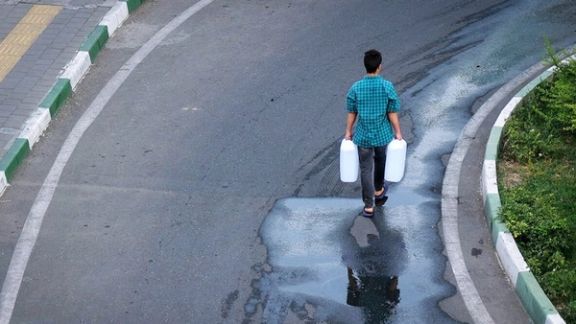
Iran’s worsening water crisis, described by a top United Nations environmental expert as a state of “water bankruptcy,” risks crippling the country’s infrastructure, undermining its stability, and weakening its influence internationally.

Kaveh Madani, Director of the United Nations University Institute for Water, Environment and Health, told Fox News Digital that the crisis was the culmination of decades of environmental mismanagement and overexploitation of resources.

“The water bankruptcy situation was not created overnight,” he said. “The house was already on fire, and people like myself had warned the government for years that this situation would emerge.”

Iran is now facing one of its most severe shortages in decades, with major reservoirs and dams nearing depletion. 

Of the five dams supplying Tehran, one has run dry and another is operating at below 8% capacity, according to recent reports. The energy ministry has already announced evening water cuts to refill reservoirs and urged households to reduce consumption by 20% to avoid mandatory rationing.

“The symptoms were already present, and now the flames are undeniable,” Madani said. “We are discussing Day Zero, when the taps would run dry in Tehran and other cities once immune to shortages.”

He described the situation as the product of “decades of mismanagement, worsened by prolonged drought and climate change,” warning that the ecological collapse was now threatening national security.

“When people are out of water and electricity, you face domestic and national security problems that even Iran’s enemies, not even President Trump or Prime Minister Netanyahu, could have wished for this to happen,” he said.

Ripple effect 

Madani warned that the crisis could have a ripple effect on Iran’s energy and nuclear infrastructure, which depends on stable power and water supplies. 

“If water and electricity shortages persist, any nuclear program would also be impacted,” he said. “Lack of rain means less hydropower generation, leading to both water and power outages.”

He added that the government’s continued defiance of Western powers and its resistance to reform had compounded the environmental strain. 

“If they want to stick to their ideology and fight with the West, they must use their natural resources and burn them,” Madani said. “So if there is no water, there is less resilience and less capacity to resist.”

The crisis, he said, is being aggravated by renewed international sanctions and economic isolation. 

“There were already sanctions in place, imposed by the United States, and there were also Security Council sanctions that, as you know, have been reintroduced,” he said. 

“Iran is in resistance mode, and remaining in this mode means increased pressure on Iran's ecosystem, natural resources, and water, but it also means heightened concerns about food insecurity issues and dependence on food imports.”

Madani concluded that Iran’s water crisis has become a national emergency with global implications. 

“This water bankruptcy weakens Iran on the world stage,” he said. “If there is no water, there is less resilience and less capacity to resist.”
Most Viewed

Ghalibaf defends Iran-US talks amid hardline backlash
1
INSIGHT

Ghalibaf defends Iran-US talks amid hardline backlash

2
VOICES FROM IRAN

Bread shortages, soaring prices strain households in Iran, residents say

3
ANALYSIS

From instability to influence: Pakistan’s pivotal role in US-Iran diplomacy

4
ANALYSIS

100 days on: why Iran’s January protests spread across social classes

5

War-hit homeowners feel abandoned as Iran’s reconstruction aid fades

Banner
Banner

Spotlight

  • Is Iran entering its Gorbachev moment?
    INSIGHT

    Is Iran entering its Gorbachev moment?

  • Iran crackdown reaches cemeteries as graves of slain protesters defaced
    EXCLUSIVE

    Iran crackdown reaches cemeteries as graves of slain protesters defaced

  • Iran diplomacy wobbles as factions compete to avoid looking soft on US
    INSIGHT

    Iran diplomacy wobbles as factions compete to avoid looking soft on US

  • The politics of pink: how Iran uses cuteness to rebrand violence
    ANALYSIS

    The politics of pink: how Iran uses cuteness to rebrand violence

  • Bread shortages, soaring prices strain households in Iran, residents say
    VOICES FROM IRAN

    Bread shortages, soaring prices strain households in Iran, residents say

  • Ghalibaf defends Iran-US talks amid hardline backlash
    INSIGHT

    Ghalibaf defends Iran-US talks amid hardline backlash

  • Tehran denies water ‘rationing,’ calls it nightly pressure cuts

    Tehran denies water ‘rationing,’ calls it nightly pressure cuts

  • Water reserves in Iran’s second-largest city drop below 3%

    Water reserves in Iran’s second-largest city drop below 3%

•
•
•

More Stories

Iranian athlete detained in Tehran over street performance without hijab

Nov 10, 2025, 09:24 GMT+0

A women’s sports coach has been detained in Tehran after performing acrobatic moves in public without wearing a headscarf, a human rights group said on Monday, as Iranian authorities continue to enforce the country’s mandatory hijab law.

The Norway-based Hengaw Organization for Human Rights said security forces arrested Hanieh Shariati Roudposhti, a taekwondo athlete and gymnastics instructor, on Sunday night and took her to an undisclosed location.

The group cited an informed source as saying the arrest was linked to a street performance deemed in violation of public dress regulations. It added that Shariati was allowed a brief phone call with her family after her detention but that her current whereabouts remain unknown.

Hengaw also said that since her arrest, Shariati’s social media accounts – including an Instagram page with about 160,000 followers – had been taken over by security officials and later disabled, displaying a message linked to Iran’s cyber police. 

In recent weeks, senior Iranian officials have repeated calls for stricter enforcement of hijab laws. Iran’s Prosecutor-General Mohammad Movahedi-Azad said on Monday that observing Islamic dress codes was a religious duty and that prosecutors were obliged to act firmly against noncompliance.

Earlier this month, Esfahan’s provincial judiciary chief also urged legal action against what he described as “immodest public behavior.”

Iranian clerics and some government figures have defended the hijab law as a social and religious necessity, while critics say it has become a symbol of broader state control over personal freedoms.

One in seven Iranian adults has diabetes, health official warns

Nov 10, 2025, 08:08 GMT+0

About 14% of Iran’s adult population, roughly 7.5 million people, live with diabetes, and nearly one in three are unaware of their condition, the head of Iran’s Endocrine and Metabolism Research Institute, Bagher Larijani, said on Monday.

Larijani told reporters that 500,000 new cases are added each year, warning that poor diet, obesity, and low physical activity are driving a “growing national health burden.” 

He said diabetes and its complications consume up to 15% of Iran’s healthcare spending and shorten healthy life expectancy by about 300,000 years annually.

He added that 9 million Iranians have pre-diabetes and that only a quarter of treated patients maintain proper glucose control. 

The health ministry, he said, plans to boost public awareness and expand early screening under a new “80-80-80” plan – ensuring 80% of citizens know their status, 80% receive treatment, and 80% achieve stable blood-sugar control.

Water reserves in Iran’s second-largest city drop below 3%

Nov 9, 2025, 23:47 GMT+0

Water reserves in the northeastern Iranian city of Mashhad, the country’s second-largest city and a major religious center with around four million residents, have dropped below 3% of capacity, an Iranian water official said on Sunday.

“The water reserves of Mashhad’s dams have now dropped to below three percent, and although water consumption has somewhat decreased in the cold season, the current situation shows that consumption management is no longer just a recommendation, but an obligation,” managing director of the Mashhad Water and Wastewater Company, said in an interview with the state-affiliated Mehr News Agency.

“Total precipitation in Mashhad county has so far amounted to only 0.4 millimeters, while last year it was around 27 to 28 millimeters,” Hossein Esmaeilian added.

Esmaeilian said the exceptionally low rainfall highlights the worsening state of water resources across northeastern Iran.

Shifting responsibility onto the public

In recent weeks, as the water crisis has worsened, several Iranian officials have blamed the problem on public overconsumption, urging citizens to "pray for rain" and show greater "moral discipline."

Esmaeilian’s remarks came on the same day Iran’s energy minister, Abbas Aliabadi, announced nightly water cuts across the country and urged residents to install home water storage systems.

However, the cost of purchasing and installing home storage systems is beyond the reach of many Iranians, and earlier Iranian media reports said prices for the equipment have risen since the government urged the public to buy them.

Esmaeilian said the top priority now is for residents to save and manage water use to avoid supply disruptions over the next one to two months while hoping for rainfall later in the year.

He added that current water consumption in Mashhad stands at about 8,000 liters per second, of which only between 1,000 and 1,500 liters per second come from the dams.

He said that if residents could reduce their consumption by around 20 percent, it would be possible to manage the situation without water rationing or supply cuts.

Last week, Hassan Hosseini, deputy governor and special governor of Mashhad, said the government is reviewing a water rationing plan and that, if the drought continues, regional rationing will begin before the end of autumn.

Despite repeated warnings from experts over the years, Iran’s water management system has focused on building dams and drilling deep wells instead of investing in and maintaining infrastructure, often blaming the crisis solely on declining rainfall.

Air pollution killed seven Iranians every hour last year, official says

Nov 9, 2025, 17:44 GMT+0

Air pollution caused about 58,975 deaths in Iran in the Iranian calendar year starting in March 2024, equivalent to 161 deaths per day and around seven every hour, the country’s deputy health minister said on Sunday.

Alireza Raisi said the deaths were linked to exposure to fine particulate matter smaller than 2.5 microns, known as PM2.5 — tiny airborne particles that can penetrate deep into the lungs and enter the bloodstream.

“Twenty-three percent were due to ischemic heart disease, 21 percent to lung cancer, 17 percent to chronic obstructive pulmonary disease, 15 percent to stroke, and 13 percent to lower respiratory infections,” he said.

Raisi said the economic damage caused by deaths attributed to air pollution was estimated at about $17.2 billion in 2024.

“These damages are equivalent to $47 million per day," he said.

Raisi said the average daily concentrations of fine particles in the country’s major cities are far higher than the World Health Organization’s permissible limits.

A day earlier, Iran's vice-president for science, technology, and knowledge-based economy Hossein Afshin warned about the consequences of air pollution especially in industrial regions.

Afshin said the central province of Isfahan has the highest number of cancer and multiple sclerosis (MS) patients in the country, adding that the operation of old power plants in the region increases particulate matter and worsens pollution.

“When power plants of this age operate in Isfahan province, the amount of particulate matter in the air also increases,” he said.

Khuzestan province worst hit

Raisi said Ahvaz, a city in southwest Iran, recorded the highest annual average concentration of PM2.5 at 42 micrograms per cubic meter — about eight times the WHO guideline of 5 micrograms per cubic meter — followed by Isfahan, Tehran, and Arak.

In Khuzestan province, air pollution killed 1,624 people over the past year and caused $427 million in health-sector losses, according to Mehrdad Sharifi, deputy for health at Ahvaz Jundishapur University.

He said the air in the cities of Ahvaz, Dasht-e Azadegan, and Hoveyzeh had been healthy for only two days in recent months, adding that 22,000 patients sought hospital treatment in October due to pollution-related illnesses.

Khuzestan’s deputy governor said on Sunday that schools in most cities of the province will remain online until around mid-November, while high schools will continue in person.

Calls to ban old vehicles, invest in cleaner energy, and empower a central environmental authority have so far gone unanswered. Critics warn that without systemic change, major cities including Tehran will continue to suffer both in air quality and human lives.

Tehran denies water ‘rationing,’ calls it nightly pressure cuts

Nov 9, 2025, 16:25 GMT+0

Iran’s National Water and Wastewater Company on Sunday rejected reports of imposing formal rationing in Tehran but admitted nightly pressure cuts citywide that may fall to zero amid worsening shortages, state media reported.

"No water rationing — the scheduled and announced distribution and supply of water on a rotating basis — has so far been implemented in Tehran or any other city in the country," the Revolutionary Guards-affiliated Fars News reported citing the National Water and Wastewater Company.

Energy Minister Abbas Aliabadi on Sunday called the nightly pressure cuts a temporary management tool to stabilize the city’s aging water network and reduce leakage. Similar steps taken during the summer, he said, conserved significant volumes.

The measure, in effect from midnight until early morning, is designed to conserve supplies and reduce network losses, the spokesperson for Iran’s water industry, Issa Bozorgzadeh, said.

“We lower water pressure from midnight until around dawn to reduce urban leakage and allow reservoirs to refill,” he said.

The energy minister said on Saturday “Tehran's water pipeline system is more than 100 years old and worn-out."

"During the 12-day war (with Israel in June), the pipelines also suffered damage, which further added to the deterioration. We are sometimes forced to reduce water pressure to zero on certain nights.”

Residents report repeated disruptions

Households across eastern and northern Tehran have reported recurring water cuts and sharp pressure drops in recent nights, according to IRNA. Residents told the outlet that the disruptions have become routine. Many apartment buildings have installed small pumps and storage tanks to mitigate the problem, while others without such systems face hours-long outages.

Inflow to Tehran’s dams has dropped by 43 percent compared with the previous water year, Behzad Parsa, managing director of the Tehran Regional Water Company, told IRNA. Parsa described the situation as unprecedented in decades, attributing it to a 100-percent decrease in rainfall in Tehran province compared with long-term averages.

100%

Expert links crisis to long-term relocation plans

President Masoud Pezeshkian’s repeated focus on Tehran’s water crisis serves two purposes, Water and environmental expert Mohsen Mousavi-Khansari wrote in a piece on Etemad daily.

“The first is to encourage conservation among citizens and to prompt coordinated planning among agencies responsible for water supply, distribution, and use. The second is to prepare public opinion in Tehran and other major cities on the central plateau for the eventual transfer of part of the population and infrastructure toward Iran’s southern coasts.”

He linked this to Pezeshkian’s proposal to relocate the capital to the Makran region.