• العربية
  • فارسی
Brand
  • Iran Insight
  • Politics
  • Economy
  • Analysis
  • Special Report
  • Opinion
  • Podcast
  • Iran Insight
  • Politics
  • Economy
  • Analysis
  • Special Report
  • Opinion
  • Podcast
  • Theme
  • Language
    • العربية
    • فارسی
  • Iran Insight
  • Politics
  • Economy
  • Analysis
  • Special Report
  • Opinion
  • Podcast
All rights reserved for Volant Media UK Limited
volant media logo

US offered to halt snapback sanctions in exchange for ending nuclear enrichment, MP says

Nov 6, 2025, 13:40 GMT+0
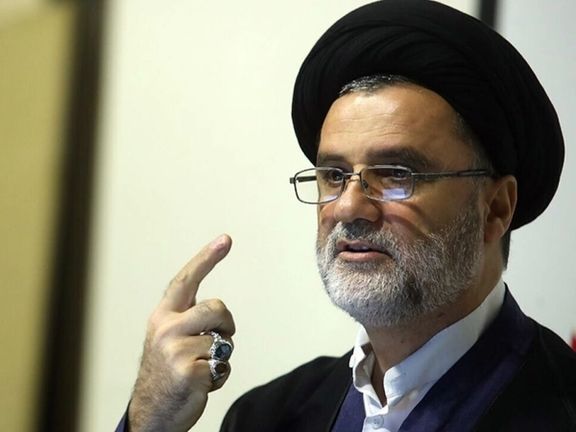
Iranian lawmaker Mahmoud Nabavian

Iranian lawmaker Mahmoud Nabavian said the United States had proposed preventing the reimposition of snapback sanctions in exchange for Tehran halting all nuclear activities, including uranium enrichment at 20% and 60%.

Nabavian, deputy head of parliament’s National Security and Foreign Policy Committee, told an academic forum in Qom on Thursday that “the real goal of the Americans is to disarm Iran technologically and scientifically.”

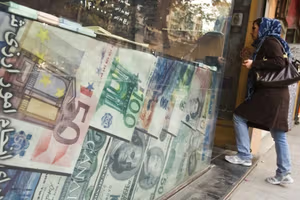
He added Washington sought to trigger snapback sanctions to collapse Iran’s economy and drive the national currency to 1,500,000 rials to the dollar but said “the plan failed due to the vigilance of the country’s security and economic authorities.”

Today, the exchange rate is about 1,080,000 rials per dollar.

Nabavian said the United States uses calls for negotiations as a tool to pressure Iran and that “none of America’s promises have ever been sincere.” 

He described Washington and Israel as “pursuing domination in the region” and said Iran’s nuclear program remains peaceful.

Nabavian added that future conflicts in the region would differ from the recent 12-day war, with adversaries likely to use economic and internal destabilization efforts before any direct confrontation.

Most Viewed

Ghalibaf defends Iran-US talks amid hardline backlash
1
INSIGHT

Ghalibaf defends Iran-US talks amid hardline backlash

2
INSIGHT

A nation in limbo: 100 days after the massacre, has the world moved on?

3
ANALYSIS

From instability to influence: Pakistan’s pivotal role in US-Iran diplomacy

4
ANALYSIS

100 days on: why Iran’s January protests spread across social classes

5

War-hit homeowners feel abandoned as Iran’s reconstruction aid fades

Banner
Banner

Spotlight

  • War-hit homeowners feel abandoned as Iran’s reconstruction aid fades

    War-hit homeowners feel abandoned as Iran’s reconstruction aid fades

  • 100 days on: the anatomy of Iran’s January crackdown
    INSIGHT

    100 days on: the anatomy of Iran’s January crackdown

  • Ghalibaf defends Iran-US talks amid hardline backlash
    INSIGHT

    Ghalibaf defends Iran-US talks amid hardline backlash

  • 100 days on: why Iran’s January protests spread across social classes
    ANALYSIS

    100 days on: why Iran’s January protests spread across social classes

  • From instability to influence: Pakistan’s pivotal role in US-Iran diplomacy
    ANALYSIS

    From instability to influence: Pakistan’s pivotal role in US-Iran diplomacy

  • A nation in limbo: 100 days after the massacre, has the world moved on?
    INSIGHT

    A nation in limbo: 100 days after the massacre, has the world moved on?

  • Sanctions snapback on Iran is about compliance, not politics

    Sanctions snapback on Iran is about compliance, not politics

  • Iran sanctions snapback heralds suffering, possible war

    Iran sanctions snapback heralds suffering, possible war

  • Sanctions snapback augurs deeper pain for Iran's ailing economy

    Sanctions snapback augurs deeper pain for Iran's ailing economy

•
•
•

More Stories

Iran’s president tells Macron Iran not seeking nuclear weapons

Nov 5, 2025, 14:06 GMT+0

Iranian President Masoud Pezeshkian told French President Emmanuel Macron that Iran’s nuclear program is peaceful and that Tehran is not seeking to obtain nuclear weapons, Iranian state media said on Wednesday.

The two leaders held a phone call to discuss the future of nuclear diplomacy and regional tensions. According to Iranian reports, Pezeshkian said Iran’s defense doctrine and a religious decree by the country’s Supreme Leader forbid the pursuit of nuclear arms.

He said Tehran continues to support diplomatic dialogue but added that “Western governments must respect Iran’s rights and avoid imposing unilateral demands.” Pezeshkian also said the use of pressure and threats “only widens differences and undermines opportunities for understanding.”

The Élysée Palace said Macron spoke with Pezeshkian to call for the “full and complete release” of Cécile Kohler and Jacques Paris, who were granted conditional freedom after three years in detention. It said the French president had also spoken earlier in the day with the two nationals and urged that they be allowed to leave Iran as soon as possible.

France announced on Tuesday that Kohler and Paris had been freed from Evin prison in Tehran and were at the French Embassy but not permitted to leave the country. Iranian Foreign Minister Abbas Araghchi said they were released under Islamic clemency and remain in Iran.

Araghchi also said Mahdieh Esfandiari, an Iranian student conditionally released by France last month after being detained over anti-Israel social media posts, is now at Iran’s embassy in Paris.

Iranian MPs urge legal action against Trump, Netanyahu and Grossi

Nov 5, 2025, 11:02 GMT+0

Seventy-six Iranian lawmakers urged the justice minister on Wednesday to file international complaints against US President Donald Trump, Israeli Prime Minister Benjamin Netanyahu and Rafael Grossi, head of the UN atomic watchdog.

Lawmakers said Iran must pursue official complaints before international courts over what they called crimes committed against the Iranian nation, according to state media.

They did not give details of the complaints, but Iran has previously accused Grossi of political bias and of failing to condemn US and Israeli airstrikes on Iranian nuclear sites in June.

Earlier this year, hardline media called for Grossi’s arrest and execution, while a senior judiciary official said he could face trial in absentia for “deceptive actions.” Tehran has accused the International Atomic Energy Agency of sharing sensitive nuclear data with Israel and the United States.

The appeal came a day after parliament marked the anniversary of the 1979 seizure of the US Embassy in Tehran, when lawmakers chanted “Death to America” and “Death to Israel.” During that session, Deputy Speaker Ali Nikzad said Iran would not yield to foreign pressure and accused Washington of decades of interference.

'No plan for US talks'

Tensions between Tehran and Washington remain high after a June conflict that saw US and Israeli strikes on Iranian nuclear facilities. Iranian Foreign Minister Abbas Araghchi said on Wednesday that any possible future talks with the United States would only concern the nuclear issue, adding that Tehran currently has no plans to hold talks with Washington.

Iran’s Foreign Ministry last week confirmed that messages between Tehran and Washington continue through intermediaries but said they do not amount to negotiations.

Iran’s parliament, dominated by conservatives, has repeatedly pressed the government to hold Western leaders accountable for sanctions and military actions. Lawmakers said the justice minister should take the lead in pursuing such complaints through international tribunals.

Iran says any possible talks with US would focus only on nuclear issue

Nov 5, 2025, 09:13 GMT+0

Any possible talks between Iran and the United States would be limited to the nuclear file, Foreign Minister Abbas Araghchi said on Wednesday.

Speaking after a cabinet meeting in Tehran, Araghchi said Washington had often raised missile and regional topics in past discussions, but Iran’s position was unchanged. “If there are talks with the US, they will only concern the nuclear issue,” he said.

Araghchi also added that Tehran currently has no plans for talks with the US and therefore sees no need for mediation.

Earlier this month, Araghchi told Al Jazeera that Iran would not stop uranium enrichment or hold talks over its missile program and warned that any new Israeli attack would have “bad consequences.”

He said Iran managed the June conflict with Israel effectively and prevented it from spreading to the wider region. The minister said several nuclear sites were damaged but that enrichment technology remained intact and nuclear material was still located at the bombed facilities.

  • Araghchi says Israel duped US on Iran threat, urges Trump to reverse course

    Araghchi says Israel duped US on Iran threat, urges Trump to reverse course

  • Araghchi says Iran will not halt uranium enrichment or negotiate on missiles

    Araghchi says Iran will not halt uranium enrichment or negotiate on missiles

On Sunday, Araghchi accused Israel of misleading Washington with what he called a fabricated nuclear threat and urged President Donald Trump to change course. He said Israel and the US attacked Iranian nuclear sites under “false pretenses” and cited comments from the UN atomic watchdog and Oman’s foreign minister confirming that Iran was not developing nuclear weapons.

Araghchi said Tehran’s nuclear work remains peaceful and that diplomacy, not confrontation, guides its policy. He added that Iran and Oman hold regular consultations every six months, alternating between Tehran and Muscat.

The United States and Israel launched strikes on Iranian facilities in June after talks over Tehran’s nuclear program collapsed. A ceasefire ended the 12-day conflict, but inspections of damaged sites remain suspended under Iranian law.

UN watchdog presses Iran to restore nuclear site access

Nov 5, 2025, 08:23 GMT+0

Iran must make a serious improvement in its cooperation with United Nations nuclear inspectors to prevent further escalation with Western powers, International Atomic Energy Agency (IAEA) chief said, the Financial Times reported on Wednesday.

Rafael Grossi told the newspaper that although the IAEA has conducted roughly a dozen inspections in Iran since its June conflict with Israel, inspectors have not been allowed to access key nuclear sites -- including Fordow, Natanz, and Isfahan -- which were bombed during US airstrikes.

The agency chief said the IAEA was maintaining dialogue with Tehran despite “bumpy” relations but warned that Iran remained bound by its obligations under the Nuclear Non-Proliferation Treaty (NPT).

“You cannot say, ‘I remain within the non-proliferation treaty,’ and then not comply with obligations,” Grossi was quoted as saying. “Otherwise, what I will have to do is report that I have lost all visibility of this material.”

Grossi added that while some movement had been detected near Iran’s enriched uranium stockpiles in October, it did “not imply that there is activity on enrichment.” 

Iranian officials dismissed his comments at the time, accusing the IAEA of spreading “unfounded opinions.” 

Foreign Ministry spokesperson Esmail Baghaei said Grossi was “fully aware of the peaceful nature” of Iran’s nuclear program.

Tehran has also blamed the IAEA for allegedly giving Israel a pretext to attack its facilities, after the agency’s board voted in June to declare Iran in violation of its NPT commitments.

Western diplomats have voiced growing concern over the IAEA’s limited visibility into Iran’s nuclear activities following the strikes and subsequent restrictions on inspections. 

Tehran’s nuclear rhetoric fuels fears of renewed conflict

Nov 4, 2025, 15:25 GMT+0
•
Behrouz Turani

Combative comments by senior officials in Tehran about Iran’s nuclear program have drawn sharp criticism at home and abroad, with analysts warning that the rhetoric makes another round of war on Iran more likely.

During a visit to a nuclear facility on November 2, President Masoud Pezeshkian declared that “Iran will resume its nuclear activity with renewed force,” while reiterating that the country does not seek to build a nuclear bomb.

On the same day, Mohammad Javad Larijani, a former senior adviser to the Supreme Leader and brother of Tehran’s security chief, made an even more provocative claim: “Iran can make a nuclear bomb in a matter of two weeks.”

Though both later walked back their remarks, saying Iran has no intention of producing a bomb, critics argue the damage was done.

The statements, they say, reinforce suspicions among world powers about Tehran’s intentions and could provoke preemptive action from Israel or the United States.

‘Iran and North Korea only’

One of the strongest cautions came from prominent economist Kamal Athari, who questioned the rationale behind such statements in an interview with the moderate daily Arman Melli on Monday.

“In the entire world, only two governments seem to want war for war’s sake: North Korea and a certain faction in Iran. The rest of the world approaches war as an unwanted extension of politics, grounded in national interest,” Athari said.

While criticizing Pezeshkian’s comments, Athari pointed to deeper forces that few dare mention publicly inside Iran.

“(Pezeshkian) inherited only the saddle of the previous government’s dead horse,” he said. “Both the nation and the broader establishment chose him over others merely sitting in the shadow of that saddle, each hoping he would rescue them from the mess they helped create.”

‘No exit strategy’

Some observers believe Pezeshkian’s comments are intended to delay direct or indirect negotiations with the United States—perhaps in the hope that Israeli Prime Minister Benjamin Netanyahu will be unseated in the next election, or that President Trump will lose interest in confronting Iran.

Others see the remarks as symptoms of deeper indecision within the government. In the absence of a coherent strategy, officials appear to shift positions daily—evident in the government’s changing stance on talks with Washington between November 1 and 3.

Political commentator Namvar Haghighi told Iran International, “Iran currently has neither a roadmap forward nor an exit strategy from its crises. The president should be mindful of this before making sweeping declarations about nuclear activity.”

Since Israel’s 12-day war with Iran in June, Tehran has faced mounting setbacks: loss of control over parts of its airspace, restricted access to foreign-held financial assets including cryptocurrencies, and a unified European front aligning more closely with the United States on Iran’s nuclear and missile programs.

Pezeshkian appears either unaware—or unwilling to recognize—that the geopolitical landscape has shifted dramatically since the war.