• العربية
  • فارسی
Brand
  • Iran Insight
  • Politics
  • Economy
  • Analysis
  • Special Report
  • Opinion
  • Podcast
  • Iran Insight
  • Politics
  • Economy
  • Analysis
  • Special Report
  • Opinion
  • Podcast
  • Theme
  • Language
    • العربية
    • فارسی
  • Iran Insight
  • Politics
  • Economy
  • Analysis
  • Special Report
  • Opinion
  • Podcast
All rights reserved for Volant Media UK Limited
volant media logo

Iran faces reform paralysis on fuel and exchange rates, lawmaker says

Nov 6, 2025, 09:42 GMT+0Updated: 12:53 GMT+0
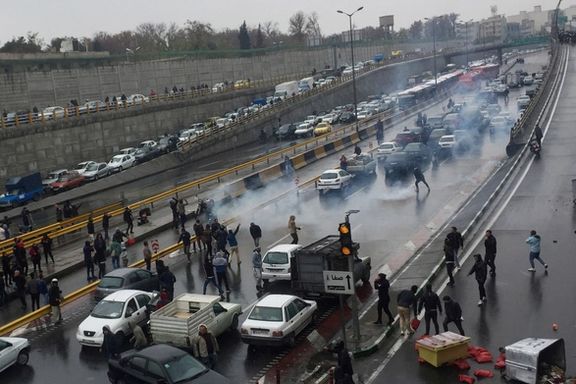
A scene of a protest on a highway in Tehran after the government raised fuel prices in 2019

An Iranian lawmaker said policymakers lack the resolve to take long-delayed decisions on subsidized petrol, bread and exchange rates, urging the government to settle the issues and adopt a single foreign-exchange rate.

Mohsen Zanganeh, a member of parliament’s Plan and Budget Committee, said “no one has the courage to decide” on key price and currency reforms and that “there is no choice but unification” of exchange rates, adding he was willing to accept responsibility for such a move, local media reported.

He said unresolved policy cases had been passed from one administration to the next and called on President Masoud Pezeshkian to close them to reduce public uncertainty. 

Zanganeh also criticized reluctance to address fuel pricing, saying prolonged debate without action burdens the economy, and argued the president can consolidate or remove budgets for subordinate agencies without new legislation.

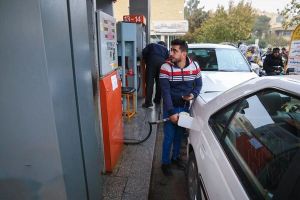
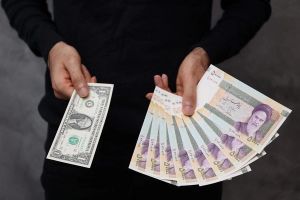
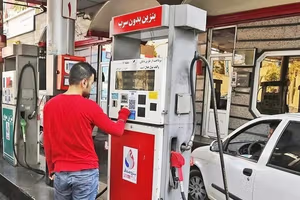
Iran maintains heavily subsidized fuel and multiple exchange-rate windows; previous efforts to unwind them have stoked inflation and unrest.

Most Viewed

Ghalibaf defends Iran-US talks amid hardline backlash
1
INSIGHT

Ghalibaf defends Iran-US talks amid hardline backlash

2
ANALYSIS

From instability to influence: Pakistan’s pivotal role in US-Iran diplomacy

3
ANALYSIS

100 days on: why Iran’s January protests spread across social classes

4

War-hit homeowners feel abandoned as Iran’s reconstruction aid fades

5
INSIGHT

100 days on: the anatomy of Iran’s January crackdown

Banner
Banner

Spotlight

  • The politics of pink: how Iran uses cuteness to rebrand violence
    ANALYSIS

    The politics of pink: how Iran uses cuteness to rebrand violence

  • Bread shortages, soaring prices strain households in Iran, residents say
    VOICES FROM IRAN

    Bread shortages, soaring prices strain households in Iran, residents say

  • War-hit homeowners feel abandoned as Iran’s reconstruction aid fades

    War-hit homeowners feel abandoned as Iran’s reconstruction aid fades

  • 100 days on: the anatomy of Iran’s January crackdown
    INSIGHT

    100 days on: the anatomy of Iran’s January crackdown

  • Ghalibaf defends Iran-US talks amid hardline backlash
    INSIGHT

    Ghalibaf defends Iran-US talks amid hardline backlash

  • From instability to influence: Pakistan’s pivotal role in US-Iran diplomacy
    ANALYSIS

    From instability to influence: Pakistan’s pivotal role in US-Iran diplomacy

  • Iran’s president says gasoline price hike inevitable, warns of social risks

    Iran’s president says gasoline price hike inevitable, warns of social risks

  • Inside Iran’s maze of multiple exchange rates

    Inside Iran’s maze of multiple exchange rates

  • Energy reform key to Iran’s economic recovery, speaker says

    Energy reform key to Iran’s economic recovery, speaker says

•
•
•

More Stories

Detained economist had linked rise of Tehran ultra-hardliners to Khamenei

Nov 6, 2025, 02:00 GMT+0
•
Behrouz Turani

An Iranian economist detained this week had suggested that Supreme Leader Ali Khamenei helped empower the country's ultra-hardliners, in remarks that quickly drew Tehran's ire and underscored a widening clampdown on critical voices.

Mohammad Maljoo, a left-leaning scholar and prominent public intellectual, was summoned and detained alongside several other left-leaning authors and researchers a few days after a YouTube debate in which he discussed the roots of extremism in Iran.

In the program, hosted and published by moderate outlet Entekhab, Maljoo argued that “extremists in Iran gained a foothold in the political power center after the war with Iraq in the late 1980s and under the second leadership, when they were given institutional backing that empowered and activated them.”

The phrase “second leadership” was widely understood as a reference to Khamenei, who became Supreme Leader after Ayatollah Ruhollah Khomeini’s death in 1989.

Rights observers said his arrest fits a pattern of detentions targeting academics, journalists, and intellectuals in recent weeks, as authorities seek to contain public debate in the aftermath of Iran’s 12-day war with Israel.

‘At the state’s core’

Before the program aired, participants had agreed to use the term extremist to describe hardliners who obstruct dialogue and disrupt normal political and social life.

Maljoo contended that these forces survive because of their relationship with the ruling elite.

“Without backing from the hard core of the government, extremists would not be heard,” he said, adding that Iran’s central power structure is “neither interested in, nor capable of excluding them.”

He described extremists as pressure groups acting on behalf of the power center while occasionally defying it. Their proximity to power, he said, “turns every outburst into an official directive.”

In return for enforcing ideological red lines—such as mandatory hijab, censorship, and control over key state appointments—they gain “wealth, status, and legitimacy.”

The interview aired as small hardline groups in Tehran were demanding the arrest of former president Hassan Rouhani, accusing him of “creating trouble for the government” after he called for renewed engagement with the West to ease economic pressures.

‘Foolish or traitor’

The other participant in the discussion, conservative political scientist Sadeq Haghighat of the Imam Khomeyni Research Center, largely concurred.

“Extremists are either foolish or traitors,” he said, adding that they seized control of the political arena soon after the 1979 revolution and later justified their dominance through ultraconservative cleric Ayatollah Mohammad-Taghi Mesbah-Yazdi, who taught that rulers need no public legitimacy once they control the state.

Haghighat traced the roots of extremism to Iran’s enduring political culture. “Regime changes—from Qajar to Pahlavi to the Islamic Republic—did not change the behavior of extremists,” he said.

Maljoo, for his part, argued that the ruling establishment occasionally tries to restrain extremists when their demands threaten stability.

“At times, the power center encourages moderates and reformists to push back,” he said. “But extremists are never satisfied and constantly seek more.”
British activist Tommy Robinson pledges to burn Khamenei's image

Nov 5, 2025, 18:10 GMT+0

British activist Tommy Robinson vowed to burn an image of Iran's Supreme Leader as anti-government activists plan to perform the protest on Friday in solidarity with a man found dead in Iran after filming himself doing so.

Robinson appeared on the YouTube channel Tousi TV on Tuesday, where host Iranian-American host Mahyar Tousi relayed a request from an audience member for the outspoken activist to take part in the symbolic act against Ali Khamenei.

"Print a big picture of the scumbag, and I will happily burn it," said Robinson, 42, an anti-migration activist whose legal name is Stephen Yaxley-Lennon.

Iranians on social media have launched a campaign to burn Khamenei's image after Omid Sarlak was found dead in a car in the city of Aligoudarz in western Iran on Sunday.

His death came shortly after posting a video of himself burning a picture of the 86-year-old theocrat with a speech by Iran's last shah playing in the background.

Local police described it as a suicide, but family members and rights activists blamed authorities. The United States on Wednesday called the death "suspicious" and suggested Tehran was responsible.

His death came as senior Iranian clerics renewed calls for severe punishment of those who insult or threaten the Supreme Leader, which is a crime in the Islamic theocracy.

One prominent official said such acts amount to "waging war against God" and warrant the death penalty.

Robinson was cleared by a UK court on Tuesday on charges relating to his refusal to provide the PIN for his mobile phone to investigators, which is an offence under counterterrorism laws.

He thanked Elon Musk, the world's richest man and in recent years a strong advocate of right-wing commentators, saying the owner of the X social media platform paid his legal fees.

Iran lawmaker says ‘VPN mafia’ blocking move to lift Telegram ban

Nov 5, 2025, 12:51 GMT+0

An Iranian lawmaker said economic interests tied to the sale of virtual private networks are working to keep internet filtering in place and that lawmakers are pursuing an inquiry into the pressure campaign, according to an interview published by Rouydad24.

Mostafa Pourdehghan, secretary of parliament’s Industries and Mines Committee, said talks with Telegram have been under way and that officials had hoped to restore access this week before differences delayed the step. 

“We have received information indicating repeated consultations with Telegram’s managers,” he told Rouydad24. “Some colleagues at the Communications Ministry have unofficially told us Telegram will be unblocked soon.”

He framed removing the filtering as a public demand and said resistance was coming from outside the legislature, what he described as "VPN mafia." 

“The financial turnover of VPNs is about 50 trillion tomans (about $450 million), and beneficiaries hide behind sacred slogans such as national security to profit from continued filtering,” he said. 

  • Iran officials demand concessions to unblock Telegram but use it themselves

    Iran officials demand concessions to unblock Telegram but use it themselves

  • Iran’s parliament speaker denies government reached deal with Telegram

    Iran’s parliament speaker denies government reached deal with Telegram

Pourdehghan added that a parliamentary “investigation and inspection into the backstory of these pressures” is being advanced with the communications minister.

The debate has intensified amid reports of negotiations over conditions for lifting the 2018 ban on Telegram, which remains widely used via VPNs. 

State-linked outlets have said Tehran wants commitments including cooperation with the judiciary on data requests, limits on content deemed to incite ethnic tensions, and measures against material considered to threaten national security.

Parliament Speaker Mohammad Bagher Ghalibaf has rejected reports that the government reached a deal with the platform. 

“If a platform does not accept internal regulations, it will not receive a license,” he told lawmakers, calling reports of an agreement false. 

President Masoud Pezeshkian campaigned on easing internet restrictions, but officials have said any change must be approved by the Supreme Council of Cyberspace and tied to compliance with domestic rules.

US calls death of Iranian man who burned Khamenei photo suspicious

Nov 5, 2025, 09:28 GMT+0

The United States on Wednesday called the death by gunshot of a young Iranian man after he had filmed himself burning a photo of Supreme Leader Ali Khamenei suspicious and suggested the state was involved.

"The United States strongly condemns the tragic death of Omid Sarlak, a young Iranian man whose body was found riddled with bullets in the city of Aligudarz shortly after he posted an anti-regime message online," the US State Department said on its Persian language account on X.

Sarlak was found dead in a car in the city of Aligoudarz in Western Iran after he shared a video of himself burning a picture of the 86-year-old theocrat with a speech of Iran's last shah playing in the background.

"The suspicious timing and circumstances surrounding the incident strongly suggest regime involvement," it added.

Authorities said his death was a suicide, but family members and rights activists have rejected the explanation.

"This is yet another example of the Iranian regime’s brutal repression of dissent and its ongoing campaign to silence those who dare to speak out against it," the State Department added. "The United States stands firmly with the Iranian people in their struggle for justice, dignity, and freedom."

  • Crowds chant ‘Death to Khamenei’ at funeral of man who burned leader’s photo

    Crowds chant ‘Death to Khamenei’ at funeral of man who burned leader’s photo

  • Young man found dead after posting video burning Khamenei's photo

    Young man found dead after posting video burning Khamenei's photo

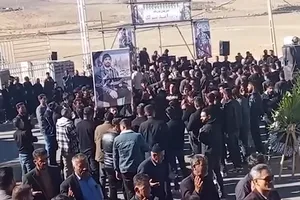
Videos from Sarlak’s funeral on Monday showed crowds chanting “Death to Khamenei” in one of the largest public outpourings of anti-government anger in recent months.

His death came as senior Iranian clerics renewed calls for severe punishment of those who insult or threaten the Supreme Leader, with one prominent official saying such acts amount to “waging war against God” and warrant the death penalty.

Iranian cleric says threats against Khamenei deserve death penalty

Nov 5, 2025, 04:59 GMT+0

A senior Iranian cleric said on Tuesday that threatening Supreme Leader Ali Khamenei should carry a death sentence, days after a young man died in Western Iran after filming himself burning the 86-year-old theocrat's photo.

"Any threat against the supreme leader is waging war on God, which carries a death sentence," Ahmad Khatami, a member of Iran's Assembly of Experts, said in a speech in Tehran.

Omid Sarlak was found dead in a car in western Iran on Saturday, shortly after posting a video of himself burning a photo of Khamenei. Police called it a suicide, but his family said he was killed by the state.

Mourners in city of Aligoudarz on Monday chanted slogans against Khamenei during Omid’s funeral.

In recent days, some ultra-conservative figures in Iran have called for tough sentences to curb social unrest.

"The sentence for someone who rejects the hijab is execution. If the martyrs were here today, they would skin alive those who stripped themselves bare with the slogan 'Woman, Life, Freedom,'" Hassan Hassannia, a former Islamic Revolutionary Guard Corps (IRGC) commander, said on Saturday.

Islamic Penal Code provisions for insulting the Islamic Republic's leader prescribe six months to two years in prison.

In the latest example of such imprisonment sentences, Forough Khosravi, a primary school teacher from Behbahan, was sentenced to 15 years in prison by the city's Revolutionary Court.

Two years of her sentence were for "insulting the leader" and two years for "insulting the founder of the Islamic Republic."