• العربية
  • فارسی
Brand
  • Iran Insight
  • Politics
  • Economy
  • Analysis
  • Special Report
  • Opinion
  • Podcast
  • Iran Insight
  • Politics
  • Economy
  • Analysis
  • Special Report
  • Opinion
  • Podcast
  • Theme
  • Language
    • العربية
    • فارسی
  • Iran Insight
  • Politics
  • Economy
  • Analysis
  • Special Report
  • Opinion
  • Podcast
All rights reserved for Volant Media UK Limited
volant media logo

Canadian immigration agency blocks deportation of former Iranian official

Mahsa Mortazavi
Mahsa Mortazavi

Iran International

Sep 29, 2025, 19:48 GMT+1Updated: 00:33 GMT+0

A Canadian move to deport a former Iranian roads official working as an Uber driver over his previous work has been rejected an immigration review body for his lack of seniority in Tehran's ruling apparatus.

The Immigration and Refugee Board of Canada (IRB) ruled on August 12, 2025 to reject a Canada Border Services Agency (CBSA) application to deport Afshin Pirnoon.

Documents related to his case, shared with Iran International by Global News, indicate Ottawa's push to deport former Iranian officials faces a high evidentiary bar.

Canada's government barred entry and residency for “senior officials” of the Islamic Republic in 2022 citing accusations Tehran is a state-sponsored terrorism and systematic human rights abuser.

The policy aims also to prevent the risk of so-called transnational repression by Iran or its agents among Canada's sizable Iranian diaspora community. It tasks CBSA with cases of people it deems inadmissible to Canada to the IRB for review.

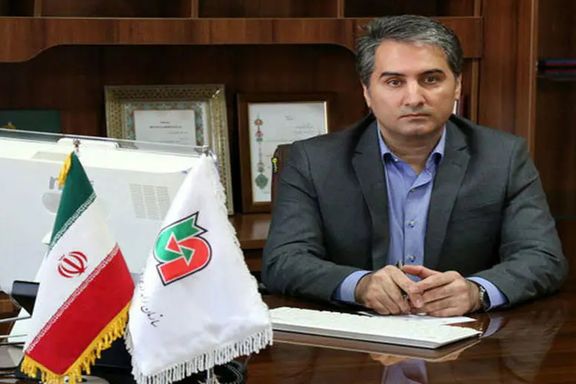
Pirnoon, worked as a civil engineer and Director-General of the Road Maintenance Office at Iran’s Road Maintenance and Transportation Organization for 22 years.

The IRB found he did not to meet the statutory definition of an Iranian “senior official” or to have “significant influence over the exercise of government power," therefore the legal requirement for his being deemed inadmissible was not met.

Pirnoon came to Canada on a tourist visa in 2022 and was working as an Uber driver when the Canada Border Services Agency launched deportation proceedings.

Three-year track record

Official data indicates that 23 individuals have been identified as suspected senior Iranian officials and 21 cases have been referred to the IRB.

But only three removal orders have been issued, with just one removal carried out to date, though some have departed voluntarily.

Canada has previously referred identified Iranian officials in the country to the IRB to assess their status and determine whether they qualify as “senior officials.”

These include Majid Iranmanesh, a former director-general in the Vice-Presidency for Science and Technology, whom the IRB found to be a senior official and ordered removed on February 2, 2024.

Another was Seyed Salman Samani, former deputy minister and spokesperson of Iran’s Interior Ministry, who received a removal order on March 20, 2024.

By contrast, in several other cases—including Pirnoon’s—the IRB has found that an official position alone, attendance of official ceremonies or routine administrative duties do not prove actual influence over policymaking or the exercise of power.

The record suggests that while the government and security agencies stress threats linked to transnational repression and public-safety imperatives, the evidentiary threshold for proving seniority and influence before the IRB remains high.

Most Viewed

Ideology may be fading in Iran, but not in Kashmir's ‘Mini Iran'
1
INSIGHT

Ideology may be fading in Iran, but not in Kashmir's ‘Mini Iran'

2
INSIGHT

Hardliners push Hormuz ‘red line’ as US blockade tests Iran’s leverage

3
VOICES FROM IRAN

Hope and anger in Iran as fragile ceasefire persists

4

Iran International says it won’t be silenced after London arson attack

5

US sanctions oil network tied to Iranian tycoon Shamkhani

Banner
Banner

Spotlight

  • Hardliners push Hormuz ‘red line’ as US blockade tests Iran’s leverage
    INSIGHT

    Hardliners push Hormuz ‘red line’ as US blockade tests Iran’s leverage

  • Ideology may be fading in Iran, but not in Kashmir's ‘Mini Iran'
    INSIGHT

    Ideology may be fading in Iran, but not in Kashmir's ‘Mini Iran'

  • War damage amounts to $3,000 per Iranian, with blockade set to add to losses
    INSIGHT

    War damage amounts to $3,000 per Iranian, with blockade set to add to losses

  • Why the $100 billion Hormuz toll revenue is a myth
    ANALYSIS

    Why the $100 billion Hormuz toll revenue is a myth

  • US blockade targets Iran oil boom amid regional disruption
    ANALYSIS

    US blockade targets Iran oil boom amid regional disruption

  • Iran's digital economy battered by prolonged blackout
    INSIGHT

    Iran's digital economy battered by prolonged blackout

•
•
•

More Stories

UN experts condemn Iran’s ‘industrial-scale’ executions

Sep 29, 2025, 16:23 GMT+1

UN experts expressed alarm on Monday at what they called an “unprecedented” surge in executions after over 1,000 people were put to death so far this year, warning they likely violated international law.

“The sheer scale of executions in Iran is staggering and represents a grave violation of the right to life,” human rights experts appointed by the United Nations Human Rights Council, including Special Rapporteur on the situation of human rights in Iran, Mai Sato, said in a statement.

“With an average of more than nine hangings per day in recent weeks, Iran appears to be conducting executions at an industrial scale that defies all accepted standards of human rights protection.”

At least 1,000 executions have been documented since January. Most were for drug-related offences and murder, followed by security-related charges and rape. Among those executed were at least 58 Afghans, including 57 men and one woman.

“The extensive use of the death penalty for drug-related offences is particularly alarming,” the experts said, adding that 499 people were executed for such crimes this year—far higher than the 24 to 30 executions annually recorded between 2018 and 2020.

They said the 2017 amendment to Iran’s anti-drug law, initially seen as progress for limiting the death penalty, has been effectively reversed, with executions surging again after 2021.

International law restricts capital punishment to the “most serious crimes,” interpreted as intentional murder, they added, stressing that drug offences do not meet that threshold.

Executions disproportionately impact marginalised communities from ethnic minority backgrounds, many of whom face confiscation of homes and farmland.

Most executions are not publicly announced, and trials are often held behind closed doors.

11 executed in 2025 on alleged espionage charges

In a post on X, Mai Sato, the UN Special Rapporteur on the situation of human rights in Iran, said 11 individuals have been executed on espionage charges, with nine carried out after Israel's military strikes on Iran on June 13.

The statement came as Iran executed the 11th man for allegedly spying for Israel’s Mossad intelligence service.

"A new espionage bill introduced after the military escalation significantly expands the scope of conduct considered espionage to include activities linked to dissemination of information and media work, such as contact with foreign and diaspora media outlets," the experts said.

“The international community cannot remain silent in the face of such systematic violations of the right to life,” the experts said. “States must take concrete diplomatic action to pressure Iran to halt this execution spree.”

Top US geophysics society awards highest honor to Iranian-American scientist

Sep 29, 2025, 13:56 GMT+1

The American Geophysical Union (AGU) has awarded its highest honor, the William Bowie Medal, to Iranian-American scientist Soroosh Sorooshian for 2025.

The award, established more than 85 years ago, is the AGU’s most prestigious distinction, given annually to a researcher for outstanding contributions to fundamental geophysics and for unselfish cooperation in science.

The AGU cited Sorooshian’s “exceptional contributions to water science and practice, and vision in developing a global precipitation product serving millions of people worldwide.”

Sorooshian, 76, is a distinguished professor of civil and environmental engineering at the University of California, Irvine, and director of the university’s Center for Hydrometeorology and Remote Sensing.

Born in Kerman, Iran, he moved to the United States in 1966 and earned his PhD at UCLA.

Kaveh Madani, head of the UN University Institute for Water, Environment and Health, congratulated Sorooshian in a social media post, calling him “the first Iranian to receive the William Bowie Medal” and praising his decades of support for younger researchers.

The AGU, founded in 1919, is the world’s largest Earth and space science society with more than 62,000 members from 144 countries. Its annual prizes are announced in September and presented at the December meeting attended by over 25,000 participants.

The hydrologist has previously received the Robert E. Horton Medal, NASA’s Distinguished Public Service Medal, and the UNESCO Great Man-Made River Water Prize. He is a member of the US National Academy of Engineering and several international scientific academies.

Iran warns of harsh penalties for illegal poppy cultivation

Sep 29, 2025, 13:26 GMT+1

Iran’s anti-narcotics authority warned on Monday that poppy cultivation would face severe punishment, including fines, prison and land confiscation for repeat offenders.

Tarahomi, head of legal affairs at the Anti-Narcotics Headquarters, told state media that speculation about legalizing poppy cultivation was misplaced. “What is under consideration is licensing controlled cultivation of certain poppy species such as Papaver bracteatum -- also known as the Iranian poppy -- for medical use, not opium poppy,” he said.

He explained that Iran had voluntarily halted poppy farming after the 1979 revolution, meeting pharmaceutical needs through seizures and imports. But declining production in Afghanistan has forced Tehran to consider limited licensed cultivation for morphine and related medicines under international conventions.

Tarahomi said licensed crops would be grown only on enclosed land with state purchase and factory processing, leaving no possibility of diversion. By contrast, he warned, illegal growers would face escalating penalties: “The first time a fine, the second time a fine and prison, and from the third time onward, fine, prison and confiscation of agricultural land.”

Officials have previously reported a sharp fall in opium seizures and rising concerns over illegal cultivation in some provinces, with authorities destroying thousands of hectares of illicit fields.

EU revives bans on Iran’s oil, banking and transport sectors after UN snapback

Sep 29, 2025, 09:26 GMT+1

The European Union on Monday reimposed sweeping sanctions on Iran’s nuclear and ballistic programs after the return of United Nations restrictions under the snapback mechanism, reinstating bans on trade, finance, transport and energy first lifted in 2015.

“Today, the Council agreed to reimpose a number of restrictive measures in relation to Iran's nuclear proliferation activities, that had then been suspended with the entry into force of the Joint Plan of Action (JCPOA or Iran nuclear deal) in 2015,” the Council of the EU said in a press release.

The decision followed the reintroduction of UN sanctions after the Security Council declined to extend relief, triggered on August 28 when France, Germany and the United Kingdom (the E3) said Iran was in “significant non-performance” of its commitments.

The Council said the measures include both UN Security Council sanctions adopted since 2006 and EU autonomous measures. They cover:

- Travel bans and asset freezes for listed individuals and entities, and a prohibition on providing funds or economic resources.

- Economic and financial sanctions, spanning trade, banking and transport.

- Trade restrictions, including bans on imports and transport of Iranian crude oil, natural gas, petrochemical and petroleum products; the sale of energy equipment, gold, precious metals, diamonds, certain naval equipment and software.

- Financial sector measures, including freezing assets of the Central Bank of Iran and major commercial banks.

- Transport restrictions, reinstating measures to bar Iranian cargo flights from EU airports and prohibit maintenance or servicing of Iranian cargo aircraft or vessels carrying prohibited materials.

The Council stressed these steps followed earlier commitments. “In October 2015 the Council adopted declaration 2015/C 345/01 lifting all EU nuclear-related sanctions in accordance with the JCPOA and stressing that the EU would reintroduce sanctions in case of significant non-performance by Iran,” it said.

  • E3 says Iran left no choice but to reimpose UN sanctions

    E3 says Iran left no choice but to reimpose UN sanctions

E3 says Iran left no choice

On Sunday, the E3 foreign ministers said Tehran’s breaches had left no alternative. “We welcome the re-instatement since 20:00 EDT on 27 September of Resolutions 1696, 1737, 1747, 1803, 1835, and 1929 after completion of the snapback process,” they said. “We urge Iran and all states to abide fully by these resolutions.”

The ministers accused Iran of “exceeding all limits on its nuclear program” since 2019, noting it held enriched uranium “48 times the JCPOA limit” and at least 10 significant quantities of highly enriched uranium outside of monitoring. “Iran has no credible civilian justification whatsoever for its HEU stockpile,” they said.

They insisted diplomacy remained possible. “The reimposition of UN sanctions is not the end of diplomacy. We urge Iran to refrain from any escalatory action and to return to compliance with its legally binding safeguards obligations.”

  • Tehran says no obligation to comply with revived UN resolutions

    Tehran says no obligation to comply with revived UN resolutions

Tehran says no obligation to comply

Iran rejected the move outright. “The Islamic Republic of Iran rejects the claim of the three European countries and the United States regarding the return of previous resolutions that ended under Resolution 2231 in 2015, and emphasizes that no obligation is created for UN member states, including Iran,” the foreign ministry said in a statement on Sunday.

It added: “Any attempt to revive terminated resolutions is legally baseless, morally unacceptable and logically flawed.”

Foreign Minister Abbas Araghchi separately wrote to UN Secretary-General Antonio Guterres and Security Council President Sang Jin Kim, saying the alleged return of sanctions was “null and void.”

He urged them “to prevent any attempt to revive the sanctions mechanisms, including the Sanctions Committee and the Panel of Experts.”

Araghchi accused the Europeans of “defaulting on their commitments, misusing the JCPOA dispute settlement process, and even justifying military attacks against safeguarded nuclear facilities in Iran.”

Tehran said all nuclear-related restrictions under Resolution 2231 must expire on October 18, 2025. “Iran will not recognize any effort to extend, revive or enforce them after that,” the ministry said.

Canada bans Iranian pistachio imports over salmonella risk

Sep 29, 2025, 09:12 GMT+1

Canada’s food safety watchdog has temporarily banned imports of pistachios and pistachio products from Iran after more than 100 confirmed salmonella cases and several recalls linked to contaminated shipments.

The Canadian Food Inspection Agency (CFIA) said the move was "a precautionary measure to protect Canadians from the risk of Salmonella infection.”

Importers must now prove shipments do not originate from Iran, or they will be blocked or sent for testing.

“An outbreak investigation is ongoing, led by the Public Health Agency of Canada, with more than 100 laboratory-confirmed Salmonella infections in Canada and numerous food recall notifications linked to pistachio kernels and products originating from Iran,” read a statement by CFIA.

At least 16 people have been hospitalized, though no deaths have been reported. The Public Health Agency of Canada said 75% of cases were among women, warning that children, the elderly and pregnant women are particularly vulnerable.

The CFIA said the restrictions will remain in place until food safety reviews are complete, with penalties ranging from fines to license suspensions or legal action for violations.

Iranian pistachios have faced bans in the past.

Last year, the European Union temporarily halted imports after detecting high levels of aflatoxin, a toxic mold byproduct.

Other Iranian produce, including peppers, kiwis and potatoes, has also been rejected by Russia, India and Pakistan in recent years over contamination concerns.