• العربية
  • فارسی
Brand
  • Iran Insight
  • Politics
  • Economy
  • Analysis
  • Special Report
  • Opinion
  • Podcast
  • Iran Insight
  • Politics
  • Economy
  • Analysis
  • Special Report
  • Opinion
  • Podcast
  • Theme
  • Language
    • العربية
    • فارسی
  • Iran Insight
  • Politics
  • Economy
  • Analysis
  • Special Report
  • Opinion
  • Podcast
All rights reserved for Volant Media UK Limited
volant media logo
INSIGHT

Coupons and concerts: Tehran scrambles for quick fixes as sanctions loom

Behrouz Turani
Behrouz Turani

Iran International

Sep 23, 2025, 16:15 GMT+1Updated: 00:36 GMT

Officials in Tehran are scrambling to blunt the impact of impending UN sanctions later this month and avert another popular flare-up that even insiders warn is near.

Among the proposals floated by politicians and economists are issuing coupons or smart ration cards to placate the public—especially the younger generation.

Efforts to introduce coupons began nearly a decade ago but stalled as rival factions in parliament and the cabinet fought over control of lucrative contracts.

In recent weeks, however, the idea has regained traction, with President Masoud Pezeshkian publicly backing it.

“We have no choice but to raise prices as subsidies on fuel and other goods are cut,” Pezeshkian said last week. “Issuing coupons will help low-income workers afford essential items.”

The system was used successfully during the 1980s war with Iraq, and many Iranians still credit then-prime minister Mir Hossein Mousavi, who is now under house arrest for nearly 15 years for leading protests against the disputed 2009 election.

‘A silent crisis’

Analysts in Tehran predict another spike in exchange rates once sanctions return on September 27. The government is expected to face a severe shortage of hard currency as oil sales become increasingly difficult.

Tehran’s priority appears to be containing unrest.

On September 18, Vice President Mohammad Reza Aref instructed the Tax Office to ease pressure on businesses and “avoid making people feel oppressed by the government.”

Many firms have already shuttered in recent months due to prolonged power outages and water shortages.

Just hours before the UN vote to reinstate sanctions last week, the reformist website Rouydad24 ran a headline warning of “A Silent Crisis in Iran.”

“Persistent economic problems … and limited access to basic services like electricity and water have severely impacted daily life, fostered a sense of despair and eroded public trust in the government,” the editorial said.

‘Bread riots’

Several academics, including political scientist Ahmad Naghibzadeh and sociologist Taghi Azad Armaki, have warned of “blind protests” and “bread riots” as public dissatisfaction reaches a boiling point.

Yet as economic warnings mount, officials have leaned on cultural gestures many see as unserious.

One initiative was a proposed free-for-all concert by renowned vocalist Homayoun Shajarian at Tehran’s iconic Azadi Square. Hardliners blocked the event, citing security concerns, and also vetoed a proposed indoor venue.

Wooing exiled artists

Once the resolution to extend Iran’s sanctions relief was voted down, government officials floated another gesture: inviting Iranian expatriate singers in Los Angeles to return to Tehran.

“I know that some of them in Los Angeles are struggling financially,” Vice President Aref said. “I invite them to come back freely.”

The administration’s spokeswoman Fatemeh Mohajerani insisted groundwork was being laid for such a move: “God forbid we end up only seeing their bodies brought back to Iran,” she told reporters on Tuesday. “They should be able to come home while they’re alive.”

Since 1979, Los Angeles has been a hub for Iranian musicians, many banned from working in Iran, stripped of homes and assets, and still censored despite their music being widely played in cars, weddings,and parties. Most are now elderly, many no longer able to perform.

No artist has yet responded. Some young users have—wryly.

“You can’t fool the new generation,” one commented on the vice president’s remark. “Even if you brought Lady Gaga to Tehran, she couldn’t make people forget their financial hardships.”

Most Viewed

US terminates green cards of 3 Iranians tied to Islamic Republic
1

US terminates green cards of 3 Iranians tied to Islamic Republic

2
PODCAST

Worst outcome is Islamic Republic’s survival, ex-CIA official says

3
ANALYSIS

Iran brings unusually broad team to US talks to blunt future blame

4
INSIGHT

Tehran sends tough message but keeps diplomacy door open

5

Zoroastrian religious figure arrested in Iran

Banner
Banner

Spotlight

  • Tehran sends tough message but keeps diplomacy door open
    INSIGHT

    Tehran sends tough message but keeps diplomacy door open

  • Worst outcome is Islamic Republic’s survival, ex-CIA official says
    PODCAST

    Worst outcome is Islamic Republic’s survival, ex-CIA official says

  • Why the Iran-US truce is more likely to buy time than peace
    ANALYSIS

    Why the Iran-US truce is more likely to buy time than peace

  • Engaged but uncommitted: China watches Iran and US fight and talk
    ANALYSIS

    Engaged but uncommitted: China watches Iran and US fight and talk

  • A truce for the world, a reckoning for Iran’s economy
    ANALYSIS

    A truce for the world, a reckoning for Iran’s economy

  • Why the world failed to bypass the Strait of Hormuz
    ANALYSIS

    Why the world failed to bypass the Strait of Hormuz

•
•
•

More Stories

Condom sales in Iran surged during Israel war, online retailer says

Sep 23, 2025, 07:58 GMT+1

Condom purchases in Iran jumped 26% during the country’s 12-day conflict with Israel in June, according to data from the country’s largest e-commerce platform Digikala.

The report on consumer behavior showed a surge in demand for a range of health-related products during the war, including sanitary pads, disinfectants, blood glucose test strips, medical bandages, nail extension supplies, blood glucose monitors, adult diapers, and sanitary underpads.

The report comes three months after Israel launched a surprise military campaign on June 13, striking military and nuclear facilities in Iran. Air attacks killed nuclear scientists along with hundreds of military personnel and civilians. Iran retaliated with drone and missile attacks which killed 31 Israeli civilians and one off-duty soldier.

The United States joined the conflict on June 22, conducting strikes on major nuclear sites including Fordow, Natanz and Isfahan, before brokering a ceasefire on June 24.

Global perspective

Similar spikes in condom sales have been reported in other countries during times of conflict or crisis. After North Korea’s nuclear test in October 2006, South Korean convenience stores recorded a surge, with condom sales averaging 1,930 per day, compared to about 1,508 per day previously.

In Russia, following the invasion of Ukraine in March 2022, major retailers reported sharp increases. The pharmacy chain Rigla noted a 26% rise, while online marketplace Wildberries saw sales climb by about 170% year-on-year, a surge linked to consumer fears of shortages and price hikes.

Similar behavior was documented in the United States during the early months of the COVID-19 pandemic, when condom makers such as Reckitt Benckiser reported sales jumps linked to consumer uncertainty and supply chain fears but not necessarily increased use.

Tehran’s divide on Pezeshkian’s trip to the UN in ten quotes

Sep 23, 2025, 07:33 GMT+1
•
Behrouz Turani

Debate has erupted in Iran over President Masoud Pezeshkian’s upcoming trip to the UN General Assembly in New York, with politicians, clerics and commentators split on whether he should meet Donald Trump or avoid the risk.

Here are ten of the sharpest takes.

1. Make history

Former Tehran mayor Gholamhossein Karbaschi:

“If Pezeshkian wishes to be remembered honorably by history, this is the time for it.”One reader commented: “Should he seek authorization to negotiate—or permission to surrender?”

2. Last chance for diplomacy

Political commentator Ali Bigdeli:

“Pezeshkian’s presence in New York is Iran’s last chance for diplomacy. If he goes empty-handed, he would be better off staying home than attending the UNGA.”

3. Only if Trump asks

Former lawmaker Ali Motahari:

“If Trump asks for a meeting with Pezeshkian, our president should accept for the sake of national interests, despite Trump’s hypocrisy and lies. Perhaps Trump’s ambition to take credit for everything could work in Iran’s favor.”

4. Negotiation is fantasy

Mohammad Mehdi Imanipour, head of the Islamic Culture and Communication Organization:

“Holding talks with Trump and similar ideas are fantasy. This is a precious opportunity to tell the world about the 12-day war with Israel and to make clear that Iran was attacked while pursuing peaceful negotiations.”

5. Don’t count on China, Russia

Political commentator Qasem Mohebali:

“It is wise to reach an agreement with the West now. We can renegotiate later from a position of strength. The most China and Russia would do for us is preserve the status quo.”

6. Seek the Leader’s backing

Reformist figure Mohammad Atrianfar:

“If Pezeshkian wants to change the current trajectory of negotiations, he must create a turning point by doing something new. If he secures Khamenei’s backing, he could even hold direct talks with Trump and seize the opportunity to serve the country’s interests.”

7. Don’t meet E3 leaders

Conservative commentator Nasser Imani:

“Pezeshkian should strictly avoid meetings with the leaders of the three countries that activated the trigger mechanism against Iran … The US and European leaders undermined not only international law but also the very organizations they themselves created.”

8. Avert UN sanctions

An editorial in the moderate daily Ham Mihan:

“(We should) not take the risky path toward sanctions. It is not true that it can do no further harm … We are masters of wasting time and missing opportunities.”

9. Do what you believe is right

Another Ham Mihan editorial:

“Do what you honestly believe is essential for the public good and the country’s survival. Never think in terms of personal interests. Do not fear criticism, and avoid later saying you wanted to act differently but were not allowed.”

10. For a picture only

Hardline figure Abdollah Ganji, former editor of the IRGC’s Javan daily:

“Two countries that have fought each other—and one of them has imposed over 3,000 sanctions on the other—cannot negotiate like this.”

Ganji branded moderates “shameless,” accusing them of seeking to put Pezeshkian “in the same picture with Trump for a moment regardless of the result.”

Iranian serial killer handed 10 death sentences for poisoning 11 husbands

Sep 23, 2025, 02:24 GMT+1

Iranian serial killer Kolsoum Akbari, a 58-year-old woman convicted of murdering 11 former husbands over about 20 years by poisoning, was sentenced to 10 death penalties, Iranian media reported.

Born in 1967, Akbari allegedly used sedatives to kill her spouses, with the murders spanning the 1990s to the 2010s.

Arrested in September 2023 for attempting to murder her 82-year-old husband, she was caught after he grew suspicious and realized she was trying to kill him.

100%

After several trial sessions, a court in Mazandaran in northern Iran sentenced Akbari to 10 death penalties.

Ten families demanded qisas (the eye-for-an-eye punishment, equivalent to the death penalty). The family of one victim agreed to forgo their right to qisas if she pays them blood money.

Akbari also received a 10-year sentence for an attempted murder.

She is the second known female serial killer in Iran, following Mahin Qadiri, who was executed in 2006 for murdering her seven husbands by poisoning them over 17 years.

'Romantic illusion': Could Pezeshkian and Trump meet at the UN?

Sep 22, 2025, 15:44 GMT+1
•
Maryam Sinaiee

Moderates are pushing for President Masoud Pezeshkian to meet Donald Trump at the United Nations in hopes of easing mounting pressure on Iran, but entrenched hardline opposition makes such a breakthrough highly unlikely.

That pressure is set to intensify with the automatic return of UN sanctions on September 28, unless a last-minute diplomatic breakthrough materializes.

Amid decades of bitter discord following the 1979 Iranian Reovlution, no US President has ever met his Iranian counterpart. US President Barack Obama spoke with President Hassan Rouhani by phone while the latter was in New York in 2013.

Reformists argue the question is not whether Pezeshkian should meet Trump, but whether he can secure Supreme Leader Ali Khamenei’s mandate to resume the pursuit of a nuclear deal. Without it, they say, the trip risks becoming another empty exercise.

“If the trip is going to be like last year or like those of past presidents, it is better not to go,” former Tehran mayor Gholamhossein Karbaschi told the moderate outlet Jamaran.

“If they want real change, he must first go to the Leader and other decision-makers and secure the necessary powers. Then he can meet senior American, European and regional officials.”

‘Courage required’

The reformist daily Sazandegi ran the headline “A Speech Is Not Enough,” urging Pezeshkian to act decisively.

Prominent centrist figure Hossein Marashi argued in an editorial that only “courageous decisions” could help avoid renewed sanctions.

Other moderates, including Amir Eghtenaei and Mohammad Atrianfar, pressed for clarity from Khamenei before departure, warning that without it the trip would yield “only repetitive words in routine meetings.”

Reformist author Abbas Abdi went further In Tehran’s other moderate daily, Etemad: unless Pezeshkian resolves the matter at home, he argued, the UN visit will be “pure loss.”

“When you return,” Abdi warned, “we should know whether the person who went to the UN was Pezeshkian representing the Iranian nation, or merely a shadow of his rivals wearing his clothes.”

‘Romantic illusion’

The "rivals" have of course been hard at work to head off any grand gestures in New Yorkk.

Kayhan, funded by the Supreme Leader’s office, derided the proposal as a “childish prescription” that would send a message of weakness.

In a biting editorial, it accused reformists of being so servile to the United States they would “probably even kiss Trump’s seat if asked.”

Javan, the IRGC-linked daily, called the idea “banana peels under Pezeshkian’s feet,” reminding readers that Trump himself tore up the 2015 nuclear deal.

Even the more measured Farhikhtegan said Washington has shown “no willingness to talk to Iran,” branding reformist hopes “romantic illusions.”

The past speaks

Analyst Amirali Abolfath told the moderate daily Ham-Mihan that even if Pezeshkian and Trump met, “just as Trump’s meetings with Putin or his letters to Kim Jong-un did not change US policy, this will not either.”

Others warned of humiliation.

President Trump could treat Pezeshkian as he did Ukraine’s Volodymyr Zelensky, hardline journalist Pouyan Hosseinpour warned, “reducing the encounter to a moment of spectacle.”

This hardline consensus mirrors earlier UNGA seasons, when moderate presidents Mohammad Khatami and Hassan Rouhani likewise floated engagement but bowed to resistance at home.

The likely outcome is the same: no meeting, and a course set for confrontation as snapback sanctions take hold.

'All engines of Iran’s growth have stopped' - Iranian business newspaper

Sep 22, 2025, 12:58 GMT+1

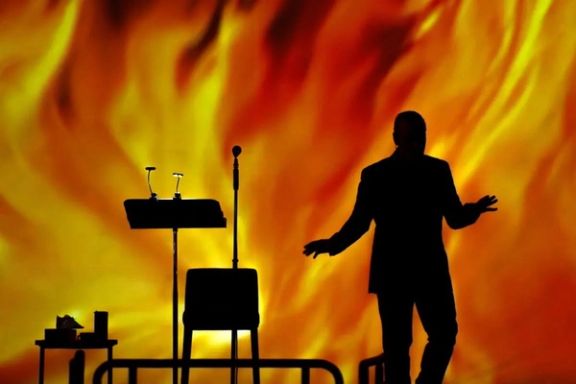
Iran’s goal of achieving 8% economic growth, a key target of its seventh five-year development plan, faces steep hurdles, with economists warning that key drivers such as investment, productivity, and financing are faltering, the daily Samt reported on Monday.

“Economic growth requires prerequisites such as a favorable business environment, sound economic governance, access to technology and adequate financing. Each of these can be likened to an engine powering growth. The problem is that none of these engines are running,” wrote the paper, which covers industry, mining and trade.

According to the report, the government’s latest decree estimates Iran would need nearly 80 quadrillion rials (about $80 billion) in combined private, public and cooperative investment in the current Iranian year (started on March 21) to hit the 8% target, factoring in capital depreciation, labor contributions and productivity gains. Current financing plans leave a shortfall of about 27.9 quadrillion rials (about $28 billion).

The report listed funding sources ranging from banks and capital markets to foreign investment, the sovereign wealth fund and private savings. But it warned that reliance on public budgets and banks alone is insufficient.

Economist Vahid Shaghaghi-Shahri told the paper: “At present all our engines of economic growth have not only stalled but are working in reverse. In this context, even preventing negative growth should be considered an achievement.”

He cited housing, oil revenues and productivity as sectors in decline, while financial channels needed to supply about $200 billion annually are blocked by sanctions, low investor confidence and structural weaknesses.

  • Iran set for soaring inflation and near-zero growth, grim IMF outlook finds

    Iran set for soaring inflation and near-zero growth, grim IMF outlook finds

  • Iran's GDP growth halves despite surge in oil exports

    Iran's GDP growth halves despite surge in oil exports

  • Questionable growth: How Iran’s government skews economic data

    Questionable growth: How Iran’s government skews economic data

Another economist, Mehdi Pazouki, argued that “without economic health no rational investor will commit to Iran.”

He said previous development programs had all set 8% growth targets that were never achieved. “When energy shortages restrict production and the business climate is hostile, such a goal is at best rhetorical,” he told the paper.

Both experts stressed the need for international engagement and domestic reforms. Pazouki said: “For meaningful growth we must first restore international relations and improve the business environment. Otherwise, capital will continue to flow abroad instead of into domestic industry.”

The report comes amid starkly different official data. Iran’s Central Bank recently announced growth of more than 3% in 2024, comparing Iran favorably to the US and eurozone, while the IMF in May projected growth of just 0.3% this year with inflation topping 43%.

Independent analysts say power shortages, a plunging rial and tighter US sanctions have pushed the economy toward stagnation.

Shaghaghi warned that unless Iran activates its “engines of growth,” negative GDP growth could emerge as early as 2026. “It is better to set realistic goals in line with our economic conditions and avoid rhetorical targets,” he said.