• العربية
  • فارسی
Brand
  • Iran Insight
  • Politics
  • Economy
  • Analysis
  • Special Report
  • Opinion
  • Podcast
  • Iran Insight
  • Politics
  • Economy
  • Analysis
  • Special Report
  • Opinion
  • Podcast
  • Theme
  • Language
    • العربية
    • فارسی
  • Iran Insight
  • Politics
  • Economy
  • Analysis
  • Special Report
  • Opinion
  • Podcast
All rights reserved for Volant Media UK Limited
volant media logo

Iran's energy exports to Iraq sag amid US sanctions
Sep 22, 2025, 17:07 GMT+1Updated: 00:36 GMT+0
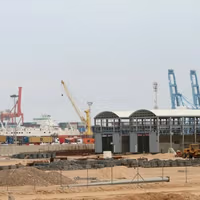
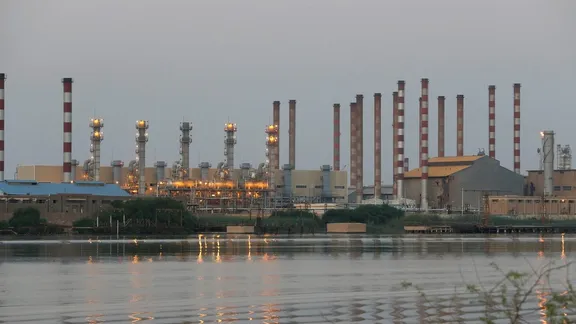
A general view of Abadan oil refinery in southwest Iran, is pictured from Iraqi side of Shatt al-Arab in Al-Faw south of Basra, Iraq September 21, 2019

Iran’s natural gas exports to neighboring Iraq have fallen sharply over the past five months after US sanctions which long exempted the trade take hold.

Between April and August 2025, exports dropped by 40%, continuing a downward trend that began in 2024, according to financial intelligence platform Zawya.

“Iran’s exports to Iraq in the first five months of this year decreased by 18% compared to the same period last year, with a significant portion of the decline due to gas exports,” Abdulamir Rabihavi, Director General of the West Asia Office at Iran’s Trade Promotion Organization, said on September 15.

“In the first five months of last year, we exported around $1.6 billion worth of gas to Iraq, but this has fallen to $950 million this year," he was quoted as saying by Iran's Etemad newspaper.

Iraq’s imports have been constrained by stepped-up United States sanctions. In March 2025, the Trump administration revoked a waiver that allowed payments for Iranian electricity imports as a long-standing carve out to broad US sanctions on Tehran.

Baghdad seeks to diversify supplies by launching a new gas import line from Turkmenistan. However, because the pipeline runs through Iran, it remains subject to US sanctions, and Washington has refused to grant Iraq a waiver.

“The entry of new competitors and possible shifts in Iraq’s market require constant monitoring and preparedness by economic actors,” Etemad newspaper quoted Yahya Al-Ishaq, President of the Iran-Iraq Chamber of Commerce, as saying.

Hamid Hosseini, a member of the Iran Chamber of Commerce, noted: “One of Iraq’s main policies in recent years has been to support domestic production. The government regularly raises import tariffs, sometimes up to 36%.”

Despite holding vast natural gas reserves, Iraq lacks the infrastructure to fully utilize them and continues to depend on imports.

The country does not have enough refineries to process associated gas from its oil fields and still flares a large portion of it.

The US maximum pressure campaign on Iran, reinstated by President Trump in February 2025 via a National Security Presidential Memorandum, aims to deny Tehran nuclear weapon paths and counter its regional influence through sweeping sanctions on its energy sector, including oil exports targeted at zero.

The policy has blocked waivers for third-country energy deals involving Iran, directly curtailing Tehran's gas and electricity flows to Iraq and exacerbating domestic shortages.


Most Viewed

State media slam Araghchi's Hormuz tweet, say it let Trump claim victory
1

State media slam Araghchi's Hormuz tweet, say it let Trump claim victory

2

Iran International says it won’t be silenced after London arson attack

3
INSIGHT

How Tehran bends its own red lines to boost state rallies

4
OPINION

The Hormuz get out of jail card turned to a grave

5

Iran halts petrochemical exports to supply domestic market

Banner
Banner

Spotlight

  • Too early to tell who is winning Iran war, experts say
    PODCAST

    Too early to tell who is winning Iran war, experts say

  • How Tehran bends its own red lines to boost state rallies
    INSIGHT

    How Tehran bends its own red lines to boost state rallies

  • Iran blackout cripples freelancer, small business incomes
    VOICES FROM IRAN

    Iran blackout cripples freelancer, small business incomes

  • Ideology may be fading in Iran, but not in Kashmir's ‘Mini Iran'
    INSIGHT

    Ideology may be fading in Iran, but not in Kashmir's ‘Mini Iran'

  • US blockade enters murky phase as tankers spoof signals and buyers hesitate
    ANALYSIS

    US blockade enters murky phase as tankers spoof signals and buyers hesitate

  • Why the $100 billion Hormuz toll revenue is a myth
    ANALYSIS

    Why the $100 billion Hormuz toll revenue is a myth

•
•
•

More Stories

'All engines of Iran’s growth have stopped' - Iranian business newspaper

Sep 22, 2025, 12:58 GMT+1

Iran’s goal of achieving 8% economic growth, a key target of its seventh five-year development plan, faces steep hurdles, with economists warning that key drivers such as investment, productivity, and financing are faltering, the daily Samt reported on Monday.

“Economic growth requires prerequisites such as a favorable business environment, sound economic governance, access to technology and adequate financing. Each of these can be likened to an engine powering growth. The problem is that none of these engines are running,” wrote the paper, which covers industry, mining and trade.

According to the report, the government’s latest decree estimates Iran would need nearly 80 quadrillion rials (about $80 billion) in combined private, public and cooperative investment in the current Iranian year (started on March 21) to hit the 8% target, factoring in capital depreciation, labor contributions and productivity gains. Current financing plans leave a shortfall of about 27.9 quadrillion rials (about $28 billion).

The report listed funding sources ranging from banks and capital markets to foreign investment, the sovereign wealth fund and private savings. But it warned that reliance on public budgets and banks alone is insufficient.

Economist Vahid Shaghaghi-Shahri told the paper: “At present all our engines of economic growth have not only stalled but are working in reverse. In this context, even preventing negative growth should be considered an achievement.”

He cited housing, oil revenues and productivity as sectors in decline, while financial channels needed to supply about $200 billion annually are blocked by sanctions, low investor confidence and structural weaknesses.
  • Iran set for soaring inflation and near-zero growth, grim IMF outlook finds

    Iran set for soaring inflation and near-zero growth, grim IMF outlook finds

  • Iran's GDP growth halves despite surge in oil exports

    Iran's GDP growth halves despite surge in oil exports

  • Questionable growth: How Iran’s government skews economic data

    Questionable growth: How Iran’s government skews economic data

Another economist, Mehdi Pazouki, argued that “without economic health no rational investor will commit to Iran.”

He said previous development programs had all set 8% growth targets that were never achieved. “When energy shortages restrict production and the business climate is hostile, such a goal is at best rhetorical,” he told the paper.

Both experts stressed the need for international engagement and domestic reforms. Pazouki said: “For meaningful growth we must first restore international relations and improve the business environment. Otherwise, capital will continue to flow abroad instead of into domestic industry.”

The report comes amid starkly different official data. Iran’s Central Bank recently announced growth of more than 3% in 2024, comparing Iran favorably to the US and eurozone, while the IMF in May projected growth of just 0.3% this year with inflation topping 43%.

Independent analysts say power shortages, a plunging rial and tighter US sanctions have pushed the economy toward stagnation.

Shaghaghi warned that unless Iran activates its “engines of growth,” negative GDP growth could emerge as early as 2026. “It is better to set realistic goals in line with our economic conditions and avoid rhetorical targets,” he said.

Rising costs push poor Iranian children out of school, activist warns

Sep 22, 2025, 10:11 GMT+1

Mounting education costs in Iran are forcing growing numbers of children from low-income families out of school and into the workforce, a labor activist warned, as families say even public schools are demanding fees despite constitutional guarantees of free education.

“Turning education into a commodity has deprived many working-class children of their right to study,” labor activist Maziar Gilaninejad told labor news outlet ILNA.

He cited official figures and media reports showing steep increases in school-related expenses, including a 30% rise in stationery prices, costs of about 3.5 million rials (about $35) for basic supplies for one elementary student, and reports of 750,000 children leaving school due to poverty.

He added that the result is “a direct link” between rising dropouts and the growth in child labor, with many minors pushed into hazardous workshops to support their families.

“The reality is families need their children’s wages as much as they cannot afford school fees,” he said.
  • Parents clean schools as payment burden hits low-income families in Iran

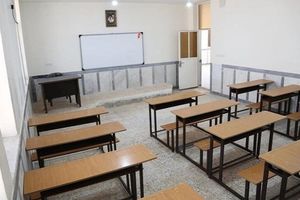
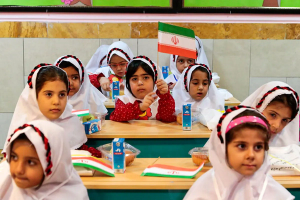
    Parents clean schools as payment burden hits low-income families in Iran

  • Parents lament hidden school fees in Iran

    Parents lament hidden school fees in Iran

Parents have echoed the concerns. Earlier this month, Iran International reported that families are often asked to pay “voluntary” enrollment fees or provide unpaid labor, such as cleaning classrooms, to secure places for their children. In some cases, schools have withheld report cards until payments were made.

University tuition has also surged, with students reporting fees doubling at some institutions in recent semesters.

“Education is becoming an exclusive path for the wealthy,” Gilaninejad said, citing data that the top 3,000 scorers in this year’s university entrance exam came almost entirely from affluent families.

Article 30 of Iran’s constitution guarantees free education, but Iran spends just 2.93% of GDP on education, well below the global average of 4.4%, according to the Global Economy data service.

Gilaninejad said neglecting this obligation risks producing “a generation systematically sidelined from opportunity” and perpetuating cycles of poverty.

Mossad sent 100 operatives into Iran to destroy missile launchers - Israeli TV

Sep 22, 2025, 00:18 GMT+1

One hundred Mossad operatives were deployed inside Iran to install and operate smuggled heavy missile systems, which were used to disable missile launchers and air-defense batteries at the start of June’s 12-day war, according to a documentary by Israel’s Channel 13.

“I told him: 'We have to do it.’ And he said, ‘You’re right, it’s gotta be done,’” Prime Minister Benjamin Netanyahu recalled of informing US President Donald Trump about the planned operation, according to the documentary.

The new Channel 13 documentary describes what it calls an unprecedented mission — both in scale and technical demands.

Specially trained agents deployed inside Iran installed and operated smuggled heavy missile systems, which were then used to strike the Islamic Republic’s ballistic missile launchers and air-defense batteries, aiding Israel’s broader campaign, the report said.

Negotiations over Iran’s nuclear program began under Trump’s administration with a 60-day ultimatum. On day 61, June 13, Israel launched its surprise 12-day campaign, coinciding with the eve of the sixth round of talks with Washington.

By the ninth day of fighting, the US carried out strikes on three Iranian nuclear sites, with Trump later boasting they had “obliterated” the program.

The Israeli operation involved about 100 foreign operatives, raising major logistical and command challenges, the report said. Channel 13's interviews with senior ministers suggest broader aims beyond disabling equipment: damaging underground facilities, weakening command structures and shaping events to sway US policy.

According to the report, leaders even discussed targeting Iran’s supreme leader if the chance arose.

Defense Minister Israel Katz is quoted as saying, “If there had been an opportunity, we would have [targeted him].”

Netanyahu reportedly told defense officials: “We are going to destroy the Iranian nuclear project as best we can. We aren’t waiting for a green light from the US, and it doesn’t matter if they say no.”

Secrecy, risk and the politics of optics

Secrecy was paramount, the documentary said. Foreign Minister Gideon Sa’ar recounted discussing a friend’s daughter’s upcoming wedding even as he knew it would not go ahead due to the looming offensive. Even families of top officials were mostly kept uninformed.

Brig. Gen. Gilad Keinan, the Israeli Air Force operations chief, said confidence was high in recovering downed crews, but extracting them from Iran was less certain. He added that many Iranian jets stayed grounded for fear of being shot down by their own defenses.

Cabinet transcripts revealed concern with optics. Strategic Affairs Minister Ron Dermer suggested images of destruction would help persuade Trump.

Netanyahu agreed, urging strikes on fuel tanks and a Basij facility, vowing to deliver a “birthday greeting” to the US president in the form of a decisive blow, according to the documentary.

Channel 13 said nuclear and missile sites were damaged and nuclear materials partly destroyed in the operation.

Air attacks killed nuclear scientists along with hundreds of military personnel and civilians.

Tehran answered with over 500 ballistic missiles and 1,100 drones, inflicting heavy casualties and widespread destruction, killing 31 Israeli civilians and one off-duty soldier.

Hidden trauma: rare reports expose sexual abuse of boys in Iran

Sep 21, 2025, 21:30 GMT+1

An investigative report by a Tehran daily documented dozens of cases of Iranian boys abused in schools, sports and transport, shedding light on a mostly underreported pattern compared to widespread accounts of girls’ abuse.

“My teacher wanted me to take off my clothes,” said Farid, a survivor who spoke to the reformist Shargh newspaper under a pseudonym.

The paper’s reporter collected detailed, often graphic recollections from men who described being touched, groped or coerced into sexual acts in settings where they expected safety.

Amir-Ali, now 32, recalled a taxi ride in which a passenger repeatedly pressed his body close and then placed a hand on his thigh. He said he felt powerless, ashamed and unable to tell friends or family.

“I didn’t speak to anyone — I thought I’d be mocked,” he told the reporter.

Majid described being molested on a crowded metro: the man next to him repeatedly adjusted his hand until the touching became unmistakable. He said he moved away without protest because embarrassment and fear made him freeze. “It was so strange and scary,” Majid added. “I just wanted to get off at the next stop.”

Far more sustained abuse appears in other accounts. Javid recounted grooming and repeated sexual exploitation by a 25-year-old assistant coach at a youth football class. He says the coach showed explicit videos, demanded sexual acts and pressured boys to comply, leaving Javid depressed and withdrawn for years.

Some victims described telling only a single friend or, in a few cases, later raising the matter in therapy — and even then withholding details.

100%

Another survivor, Sepehr, said a close relative forced him into sexual acts from the age of ten and that he has only ever disclosed the abuse in psychotherapy. He feared family fallout and shame: “I was scared that people in the family would find out,” he told Shargh.

Shame, silence and long-term harm

The dominant theme is shame, according to psychologist Parisa Pouyan, who works on social-harm issues.

“They often feel their masculinity and sexual identity are questioned; for many, the violation is deeply humiliating,” she added. Pouyan warned that the silence compounds harm: survivors commonly suffer depression, social withdrawal and difficulties forming intimate relationships long after the assaults.

100%

Legal advocates say institutional barriers deepen invisibility. Although Iran’s statutes do not formally distinguish male and female victims, “in practice, the numbers and the follow-through are very different,” Monica Nadi, a lawyer experienced in social-harm cases, told the paper.

She pointed to stigma, a lack of male-oriented support services and the legal difficulties of proving sexual crimes — lost physical evidence, absent witnesses and delayed reporting — as reasons why men rarely pursue judicial remedies.

Settings and system failures

Shargh’s investigation found incidents in boys’ schools, sports clubs, family homes, barracks, prisons, taxis and metro cars.

Several interviewees said suspected perpetrators were later moved between institutions rather than removed from positions of authority after being exposed for their harassment, risking further abuse.

The paper’s reporting calls for targeted steps: breaking cultural taboos, expanding counselling and support services for male survivors, training educators and staff, and improving mechanisms for reporting and evidence collection.

Survivors and experts warned that without systemic reform, many victims will continue to carry trauma in silence and cycles of abuse may persist.

US dollar hits record high of 1,060,000 rials in Iran’s market

Sep 21, 2025, 11:12 GMT+1

The value of the US dollar surged to an unprecedented 1,060,000 rials in Iran’s free market on Sunday, setting a new all-time record as fears of renewed UN sanctions deepened.

By mid-afternoon, the rate had reached 1,062,600 rials, continuing a sharp climb that added more than 30,000 rials since Saturday. The jump comes amid heightened expectations that the snapback mechanism will be activated, reinstating international sanctions previously suspended under the 2015 nuclear deal.

On September 20, the dollar opened trading at around 1,013,000 rials and rose to above 1,035,000 by midday, immediately after the UN Security Council rejected a South Korean draft resolution that would have permanently lifted sanctions. With the measure defeated, all restrictions are now set to reimpose automatically from September 27.

The rial has faced repeated shocks since Donald Trump returned to the White House. The latest surge follows months of volatility, with the dollar climbing to 1,058,900 rials in April when US B-2 bombers were deployed to the region. Optimism over nuclear talks briefly brought the exchange rate down to 820,000 rials after a second round of negotiations in Rome, but subsequent Israeli strikes on Iranian targets reignited the currency’s slide.

Even after a ceasefire was announced, the US dollar remained high at 930,000 rials and later climbed back above 940,000 on speculation over snapback sanctions. Despite occasional dips, the overall trend has been steadily upward, culminating in Sunday’s record high.

The collapse of the rial underscores Iran’s deepening economic vulnerability as diplomatic isolation grows, with markets responding sharply to both international pressure and the stalled state of nuclear negotiations.