• العربية
  • فارسی
Brand
  • Iran Insight
  • Politics
  • Economy
  • Analysis
  • Special Report
  • Opinion
  • Podcast
  • Iran Insight
  • Politics
  • Economy
  • Analysis
  • Special Report
  • Opinion
  • Podcast
  • Theme
  • Language
    • العربية
    • فارسی
  • Iran Insight
  • Politics
  • Economy
  • Analysis
  • Special Report
  • Opinion
  • Podcast
All rights reserved for Volant Media UK Limited
volant media logo

US senator says Israel’s strike in Qatar imperils Gaza peace bid

Marzia Hussaini
Marzia Hussaini

Iran International

Sep 17, 2025, 06:30 GMT+1Updated: 00:39 GMT+0
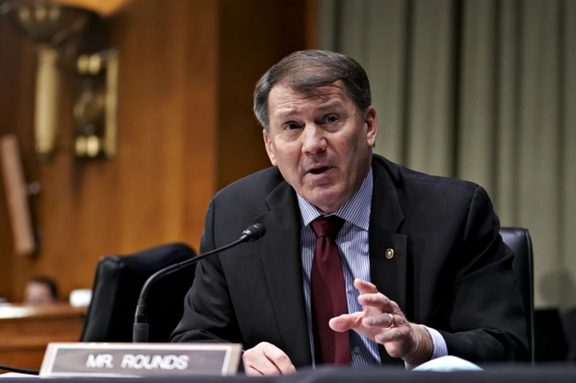
Senator Mike Rounds, a South Dakota Republican.

Israel’s recent strike on Hamas leaders in Qatar could undermine fragile efforts toward ending a nearly two-year-old war in Gaza, South Dakota Republican Senator Mike Rounds (R-SD) told Iran International.

“Number one, Hamas is a terrorist organization. We recognize Israel is going to go after every single one of those terrorists," said senator Mike Rounds.

"But at the same time, Qatar is a different country, and this took place in a different country that was our ally, and it is a country which was allowing for a peace process to try to proceed."

The senator stressed that while he backs what he called Israel’s right to target Hamas, he was concerned by the assassination attempts on the soil of a US ally at the heart of ongoing mediation.

“I think the President of the United States is correct in addressing his concern with Israel’s decision to literally attack individuals, even if they were terrorists, in a foreign country. And I think this is going to cause problems for any peace process to move forward in a timely fashion now.”

The White House has said it was notified of the strike only after missiles were already in the air, giving President Trump no chance to intervene. However, Axios, citing unnamed Israeli officials, reported that Washington had earlier notice and had informed the president.

On September 9, 2025, Israel carried out an airstrike in Doha, Qatar, targeting a meeting of Hamas political officials. At least five Hamas members and a Qatari security officer were killed.

The attack was the first known Israeli strike on Qatari soil — a state that has long hosted Hamas’ political leadership while also mediating ceasefire and hostage talks.

Israel defended the strike as a necessary step to eliminate Hamas leaders it accused of orchestrating attacks against Israeli civilians. For Qatar, however, the attack represented a violation of sovereignty and a blow to its credibility as a mediator.

The fallout was immediate and sharp. Qatar denounced the strike as “cowardly and treacherous,” vowing to raise the issue at the United Nations. The United Arab Emirates, despite its normalized ties with Israel, summoned Israel’s deputy ambassador and described the attack as “blatant and cowardly.”

Turkey accused Israel of adopting “state terrorism as policy.” The UN Security Council, with US support, condemned the operation as a violation of international law and a threat to peace talks.

Iran seized on Israel’s strike in Doha to portray itself as the defender of Arab sovereignty and Palestinian resistance, with President Masoud Pezeshkian and other officials condemning the attack as illegal and anti-peace. Officials in Tehran argue that this could push regional states closer to Iran.

Leaders of the Arab League and the Organization of Islamic Cooperation convened an emergency summit in Doha on Monday, where a draft communiqué warned Israeli operations on foreign soil risk unraveling normalization efforts across the Arab world.

Rounds’ remarks underscore Washington’s delicate balancing act — supporting what it calls Israel’s right to defend itself while also defending the sovereignty of a Persian Gulf ally critical to US diplomacy.

Most Viewed

Ghalibaf defends Iran-US talks amid hardline backlash
1
INSIGHT

Ghalibaf defends Iran-US talks amid hardline backlash

2
ANALYSIS

From instability to influence: Pakistan’s pivotal role in US-Iran diplomacy

3
ANALYSIS

100 days on: why Iran’s January protests spread across social classes

4

War-hit homeowners feel abandoned as Iran’s reconstruction aid fades

5

Iran says no decision yet on talks as Pakistan prepares to host US team

Banner
Banner

Spotlight

  • Iran diplomacy wobbles as factions compete to avoid looking soft on US
    INSIGHT

    Iran diplomacy wobbles as factions compete to avoid looking soft on US

  • The politics of pink: how Iran uses cuteness to rebrand violence
    ANALYSIS

    The politics of pink: how Iran uses cuteness to rebrand violence

  • Bread shortages, soaring prices strain households in Iran, residents say
    VOICES FROM IRAN

    Bread shortages, soaring prices strain households in Iran, residents say

  • 100 days on: the anatomy of Iran’s January crackdown
    INSIGHT

    100 days on: the anatomy of Iran’s January crackdown

  • Ghalibaf defends Iran-US talks amid hardline backlash
    INSIGHT

    Ghalibaf defends Iran-US talks amid hardline backlash

  • From instability to influence: Pakistan’s pivotal role in US-Iran diplomacy
    ANALYSIS

    From instability to influence: Pakistan’s pivotal role in US-Iran diplomacy

  • Tehran seizes on Israel’s Doha strike to bolster regional narrative

    Tehran seizes on Israel’s Doha strike to bolster regional narrative

•
•
•

More Stories

Iran executes political prisoner accused of spying for Israel

Sep 17, 2025, 01:38 GMT+1
•
Azadeh Akbari

Iran executed political prisoner Babak Shahbazi on Wednesday, state-affiliated media reported, saying he had been convicted of spying for Israel.

Shahbazi, a father of two, had been moved to solitary confinement on Tuesday after a court in Tehran rejected his third request for a retrial, sources close to the family told Iran International.

He was detained in January 2024 and later convicted of “spying for Israel” and “corruption on earth,” charges he denies.

Rights groups have described the proceedings as grossly unfair and based on forced confessions obtained under torture.

"The court rejected our request for a retrial for the third time this morning and moved him to solitary confinement by around noon," the source said.

"We are worried they may have taken him to solitary confinement in preparation for execution," the source said.

Shahbazi was being held in Ghezel Hesar prison, one of the largest in Iran, located about 20 kilometers northwest of the capital, Tehran.

His initial sentence was handed down in May 2025 by Judge Abolghasem Salavati, who was sanctioned by the United States in 2019 for presiding over unfair trials, extracting forced confessions, and imposing harsh sentences on political prisoners and journalists.

Messages to Zelensky

The source said Shahbazi had sent messages to Ukraine’s President Volodymyr Zelensky in 2022, offering help against the Russian invasion.

The messages were later falsified by Iranian authorities to make them appear as if they had been addressed to Israeli Prime Minister Benjamin Netanyahu and the Israeli military, according to the source.

“They have no evidence against him, and they haven’t even given the family a final visit, which usually happens before an execution,” the source said.

During his detention, authorities placed Shahbazi in a cell with a prisoner who was a member of the Islamic State, the Sunni Muslim militant group.

“It was as if they deliberately wanted him to be killed in prison. When the family visited him days later, both his eyes were bruised,” the source said.

Shahbazi was pressured to write dictated confessions under the promise that his death sentence would be commuted to three years if he signed them in front of his lawyer, according to the source.

“He refused to sign because he hadn’t done those things. They even slipped in pages that weren’t his writing and told him to sign, but he didn’t. Despite that, the court sentenced him to death on the basis of unsigned dictated notes,” the source said.

The source said authorities also relied on a coerced statement by Esmail Fekri, who was executed in June after being convicted of spying for Israel. Rights groups described his trial as unfair as well.

“They told him if he confessed against Babak (Shahbazi), his cryptocurrency would be returned to him. He even later wrote a letter saying he had been forced to make that confession,” the source said.

Tehran slams US ‘hypocrisy’ over Mahsa Amini anniversary message

Sep 16, 2025, 22:10 GMT+1

Iran condemned the United States on Tuesday for what it called “hypocritical and deceitful” remarks on the anniversary of a young Iranian woman's death in morality police custody in 2022, accusing Washington of decades of crimes and subversion.

“No rational and patriotic Iranian would ever believe the claim of friendship and sympathy by a regime with a long history of meddling in Iran’s affairs and committing crimes against Iranians,” the foreign ministry said in its statement.

It cited grievances ranging from a CIA-orchestrated 1953 coup and US support for Saddam Hussein during the 1980–1988 war to the downing of an Iranian passenger jet in 1988, years of sanctions and joining Israel in attacks on nuclear sites in June.

Tehran also argued that the US, as Israel’s main supporter and a country it described as steeped in racism, has “no credibility to speak on human rights.” It vowed that Iranians “will never forget or forgive” America’s actions.

Mahsa "Jina" Amini, 22, died in morality police custody on September 16 2022, igniting nationwide protests under the slogan “Woman, Life Freedom” that remain a rallying point for calls for systemic change in Iran.

In its message on the eve of the anniversary, the US State Department said it “stands with the people of Iran in their calls for dignity and a better life,” adding, “Mahsa’s name will never be forgotten” and accusing Tehran’s leaders of “crimes against humanity.”

The statement charged that Iran’s rulers had squandered the nation’s wealth on exporting ideology abroad while leaving citizens to endure “shortages of water and electricity, poverty, and crumbling infrastructure.”

Iran security chief visits Saudi leadership for rare meeting

Sep 16, 2025, 22:05 GMT+1

Iran's security chief Ali Larijani met Saudi Crown Prince Mohammed bin Salman and his brother, the defense minister, on Tuesday in a rare high-level meeting between regional rivals, following an Israeli attack in Qatar last week.

In Larijani's meeting with the Crown Prince, discussions focused on strategic regional issues and the situation in Islamic countries, with both sides exchanging views on the future of the region.

The meetings come amid heightened regional tensions following an Israeli airstrike in Doha on September 9 which targeted Hamas leaders. Qatar and other Arab states, including Saudi Arabia, condemned the attack as a violation of sovereignty.

Larijani and Bin Salman also explored ways to expand economic cooperation between Tehran and Riyadh, including resolving obstacles facing traders and examining opportunities for joint investments, Iranian official media reported.

Saudi defense minister Khalid Bin Salman (right) meets Iran's top security official Ali Larijani
100%
Saudi defense minister Khalid Bin Salman (right) meets Iran's top security official Ali Larijani

Larijani later held a meeting with Saudi Defense Minister Khalid Bin Salman, during which both sides discussed prospects for bilateral cooperation in the defense field as part of broader efforts to consolidate ties between the two countries, according to IRGC-affiliated Fars News.

Following talks with Larijani, Khalid bin Salman said he had reviewed bilateral relations and regional developments.

“In my meeting, we discussed Saudi-Iranian relations and addressed a number of issues of mutual interest, as well as regional developments and efforts to achieve security and stability,” the Kingdom's defense minister said.

Khalid bin Salman in April paid a rare visit to Tehran, where he met with Iran's Supreme Leader Ali Khamenei. It was the first time Khamenei had received a Saudi official since 2006.

UN chief urges diplomacy to avert snapback of Iran sanctions

Sep 16, 2025, 20:33 GMT+1

United Nations Secretary-General António Guterres on Tuesday called on Iran and Western countries to intensify diplomatic efforts to prevent the so-called snapback of international sanctions on Tehran initiated by European states last month.

Guterres said building trust through dialogue is essential, speaking in response to a question from Iran International's reporter at the UN on Tuesday.

“My appeal to Iran and to the other powers is to use diplomacy and to create the conditions of trust in order to be able to avoid it,” UN Secretary General said.

Guterres added that he has been in contact with both sides and aimed to facilitate discussions.

“Of course, offering my good offices, but it all depends on the diplomatic efforts that are made in order to establish the trust that is needed for the snapback to be avoided,” Guterres said.

Last month, France, Germany, and the United Kingdom triggered the UN snapback sanctions mechanism in a partly lapsed 2015 international nuclear deal with Iran.

The move initiated a 30-day window for diplomacy before sanctions are due to take effect on October 18.

Iran-IAEA cooperation

One of the demands of the three European countries is the immediate resumption of full work between Iran and the International Atomic Energy Agency (IAEA), the UN nuclear watchdog.

Iran and the IAEA signed an agreement in Cairo last week aimed at eventually resuming nuclear inspections in Iran. IAEA chief Rafael Grossi on Monday urged Iran to immediately implement the deal to resume inspections.

Iran's nuclear chief Mohammad Eslami on Tuesday criticized European powers for adopting an even more bellicose rhetoric against Tehran after the Cairo deal.

"From the very moment the agreement was signed between our esteemed foreign minister and the IAEA director general, we witnessed new and harsher positions from European countries," he told reporters in Vienna.

The Europeans also seek unconditional renewed talks with the United States severed since Israeli and US attacks on Iran in June.

Last month, Iran’s Supreme Leader Ali Khamenei rejected calls by Tehran moderates for direct negotiations with the United States, insisting that Washington’s hostility cannot be resolved through talks.

US urges Iran to cease war rhetoric, address people's needs

Sep 16, 2025, 17:50 GMT+1

The United States on Tuesday called on Iran’s leadership to move away from what it called bellicose rhetoric and focus on easing domestic hardships, saying Iranians deserve better after years of economic privations.

"The Iranian regime must focus on addressing the needs of its people instead of engaging in destructive war rhetoric," the State Department said in a post on its Persian-language account on X.

"After years of economic hardship and international isolation, the people of Iran deserve peace and prosperity."

Iranian officials, especially hardliners and military leaders, have repeatedly mooted striking Israel and the United States if attacked again following their surprise military campaign in June. Officials have also issued menacing rhetoric to dissidents abroad.

Last month, Iran's top security official Ali Larijani said the country must remain prepared for a fresh round of conflict as the war with Israel is not over despite a US-brokered ceasefire that put an end to a 12-day war between Iran and Israel in June.

The Islamic Republic needs to "create capacities so that the enemy will not be tempted to take action again," Larijani said in an interview with the Supreme Leader's official website.

His remarks were the latest in a series of sharp comments from leaders on both sides, with Israel’s army chief vowing readiness for further strikes and Iran’s General Staff warning of “a far stronger response” to any future attacks by the United States or Israel.

Meanwhile Israeli officials have frequently asserted that their military quarrel with Iran is not yet finished and continue to cite Iran as an alleged existential threat.

Iran’s navy test-fired a range of cruise missiles during large-scale drills last month, and the defense ministry warning of stronger response in any new war with Israel.

"Any miscalculation in the region will be met with a very strong response from Iran’s powerful armed forces,” it said in a statement.

"Senior officials of the regime have chosen to distract from internal challenges by instilling fear of external threats," the State Department said in its post.

"Iran’s leadership should instead prioritize actions that restore economic stability, improve living conditions, and rebuild trust with both its citizens and the international community."

Iran’s currency, the rial, now trades at nearly one million to the dollar, having lost almost a third of its value since Donald Trump won the US presidential election last November.

Iran faces one of the highest inflation rates in the region. According to the International Monetary Fund's estimates, the annual inflation rate has averaged above 42% since 2020, sending costs of living soaring.

Sanctions, corruption and economic mismanagement have contributed to widespread economic hardship and market instability as Iran's currency the rial has lost over 90% of its value since US sanctions were reimposed in 2018.

A poll by Iran's leading economic newspaper Donya-ye Eqtesad last month reported that just under 90% of Iranians described their level of satisfaction with government economic policies as low or very low.