• العربية
  • فارسی
Brand
  • Iran Insight
  • Politics
  • Economy
  • Analysis
  • Special Report
  • Opinion
  • Podcast
  • Iran Insight
  • Politics
  • Economy
  • Analysis
  • Special Report
  • Opinion
  • Podcast
  • Theme
  • Language
    • العربية
    • فارسی
  • Iran Insight
  • Politics
  • Economy
  • Analysis
  • Special Report
  • Opinion
  • Podcast
All rights reserved for Volant Media UK Limited
volant media logo

Families demand international action on Mahsa Amini death anniversary

Sep 16, 2025, 00:30 GMT+1Updated: 00:40 GMT+0

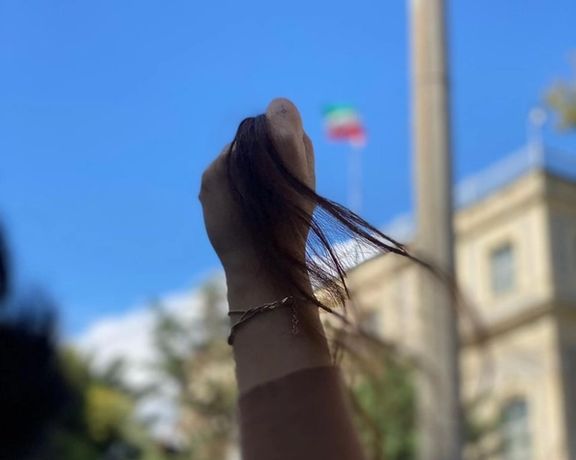
On the eve of the anniversary of Mahsa Amini’s death in police custody, families and victims of Iranians killed, tortured or injured by authorities have issued an open letter to world leaders calling for urgent international action to confront Tehran.

The signatories warn that current policies only embolden Tehran, which they describe as a menace to foreign powers and its people alike which survives solely through violence.

“The people of Iran have shed blood and stood firm. Now it is time for the international community to act for its own security. The struggle of the Iranian nation will be remembered in history as a sacrifice not only for freedom but also for the security of the world,” the letter states.

Mahsa Amini, a 22-year-old Iranian woman, died in September 2022 after being arrested by Iran’s so-called morality police.

Her death sparked widespread outrage and ignited the Women, Life, Freedom protest movement which was quashed with deadly force.

In their letter, the families and victims demanded governments formally designate the Islamic Revolutionary Guard Corps (IRGC) as a terrorist organization, cut diplomatic and economic ties with Tehran, and impose sanctions on the IRGC’s financial, military and cyber networks.

"The people of Iran have shed blood and stood firm. Now it is time for the international community to act for its own security. The struggle of the Iranian nation will be remembered in history as a sacrifice not only for freedom but also for the security of the world," it read.

The families portray the Islamic Republic as weakened at home and increasingly isolated abroad. They point to the twelve-day war in June, during which the United States and Israel jointly struck nuclear sites and targeted senior IRGC officials, as a punishing blow.

Meanwhile, Iran’s economy continues to collapse. The rial has lost more than 90 percent of its value since US President Donald Trump imposed “maximum pressure” sanctions in 2018.

Coupled with widespread drought, empty taps and persistent electricity shortages, the instability is fueling fears of mass migration that could destabilize neighboring countries already struggling with refugee challenges.

The letter is signed by more than 100 victims and families of those killed or injured during nationwide uprisings in 2017, 2019, and 2022.

Among the public signatories are the families of people killed during the 2022 protests including Majid Kazemi, Mino Majidi, Pouya Bakhtiari and Aida Rostami, along with dozens of survivors who suffered severe injuries.

Most Viewed

State media slam Araghchi's Hormuz tweet, say it let Trump claim victory
1

State media slam Araghchi's Hormuz tweet, say it let Trump claim victory

2
OPINION

The Hormuz get out of jail card turned to a grave

3
INSIGHT

How Tehran bends its own red lines to boost state rallies

4

Iran International says it won’t be silenced after London arson attack

5
VOICES FROM IRAN

Iran blackout cripples freelancer, small business incomes

Banner
Banner

Spotlight

  • Too early to tell who is winning Iran war, experts say
    PODCAST

    Too early to tell who is winning Iran war, experts say

  • How Tehran bends its own red lines to boost state rallies
    INSIGHT

    How Tehran bends its own red lines to boost state rallies

  • Iran blackout cripples freelancer, small business incomes
    VOICES FROM IRAN

    Iran blackout cripples freelancer, small business incomes

  • Ideology may be fading in Iran, but not in Kashmir's ‘Mini Iran'
    INSIGHT

    Ideology may be fading in Iran, but not in Kashmir's ‘Mini Iran'

  • US blockade enters murky phase as tankers spoof signals and buyers hesitate
    ANALYSIS

    US blockade enters murky phase as tankers spoof signals and buyers hesitate

  • Why the $100 billion Hormuz toll revenue is a myth
    ANALYSIS

    Why the $100 billion Hormuz toll revenue is a myth

•
•
•

More Stories

Joy as resistance: Iranians push boundaries on Mahsa anniversary

Sep 15, 2025, 22:10 GMT+1
•
Negar Mojtahedi

A concert by famed Iranian artist Sirvan Khosravi held on the grounds of what were once the Shah’s palace in Tehran has become an emblem of the 2022 Woman, Life, Freedom movement's legacy.

Videos circulating on social media show women in the audience not only discarding the compulsory hijab but dancing in unapologetically Western-style attire without a trace of enforced covering.

The scene plays out in a space once tied to Iran’s monarchy, now under the increasingly permissive gaze of the Islamic Republic.

Concertgoers are seen singing and dancing freely, acts that remain technically criminal under the Islamic Republic’s penal code and used to be harshly punished until a few years ago.

The scenes are a sharp contrast to 2023, when women were arrested at another Sirvan concert for what authorities deemed “bad hijabs.”

Mahsa Amini died in Iranian morality police custody, sparking the Woman, Life, Freedom protest movement which was crushed with deadly force but belatedly appears to have blunted Tehran's more repressive tendencies.

A new hijab and chastity law was halted by Iran's Supreme National Security Council (SNSC) in May amid concerns it could deepen tensions as geopolitical and economic pressure mount on Iranians.

Iranian freelance music journalist Bahman Babazadeh described this week’s concert as evidence of a deeper shift.

Writing on his social media accounts, he said: “The system and the Islamic Republic have learned their lesson and moved beyond many things. They are past the stupidity of canceling concerts."

"But the system has learned, and for the sake of its survival, it has moved on," wrote Babazadeh.

He also pointed to a concert by the band Bomrani in Shiraz, calling it “the beginning of a major movement for structural change” and reminding his audience that “happiness is the right of the people.”

Only days later, authorities announced Bomrani had been banned from performing in Shiraz and the wider province of Fars, accusing the group of “norm-breaking behavior” during the same show, according to Mehr news agency.

The incident underscored how precarious these cultural openings remain, subject to sudden reversals.

Not everyone sees these changes as real progress. Mercedeh Shahinkar, a Women, Life, Freedom protest survivor who was shot in the eye by security forces in 2022, believes such relaxations amount to “controlled freedoms,” designed to defuse public anger and prevent another nationwide uprising.

While the protests have sparked undeniable social shifts, she argues, the state permits them only as a calculated strategy of survival.

Still, on the eve of the anniversary of Mahsa Jina Amini’s death, the images of young Iranians attending concerts, uncovered, singing, and smiling together carry their own quiet power. For many, they stand as a reminder that her legacy lives on.

Iran security chief says 'rootless' Netanyahu pushing Americans to suicide

Sep 15, 2025, 20:15 GMT+1

Ali Larijani, Iran’s newly appointed security chief, courted controversy on Monday by suggesting Americans could be driven to suicide when hearing Prime Minister Benjamin Netanyahu describe Israel as a bulwark of American civilization.

"When a rootless child-killing criminal like @Netanyahu calls himself 'the frontline of American civilization', you can’t blame Americans if they feel like suicide," Ali Larijani wrote on X.

US Secretary of State Marco Rubio met Netanyahu on Monday and both hailed the unity of their two nations in confronting threats they say Iran poses.

Larijani is a relative moderate and veteran insider who was elevated to lead Iran's Supreme National Security Council following a 12-day war in which Israel and the United States pounded Iranian nuclear and military sites, leaving hundreds dead.

It was unclear what Larijani meant by the assertions. "Rootless cosmopolitan" was a slur deployed in the Soviet Union directed at intellectual figures and particularly Jews, and the descriptor has been consistently deployed by anti-Semitic polemicists.

Critics of Israel have frequently scorned the relatively recent arrival of its leaders or their families from other countries in the twentieth century.

The Israeli premier's father, who was born in Poland as Benzion Mileikowsky, later adopted the Biblical surname Netanyahu and became a preeminent scholar or early modern Spain.

Larijani's assertion on the United States was less direct and could have been a reference to a fraught moment in American politics as political polarization deepens in the wake of the assassination of prominent political commentator Charlie Kirk.

Holding a PhD in philosophy and the rank of brigadier general in Iran's Islamic Revolutionary Guard Corps, Larijani has long plied a deft course around public debates which have divided Iran's ruling factions.

Larijani also serves as Supreme Leader Ali Khamenei's personal representative to the key decision-making SNSC, an apparent key endorsement by Tehran's top authority.

His new mandate is widely seen as righting Iran's security tack after lapses allowing Israeli attacks to kill nuclear scientists along with hundreds of military personnel and civilians.

In the sensitive new role, Larijani has stepped up the frequency and edge of his social media criticism of Israel and the United States, especially following the 12-day war in June.

Families of protest victims threatened on Mahsa Amini death anniversary

Sep 15, 2025, 17:35 GMT+1

Iranian security bodies summoned and threatened families of people killed in 2022 nationwide protests that followed the death of a young woman named Mahsa Amini in morality police custody ahead of the third anniversary, source told Iran International.

Amjad Amini, Mahsa’s father, marked the date with a message on Instagram. “Kurdistan and Iran will never forget the withering of their flowers’ smiles and beauty. We will never forget the butterflies of joy on her lips,” he wrote. The family hailed from Iran's Kurdish minority.

Mahsa Amini, aged 22, was arrested by Iran's morality police in Tehran on September 13, 2022. She died three days later in hospital from injuries sustained in custody, sparking mass protests across Iran.

The demonstrations dubbed the Woman, Life, Freedom movement were quashed with deadly force.

Relatives of victims, sources told Iran International on condition of anonymity, have in recent days been called to intelligence offices in Tehran and other provinces or contacted by phone with warnings not to gather.

Similar tactics were reported in the past two years as authorities sought to prevent public commemorations for Amini and others killed during the crackdown.

A father’s vow

Despite renewed pressure, Amjad Amini published his message on September 14 in remembrance of his daughter.

“The memory and demand for justice for Mahsa 'Jina' and the other slain protesters will never be forgotten,” he wrote using her Kurdish name, adding that her absence remains “a volcano burning eternally in our hearts.”

He also recalled that September 15 would mark the third anniversary of her “state killing,” as he has consistently described it.

Independent rights groups say at least 551 people, including 68 children, were killed during the 2022 uprising sparked by Amini’s death.

Over the weekend, exiled Iranians staged demonstrations in European countries including Sweden, Switzerland, the Netherlands, Britain, Denmark, Germany, France and Cyprus as well as in the United States, Canada, Australia and New Zealand.

The gatherings paid homage to Mahsa Amini and other victims and aimed to raise awareness on the plight of political prisoners in Iran.

Iran summons 10 over protests against power and water shortages

Sep 15, 2025, 12:04 GMT+1

Iranian authorities have summoned 10 citizens in the northeastern city of Sabzevar to face charges linked to protests over repeated power and water cuts, the Human Rights Activists News Agency (HRANA) reported on Monday.

HRANA listed their names adding that they were ordered to appear before the third branch of the Sabzevar public and revolutionary prosecutor’s office within 10 days to present their final defense.

According to the report, the individuals face charges of “propaganda against the Islamic Republic,membership in a group aimed at disrupting state security, and assembly and collusion against national security.”

They were previously detained during July demonstrations in Sabzevar against rolling blackouts and water shortages, and later released on bail.

  • Tear gas fired as protests over power and water shortages continue in Iran

    Tear gas fired as protests over power and water shortages continue in Iran

  • ‘Failure at every level’: Iranians pan weekly holiday plan amid energy crisis

    ‘Failure at every level’: Iranians pan weekly holiday plan amid energy crisis

At the time, videos verified by rights groups showed residents rallying outside the governor’s office, chanting “Water, electricity, life — our absolute rights” and “If we don’t get our rights, we won’t leave.”

The summons comes amid mounting public frustration. Over the summer, Iran faced its second-driest year in five decades, with rainfall 43% below average. Widespread outages have disrupted daily life, industrial production and the economy, triggering protests in several cities such as Shiraz and Kazeroun.

In Sabzevar, protests entered a second night in July, with security forces firing tear gas at demonstrators. Footage sent to Iran International showed crowds chanting “Shameless, shameless” as they fled the crackdown.

Authorities have attributed the shortages to drought and surging demand, while critics cite years of mismanagement, sanctions and neglected infrastructure.

Diaspora rallies mark third anniversary of Woman, Life, Freedom

Sep 15, 2025, 09:46 GMT+1

Iranian communities abroad staged demonstrations across Europe, North America, Australia, and New Zealand on Sunday to mark the third anniversary of Mahsa Amini’s death and to honor those killed in protests since 2022.

The gatherings followed a first wave of commemorations the previous day.

In Toronto, Hamed Esmaeilion, a board member of the Association of Families of Flight PS752 Victims, told demonstrators: “Who is more deserving than the people of Iran to determine the fate of the country? Who is more deserving than the people of Iran to bring the perpetrators of crimes to trial? Who is more deserving than the people of Iran to drag Khamenei and other criminal clerics out of hiding?”

Amini, 22, died on September 16, 2022, after being detained by Iran’s morality police for allegedly violating mandatory hijab rules. Her death sparked months of unrest in which at least 551 protesters, including 68 children, were killed, according to rights groups, and thousands detained.

Voices in London

Several rallies also took place in London, called by around 15 political and civil groups. Videos sent to Iran International showed protesters chanting the names of Mahsa Amini and others killed in the 2022 protests.

Mahsa Piraei, daughter of protest victim Minou Majidi, addressed one gathering. “Today we have come together to shout the names of the victims and not let their memory be forgotten, because what dictatorships do is erase memories. We are heirs to a wounded truth, and we will not let the Islamic Republic bury justice,” she said.

Protests worldwide

Events were held in The Hague, Brussels, Frankfurt, Nicosia, Sydney, Melbourne, Brisbane, Auckland, Calgary, Montreal, Los Angeles, and Washington.

In Sydney, demonstrators urged the Australian government to designate the Revolutionary Guards as a terrorist organization, days after Canberra closed Iran’s embassy and expelled its diplomats over involvement in terror operations.

Alongside the street demonstrations, a two-day National Dialogue for Iran conference was convened in Washington. The 13-panel event gathered former political prisoners, journalists, activists, and victims of state violence.

Participants included former US State Department spokesperson Alan Eyre, German MEP Hannah Neumann, Swedish-Iranian MP Alireza Akhundi. Writers and activists such as Nazanin Afshin-Jam, Nazanin Boniadi, Azar Nafisi, and Atena Daemi joined, alongside Iranian journalists and survivors of eye injuries sustained during protests.

On Saturday, Iranians in Sweden, Switzerland, the Netherlands, Britain, Denmark, Germany, Cyprus, Canada, and the United States had also rallied to mark the anniversary of Mahsa Amini’s killing in morality police custody.