• العربية
  • فارسی
Brand
  • Iran Insight
  • Politics
  • Economy
  • Analysis
  • Special Report
  • Opinion
  • Podcast
  • Iran Insight
  • Politics
  • Economy
  • Analysis
  • Special Report
  • Opinion
  • Podcast
  • Theme
  • Language
    • العربية
    • فارسی
  • Iran Insight
  • Politics
  • Economy
  • Analysis
  • Special Report
  • Opinion
  • Podcast
All rights reserved for Volant Media UK Limited
volant media logo

Israeli intelligence tells France Iran’s nuclear program not destroyed
Sep 13, 2025, 10:35 GMT+1
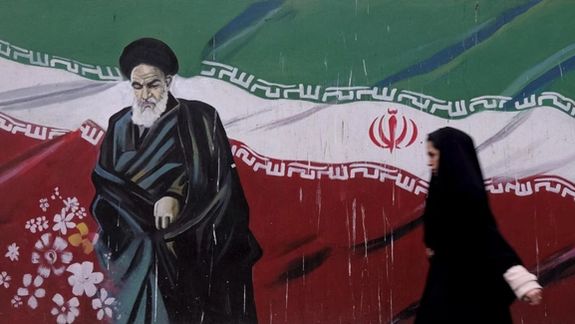
A woman walks past a painting of Iran's late leader Ruhollah Khomeini in Tehran, File Photo.

Israeli officials told French authorities that Iran’s nuclear program was not entirely destroyed in June’s US-Israeli airstrikes, Le Monde reported on Friday.

The French newspaper, citing diplomatic sources, said the information was shared in early September. Le Monde quoted Israeli intelligence as saying that “while the centrifuge manufacturing sites and most of the uranium enrichment facilities were destroyed, particularly at Fordow and Natanz, Iran still possesses this type of equipment.” Officials added: “Too few to restart the program in the short term, but it’s only a matter of time.”

Le Monde said France values the Israeli assessment because US intelligence has stopped sharing information on Iran’s program with European partners since the June war.

Cairo deal and snapback

Iran has rejected the idea that its program was wiped out. Foreign Minister Abbas Araghchi told Le Monde in July that “the claim that a peaceful nuclear program has been annihilated is a miscalculation” and said the strikes had “reignited” a nuclear arms race.

This week, Araghchi said Iran’s new agreement with the International Atomic Energy Agency, signed in Cairo, does not currently allow inspectors into nuclear sites. He said the deal is consistent with a law passed after the June strikes that suspended cooperation pending approval by the Supreme National Security Council. He added that its continuation depends on Western powers not restoring UN sanctions under the “snapback” mechanism.

Britain, France and Germany triggered snapback in late August, which could restore sanctions at the end of September. They said they would pause the process only if Iran restored IAEA inspections, accounted for its highly enriched uranium stockpile, and engaged in nuclear talks with the United States.

Western pressure

The United States and European Union pressed Tehran to act quickly. Acting US envoy Howard Solomon told the IAEA board that Iran had “ceased implementing its most basic obligations.” The EU said safeguards access is “non-negotiable,” while France, Germany and Britain said they were “alarmed” by Iran’s uranium stockpile.


Most Viewed

Ghalibaf defends Iran-US talks amid hardline backlash
1
INSIGHT

Ghalibaf defends Iran-US talks amid hardline backlash

2
ANALYSIS

From instability to influence: Pakistan’s pivotal role in US-Iran diplomacy

3
ANALYSIS

100 days on: why Iran’s January protests spread across social classes

4

War-hit homeowners feel abandoned as Iran’s reconstruction aid fades

5

Iran says no decision yet on talks as Pakistan prepares to host US team

Banner
Banner

Spotlight

  • The politics of pink: how Iran uses cuteness to rebrand violence
    ANALYSIS

    The politics of pink: how Iran uses cuteness to rebrand violence

  • Bread shortages, soaring prices strain households in Iran, residents say
    VOICES FROM IRAN

    Bread shortages, soaring prices strain households in Iran, residents say

  • War-hit homeowners feel abandoned as Iran’s reconstruction aid fades

    War-hit homeowners feel abandoned as Iran’s reconstruction aid fades

  • 100 days on: the anatomy of Iran’s January crackdown
    INSIGHT

    100 days on: the anatomy of Iran’s January crackdown

  • Ghalibaf defends Iran-US talks amid hardline backlash
    INSIGHT

    Ghalibaf defends Iran-US talks amid hardline backlash

  • From instability to influence: Pakistan’s pivotal role in US-Iran diplomacy
    ANALYSIS

    From instability to influence: Pakistan’s pivotal role in US-Iran diplomacy

•
•
•

More Stories

Khamenei adviser warns Azerbaijan against hosting rabbinical event

Sep 13, 2025, 10:00 GMT+1

A senior adviser to Iran’s Supreme Leader warned on Saturday that Azerbaijan would damage the image of Shiites if it proceeds with plans to host a major rabbinical meeting.

Ali Akbar Velayati said he hoped reports of the event were false, describing it as “anti-Islamic and against the dignity of Shiites.”

Such a move by Baku, he added, was unprecedented and suggested it might be tied to efforts to widen the Abraham Accords, under which several Muslim states normalized ties with Israel.

The remarks appeared aimed at the Conference of European Rabbis, scheduled for Nov. 4–6 in Baku, where Jewish leaders from across Europe are due to convene.

Velayati’s comments come as Azerbaijan deepens international links, including through a landmark peace deal reached in Washington last month. Armenian Prime Minister Nikol Pashinyan and Azerbaijani President Ilham Aliyev signed the accord at the White House with US President Donald Trump, granting exclusive US development rights to a transit corridor through the South Caucasus.

The route will connect Azerbaijan to its Nakhchivan exclave across southern Armenia. The White House said the project, named the Trump Route for International Peace and Prosperity, would expand energy and resource exports.

Tehran has objected to the corridor, warning it sidelines Iranian trade routes and diminishes its role in the region. Iranian officials have also accused Azerbaijan of permitting Israeli activity on its soil, intensifying mistrust.

The dispute over the rabbinical gathering now adds a cultural and religious dimension to already fraught relations between Iran and Azerbaijan.

Australia joins G7 in condemning Iranian repression abroad

Sep 13, 2025, 08:26 GMT+1

Australia joined G7 Rapid Response Mechanism members on Friday in denouncing what they described as Iran’s systematic targeting of opponents overseas.

“Iranian intelligence services have increasingly attempted to kill, kidnap, and harass political opponents abroad, following a disturbing and unacceptable pattern of transnational repression, and clearly undermining state sovereignty,” the joint statement said.

The signatories included the G7 states—Canada, France, Germany, Italy, Japan, the United Kingdom, the United States, and the European Union—alongside associate members Australia, the Netherlands, New Zealand, and Sweden. They cited Iranian efforts to intimidate journalists and Jewish communities, as well as operations to obtain and expose personal information in order to divide societies.

“The G7 RRM stands in solidarity with our international partners whose citizens and residents have also been targeted by Iran,” the statement added, pledging to continue countering foreign interference and safeguarding national sovereignty.

Canberra expelled ambassador Ahmad Sadeghi late last month following an ASIO-led investigation linking Iran’s Revolutionary Guards (IRGC) to two anti-Semitic attacks in Melbourne and Sydney.

Separately, Canberra announced the renewal of counter-terrorism sanctions against Hamas, Hezbollah, and Palestinian Islamic Jihad.

“The Albanese Government has zero tolerance for foreign interference and violence in Australia,” Foreign Minister Penny Wong said in an X post, reiterating calls for the release of hostages taken on October 7, 2023.

Hamas is now considered one of the Iran's armed militant proxy forces in the region, alongside the Lebanese Hezbollah, Yemeni Houthis and a collection of Shiite militias in Iraq and Syria.

Next Generation Penetrator: US to scoop up Iran mega-bomb successor

Sep 13, 2025, 00:30 GMT+1

The United States Air Force has ordered a batch of cutting-edge new bunker buster bombs, Defense News reported this week, reaching for the successor technology to huge ordnance which pounded Iranian nuclear sites in June.

The new Massive Ordnance Penetrator (MOP) contract has been awarded to Applied Research Associates (ARA) for a two-year prototype design, according to the outlet.

Boeing, which originally developed the MOP, will team up with ARA for the design and full integration of new features, it added in an article on Monday.

The bombs the United States used against Iranian nuclear sites in Fordow, Natanz and Isfahan in a surprise attack on June 22 were GBU-57 MOPs.

The GBU-57 is a 30,000-pound GPS-guided bunker buster designed to destroy hardened and deeply buried nuclear facilities which is carried by the B-2 Spirit bomber.

Its first combat use came in the June strikes in the strikes dubbed Operation Midnight Hammer, when the Air Force dropped 12 bombs on the Fordow nuclear site alone.

The successor MOP, called the Next Generation Penetrator (NGP_ will focus on deeper penetration and reduced weight. Unlike the GBU-57, it will not exceed 22,000 pounds, and its guidance system will remain effective even if the enemy jams or disables GPS.

The weapon will also incorporate advanced fuzing to increase effectiveness against previously untested environments, another outlet The War Zone reported.

“Advanced fuzes with features like the ability to ‘count’ floors to determine depth and sense the ‘voids’ formed by underground mission spaces greatly increase the potential for maximum damage from a weapon like MOP,” TWZ wrote.

The United States began designing the GBU-57 in 2004 under the Air Force Research Laboratory, with production and first deliveries starting in 2011.

President Donald Trump has said the bombings "obliterated" Iran's nuclear program, adding that his decision to strike the sites forestalled a nuclear war.

US seizes nearly $600k in crypto from Iranian tied to IRGC drones

Sep 12, 2025, 22:00 GMT+1

Federal prosecutors in Massachusetts said on Friday they had seized $584,741 in cryptocurrency from an Iranian national tied to the Revolutionary Guards’ drone manufacturing program.

The assets belonged to Mohammad Abedini Najafabadi, also known as Mohammad Abedini, 39, of Tehran.

“The government seized USDT (Tether) from an un-hosted cryptocurrency wallet alleged to be controlled by Abedini,” the Justice Department announced in a statement on Thursday.

USDT (Tether) is a stablecoin, meaning its value is tied to the US dollar. The cryptocurrency has been issued by Tether Limited since 2014.

Abedini is the founder and managing director of San’at Danesh Rahpooyan Aflak Co. (SDRA), a company that manufactures navigation system modules, including the Sepehr Navigation System (SNS), used in the Islamic Revolutionary Guard Corps (IRGC) military drone program, the Justice Department alleged.

The IRGC has been designated a Foreign Terrorist Organization (FTO) by the United States since 2019.

The SNS is used in guided rockets and missile-integrated navigation systems. In January 2024, three US service members were killed in an attack Washington blamed on the IRGC. A drone recovered from the attack was identified as a Shahed drone equipped with the SNS guidance system.

The strike targeted Tower 22, a US military base in northern Jordan, injuring more than 40 others.

“US law authorizes the forfeiture of all assets of individuals or entities engaged in planning or perpetrating a federal crime of terrorism against the United States, its citizens or residents, or their property, and all assets, foreign or domestic, affording any person a source of influence over any such entity,” the Justice Department said.

The United States charged Abedini in 2024 with conspiring to export sophisticated electronic components from the US to Iran and providing material support to a designated FTO.

He was arrested in Italy in December 2024 at the request of the United States, which sought his extradition. Abedini was released in January 2025 after Italy appeared to swap him for an Italian journalist detained in Tehran.

Italian authorities determined that violations of the International Emergency Economic Powers Act are not punishable under Italian law, in line with the Italy–US extradition treaty.

US attack on Iran was sound but talks must win peace, ex-US diplomat says

Sep 12, 2025, 21:30 GMT+1
•
Negar Mojtahedi

US attacks on Iranian nuclear sites forestalled their potential push toward a bomb but a deal must be reached to guarantee Tehran will not go nuclear, former Deputy Assistant Secretary of State Joel Rubin told Iran International.

Iran's diplomacy with the West is locked in a high-stakes limbo, with European-triggered sanctions looming by month's-end if Tehran does not resume nuclear talks with the United States silenced since surprise US and Israel attacks in June.

US President Donald Trump's envoys had been engaged in tense negotiations with Tehran for two months on how to guarantee it would not acquire a nuclear weapon, but the West accuses Iran of evasion and insincerity while Iran denies seeking a bomb.

On June 13, Israel launched a surprise war just as a new round of talks was reportedly due, starting a 12-day war capped off by US strikes on three Iranian nuclear sites.

"(Trump) was starting off with diplomacy. He was trying, he was saying it. We could always critique the tactics of the diplomacy, but he at least put that message out... and there was no reciprocation," Rubin told the Eye for Iran podcast.

Rubin now works as a commentator and author of The Briefing Book on Substack.

"At that moment in time there was actually deep danger that Iran was going to accelerate and build a nuclear device, so I supported the strikes," he added. "I supported the American response. I believe that it set back the program. I believe it was devastating."

Program over people

Trump had said the attacks were an unmitigated success which "obliterated" Iran's nuclear program.

The President, who had repeatedly expressed his preference for a peaceful outcome to the impasse but said the intervention had forestalled a nuclear war, has since been ambivalent on the need for further diplomacy.

"I also believe there needs to be a diplomatic agreement to lock in those gains," Rubin added. "If they really want to get international faith restored, they need to come clean. They need to allow full inspections. They need to say they want to go back into a nuclear deal with, with the world."

Tensions have flared as a European troika of Britain, France and Germany threw down the gauntlet of a high-stakes sanctions measure under the 2015 nuclear deal which Rubin, as a diplomat in the Barack Obama administration, helped midwife.

The mechanism under the agreement from which Trump in his first term withdrew the United States allows any party to reimpose UN sanctions after a thirty-day period of calling out Iran for alleged non-compliance.

Tehran has bristled at the move and said a deal with the UN nuclear watchdog clinched this week to resume inspections ended by the June conflict will be scuppered by the Europeans' so-called "snapback" sanctions move.

Iran's tack, Rubin said, had yet to convince the West of its nuclear intentions in a way that let down their own people.

"They are in violation of multiple international standards. They have essentially prioritized the nuclear program over their people," he said.

"We have a dynamic where the Europeans, even though they were concerned about the military action taken in June, they have no confidence in what the Iranian government is saying."''

Watch the full Eye for Iran episode on YouTube, or listen on Spotify, Apple, Amazon or Castbox.





