• العربية
  • فارسی
Brand
  • Iran Insight
  • Politics
  • Economy
  • Analysis
  • Special Report
  • Opinion
  • Podcast
  • Iran Insight
  • Politics
  • Economy
  • Analysis
  • Special Report
  • Opinion
  • Podcast
  • Theme
  • Language
    • العربية
    • فارسی
  • Iran Insight
  • Politics
  • Economy
  • Analysis
  • Special Report
  • Opinion
  • Podcast
All rights reserved for Volant Media UK Limited
volant media logo

Iran sets up suicide-prevention task force for coordinated national response

Sep 9, 2025, 13:49 GMT+1Updated: 01:30 GMT+0
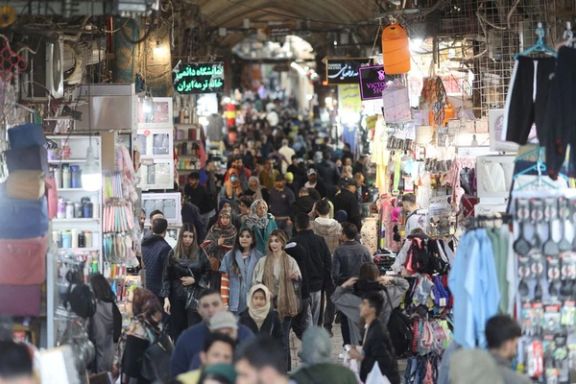
A file photo of Tehran bazaar

Iran has set up a suicide-prevention task force, the vice president for women and family affairs said on Monday, as the government prepares a national plan after rising cases among students and health workers.

Zahra Behrouzazar told an event at Iran University of Medical Sciences that a “Suicide Prevention Command Center” had been formed in Tehran province and would be expanded nationwide.

“Each of us is responsible for reducing suicide and our hope is that suicides will reach zero. This is an ambitious goal and requires a national program,” she said, according to state news agency IRNA. She described suicide as “a form of violence against oneself” and said prevention requires both “structural reforms and changes in mindset”.

Behrouzazar said Iran’s Social Emergency service -- a crisis intervention network run by the State Welfare Organization -- had been “65% effective” in its interventions and operates a 24-hour response in 378 cities.

“We cannot place all the burden on the Social Emergency; the supportive role of families matters,” she added.

Hassan Mousavi Chelek, the Welfare Organization’s deputy for social health, told the same conference the Social Emergency has worked on suicide prevention since 1999 and now runs fixed centers, mobile teams and the 123 hotline around the clock in 378 cities, IRNA reported.

He said interventions related to suicidal thoughts and attempts had increased fivefold between 2021 and 2024, which he said showed both need and growing public trust in the service.

Azarakhsh Mokri, a psychiatrist and associate professor at Tehran University of Medical Sciences, said social factors “more than medical illness” drive suicide risk, citing loneliness, unemployment and relationship breakdowns. He urged broader use of data and new technologies in prevention and cautioned against “over-medicalizing” suicide, IRNA reported.

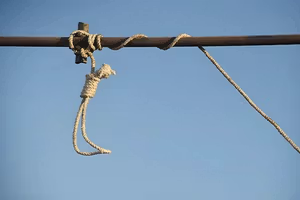
The policy announcements come amid a spate of reported cases. Local rights outlet Haalvsh said on Monday that a farmer in Kahnuj, southeastern Iran, died by suicide at a local agriculture department office following alleged economic pressures, and that an internal-medicine specialist at Saravan’s Iranmehr Hospital was found dead in her dormitory after taking medication.

Also on Monday, a 26-year-old janitor who set himself on fire outside the governor’s office in Shadegan, southwestern Khuzestan province, died of his injuries, rights activists said.

In a separate report, a student collective said a female student died by suicide at Mohaghegh Ardabili University, calling for better campus support; the university has not issued an official statement.

Last year, a senior official at the prosecutor-general’s office said Iran records roughly 130,000 suicide attempts annually with about 7,000 deaths, and that suicide is the third-leading cause of death among people aged 15 to 24, according to reports from September 2024.

The official, Gholam-Abbas Torki, added that while Iran’s overall suicide mortality rate -- around 6.6 to 9.1 per 100,000 depending on the estimate -- is below the global average, it has been on an upward trend and requires scientific and coordinated prevention.

Most Viewed

Ghalibaf defends Iran-US talks amid hardline backlash
1
INSIGHT

Ghalibaf defends Iran-US talks amid hardline backlash

2
ANALYSIS

From instability to influence: Pakistan’s pivotal role in US-Iran diplomacy

3
ANALYSIS

100 days on: why Iran’s January protests spread across social classes

4

War-hit homeowners feel abandoned as Iran’s reconstruction aid fades

5

Iran says no decision yet on talks as Pakistan prepares to host US team

Banner
Banner

Spotlight

  • Iran diplomacy wobbles as factions compete to avoid looking soft on US
    INSIGHT

    Iran diplomacy wobbles as factions compete to avoid looking soft on US

  • The politics of pink: how Iran uses cuteness to rebrand violence
    ANALYSIS

    The politics of pink: how Iran uses cuteness to rebrand violence

  • Bread shortages, soaring prices strain households in Iran, residents say
    VOICES FROM IRAN

    Bread shortages, soaring prices strain households in Iran, residents say

  • 100 days on: the anatomy of Iran’s January crackdown
    INSIGHT

    100 days on: the anatomy of Iran’s January crackdown

  • Ghalibaf defends Iran-US talks amid hardline backlash
    INSIGHT

    Ghalibaf defends Iran-US talks amid hardline backlash

  • From instability to influence: Pakistan’s pivotal role in US-Iran diplomacy
    ANALYSIS

    From instability to influence: Pakistan’s pivotal role in US-Iran diplomacy

  • Iranian farmer hangs himself in public over economic woes, rights group says

    Iranian farmer hangs himself in public over economic woes, rights group says

•
•
•

More Stories

Iran border guards kill six Afghan migrants in Sistan-Baluchestan - Haalvsh

Sep 9, 2025, 10:10 GMT+1

Iranian border guards opened fire on a group of Afghan migrants crossing into Sistan-Baluchestan province, killing six people and wounding five others, the Baluch rights group Haalvsh reported on Tuesday.

Haalvsh, which monitors events in the southeastern province, said around 120 Afghan nationals, including women, children and elderly people, came under fire on September 8 in the border district of Golshan.

The group said Iranian forces used both heavy and light weapons, including a DShK heavy machine gun, without issuing a warning.

According to Haalvsh, the bodies of five of the dead were left at the scene, and one of the wounded lost a leg after being hit by heavy gunfire. It also released the names of those hospitalized in Saravan, adding that the condition of three was critical.

The rights group said about 40 others were detained by border forces.

The US-based Human Rights Activists News Agency (HRANA) described the shooting as “a violation of fundamental human rights,” citing the direct fire on unarmed migrants, including women and children, and the use of heavy weapons. HRANA said the failure to provide timely medical treatment and the collective arrests also breached international law.

Haalvshadded that similar incidents have occurred before. In October 2024, Iranian border forces fired on groups of Afghan migrants, leaving dozens dead, injured or missing.

According to HRANA’s annual monitoring, 484 civilians in Iran were shot by security forces in 2024, with 163 killed and 321 wounded.

  • 'Economic suicide': Afghan expulsions spark labor crisis in Iran

    'Economic suicide': Afghan expulsions spark labor crisis in Iran

  • With post-war deportations, Afghans in Iran bear brunt of official failures

    With post-war deportations, Afghans in Iran bear brunt of official failures

The reported incident comes amid an intensified crackdown on Afghan migrants in Iran. Late in August, an Interior Ministry official said Tehran expelled 1.8 million undocumented migrants in the past year, most of them Afghans, and intends to remove at least 800,000 more under a government plan.

The United Nations has warned of a looming humanitarian crisis in Afghanistan as deportations accelerate. UN experts urged Iran and Pakistan in July to halt forced returns, saying nearly 1.9 million Afghans had been sent back since the start of 2025.

Iran hosts millions of Afghan nationals, many of whom fled decades of war and instability.

Iranian labor, social groups vow Woman, Life, Freedom fight will continue

Sep 9, 2025, 09:06 GMT+1

Twenty-four Iranian labor, social and support organizations said in a joint statement on Monday that the Woman, Life, Freedom movement sparked by the death of Mahsa Amini in 2022 would not be silenced, pledging to continue their struggle for political and social change.

The groups, ranging from teachers’ and oil workers’ councils to environmental and cultural associations, issued the statement in the days leading up to the third anniversary of Mahsa Amini’s death on September 16, which ignited months of nationwide unrest.

“The struggle will not stop,” the statement said, describing the protests as the product of “more than four decades of resistance.”

The groups called for three central demands: “an end to gender apartheid,guaranteed public welfare, and unconditional political, social and cultural freedoms.”

The signatories said the 2022 protests, which began after the 22-year-old Kurdish woman’s arrest by morality police for allegedly violating hijab rules and her consequent death, embodied wider grievances over poverty, corruption, repression and inequality.

“The uprising of Woman, Life, Freedom arose as a deeper cry against poverty, economic pressure, discrimination, repression and humiliation,” the statement read.

The groups cited a list of crises they said were rooted in “the authoritarian, discriminatory and despotic structure of political Islam.”

These included “a deep wealth gap, gender discrimination, concentration of power in the hands of a small ruling minority, systematic corruption, mass unemployment, structural poverty, forced migration, environmental destruction and organized repression.”

The statement also linked Iran’s foreign and security policies to domestic hardship. “The specter of war over society is constantly increasing, the result of warmongering policies, proxy forces and insistence on nuclear armament, which have drained people’s lives,” it said.

The organizations said protests over inflation, utility shortages, lifestyle restrictions, political prisoners and executions were all part of the same continuum of struggle.

“No reform from above can heal these wounds... The true force of this revolution is in the streets, in strikes, in the solidarity of workers, women, youth, teachers, retirees, students and marginalized groups,” they wrote.

They voiced demands for the release of political prisoners, an end to executions and for social justice. “We declare loudly: no power from above, no behind-the-scenes compromise and no imposed order has the right to decide for the people,” the statement said.

  • Iranian activist urges global rallies to mark Mahsa Amini death anniversary

    Iranian activist urges global rallies to mark Mahsa Amini death anniversary

The anniversary comes as Canada-based activist Hamed Esmaeilion has called for rallies in more than 20 cities worldwide, including Toronto, Berlin, London and Sydney, between September 13 and 16 to mark Amini’s death. He said the demonstrations would commemorate those killed or imprisoned since 2022 and demand accountability from Iranian authorities.

Rights groups say at least 551 people, including women and children, were killed during the protests that followed Amini’s death, while thousands were arrested. Amnesty International has described Iran’s crackdown as crimes against humanity, and a UN fact-finding mission has said systemic repression, particularly against women and girls, continues.

“The revolution is not only for a change of political structure,” the Iranian groups’ statement concluded. “It is to end centuries of oppression, exploitation and backwardness, and to open a path where welfare, freedom and equality are a daily reality.”
Khamenei aide’s son warns of possible assassination plot against leader

Sep 9, 2025, 08:27 GMT+1

Hamzeh Safavi, son of Yahya Rahim-Safavi, a senior military adviser to Supreme Leader Ali Khamenei, said Iran must be prepared for the possibility that Israel could attempt to assassinate the country’s top leader.

In a video interview, Safavi, a political science professor at Tehran University, repeatedly referred to the possibility of Khamenei’s killing, describing such scenarios as “disruptive and hostile acts” that Israel might pursue independently of US approval.

“If the issue of access to the number one or number two person in the country arises, they will carry it out at any cost, even at the risk of war,” Safavi said. “If Israel does this without America’s permission, the US will face a fait accompli, and Iran will be forced to think through its response.”

Former Israeli defense minister Yoav Gallant said last week that eliminating Khamenei should be part of Israel’s plan in any future conflict. Israeli officials, including Defense Minister Israel Katz, have also issued warnings aimed at the Supreme Leader, amid heightened rhetoric between Tehran and Tel Aviv following their 12-day war in June.

  • ‘You got beat to hell’: Trump says he saved Khamenei from death

    ‘You got beat to hell’: Trump says he saved Khamenei from death

  • Israel must kill Khamenei in next round of Iran war, ex-defense chief says

    Israel must kill Khamenei in next round of Iran war, ex-defense chief says

  • Israel threatens Khamenei after Iranian outlet publishes kill list

    Israel threatens Khamenei after Iranian outlet publishes kill list

Safavi said US President Donald Trump had once claimed he stopped Israeli plans to target Khamenei during the June conflict. Trump later boasted he had “saved” the Iranian leader from what he called a “very disgraceful and humiliating death.”

While Safavi said war with Israel remained possible, he warned of what he called a more dangerous scenario of “gradual humiliation and erosion” if Iran did not respond to escalating threats.

“The worst scenario is not war. The worst scenario is being worn down,” he said.

  • Iran security council move shines faint light on post-Khamenei future

    Iran security council move shines faint light on post-Khamenei future

  • Iran after Khamenei? Israeli and US threats push succession into view

    Iran after Khamenei? Israeli and US threats push succession into view

  • Succession debate flares after critic’s apparent backing of Khamenei’s son

    Succession debate flares after critic’s apparent backing of Khamenei’s son

Safavi also voiced rare criticism of Khamenei’s long-held stance on Washington, urging Iran to pursue what he called “comprehensive negotiations” with the United States that go beyond uranium enrichment.

“The nuclear deal was a single-issue agreement, and that is why it failed,” he said. “We need comprehensive talks with America.”

Rahim-Safavi, his father and Khamenei’s longtime military adviser, has himself said another war with Israel may be inevitable, but could be the last. “We soldiers always plan for the worst-case scenario,” he said in August.

Iran judiciary says 21 official bodies responsible for April port blast

Sep 9, 2025, 07:31 GMT+1

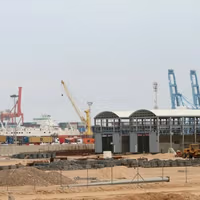
Twenty-one official bodies were found responsible for the April explosion at Shahid Rajaee port, southern Iran, that killed 58 people and injured more than 1,500, Iran’s judiciary said on Monday.

The judiciary said experts concluded that poor storage of hazardous materials, weak oversight, and lack of coordination among authorities contributed to the disaster. Official bodies including the Ports and Maritime Organization, Customs, the Central Bank and several ministries, were among those cited.

The blast, triggered by containers in the wharf area and followed by a massive fire, devastated part of Bandar Abbas’s main port infrastructure.

The Mostazafan Foundation, a multi-billion-dollar conglomerate controlled by Supreme Leader Ali Khamenei and sanctioned by the United States, was also named.

Judiciary chief Gholamhossein Mohseni Ejei called the explosion “very bitter and sad” and said inquiries into both organizations and individuals were continuing.

“According to expert assessments, some organizations and individuals were found at fault. Once the matter is finalized, those responsible will be held accountable,” he said on Monday.

He said several people had been arrested, but gave no numbers.

Ejei said damages for all 58 victims had been secured and most families had already received payments. Assistance has also been provided to survivors and to businesses that lost property.

The blast began with a fire in a container yard at the Sina company site in Bandar Abbas and spread quickly, destroying part of Iran’s main southern port. The area was operated by Sina Marine and Port Services, a subsidiary of the Mostazafan Foundation. Satellite images showed the yard, which could hold up to 20,000 containers, was completely destroyed.

The judiciary said port operations have restarted, with new measures promised to prevent similar tragedies.

Ejei said the judiciary would press for tougher safety enforcement and faster investigations. “Matters must be pursued with determination and should not be allowed to drag on,” he said.

Iran court sentences six Baha'i women to combined 39-year prison term

Sep 8, 2025, 21:33 GMT+1

An Iranian court has ordered six Baha'i women in the western city of Hamedan to serve a combined 39 years in prison on charges linked to their religious activity, a US-based rights group reported on Monday.

The women — Neda Mohebbi, Atefeh Zahedi, Farideh Ayubi, Noura Ayubi, Zarrindokht Ahadzadeh and Zhaleh Rezaei — were told to appear within ten days at the Hamedan Revolutionary Court to begin serving their terms, the Human Rights Activists News Agency (HRANA) said.

They were convicted in June 2024 of membership in the Baha’i community and of spreading propaganda against Islam, and their sentences were later upheld on appeal.

The six were first detained in November 2023 by security forces and later released on bail in December. Their homes were searched during the arrests, HRANA said.

Baha'is constitute the largest religious minority in Iran and have faced systematic harassment and persecution since the Islamic Revolution of 1979.

The Islamic Republic does not recognize the Baha’i faith as an official religion, unlike Christianity, Judaism or Zoroastrianism.

The Iranian Baha’i community has faced nearly 1,500 years in prison sentences over the past five years, according to a report by HRANA last month.

At least 284 Baha’is were arrested and 270 were summoned to security or judicial institutions in Iran between August 2020 and 2025.

Nearly three-quarters of documented violations of religious minority rights in Iran have involved Baha'is over the past three years, according to the report.