• العربية
  • فارسی
Brand
  • Iran Insight
  • Politics
  • Economy
  • Analysis
  • Special Report
  • Opinion
  • Podcast
  • Iran Insight
  • Politics
  • Economy
  • Analysis
  • Special Report
  • Opinion
  • Podcast
  • Theme
  • Language
    • العربية
    • فارسی
  • Iran Insight
  • Politics
  • Economy
  • Analysis
  • Special Report
  • Opinion
  • Podcast
All rights reserved for Volant Media UK Limited
volant media logo

Iran struck key Israeli defense and research sites in June, official says

Aug 4, 2025, 15:48 GMT+1Updated: 05:37 GMT+0
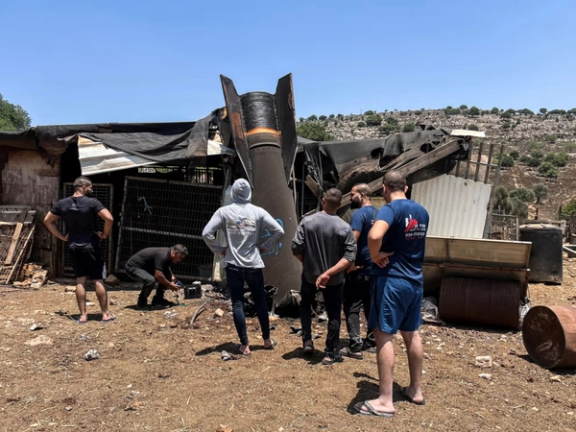
People look at apparent remains of a ballistic missile following missile attack by Iran on Israel, in northern Israel, June 24, 2025.

Attacks on Israeli military, intelligence and scientific centers in a 12-day war in June demonstrated Iran's ability to hit its enemy's critical defense infrastructure, a senior official affiliated with the office of Iran’s Supreme Leader said on Monday.

The targets included major Israeli defense contractor Rafael and research institution the Weizmann Institute of Science, said Mehdi Abbasi-Mehr, political director of the Supreme Leader’s office in Iranian universities.

“We hit the Rafael factory. Go search the internet. Rafael made $3.5 billion in profit in one year. Rafael is the manufacturer of the Iron Dome. Manufacturer of David’s Sling and Arrow 3,” Abbasi-Mehr told a public forum referring to missile interceptors.

“Everyone in the world who uses a shoulder-launched Spike bought it from Rafael.”

Missile attacks on June 16 and June 20 targeted the company's facilities in the northern Israeli city of Haifa.

Rafael Advanced Defense Systems is a key Israeli state-owned weapons manufacturer responsible for some of Israel’s most prominent missile defense platforms.

Iranian forces also targeted the Weizmann Institute of Science, added Abbasi-Mehr, who described it as “the strategic brain of Israel’s science and technology,” alleging it is key to Israel’s nuclear, missile and biological research.

The Weizmann Institute of Science was established in 1934 as a public research university in Rehovot, fourteen years before the State of Israel was founded.

A June 15 attack on what researchers have called Israel's "crown jewel of science" destroyed as many as 25 labs according to local media reports, with no public indication that defense-related projects were hit.

“They have major defense contracts,” Abbasi-Mehr said, adding that the institute’s affiliated activities are located in the Gav Yam Science and Technology Park. “We hit Gav Yam.”

The Gav Yam site, also known as the Negev Advanced Technologies Park, is a technology park founded in 2013 in Be'er Sheva, located in Israel's Negev Desert.

Abbasi-Mehr claimed additional hits on Israeli C4 command centers and Aman, the military intelligence directorate, where he said Unit 8200 — Israel’s signals and cyber intelligence division — is based.

“The footage exists,” he said. “Despite their censorship, the footage exists. And we hit all of it during the day. All of it was hit during daylight.”

His comments follow a July report by The Telegraph citing radar data from Oregon State University showing Iranian missiles struck five Israeli military facilities during the June conflict. That analysis indicated damage to an air base, a logistics hub and an intelligence site.

The Israeli military did not confirm the specific damage but said operations remained “functionally continuous.”

The 12-day war left over 1,000 Iranians dead and thousands more injured. Israel reported 29 deaths, mainly civilians, and over 3,000 wounded.

A brokered ceasefire ended the conflict after extensive drone and missile exchanges.

Most Viewed

Ghalibaf defends Iran-US talks amid hardline backlash
1
INSIGHT

Ghalibaf defends Iran-US talks amid hardline backlash

2
INSIGHT

100 days after carnage: Iran economy reels from war, inflation, unemployment

3
INSIGHT

A nation in limbo: 100 days after the massacre, has the world moved on?

4
ANALYSIS

From instability to influence: Pakistan’s pivotal role in US-Iran diplomacy

5
ANALYSIS

100 days on: why Iran’s January protests spread across social classes

Banner
Banner

Spotlight

  • War-hit homeowners feel abandoned as Iran’s reconstruction aid fades

    War-hit homeowners feel abandoned as Iran’s reconstruction aid fades

  • 100 days on: the anatomy of Iran’s January crackdown
    INSIGHT

    100 days on: the anatomy of Iran’s January crackdown

  • Ghalibaf defends Iran-US talks amid hardline backlash
    INSIGHT

    Ghalibaf defends Iran-US talks amid hardline backlash

  • 100 days on: why Iran’s January protests spread across social classes
    ANALYSIS

    100 days on: why Iran’s January protests spread across social classes

  • From instability to influence: Pakistan’s pivotal role in US-Iran diplomacy
    ANALYSIS

    From instability to influence: Pakistan’s pivotal role in US-Iran diplomacy

  • A nation in limbo: 100 days after the massacre, has the world moved on?
    INSIGHT

    A nation in limbo: 100 days after the massacre, has the world moved on?

•
•
•

More Stories

‘Buy now, pay later’ culture spreads to Iran’s corner shops due to cash crunch

Aug 4, 2025, 12:46 GMT+1

As inflation continues to erode household incomes in Iran, a growing number of corner shops and grocery vendors across the country are quietly reviving an old tradition: the ledger-based, buy-now-pay-later system, Iranian daily Etemad wrote on Monday.

Once limited to big-ticket items like furniture or electronics, installment purchases are now being used to pay for daily essentials, from fruit and rice to detergent and chicken.

According to Etemad, field reports from Tehran and other cities suggest that even small neighborhood grocers and butchers are offering informal credit lines to loyal customers, often without collateral, checks, or formal agreements — simply on trust.

“They come every week and settle their bills at the start of the month, once salaries come in,” said one Tehran shopkeeper. “It’s like an installment plan — just between us.”

Strain breeds new norms

The practice, known locally as “hesab-daftari” (ledger credit), is expanding rapidly amid what economists describe as a deepening period of stagflation — a toxic mix of high inflation and economic stagnation. The article says the shift reflects a broader trend: the normalization of debt as a tool for day-to-day survival.

“In the past, installment buying was for luxury goods,” Etemad cited Ahmad Janjan, an economist based in Tehran. “Now it’s a way to afford bread and shampoo.”

He added that this shift is driven primarily by falling real wages, lack of liquid savings, and the rising cost of living.

From credit apps to corner stores

While fintech platforms like Digikala and Snapp Pay – Iran's top online markets -- have introduced digital installment options with slogans such as “no check, no guarantor,” it is the informal, person-to-person credit that is becoming more prevalent.

Some meat shops now allow buyers to split payments for poultry and beef. In produce markets, fruit vendors maintain handwritten tabs for repeat customers. Others offer agreements on mutual trust, sometimes in exchange for steady patronage.

'Buy now, pay more'

But not everyone is embracing this development as a lifeline.

“The shirt I bought online cost me 1,500,000 rials (about $2) more than in the store,” one customer wrote on social media. “But the store wouldn’t sell in installments. I had no choice.”

Others raised concerns about hidden fees and rising consumer debt. “This isn’t just delayed payment,” another user commented. “It’s disguised interest — and it adds up.”

Etemad cited Iranian economists as warning that while installment buying can temporarily soften financial blows, it also carries long-term risks in the absence of consumer protections or reliable credit scoring systems.

“There are no unified regulations on this,” said Janjan. “People may end up with debt they can’t service, all for everyday necessities.”

The growing reliance on credit is also changing spending behavior. Morteza Afghah, another economist, told the daily, “You get what you need today, but repayment obligations can pile up and strain households even more.”

Afghah links the trend to "deep-rooted structural issues, including political instability, bureaucratic inefficiencies, and unstable regulation — all of which raise production costs and feed into the country’s chronic inflation."

He warned that installment-based purchases are becoming more diverse fast, attributing the trend to what he called "stagflation."

“We are not only facing inflation and recession at the same time, but their combination — stagflation — has become a chronic condition in Iran’s economy, making it more difficult and time-consuming to address.”
Iran expects IAEA visit within 10 days but future cooperation still in doubt

Aug 4, 2025, 08:37 GMT+1

No inspectors from the International Atomic Energy Agency are currently present in the country, Iran said on Monday, adding that future cooperation with the agency will be determined following an upcoming visit by a senior IAEA official.

“We are obliged to regulate our interactions with the agency based on the law passed by parliament,” the Foreign Ministry Spokesman Esmail Baghaei said during his weekly briefing, referring to legislation that suspended IAEA access to nuclear sites.

In late June, Iran’s parliament approved a bill to suspend the country’s cooperation with the IAEA, a day after a ceasefire with Israel following 12 days of deadly war.

The bill, passed with 221 votes in favor, none against, and one abstention out of 223 members present, bars the UN nuclear watchdog’s inspectors from accessing Iran’s nuclear facilities.

Iran also accused the agency chief Rafael Grossi of bias and failing to condemn the attacks.

No normal situation, Iran says

Baghaei said Monday that Iran’s nuclear facilities came under attack during the recent conflict, adding that the current situation is not normal and could raise concerns about ensuring the safety of international inspectors.

The scheduled visit, according to the ministry, expected within 10 days, will take place within the framework of technical cooperation.

However, Baghaei said, “The visit of IAEA representatives to Tehran is being carried out to examine the matter. We are facing an exceptional situation: for the first time in the history of the International Atomic Energy Agency, the operating facilities of a Non-Proliferation Treaty member state—facilities under 24-hour agency supervision—have come under unlawful attack by two nuclear-armed regimes."

The foreign ministry accused the IAEA of abandoning neutrality, failing to condemn the attacks, and enabling external pressure through its own actions.

‘Defensive capabilities not up for negotiation’

Iran would assess the outcome of the IAEA visit and make decisions about future cooperation in line with the binding parliamentary mandate, Baghaei added.

Any further negotiations must include demands for accountability and compensation over the strikes on nuclear infrastructure, he said.

Responding to recent comments by British Foreign Secretary David Lammy, who said Iran’s 60 percent enrichment has no civilian justification, Baghaei dismissed the remarks as politically motivated.

“He is in no position to cast doubt on Iran’s nuclear program,” the ministry spokesman said.

Iran’s defensive capabilities would not be subject to any negotiation, Baghaei said, criticizing the European parties to the nuclear deal for “inconsistency.”

While deputy foreign ministers remain in contact, he said, no date has been set for a next round of talks with the E3.

Snapback would draw ‘decisive response,’ Iran says

Aug 4, 2025, 08:29 GMT+1

Tehran would issue a firm response if European governments trigger the snapback mechanism under UN Resolution 2231, Iran’s Deputy Foreign Minister Kazem Gharibabadi said Sunday.

“We have made it clear to the United Nations and the Security Council that such a step is a misuse of international structures, and the Islamic Republic will respond decisively,” he said.

Speaking to parliament’s national security and foreign policy committee, Gharibabadi said Tehran instead suggested talks on formally ending both the resolution and the snapback clause.

The government remains committed to the law suspending cooperation with the International Atomic Energy Agency, Ebrahim Rezaei, the committee’s spokesperson, quoted Gharibabadi as saying.

President Masoud Pezeshkian enacted the IAEA suspension law early in July, following its approval by parliament and the Guardian Council. Rezaei described the legislation as “binding and enforceable.”

European states have failed to uphold their obligations under the nuclear agreement, the deputy foreign minister said, and therefore “have no right to activate snapback,” according to Rezaei.

Meanwhile, hardline newspaper Farhikhtegan warned in an article of escalating tensions, the possibility of military conflict, and the formation of a global consensus against the Islamic Republic following activation of the snapback mechanism by European countries.

Iran aligns with China, Russia on snapback response

Tehran had held a trilateral meeting with Beijing and Moscow to coordinate a joint stance in case the European powers move to reimpose UN sanctions, Gharibabadi told the committee.

His comments follow renewed scrutiny of Iran’s ties with its two main partners.

On Sunday, Revolutionary Guard political deputy Yadollah Javani responded to domestic criticism over Chinese and Russian inaction during Israeli attacks by saying Tehran had made no request for support.

Long-term agreements with both countries “do not oblige them to defend the Islamic Republic during war,” he added.

Separately, Saudi outlet Al Hadath reported that the United States is pressuring China to halt Iranian oil imports.

Beijing has expressed willingness to reduce purchases if offered lower prices elsewhere.

Citing informed sources, Al Hadath also reported that according to US assessments, the administration of US president Donald Trump may have no more than one year left to act against the Islamic Republic’s nuclear program.

“Washington does not intend to give Tehran any opportunity to rebuild its power,” wrote the outlet.

US President Donald Trump repeatedly said that American airstrikes had obliterated Iran’s nuclear infrastructure.

Iranian cleric warns Arbaeen pilgrims against criticizing pro-Tehran militias in Iraq

Aug 4, 2025, 08:08 GMT+1

Mofid Hosseini Kouhsari, deputy for international affairs of Iran’s seminaries, has called on Iranian pilgrims traveling to Iraq for the upcoming Arbaeen pilgrimage to refrain from criticizing forces aligned with Tehran, including the Iran-backed Hashd al-Shaabi militia.

“Hashd al-Shaabi ensures the security of Arbaeen,” Kouhsari said. “We should not say anything that undermines the importance of our allies or the resistance forces. This is a shared position we must uphold.”

He cautioned against openly voicing political opinions about Iraqi factions, warning that doing so could trigger internal tensions. “There is no reason for our pilgrims to speak freely and recklessly about Iraq’s political currents. God forbid it leads to discord,” he added.

Since the 2003 US invasion that ousted Saddam Hussein, numerous militias have emerged in Iraq, many with ties to Iran. Following the outbreak of the Israel-Hamas war in October 2023 and the recent Israel-Iran escalation, including US strikes on Iranian nuclear sites, the pro-Iran factions have periodically targeted US bases in Iraq.

Groups within the Popular Mobilization Forces (PMF), an umbrella group of mostly Shia armed groups originally formed to fight the Islamic State and then integrated into Iraq's security forces, have been among those involved.

A focal point of US-Iraqi tensions lies in the future of the PMF. Though nominally under Iraqi military command since 2016, many PMF units maintain strong ties to Iran and operate with broad autonomy.

Missing embryos case at Tehran fertility clinic triggers legal probe

Aug 3, 2025, 20:25 GMT+1

Iran’s judiciary is investigating claims that frozen embryos were lost or misidentified at a state-affiliated hospital in Tehran, in a case that has deepened concerns about trust and oversight in the country’s fertility services.

Sajjad Razavi, deputy health minister for treatment affairs, confirmed Sunday that the case will soon be submitted to the prosecutor’s office.

“The issue is under review, and the file is being completed,” Razavi told Tasnim News Agency. "Any violations are under investigation, and the final decision will be made by the judiciary."

The embryos have since been moved to a different medical center “in coordination with the owners,” he said.

The controversy surfaced after Shargh newspaper reported on July 29 that multiple frozen embryos stored at Aban Hospital in Tehran had disappeared or been wrongly transferred.

Four months earlier, the hospital had abruptly shut down its IVF unit without informing families who had stored embryos, sperm, or eggs.

Families discovered the issue by accident, and in some cases were told that their embryos were either missing or delivered to the wrong recipients during the relocation process.

In vitro fertilization (IVF) is permitted in Iran under religious guidance. Demand for fertility services has surged in recent years as the country grapples with declining birth rates, rising infertility, and widespread economic uncertainty delaying marriage and childbearing.

Government policy has increasingly emphasized population growth, with officials urging couples to have more children. However, access to fertility care remains costly and largely urban-centered, driving some to entrust long-term embryo storage to major hospitals.

Aban Hospital is run by Iran University of Medical Sciences and falls under the Health Ministry.

However, health officials have denied any wrongdoing. “The embryos were being preserved under proper conditions,” Mohammadreza Foroughizad, head of public relations at the university, said on July 30.

University president Nader Tavakkoli dismissed the affair as a misunderstanding caused by temporary renovations and said no embryos had been harmed.

But Shargh reported that police visited the hospital on July 28 and formally registered family complaints. Many families still do not know where their frozen embryos are.

They are demanding accountability, judicial action, and compensation for damages, as well as the safe return of their biological material.