• العربية
  • فارسی
Brand
  • Iran Insight
  • Politics
  • Economy
  • Analysis
  • Special Report
  • Opinion
  • Podcast
  • Iran Insight
  • Politics
  • Economy
  • Analysis
  • Special Report
  • Opinion
  • Podcast
  • Theme
  • Language
    • العربية
    • فارسی
  • Iran Insight
  • Politics
  • Economy
  • Analysis
  • Special Report
  • Opinion
  • Podcast
All rights reserved for Volant Media UK Limited
volant media logo
OPINION

Watching war from afar: Iranian diaspora grief is real

Farnaz Farrokhi
Farnaz Farrokhi

Clinical Counsellor

Jul 15, 2025, 11:44 GMT+1Updated: 07:50 GMT+0
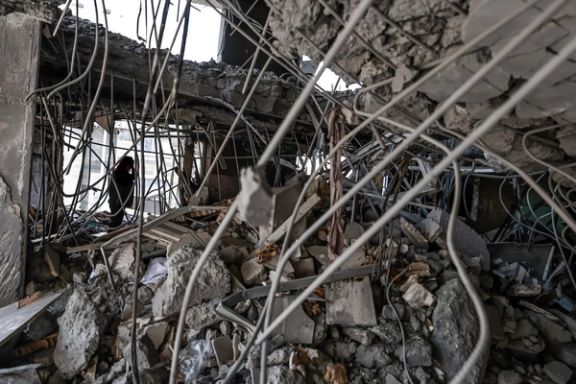
A building destroyed by an Israeli strikes

Watching Iran burn from afar creates a unique kind of anguish—a sense of guilt that you’re free and safe while your homeland is in pain.

As someone who lived through the Iran-Iraq War and now works as a trauma-informed grief and anxiety counselor, I’ve felt both sides of this reality—the trauma of conflict and the quiet torment of safety, watching loved ones suffer from a distance.

For many Iranians in the diaspora, the images flooding our screens—of women removing their hijabs, of protesters facing violence, of families torn apart—rekindle our own memories of fear and loss.

If you’ve fled to safety and now witness the struggle through your screen, know this: your pain is real, your feelings valid. You are not alone.

The surreal reality of distance

There’s something disorienting about watching your homeland’s suffering while living in freedom. You might scroll through news obsessively, heart racing with each update.

Drinking your morning coffee while reading about another protester’s death or celebrating your child’s milestones while Iranian children face fear can create a jarring emotional split.

You may feel guilty for the freedoms you now enjoy, relive past traumas or find yourself emotionally transported back to earlier moments of fear and helplessness.

For many, simply navigating daily life while carrying the emotional weight of a distant crisis can be overwhelming.

Understanding diaspora trauma

The trauma felt in exile is layered and often misunderstood. Relief and guilt coexist—grateful to be safe, yet emotionally anchored to a country still suffering.

This survivor’s guilt is hard to shake when the crisis back home hasn’t ended.

Photos of crackdowns, arrests, or even the Iranian flag may evoke grief. Persian news broadcasts, protest chants or traditional music can trigger memories of fear or loss.

Well-meaning comments like “at least you’re safe” may feel dismissive and isolating. And the challenge of reconciling your identity with how Iran is portrayed in the media can deepen the sense of disconnection.

Survivor’s guilt, silent shame

You may wonder why you deserve freedom when others don’t. Everyday joys—walking outside unveiled, speaking freely, or laughing aloud—can feel laced with shame.

The belief that you’re not doing “enough” to help those still struggling can intensify that guilt. The privilege of safety and agency, once hard-won, may suddenly feel too heavy to carry.

Even in safety, your body may react as if under threat.

This is secondary trauma—when witnessing violence affecting your community triggers real psychological responses: flashbacks, insomnia, numbness, anxiety.

Your body is trying to stay connected to those you’ve left behind, even if it can’t protect them.

Grounding in the present

When emotions become overwhelming, grounding techniques can help return you to the present moment.

One simple method is the 5-4-3-2-1 sensory technique, which gently anchors you through what you can see, touch, hear, smell, and taste:

Five things you can see: A window, a tree, a book, a rug, etc. 4 things you can touch: Clothing, floor, cup, chair. 3 things you can hear: Birds, traffic, your breath. 2 things you can smell: Tea, candle, your shirt. 1 thing you can taste: Water, gum, tea.

It’s especially helpful when anxiety or distress feel like too much to bear. Each sensory cue offers a small reminder: you are here, and you are safe.

Breath and affirmation

Another powerful tool for managing intense emotion is breathwork paired with gentle affirmations.

Begin by placing a hand on your chest or belly. Inhale slowly through your nose to a count of four, pause for a moment, then exhale gently through your mouth for a count of six. Let your breath settle into a rhythm.

As you breathe, repeat calming words to yourself: I am here. I am safe. This is now. You might remind yourself, My freedom honors those still fighting, or My survival is not betrayal—it is resilience.

These affirmations are not meant to erase the pain, but to acknowledge it—and to help you stay rooted in your reality. You carry Iran in your heart.

You can grieve and still build a meaningful life. Breath by breath, you remind your nervous system that you are allowed to heal.

Healing together

Living between two worlds can be confusing and lonely—but healing doesn’t mean letting go of who you are. Both identities can coexist.

Making Persian food while playing Googoosh or Dariush, dancing along with pop videos, or wearing a necklace from home can be quiet acts of memory and resilience. They allow you to choose when to share your story and when to simply carry it.

And in that space, both sorrow and joy can safely exist together.

The light that enters

Survivor’s guilt is the shadow of resilience—proof that you care deeply. It’s a heavy ache, a reminder that freedom comes at a cost. But when you name that grief, you create space for compassion, purpose, and solidarity.

As Rumi wrote: “The wound is the place where the light enters you.”

Let that wound become your strength. You are not broken. You are connected. And you are allowed to move forward—carrying Iran with you as you do.


Most Viewed

Ghalibaf defends Iran-US talks amid hardline backlash
1
INSIGHT

Ghalibaf defends Iran-US talks amid hardline backlash

2
VOICES FROM IRAN

Bread shortages, soaring prices strain households in Iran, residents say

3
ANALYSIS

From instability to influence: Pakistan’s pivotal role in US-Iran diplomacy

4
ANALYSIS

100 days on: why Iran’s January protests spread across social classes

5

War-hit homeowners feel abandoned as Iran’s reconstruction aid fades

Banner
Banner

Spotlight

  • Is Iran entering its Gorbachev moment?
    INSIGHT

    Is Iran entering its Gorbachev moment?

  • Iran crackdown reaches cemeteries as graves of slain protesters defaced
    EXCLUSIVE

    Iran crackdown reaches cemeteries as graves of slain protesters defaced

  • Iran diplomacy wobbles as factions compete to avoid looking soft on US
    INSIGHT

    Iran diplomacy wobbles as factions compete to avoid looking soft on US

  • The politics of pink: how Iran uses cuteness to rebrand violence
    ANALYSIS

    The politics of pink: how Iran uses cuteness to rebrand violence

  • Bread shortages, soaring prices strain households in Iran, residents say
    VOICES FROM IRAN

    Bread shortages, soaring prices strain households in Iran, residents say

  • Ghalibaf defends Iran-US talks amid hardline backlash
    INSIGHT

    Ghalibaf defends Iran-US talks amid hardline backlash

•
•
•

More Stories

Iran doubts Israel ceasefire and is ready for combat, defense minister says

Jul 14, 2025, 22:10 GMT+1

Iran's defense minister on Monday said the Islamic Republic does not trust the current ceasefire with Israel and has prepared multiple military scenarios in anticipation of renewed hostilities.

“The Islamic Republic does not trust the ceasefire,” Aziz Nasirzadeh said in a phone call with Turkey’s defense minister Yasar Guler on Monday, according to the state-run IRNA news. “We have therefore anticipated various scenarios for any new adventurism.”

“We are not seeking to expand war and insecurity in the region, but we are ready to give a firm and regret-inducing response to any act of aggression,” he added.

Nasirzadeh also criticized the timing of the strikes, saying, “The attack on Iran took place during negotiations. We have proven to the world that we are not opposed to dialogue and negotiation.”

On June 13, Israel launched a large-scale surprise air campaign against Iran, striking multiple nuclear and military sites as part of the opening phase of what became a 12‑day conflict.

Hundreds of Iranian civilians were killed in the Israeli airstrikes. Iranian missile attacks also killed 27 Israeli civilians.

Following the Israeli strikes, Iran–US nuclear talks scheduled for June 15 in Muscat were called off.

The United States joined the offensive on June 22 with its own strikes—dubbed Operation Midnight Hammer—involving B‑2 bombers and Tomahawk cruise missiles targeting Natanz, Fordow, and Isfahan.

A ceasefire came into effect on June 24, brokered by US President Donald, marking the end of the fighting. While the ceasefire ended the air war, its long-term viability remains in doubt.

Last month, Iran’s reformist daily Shargh described the ceasefire as legally fragile and unpredictable.

“The ceasefire is not based on any international legal standards, regulations, or the rules of official global organizations and institutions,” the newspaper wrote.

“In fact, it is a temporary and ambiguous ceasefire, and there can be no serious certainty about its durability.”

Last week, Prime Minister Benjamin Netanyahu said in an interview that Israel had rolled back Iran's nuclear program but implied the Jewish state had not yet finished its confrontation with the Islamic Republic.

In rare riposte, Khamenei’s office lashes out at Israeli ex-defense minister

Jul 14, 2025, 21:53 GMT+1

Ali Khamenei’s office has responded to an open letter sent by former Israeli defense minister Yoav Gallant to Iran's Supreme Leader, calling it propaganda and a “full-scale psychological operation.”

In an op-ed published Monday on Khamenei’s official website, his office issued a rare rejoinder to Israeli officialdom in which it dismissed Gallant's assertions of overwhelming Israeli military and intelligence superiority.

The statement described Gallant's message as part of “a conflict whose primary battlefield is not border zones, but public perception and the realm of awareness.”

Gallant’s letter, dated July 9, highlighted what he described as Israel’s supremacy over Iran which had unraveled the Islamic Republic's long-held strategy.

“What unfolded in June 2025 was not merely a military campaign. It was the strategic collapse of a system you spent four decades constructing,” Gallant wrote, referring to the 12-day Iran-Israel war last month.

Israel launched a series of strikes on June 13 which pounded military and nuclear sites, assassinated senior commanders and killed hundreds of civilians. Iranian missiles killed 27 Israeli civilians.

Gallant warned Khamenei that Israel has full access to Iran’s inner workings, including military planning and high-level decision-making.

“We knew your schedules. Your sites. Your communications. Your conversations with your closest allies — most of whom are no longer with you — in Beirut, Damascus, and Tehran. Your timelines. Your fallback plans. And your blind spots,” he wrote.

The letter also highlighted weaknesses in Iran’s air defenses and warned that any attempt to restore the nuclear program would invite future attacks.

“Abandon your war against a small, determined country a thousand miles from your border," Gallant said, "and focus instead on the welfare and future of your own people.”

Iran considering closing Strait of Hormuz, lawmaker suggests

Jul 14, 2025, 17:50 GMT+1

A senior Iranian lawmaker on Monday suggested Iran might use its military to seal the strategic Strait of Hormuz waterway as tensions continue over stalled nuclear talks following a 12-day conflict with Israel and the United States.

Esmail Kowsari told Hezbollah-affiliated Al Mayadeen TV that no decision on closing the Strait had been made but military preparations to do so were ready.

“Military measures concerning the Strait of Hormuz have been completed, but no decision has yet been made regarding its (closure) and the matter is still under review,” said Kowsari, a member of the parliament's national security committee.

The Strait of Hormuz is a waterway bordered by Iran, the United Arab Emirates, and Oman. Around a fifth of global oil and gas shipments pass through the strategic chokepoint, which was a site of conflict in the Iran-Iraq in the 1980s but was spared in the Mideast combat last month.

Tehran, Kowsari added, has not walked away from negotiations but US attacks on Iranian nuclear sites violated Iran's sovereignty and hurt diplomatic efforts.

Conditions for resuming talks do not currently exist, Kowsari said.

Iranian officials have repeatedly threatened to close the strait as tensions with Israel and the United States have flared in recent years.

Last month, Kowsari told state media that the Iranian parliament had approved a measure to close it but that the measure was not binding, and the final decision rests with Iran’s top decision-making body, the Supreme National Security Council.

A closure would likely upend global energy markets and risk triggering broader conflict.

US-Israeli attacks aimed at Iran regime change, presidential aide says

Jul 14, 2025, 16:25 GMT+1

A joint American-Israeli plan to collapse Iran’s leadership within days of a surprise Israeli attack last month failed and only alienated the public, Iranian presidential aide Ali Rabiei said.

“According to the plan drawn by Israel and the United States, the regime was supposed to fall by the ninth or tenth day of the war,” Rabiei, a veteran of the intelligence ministry and a former cabinet minister, told local media.

“When Trump told the people of Tehran to leave the city, it was clear something was meant to happen—but it failed.”

The 12-day campaign assassinated Iranian military commanders and pounded military targets but killed hundreds of civilians. A US attack on Iranian nuclear sites capped off the conflict. Iranian missiles killed 27 Israelis.

Both US President Donald and Israeli Prime Minister Benjamin Netanyahu mooted regime change and killing Iran's Supreme Leader during the conflict.

Tehran officialdom swiftly declared the conflict a victory, in a narrative which jarred many war-weary Iranians.

Netanyahu said the conflict reversed Iran’s nuclear progress and set the stage for internal political collapse.

“We hit them right on the nose, in the groin,” he told US network Newsmax in an interview on Thursday. “It creates a possibility inside Iran, because the people who are being tyrannized now say they have hope.”

But Rabiei said Iran’s population had only grown more embittered.

“The day Evin prison was bombed—a surreal scene in which women prisoners, medics and soldiers were killed—they expected protests,” he said, referring to an Israeli air strike on a notorious prison which killed dozens of people. “Instead, people were consumed with hatred for Israel.”

“No country is better off after regime change following a war. Israel does not care what happens to Iran afterward—it just wants Iran not to be strong,” he added.

A fragile ceasefire remains in place between Iran and Israel after Trump said US attacks had “obliterated" Iran’s nuclear program.

Iran confirms GPS jamming, eyes switch to Chinese system

Jul 14, 2025, 13:29 GMT+1

Iran’s communications ministry confirmed deliberate GPS jamming affecting millions of people in the wake of a war with Israel and said it is considering adopting China’s BeiDou in order to thwart drone and missile attacks.

“Some of the disruptions to the GPS system originate from within the country for military and security purposes,” Ehsan Chitsaz, Deputy Communications Minister, told the Ham-Mihan newspaper on Monday, acknowledging the government's role.

He added that “political priorities following the ceasefire between the Islamic Republic and Israel may have led to shifting satellite allocations.”

The main purpose of the jamming is to misdirect drones or guided missiles, preventing them from striking their intended targets.

While most modern military drones and missiles use encrypted GPS signals for military use only, some reconnaissance drones and guided bombs or missiles still rely on unencrypted, open GPS signals, making them vulnerable to interference.

Tehran has felt the disruptions more than most regions in recent days. Domestic navigation apps such as Balad and Neshan, as well as international ones like Waze, have been displaying incorrect maps or placing users in locations such as Europe, Canada, or Africa while signals are scrambled.

Chitsaz also confirmed Iran was now exploring alternative systems, pointing to its ally China’s BeiDou navigation constellation.

“The Islamic Republic is set to pursue alternative options such as China’s BeiDou system, which has been raised as one of the main axes of the long-time joint agreement during ongoing negotiations between Tehran and Beijing," he said.

The Global Positioning System consists of 24 advanced satellites owned by the US Department of Defense that orbit the Earth and use mathematical data to help GPS receivers determine location and even time. The number of satellites has now risen to over 30, increasing the system’s accuracy.

A smartphone or any device equipped with a GPS receiver determines its physical location by receiving signals from satellites and calculating based on the time the signals were sent and the satellites' positions.

If the clocks on these satellites are off by even a thousandth of a second, users can be placed 200 or 300 kilometers away from the correct location, as many in Iran have experienced.

Navigation outages tied to internal security clampdown

Chitsaz’s remarks follow mounting public complaints of GPS disruptions across Iranian cities. Users reported navigation apps displaying incorrect locations, with one example cited by Ham-Mihan involving a driver in Shahr-e-Rey, southern Tehran, being shown in Shiraz.

During the 12-day war, internet and mobile blackouts were announced as necessary for national security, seeing many Iranians without the internet for several days in a row.

Hossein Meysami, director of new technologies at the communications ministry, acknowledged difficulties faced by the likes of taxi drivers and couriers who depend on GPS services for business.

“We must accept that an event occurred in our country, and it was reasonable for certain agencies that are sensitive in this area to impose restrictions until conditions normalize,” Meysami said on Monday, referring to the lingering after-effects of the 12-day war with Israel.

He also warned that senior military and government personnel should under no circumstances use WhatsApp, citing security concerns.

In Tehran, GPS disruptions have been reported near military and security sites such as the Ministry of Defense and sensitive locations such as around the residences of the Supreme Leader.

In these restricted zones, residents have been unable to locate themselves for days or even longer, with their phones showing them in distant places like Mehrabad Airport, or even in another country.

Damage to digital businesses acknowledged

The deputy minister also admitted that government-imposed internet restrictions have hurt the private sector, affecting as many as 10 million internet-dependent businesses.

“Filtering and systemic disruption have not only destroyed some businesses but also created social despair and mistrust,” Chitsaz admitted.

During the war, rights group HRANA said over 1,100 Iranians had been killed by Israel, including military personnel and nuclear scientists targeted, with senior figures eliminated in a wave of precision strikes.

Iran says 13 top nuclear scientists were killed with a further 20 commanders, including the commander-in-chief of the Islamic Revolutionary Guard Corps (IRGC), also eliminated.

On Saturday, IRGC-affiliated Fars News said that the country's president was among several injured when an Israeli strike targeted a National Security Council meeting.