• العربية
  • فارسی
Brand
  • Iran Insight
  • Politics
  • Economy
  • Analysis
  • Special Report
  • Opinion
  • Podcast
  • Iran Insight
  • Politics
  • Economy
  • Analysis
  • Special Report
  • Opinion
  • Podcast
  • Theme
  • Language
    • العربية
    • فارسی
  • Iran Insight
  • Politics
  • Economy
  • Analysis
  • Special Report
  • Opinion
  • Podcast
All rights reserved for Volant Media UK Limited
volant media logo

Iran stepped up missile tech procurement in Europe, German intel says

Benjamin Weinthal
Benjamin Weinthal

Contributor

Jun 19, 2025, 23:29 GMT+1Updated: 08:01 GMT+0
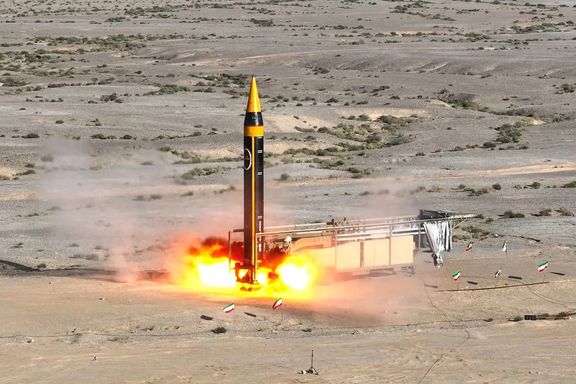
A surface-to-surface 4th generation Khorramshahr ballistic missile called Khaibar with a range of 2,000 km is launched at an undisclosed location in Iran, in this picture obtained on May 25, 2023

As Israel continues striking Iran and Tehran fires missiles in retaliation, a new German intelligence report warns that Iranian efforts to acquire missile-related technology in Europe surged in 2024.

“In addition to its nuclear program, Iran pursues one of the most extensive missile programs in the Middle East,” Germany’s Federal Office for the Protection of the Constitution (BfV), equivalent to the FBI in the US, asserted last week.

“Procurement activities in Germany in the area of Iranian missile technology/missile programs remain high – and are on the rise.”

The report added that Iran continued to violate key commitments under the 2015 nuclear deal (JCPOA), prompting the EU to maintain a partial embargo banning the transfer of sensitive goods, weapons, and delivery systems.

Calls for snapback sanctions

In May, Austria’s intelligence service concluded that Iran’s nuclear weapons development is “well advanced” and that it now has a growing arsenal of ballistic missiles capable of delivering nuclear warheads.

On June 12, the UN’s International Atomic Energy Agency(IAEA) censured Tehran for failing to meet its safeguard obligations under the nuclear Non-Proliferation Treaty (NPT).

“The E3 (Britain, France and Germany) should invoke the snapback sanctions mechanism,” Jason Brodsky, policy director at United Against Nuclear Iran (UANI), told Iran International.

“Invoking snapback would restore previous UN Security Council resolutions requiring Iran to suspend all uranium enrichment and reinforce the US position of zero enrichment in Iran,” he added, pointing out that snapback would also reinstate the arms embargo and missile restrictions.

Espionage, repression, regional threats

The report also named Iran, along with Russia, China, and Turkey, as among the top four states conducting espionage, cyberattacks, influence operations, and proliferation inside Germany.

Each country, it noted, pursues different priorities.

Proliferation was defined as acquiring products and knowledge for weapons of mass destruction, delivery systems, and other advanced military technologies. Iran was mentioned 84 times in the 412-page report, which outlines threats to German democracy.

It also condemned Tehran’s domestic crackdown and support for Russia’s war in Ukraine.

“Due to the violent actions of Iranian security forces within the country and the support of Russia’s war of aggression against Ukraine, the EU imposed further sanctions against the country in 2023 and 2024,” the report said.

German-Iranian political scientist Dr. Wahied Wahdat-Hagh told Iran International that Berlin is increasingly alarmed by Tehran’s continued defiance. He said snapback under UNSCR 2231 is likely unless Iran yields to US demands.

He also warned that Iran’s missile program poses a threat to Europe, citing its threats to close the Persian Gulf, disrupt global markets, and target countries allied with Israel.

Iran International contacted Israeli officials for comments on the German findings. No response was received at the time of publication.

Most Viewed

Ghalibaf defends Iran-US talks amid hardline backlash
1
INSIGHT

Ghalibaf defends Iran-US talks amid hardline backlash

2
VOICES FROM IRAN

Bread shortages, soaring prices strain households in Iran, residents say

3
ANALYSIS

From instability to influence: Pakistan’s pivotal role in US-Iran diplomacy

4
ANALYSIS

100 days on: why Iran’s January protests spread across social classes

5

War-hit homeowners feel abandoned as Iran’s reconstruction aid fades

Banner
Banner

Spotlight

  • Iran crackdown reaches cemeteries as graves of slain protesters defaced
    EXCLUSIVE

    Iran crackdown reaches cemeteries as graves of slain protesters defaced

  • Iran diplomacy wobbles as factions compete to avoid looking soft on US
    INSIGHT

    Iran diplomacy wobbles as factions compete to avoid looking soft on US

  • The politics of pink: how Iran uses cuteness to rebrand violence
    ANALYSIS

    The politics of pink: how Iran uses cuteness to rebrand violence

  • Bread shortages, soaring prices strain households in Iran, residents say
    VOICES FROM IRAN

    Bread shortages, soaring prices strain households in Iran, residents say

  • 100 days on: the anatomy of Iran’s January crackdown
    INSIGHT

    100 days on: the anatomy of Iran’s January crackdown

  • Ghalibaf defends Iran-US talks amid hardline backlash
    INSIGHT

    Ghalibaf defends Iran-US talks amid hardline backlash

•
•
•

More Stories

Taliban weighs IRGC, al-Qaeda escape as Iran refugee intake looms

Jun 19, 2025, 12:00 GMT+1

The Taliban’s General Directorate of Intelligence (GDI) held a high-level internal session on the possible escape of Islamic Revolutionary Guard Corps and al-Qaeda members into Afghanistan, alongside a potential wave of Iranian refugees, Afghanistan International has learned.

Amid the ongoing conflict between Israel and the Islamic Republic, the session outlined several key concerns and scenarios.

IRGC members seeking asylum

Facing potential instability, senior members of the Islamic Revolutionary Guard Corps (IRGC) could flee Iran and seek refuge in Afghanistan. GDI discussed the possibility during the session that such individuals might request protection from the Taliban, according to Afghanistan International’s sources.

Risk of al-Qaeda member relocation

Senior al-Qaeda figures such as Saif al-Adel and Abu Abdulrahman, who are believed to currently reside in Iran, may attempt to escape the country amid instability. GDI has asked the Taliban leadership for guidance on how to respond if they attempt to enter Afghanistan—whether to accept them, place them under surveillance, or reject their entry altogether. This discussion was part of the internal analysis obtained by Afghanistan International.

In 2021, then–US Secretary of State Mike Pompeo accused Iran of harboring al-Qaeda leaders. US and UN intelligence agencies later confirmed that Saif al-Adel was residing in Iran and is now considered al-Qaeda’s de facto leader. In 2024, the US State Department reaffirmed that Iran continues to provide safe haven to senior al-Qaeda operatives.

Preparedness for influx of Iranian refugees

GDI has posed a critical question: Can Afghanistan absorb a possible wave of Iranian refugees? The session called for urgent contingency planning to evaluate national capacity, political risks, and humanitarian consequences.

Democrats warn Trump lacks mandate as he signals Iran strike

Jun 19, 2025, 07:39 GMT+1

Top Senate Democrats on Wednesday accused US President Donald Trump of risking war with Iran without legal authority, hours after Trump said the Islamic Republic’s downfall was possible and suggested he might bomb key nuclear sites.

“I want total and complete victory,” Trump said in Washington, dismissing any notion of a ceasefire and suggesting Iran had asked for talks. “They should have negotiated sooner.”

The president said Iranian officials had even proposed a visit to the White House, a remark later denied by Iran’s UN mission in New York.

The statements came as ABC News reported that Trump was increasingly open to a military strike on Iran’s underground Fordow nuclear site, citing a source familiar with current intelligence.

Democratic senators call for legal authority

Five senior Senate Democrats issued a joint statement criticizing what they called the administration’s “lack of preparation, strategy, and clearly defined objectives” on Iran.

“The United States cannot sleepwalk into a third war in as many decades,” the senators wrote, warning Trump against bypassing congressional approval.

“By law, the president must consult Congress and seek authorization if he is considering taking the country to war," they said.

“He owes Congress and the American people a strategy for US engagement in the region.”

The signatories included Minority Leader Chuck Schumer, Chris Coons, Mark Warner, Jack Reed, and Patty Murray.

Iran vows response if provoked

Iran’s UN ambassador in Geneva warned that any trace of US involvement in Israeli attacks would trigger retaliation.

Mojtaba Ranjbar, a Iranian cleric, said, “If the United States targets the Supreme Leader, Iran will strike Washington and New York.”

Trump described Iran as “totally defenseless,” intensifying speculation over imminent military action.

With threats traded and authorizations absent, the risk of open conflict is rising as Washington and Tehran continue to exchange warnings without resolution.

US leans toward strikes as Iran-Israel war hits Day 6: what we know so far

Jun 19, 2025, 00:43 GMT+1

US President Donald Trump looked closer to attacking Iran on Wednesday, saying he gave Iran "the ultimate ultimatum" while Iranian Supreme Leader Ali Khamenei vowed "irreparable damage" if confronted, as Israel and the Islamic Republic warred on.

Here's a brief summary of major developments as the conflict entered its sixth day.

President Trump gives "ultimate ultimatum"

  • US President Donald Trump said Wednesday the Islamic Republic's downfall was possible. Trump added he seeks “total and complete victory,” not a ceasefire.
  • The US President said he had given Iran the "ultimate ultimatum".
  • Iran has expressed interest in negotiating, Trump said on Wednesday.
  • Trump said Tehran had even proposed a visit to the White House. “They should have negotiated sooner,” Trump said.
  • The US President was growing more comfortable with bombing Iran's Fordow nuclear site, ABC News reported citing a source familiar with the intelligence.

Khamenei warns US of pain

  • Iran’s Supreme Leader appeared in a defiant video address.
  • Ali Khamenei said a US military intervention would result in “irreparable damage".
  • Khamenei rejected Trump's call for Iran to surrender the previous day.
  • Iran's Foreign Minister Abbas Araghchi lashed out at Israel but said diplomacy was still possible, in an apparent reference to the United States.

Mutual blows continue

  • Israel's military said it continued to target Iran’s military capabilities.
  • Israeli strikes over the past day hit 60 locations, a spokesman said, including centrifuge and anti-tank missile production sites in and around Tehran.
  • Iran continued to launch missile salvos at Israel, albeit at less intensity.
  • Residents reported huge explosions in Isfahan, Shiraz and Kermanshah.
  • Iran has launched around 400 ballistic missiles and 1,000 drones at Israel since the conflict began on Friday, CNN cited a senior Israeli military official as saying.
  • The IAEA confirmed Israeli air strikes hit two Iranian centrifuge production sites, the TESA Karaj workshop and the Tehran Research Center.

US military readied, Congress to be briefed

  • US Defense Secretary Pete Hegseth said the military was ready for any scenario, including the fallout from a potential attack on Iran.
  • Hegseth said the US military is prepared to execute any decision President Donald Trump makes regarding war or peace.
  • An aide to Senate Democratic Leader Chuck Schumer said senators would be briefed on Iran in a classified session early next week.

US moves assets to Mideast

  • The USS Ford Carrier Strike Group is set to deploy into the eastern Mediterranean near Israel, CNN reported citing US officials.
  • The United States has deployed more than 30 aerial refueling tankers to the Middle East.

Israel touts wins

  • Israeli Prime Minister Benjamin Netanyahu said Israel controlled Iran's skies.
  • The country's pilots, Netanyahu added, were striking at nuclear and missile sites.
  • Israel's Defense Minister Israel Katz said the air force had destroyed the headquarters of Iran’s internal security agency.

Iran warns of retaliation to US

  • Iran’s UN envoy in Geneva warned that Tehran would retaliate against the United States if it detects American involvement in Israeli attacks.
  • Iran’s Revolutionary Guards warned Israelis to flee or risk being trapped in bomb shelters under missile fire.
  • A senior Iranian official Mojtaba Ranjbar said the United States targets the Supreme Leader, Iran would strike Washington and New York.
  • Iran’s UN mission in New York rejected President Donald Trump’s statement that Iranian officials proposed a visit to the White House.

Diplomacy quickens

  • Foreign Minister Abbas Araghchi would accept a meeting to discuss a ceasefire with Israel, the New York Times cited a senior Iranian official as saying.
  • Russia’s President Vladimir Putin said Moscow had presented ideas for a settlement to Iran, Israel and the United States.
  • Russian Deputy Foreign Minister Sergei Ryabkov cautioned on Wednesday that direct US military assistance to Israel could sharply destabilize the Middle East.
  • UK Prime Minister Keir Starmer warned his cabinet to prepare for a potential US military strike on Iran, the Financial Times cited British officials as saying.
  • Foreign ministers from Germany, France, and Britain will meet their Iranian counterpart in Geneva on Friday for nuclear talks, Reuters cited a German diplomatic source as saying
  • IAEA Director General Rafael Grossi told Bloomberg the UN nuclear watchdog can no longer verify the location or security of Iran’s highly enriched uranium.

State TV hacked, internet down

  • Iran’s state broadcaster was hacked Wednesday night and videos calling for street protests briefly aired.
  • Iran's Cybersecurity Command said it had thwarted a major cyberattack targeting the country’s banking system
  • Armed Revolutionary Guard forces took control of Iran’s state broadcaster compound in Tehran following an Israeli airstrike, tightening security.
  • Iran’s exiled prince Reza Pahlavi said The Islamic Republic is in its final phase, urging support for a peaceful transition led by Iranians.
  • Several buildings near the headquarters of the Law Enforcement Command (FARAJA) were attacked wounding several offices, Iranian authorities said.

In rubble, not in court: Hajizadeh’s death and the voices of PS752

Jun 18, 2025, 22:23 GMT+1
•
M. Mehdi Moradi

So much has happened since Israel began striking Iran that the killing of IRGC aerospace chief Amir Ali Hajizadeh already feels half-buried—but not to those who lost loved ones on Flight PS752, shot down by the forces under his command.

Hajizadeh was the face of Iran’s missile and drone program. He wasn’t its architect, but its courier. His image, projected through ceremony and spectacle, became central to the Islamic Republic’s projection of power.

That changed five years ago.

On January 8, 2020, two missiles, fired seconds apart, tore through a Ukrainian passenger jet departing Tehran. One hundred seventy-six lives were lost—students, children, newlyweds, entire families.

The next day, Hajizadeh appeared on television, standing before the flags of Iran’s regional allies and praising a missile strike on a US base in Iraq—launched in response to the killing of Qasem Soleimani days earlier.

He spoke with pride, smirking as if a massacre had not just unfolded under his command.The IRGC admitted to downing the plane three days later.

Hajizadeh resurfaced, blaming a lone operator. No resignation. No remorse. The gap between his initial celebration and later deflection said more than either moment alone.

In the years that followed, truth remained elusive. Families were silenced. One father recalled being told by a senior commander that if the plane had not crashed, Iran and the US might have gone to war, and “ten million could have died.”

Few admissions made the intent more legible: the passengers may have been a human shield against retaliation.

A reckoning by other means

For families of PS752, Hajizadeh’s killing brought a wave of raw emotion—grief laced with a private sense of justice. Their motto had always been: Never Forget, Never Forgive.

They had waited not for revenge, but for truth. For the day a free court would summon him by name. That day never came. The reckoning arrived by other means.

Hamed Esmaeilion, who lost his wife and nine-year-old daughter, Reera, responded to the news with words shaped by fury and mourning. He recalled Hajizadeh’s defense: “the operator had ten seconds to decide.”

That moment, Esmaeilion said, sealed Hajizadeh not as a soldier, but as a custodian of a lie. “You are dead,” he wrote, “but our hatred of you, dead and alive, will live on in history.”

For Esmaeilion and others, Hajizadeh’s death may have closed a chapter, but not the book—not before the eyes of his daughter Reera, now etched in the national memory as a symbol of innocence lost.

Javad Soleimani, who lost his wife that same morning, wrote that while there was relief, there was also regret: “Standing eye to eye with Hajizadeh was a wish that never came true.”

The feeling echoed in Meghdad Jebelli, whose nephew was killed aboard PS752.

“Regret was added to all the regrets of my life,” he said—not seeing Hajizadeh “in a prison uniform and handcuffs, standing in a righteous court.” Still, he admitted, the feeling was “sweeter” than any regret before it.

As news of Hajizadeh’s killing spread, many families posted joyful clips of their loved ones—glimpses of life reclaimed against the void left by the IRGC’s system of violence.

A legacy built on bluster

Hajizadeh had projected strength, but his record told a different story.

He postured as a man firm against enemies, but often struck the powerless. He softened when under pressure, as when he downplayed the US base strike, insisting it was symbolic and not meant to kill.

The man who smirked as families wept, who lied as bodies burned, is no more.

The house of cards he built—missiles, drones, staged power—collapsed with him. He never stood before Esmaeilion, Soleimani, Jebelli, or the nation’s eyes to face the public humiliation that real justice brings.

Still, the justice dealt in the rubble, though imperfect, carried its own humiliation.One journalist wrote she hoped he lived for “three minutes and forty-two seconds”—the time it took PS752 to fall from the sky.

For the families, it may have offered a moment of healing. But the wound will not close until the truth behind the tragedies under his command is brought to light—and the system that created him is confronted in full.

Cyberattack hits Iran’s largest crypto exchange Nobitex

Jun 18, 2025, 12:11 GMT+1

Iran’s largest cryptocurrency exchange, Nobitex, has confirmed a security breach after a suspected cyberattack that resulted in the theft of tens of millions of dollars, as reports circulated of a $48 million loss.

The attack, which targeted Nobitex’s “hot wallet” infrastructure, was claimed by a hacktivist group Predatory Sparrow (Gonjeshke Darande), allegedly linked to Israel.

The group accused Nobitex of facilitating sanctions evasion and financing activities linked to the Iranian government, including support for the Islamic Revolutionary Guard Corps (IRGC).

Nobitex said in a statement on Wednesday that its technical team detected unauthorized access earlier that morning and acted swiftly to suspend all access. It stressed that the majority of user assets were held in cold storage and remained secure.

A hot wallet is connected to the internet and used for quick transactions, while a cold wallet is offline and offers higher security for long-term storage.

“The incident only affected a portion of assets held in hot wallets,” the platform said. “Nobitex accepts full responsibility and will compensate all damages through its insurance fund and internal resources.”

The exchange’s website and app have been taken offline temporarily while an internal investigation continues.

Predatory Sparrow threatened to publish Nobitex’s internal source code and user data unless the platform is fully emptied by users.

On Tuesday, the group also claimed responsibility for a separate cyberattack on Iran’s Bank Sepah – affiliated with Iran’s military, alleging they destroyed critical data and disrupted online access.

Nobitex, which dominates Iran’s crypto market, has often been seen as a key channel for accessing global financial networks amid strict US-led sanctions.

Iran’s cybercrime police (FATA) has not yet issued a detailed public statement on the Nobitex breach.

Binance processed billions via Nobitex – Chainalysis Data

Blockchain data cited by Reuters in 2022 showed crypto giant Binance processed nearly $8 billion in Iranian transactions since 2018, largely viaNobitex, according to a review of data from leading US blockchain researcher Chainalysis. 

About $7.8 billion flowed between Binance and Nobitex, which has also published guidance on evading sanctions on its website.

Around 75% of those funds were in Tron, a lesser-known cryptocurrency that enables users to obscure their identities. Nobitex previously encouraged clients to use Tron for anonymous trading, calling it a safer option under sanctions.

More than 6,700 distributed denial-of-service (DDoS) attacks have hit Iran in the past three days amid the war with Israel, according to Fars News Agency, which is affiliated with the Islamic Revolutionary Guard Corps. DDoS attacks overwhelm servers to disrupt online services.







