• العربية
  • فارسی
Brand
  • Iran Insight
  • Politics
  • Economy
  • Analysis
  • Special Report
  • Opinion
  • Podcast
  • Iran Insight
  • Politics
  • Economy
  • Analysis
  • Special Report
  • Opinion
  • Podcast
  • Theme
  • Language
    • العربية
    • فارسی
  • Iran Insight
  • Politics
  • Economy
  • Analysis
  • Special Report
  • Opinion
  • Podcast
All rights reserved for Volant Media UK Limited
volant media logo

Pakistani man convicted in US for smuggling Iranian weapons to Houthis

Jun 6, 2025, 07:21 GMT+1
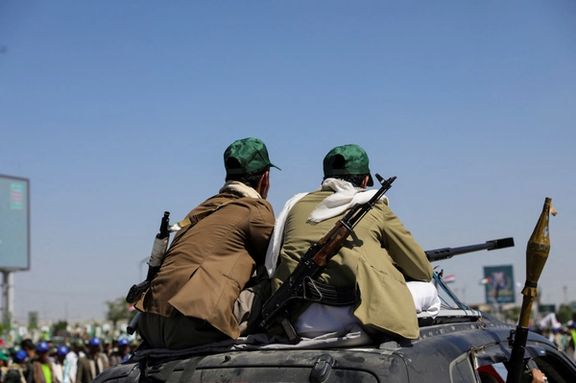
Houthi-mobilized fighters ride atop a car in Sanaa, File Photo.

A US federal jury has convicted a Pakistani national of smuggling Iranian-made advanced weaponry to Yemen’s Houthis and threatening witnesses, the Justice Department announced Thursday.

Muhammad Pahlawan, 49, was arrested in January last year after US Navy forces boarded an unflagged dhow in the Arabian Sea and discovered ballistic missile parts, cruise missile components, and a warhead. The weapons were consistent with those used by the Houthis in attacks on commercial and military vessels.

Prosecutors said Pahlawan worked with two Iranian nationals linked to the Islamic Revolutionary Guard Corps (IRGC) to move arms from Iran to Yemen via ship-to-ship transfers off the Somali coast. He was convicted on multiple charges, including providing material support to terrorists and Iran’s weapons of mass destruction program.

Pahlawan is scheduled to be sentenced on September 22.

Most Viewed

Ideology may be fading in Iran, but not in Kashmir's ‘Mini Iran'
1
INSIGHT

Ideology may be fading in Iran, but not in Kashmir's ‘Mini Iran'

2
INSIGHT

Hardliners push Hormuz ‘red line’ as US blockade tests Iran’s leverage

3
VOICES FROM IRAN

Hope and anger in Iran as fragile ceasefire persists

4

Iran International says it won’t be silenced after London arson attack

5

US sanctions oil network tied to Iranian tycoon Shamkhani

Banner
Banner

Spotlight

  • Hardliners push Hormuz ‘red line’ as US blockade tests Iran’s leverage
    INSIGHT

    Hardliners push Hormuz ‘red line’ as US blockade tests Iran’s leverage

  • Ideology may be fading in Iran, but not in Kashmir's ‘Mini Iran'
    INSIGHT

    Ideology may be fading in Iran, but not in Kashmir's ‘Mini Iran'

  • War damage amounts to $3,000 per Iranian, with blockade set to add to losses
    INSIGHT

    War damage amounts to $3,000 per Iranian, with blockade set to add to losses

  • Why the $100 billion Hormuz toll revenue is a myth
    ANALYSIS

    Why the $100 billion Hormuz toll revenue is a myth

  • US blockade targets Iran oil boom amid regional disruption
    ANALYSIS

    US blockade targets Iran oil boom amid regional disruption

  • Iran's digital economy battered by prolonged blackout
    INSIGHT

    Iran's digital economy battered by prolonged blackout

•
•
•

More Stories

Iran orders thousands of tons of ballistic-missile material from China – WSJ

Jun 6, 2025, 06:49 GMT+1

Iran has ordered thousands of tons of ammonium perchlorate, a key ingredient for ballistic missile fuel, from China in a move to expand its missile arsenal while nuclear negotiations with the United States continue, the Wall Street Journal reported on Thursday.

The shipments, expected to arrive in the coming months, could be used to produce hundreds of missiles, with some material likely to be transferred to Iranian-aligned groups such as the Houthis in Yemen, the report said, citing people familiar with the matter.

The order was placed by an Iranian company through a Hong Kong-based firm. US officials estimate the material could support the production of up to 800 missiles. Iran has one of the region’s largest ballistic missile programs and has rejected any limits on its missile capabilities as part of nuclear talks.

US sanctions and growing concerns

The US has recently sanctioned multiple individuals and entities in Iran and China linked to missile propellant procurement. A State Department official told the Journal that Chinese support for Iran’s missile program and its regional allies remains a concern.

The shipments, expected to arrive in the coming months, could be used to produce hundreds of missiles, with some material likely to be transferred to Iranian-aligned groups such as the Houthis in Yemen, the report said.

The order was placed by an Iranian company through a Hong Kong-based firm. US officials estimate the material could support the production of up to 800 missiles. Iran has one of the region’s largest ballistic missile programs and has rejected any limits on its missile capabilities as part of nuclear talks.

The US has recently sanctioned multiple individuals and entities in Iran and China linked to missile propellant procurement. A State Department official told the Journal that Chinese support for Iran’s missile program and its regional allies remains a concern.

Previous shipments linked to missile fuel

The move follows earlier shipments of sodium perchlorate—used to manufacture ammonium perchlorate—also sent from China to Iran earlier this year, aboard two Iranian cargo vessels. According to Western officials cited by CNN, Financial Times, and the Associated Press, these shipments were bound for the Islamic Revolutionary Guard Corps and could fuel hundreds of mid-range missiles.

Explosion at Shahid Rajaei port still unexplained

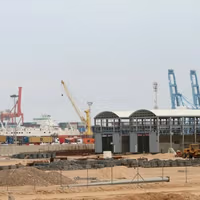
In April, a deadly explosion occurred at Iran’s Shahid Rajaei port, where some of the imported materials were reportedly delivered. Iranian authorities have not confirmed the cause of the blast.

However, according to the private security firm Ambrey, the explosion was “reportedly the result of improper handling of a shipment of solid fuel intended for use in Iranian ballistic missiles.” Months later, officials have not publicly provided a detailed explanation.

Iranian pilgrims chant ‘death to America’ and ‘death to Israel’ at hajj ceremony

Jun 5, 2025, 12:19 GMT+1

Iranian pilgrims chanted “Death to America” and “Death to Israel” during the annual “Disavowal of Polytheists” ceremony held on Thursday in the plain of Arafat in Saudi Arabia, Iranian media reported.

The event, organized as part of Iran’s official Hajj program, took place in tents allocated to Iranian pilgrims and was attended by senior officials, including Iran’s ambassador to Saudi Arabia and the country’s top Hajj representative.

Participants carried placards with slogans such as “Al-Quds is ours” and “Israel is absolute evil.”

The Islamic Republic of Iran has long regarded the “Disavowal of Polytheists” as a politically symbolic ritual, tying religious observance to opposition to perceived global oppressors. The chant “Death to America” has been a staple of the ceremony since it was first introduced after the 1979 revolution.

In 1987, the event led to a deadly confrontation between Iranian pilgrims and Saudi security forces, resulting in more than 400 deaths. Following that incident, the ceremony was suspended for several years and resumed in 2001 in a more restricted format. It is now conducted inside enclosed tents under Iranian supervision and coordinated with Saudi authorities.

Trump says travel ban countries like Iran 'don't have things under control'

Jun 5, 2025, 10:00 GMT+1

US President Donald Trump on Wednesday signed a new executive order barring entry to nationals from 12 countries, including Iran, in what the White House described as an effort to prevent terrorism and safeguard national security.

“Iran is a state sponsor of terrorism. Iran regularly fails to cooperate with the United States Government in identifying security risks, is the source of significant terrorism around the world, and has historically failed to accept back its removable nationals,” the announcement said late on Wednesday.

"The countries that we have (on the travel ban list) don't have things under control," Trump told reporters in the White House on Thursday.

"And why now? I can say that it can't come soon enough frankly. We want to keep bad people out of our country."

The US State Department designated the Islamic Republic a state-sponsor of terrorism in 1984. However, the latest statement against Iran comes amid sensitive nuclear negotiations between Washington and Tehran.

Effective June 9, the directive prohibits most travelers from Afghanistan, Myanmar, Chad, Congo, Equatorial Guinea, Eritrea, Haiti, Iran, Libya, Somalia, Sudan, and Yemen from entering the United States. Partial travel restrictions have also been imposed on citizens from seven additional countries: Burundi, Cuba, Laos, Sierra Leone, Togo, Turkmenistan, and Venezuela.

“We cannot have open migration from countries where we cannot safely and reliably vet individuals,” Trump said in a video address. “The recent terror attack in Boulder, Colorado, showed the danger of allowing unvetted foreign nationals to enter our country and overstay their visas.”

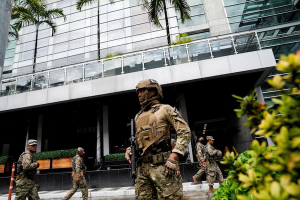
  • Iranian migrants moved to remote Panama jungle camp

    Iranian migrants moved to remote Panama jungle camp

  • Deported by US, Iranian Christian convert stranded in Panama jungle camp

    Deported by US, Iranian Christian convert stranded in Panama jungle camp

The announcement comes days after an Egyptian national was charged with throwing a Molotov cocktail at a pro-Israel rally in Colorado. Officials say the suspect had overstayed his tourist visa and was working illegally in the US. Egypt is not among the countries affected by the ban.

It is also just days after two staff members from the Israeli embassy were gunned down in Washington's Jewish Museum by a man who, according to court papers, said he did it "for Palestine".

The White House said the latest decision follows a State Department-led review, coordinated with national security agencies, which identified persistent security failures, such as inadequate identity verification systems, poor criminal record keeping, high visa overstay rates and lack of cooperation on counterterrorism.

Exceptions to the ban include US lawful permanent residents, holders of valid visas, dual nationals using a non-restricted passport, certain US government employees, Olympic athletes and individuals whose entry is deemed in the national interest.

“The suspension of and limitation on entry... shall not apply to immigrant visas for ethnic and religious minorities facing persecution in Iran,” the statement added.

The new order builds on Trump’s first-term travel bans, which were upheld by the Supreme Court. The White House said the policy may be revised based on improvements in cooperation or emerging threats.

“Our priority is to keep America safe,” Trump said. “We will not admit those who wish to do us harm.”
Iran-backed militants may be behind Israel-Syria flare-up - Reuters

Jun 4, 2025, 10:42 GMT+1

Armed groups linked to Iran may have played a role in rising tensions between Syria and Israel, Reuters reported on Wednesday, after Israel launched airstrikes in response to what it said were two projectiles fired from Syrian territory.

Israel held Syria’s interim president Ahmed al-Sharaa responsible for the reported fire on Tuesday. It was the first Israeli strike in Syria in nearly a month.

The Syrian government said the Israeli attacks caused “heavy human and material losses,” denied posing any threat to regional parties, and stressed the need to dismantle armed groups and restore full state control in the south.

Reuters cited a Syrian official as saying that remnants of Assad-era militias with ties to Iran and operating in the Quneitra area may have an interest in provoking Israeli retaliation as a way to escalate tensions and undermine current stabilization efforts.

Several Arab outlets published a statement from a little-known group named "Martyr Muhammad Deif Brigades," an apparent reference to Hamas' military leader who was killed in an Israeli strike in 2024.

Around the same time that Israel reported the projectiles from Syria, the Israeli military said it intercepted a missile launched from Yemen.

Yemen’s Iran-aligned Houthis said they targeted the Israeli city of Jaffa with a ballistic missile, describing the attack as part of their support for Palestinians during the war in Gaza.

Iran’s ‘hell’ exhibit goes cold on final night after technical glitch

Jun 4, 2025, 09:26 GMT+1

A theatrical “hell” installation staged by Iran’s Revolutionary Guards failed to deliver its fiery finale after technical issues left the exhibit cold on its final night, the online newspaper Faraz reported.

The immersive experience, part of the Heaven Time project in Gilan Province, aimed to depict scenes from the Islamic afterlife using real flames, costumed actors, and dramatized punishments. But on the final night, hell failed to ignite—at least on Earth.

Civil rights lawyer Hassan Younesi wrote on X that several women were denied entry to the “hell” exhibit for not wearing the mandatory hijab—sparking widespread irony online, where users said that those supposedly destined for hell were barred from even visiting it.

Images and reports from the event had already sparked ridicule online for what many called a crude and unsettling parody of faith.