• العربية
  • فارسی
Brand
  • Iran Insight
  • Politics
  • Economy
  • Analysis
  • Special Report
  • Opinion
  • Podcast
  • Iran Insight
  • Politics
  • Economy
  • Analysis
  • Special Report
  • Opinion
  • Podcast
  • Theme
  • Language
    • العربية
    • فارسی
  • Iran Insight
  • Politics
  • Economy
  • Analysis
  • Special Report
  • Opinion
  • Podcast
All rights reserved for Volant Media UK Limited
volant media logo

US intel suggests possible Israeli strike on Iran nuclear facilities - CNN

May 21, 2025, 08:15 GMT+1Updated: 08:12 GMT+0
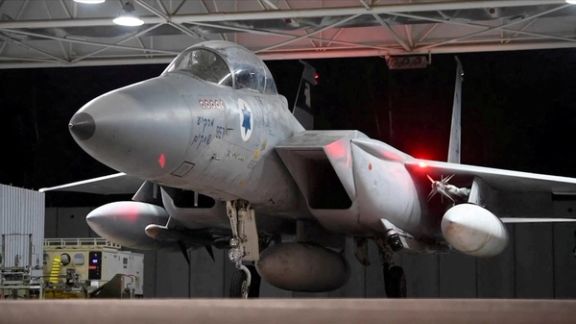
A screengrab shows an Israeli Air Force plane, which the Israeli army says is departing to carry out strikes on Iran, from a handout video released on October 26, 2024.

New US intelligence suggests preparations are underway for an Israeli strike on Iran’s nuclear facilities in spite of its ally being in the midst of sensitive nuclear talks with Tehran, according to CNN.

Citing intelligence sources, the report said that among the military preparations the US has observed are the movement of air munitions and the completion of an air exercise.

Additionally, CNN said intelligence had come from intercepted Israeli communications.

A source close to US intelligence told CNN that “the chance of an Israeli strike on an Iranian nuclear facility has gone up significantly in recent months and the prospect of a Trump-negotiated US-Iran deal that doesn’t remove all of Iran’s uranium makes the chance of a strike more likely.”

In a letter to Iran’s Supreme Leader Ali Khamenei in mid-March, Trump set a 60-day deadline for the resolution of a new nuclear deal to replace the JCPOA from which Trump left during his first presidency in 2018.

According to a source familiar with the communication, CNN reported that it has now been more than 60 days since that letter was delivered, and about 40 days since the first round of talks began.

Trump warned that there will be “bombing the likes of which they have never seen before” before the talks commenced.

However, after the fourth round of Oman-mediated negotiations, Khamenei on Tuesday said the discussions look likely to fail as the US insists that Iran stops all uranium enrichment.

"Saying things like 'we won’t allow Iran to enrich uranium' is way out of line," he said. "We do not think (the talks) would yield results now."

Iran is the only non-nuclear weapon state enriching uranium to 60% U-235, a level that causes "serious concern," according to International Atomic Energy Agency (IAEA) Director General Rafael Mariano Grossi.

The IAEA has consistently maintained that there is no credible civilian use for uranium enriched to this level, which is a short technical step from weapons-grade 90% fissile material. Iran's stockpile of 60% enriched uranium had increased to 275 kg, enough to theoretically make about half a dozen weapons if Iran further enriches the uranium.

Speaking to CNN, Jonathan Panikoff, a former senior intelligence official specializing in the region said that the talks have put Israel “between a rock and a hard place” as Israeli Prime Minister Benjamin Netanyahu now waits for Trump’s next moves.

“At the end of the day, the Israeli decision-making is going to be predicated on US policy determinations and actions, and what agreements President Trump does or does not come to with Iran,” Panikoff said, stressing that even Netanyahu would not be as bold as to act without tacit US approval.

Iran's air defenses were significantly weakened after Israeli bombings in October, though the country's top military commander announced renewed air defense systems this week.

The US intelligence source told CNN: “I think it’s more likely they [Israel] strike to try and get the deal to fall apart if they think Trump is going to settle for a ‘bad deal. The Israelis have not been shy about signaling that to us … both publicly and privately.”

A previous CNN report showed that according to a US intelligence assessment from February, Israel could use either military aircraft or long-range missiles to capitalize on Iran’s degraded air defense capabilities after the October strikes.

In the same month, US intelligence agencies issued warnings that Israel will likely attempt to strike facilities key to Iran’s nuclear program this year.

It has “consistently been the Israeli position that the military option is the only option to stopping Iran’s military nuclear program,” one US official told CNN.

Most Viewed

Ghalibaf defends Iran-US talks amid hardline backlash
1
INSIGHT

Ghalibaf defends Iran-US talks amid hardline backlash

2
VOICES FROM IRAN

Bread shortages, soaring prices strain households in Iran, residents say

3
ANALYSIS

From instability to influence: Pakistan’s pivotal role in US-Iran diplomacy

4
ANALYSIS

100 days on: why Iran’s January protests spread across social classes

5

War-hit homeowners feel abandoned as Iran’s reconstruction aid fades

Banner
Banner

Spotlight

  • Is Iran entering its Gorbachev moment?
    INSIGHT

    Is Iran entering its Gorbachev moment?

  • Iran crackdown reaches cemeteries as graves of slain protesters defaced
    EXCLUSIVE

    Iran crackdown reaches cemeteries as graves of slain protesters defaced

  • Iran diplomacy wobbles as factions compete to avoid looking soft on US
    INSIGHT

    Iran diplomacy wobbles as factions compete to avoid looking soft on US

  • The politics of pink: how Iran uses cuteness to rebrand violence
    ANALYSIS

    The politics of pink: how Iran uses cuteness to rebrand violence

  • Bread shortages, soaring prices strain households in Iran, residents say
    VOICES FROM IRAN

    Bread shortages, soaring prices strain households in Iran, residents say

  • Ghalibaf defends Iran-US talks amid hardline backlash
    INSIGHT

    Ghalibaf defends Iran-US talks amid hardline backlash

•
•
•

More Stories

Iranian optimism fades after Khamenei doubts success of US talks

May 20, 2025, 19:35 GMT+1
•
Maryam Sinaiee

Optimism in Tehran about nuclear talks with Washington has waned after a stern public rebuke from Iran's Supreme Leader Ali Khamenei on Tuesday to US demand that Iran totally halt uranium enrichment.

"The American side ... should try not to spout nonsense," Khamenei said in a speech. "Saying things like 'we won’t allow Iran to enrich uranium' is way out of line," he added. "We do not think (the talks) would yield results now."

Within hours of Khamenei's speech, the Iranian rial weakened by over 3 percent, and the main index of the Tehran Stock Exchange dropped by around 2 percent.

Some supporters of a hard Iranian line said a US moratorium on Iranian enrichment, which Tehran maintains is its national right, would scupper the talks.

“The Leader stood up to America's excesses. The US will be directly responsible if the negotiations bear no result. They have no right not to recognize (Iran's) right to enrichment,” hardline cleric Ehsan Ebadi posted on X.

But the sharp speech also raised alarm about the stakes of the talks' collapse.

“The failure of the negotiations is definitely a loss for Iran, not the US. Iran should not let the negotiations fail,” Iranian teacher Ali Ghiasi-Farahani posted on X.

“What benefit has enrichment had for the Iranian people that they insist on continuing it? It has cost over a trillion dollars in direct and indirect costs so far. Be realistic!!”

Door not yet closed?

Observers from the reformist camp sought to project a cautiously hopeful tone, suggesting the door to diplomacy has not yet closed.

“Peace will come, God willing, when the fighting escalates, the uproar increases, and the pressure reaches an unbearable level. Reason: Experience,” senior reformist journalist Mohammad Sahafi posted on X.

Likewise, reformist journalist Ali-Asghar Shafieian who is close to the Pezeshkian administration emphasized that firm statements from Iranian officials did not yet mean negotiations were doomed.

“Relevant officials have given a similar and appropriate response to the other party's claim before the Leader. If required, they will again make the necessary response after him,” Shafieian posted on X. “But these responses do not mean the failure of negotiations or despair in finding innovative solutions to the problem.”

Matin Razavi, a hardline commentator, also dismissed suggestions of a diplomatic breakdown. “Iran's rejection of further talks and saying no to the US is part of Tehran's 'diplomatic performance' toward Washington. We have not yet reached the stage of failure of the talks,” he wrote.

A more nuanced interpretation was offered by a supporter of Parliament Speaker Mohammad-Bagher Ghalibaf posting as @mhmdhsyn who suggested that Khamenei’s rhetoric could be a tactical gambit.

“The Islamic Republic says no through the words of its Leader, shows its frowns through the language of its military men, and says yes by its diplomats," he wrote. “This is the Al Pacino face of Iranian diplomacy—smiling on one side and frowning on the other.”

Rubio says US won't let Iran become untouchable nuclear threshold state

May 20, 2025, 18:05 GMT+1

US Secretary of State Marco Rubio gave an expansive view of negotiations with Iran on Tuesday, telling a Senate Committee that the United States rules out Iranian enrichment and could maintain missile and terrorism related sanctions after any deal.

Iranian enrichment

"Once you know how to enrich at any level, all you need is time to be able to enrich at a higher level. And they've already proven the ability to enrich at a higher level. In fact, they have and are doing so now," Rubio said on Tuesday.

"They claim that enrichment is a matter of national pride. It is our view that they want enrichment as a deterrent, they believe that it makes them a threshold nuclear power, and as a result, becomes untouchable," Rubio told the Senate Foreign Relations Committee. "That is the crux of the situation we're facing right now."

"Our hope is that we can encourage them to show them a path towards prosperity and peace that allow them to develop their economy, that allow them, if they want, to have a civil nuclear energy program like other countries around the world have - without enrichment."

Terrorism, missile sanctions

"Obviously we're aware of their sponsorship of terrorism in the region, including the Houthis and Hezbollah and other groups such as these, the militias in Iraq and their efforts to get back into Syria. Right now, the focus at this point of (the talks) has been their enrichment capability and their insistence on enrichment capability," Rubio said.

"Ultimately, I would say that if in fact we have sanctions that are related to the sponsorship of terrorism and a violation of weapons conventions and the like, their long-range munitions—those sanctions will remain. If those aren't part of the deal, then the sanctions will remain as a result of that," he added.

"The focus of the conversations over the last few weeks with (US special envoy) Witkoff and the Iranians has been on this enrichment matter, which is by far sort of the core and most critical matter."

Maximum pressure

"The administration sanctioned 72 entities, 14 individuals, 74 vessels, as well as 18 additional entities, including two Chinese-based oil terminals, 13 vessels," Rubio said.

"I think the maximum pressure campaign is working. We're already seeing a reduction in Iran's ability to fund destabilizing operations across the region ... we're going to continue with sanctions until there's a deal," he told the Senate Foreign Relations Committee.

"The administration’s maximum pressure campaign has secured the release of the last living American hostage held by Hamas, a pledge by the Houthis to abandon attacks on American ships and forced Iran to beg for talks with the United States," Rubio said earlier in the day in prepared remarks submitted to the committee.

European sanctions

"There's a separate set of sanctions out there, which are the snapback provisions that the E3 in Europe have," Rubio said, referring to Britain, France and Germany - the European signatories to a lapsed 2015 nuclear deal with Iran.

"That's on another clock, completely different from ours ... Now, maybe we'll do a deal with Iran and they'll be satisfied with it and not impose their sanctions," he added.

"They are moving forward on their process, independent from ours."
Israeli defense minister says he was target of Iranian spy op

May 20, 2025, 12:46 GMT+1

Israel’s Defense Minister Israel Katz said a spy plot against him had been thwarted in what Israel says is the 20th Iran-backed operation thwarted in the country since the Gaza war began.

“Iran is the head of the terrorist octopus that promotes terrorist activity directly and through the terrorist organizations it supports against leaders and against all citizens of the state of Israel,” Katz said in a statement Tuesday.

Two Israeli suspects, Roy Mizrahi and Almog Atias, both 25 and childhood friends, were arrested at the end of April accused of intelligence-gathering missions and placing explosives in the community where Katz lives.

Israel Police said in a statement on Tuesday: “The investigation revealed that during 2025, Roy was in contact with Iranian terrorist elements and carried out a large number of different security missions for them, some of them together with his friend Almog, while the two understood that they were acting under Iranian direction and that their actions were intended to harm the security of the state due to financial gain.”

The police statement said that Mizrahi was communicating with his handler through a dedicated application on a new cell phone he had bought for the operation.

“Later, he was asked by his handlers to move a bag buried in the ground from one point to another, which, according to his understanding, contained an explosive device. Roy carried out the transfer of the bag in accordance with his handlers' instructions,” the statement said.

Israel's Mako reported that after carrying out minor tasks such as photographing street signs, the pair’s activities included trying to install cameras at the minister’s home.

“The more serious task, which came after they successfully completed the first tasks, was purchasing a camera with a SIM card that allows for remote control, and installing it outside the defense minister's home,” the report said.

“First, they installed the cameras throughout Haifa and Nesher and gave the Iranians a code with which they could remotely control the cameras. Another time, they arrived at the driveway outside Minister Katz's house to install the camera - then they saw a Shin Bet vehicle and fled the scene," Mako added.

The case is the latest in a string of plots foiled since the start of the Gaza war in October 2023, with dozens of Israelis allegedly hired by Iranian operatives to carry out operations targeting the country’s top political and military echelons.

Other targets have included the Prime Minister Benjamin Netanyahu and head of the Shin Bet intelligence agency, Ronen Bar.

In the coming days, the Central District Attorney's Office is expected to file a serious indictment against the two suspects.

Iran's parliament condemns UK over potential IRGC terror listing

May 20, 2025, 12:25 GMT+1

Iran’s parliament on Tuesday condemned a motion by over 550 British lawmakers calling to label the Islamic Revolutionary Guard Corps (IRGC) a terrorist group, warning of legal repercussions from Tehran.

The statement, read aloud by parliamentary presidium member Ahmad Naderi during an open session, described the UK’s move as “reckless and hostile”.

“The UK’s potential designation of the IRGC violates fundamental principles of international relations and will provoke lawful, reciprocal action by the Islamic Republic of Iran,” Naderi said.

The parliament’s response came amid rising tensions between Tehran and London following the arrest and charging of three Iranian nationals in the UK under its National Security Act.

British authorities allege the men acted on behalf of Iranian intelligence and conducted surveillance targeting journalists from Iran International, a London-based Persian-language broadcaster critical of the Islamic Republic.

The charges follow counter-terrorism raids earlier this month in which eight people, including seven Iranian nationals, were detained.

UK Home Secretary Yvette Cooper said on Monday that the Islamic Republic poses an “unacceptable threat” to Britain’s domestic security.

“We will not tolerate growing state-backed threats in the UK,” Cooper told parliament.

Amid pressure from lawmakers, UK officials are reviewing options to strengthen legal measures against IRGC affiliates.

A government terrorism advisor on Monday proposed new powers to sanction individuals and entities linked to the IRGC, calling for measures to criminalize public displays of support, including insignia, and expand arrest and deportation capabilities under what he termed a "Statutory Alert and Liability Threat (SALT)" notice.

The Iranian parliament’s statement listed a long history of grievances against the UK, including the 1953 CIA- and MI6-backed coup against Prime Minister Mohammad Mossadegh, the occupation of Iran during World War II, the 1917 famine, and British support for Iraqi leader Saddam Hussein during the Iran-Iraq war.

“These black marks in British history against the Iranian people are undeniable and shameful,” the statement said.

It also warned that if the UK proceeds with the designation, Iran would respond under Article 7 of a 2020 domestic law mandating reciprocal measures.

According to the law, British military forces and bases in West Asia and the Persian Gulf could be labeled as hostile entities and subjected to retaliatory measures.

“The Revolutionary Guards are a constitutional and sovereign force charged with defending Iran’s territorial integrity,” the statement read. “Labeling them as terrorists amounts to aggression against Iran’s national sovereignty and a breach of the UN Charter.”

Lawmakers in Tehran ended the session with chants of “Death to England,” and Parliament Deputy Speaker Hamidreza Haji Babai said: “The British have never stood with the Iranian people. They have always been our enemy.”

The UK has not formally designated the IRGC a terrorist organization, though it has imposed sanctions on many of its commanders and affiliated institutions. The United States added the IRGC to its list of foreign terrorist organizations (FTOs) in 2019.

New nuclear deal could shift Iran’s regional role, says former CIA director

May 20, 2025, 11:57 GMT+1

Former CIA Director and retired US Army General David Petraeus said that a new nuclear deal with Iran could pave the way for Tehran to become a more constructive player in the region.

“There’s a chance that there could be a nuclear deal that doesn’t have some of the shortcomings of the previous nuclear deal that could enable the lifting of sanctions progressively and so forth as confidence is built,” Petraeus said during a panel discussion at the Qatar Economic Forum 2025.

“And that could lead to them being a more constructive player in the region than they certainly have been for many decades.”

Asked whether Iran could be “brought back into the fold” like Syria, Petraeus responded: “That’s overly optimistic.”

He pointed to Iran’s role in supporting its allied forces in the region such as the Houthis in Yemen. “Assuming Iran then also stops some of the terrible activities that they’re doing through proxies in the region which have been so destabilizing, then you can start to see the contours of something that could be much more positive.”

Petraeus said there are signs of narrowing differences between Washington and Tehran, and a possible compromise could include restrictions on uranium enrichment for a limited period.

“Maybe that ends up being for three years and then you have an opportunity to do something small again. But you can actually see this deal starting to come together,” he said.

Amid indirect Iran-US talks, US President Donald Trump has insisted Iran must fully cease enrichment, leading Supreme Leader Ali Khamenei to warn on Tuesday that talks look unlikely to progress under those conditions.

On Sunday, Trump's Middle East envoy Steve Witkoff told ABC News: “We cannot allow even one percent of an enrichment capability. Everything begins from our standpoint with a deal that does not include enrichment. We cannot have that.”

On the question of regime change, Petraeus dismissed it as unrealistic. “You have to deal with the world the way it is, not the way you would like it to be. And I never thought that regime change was at all realistic, frankly.”