• العربية
  • فارسی
Brand
  • Iran Insight
  • Politics
  • Economy
  • Analysis
  • Special Report
  • Opinion
  • Podcast
  • Iran Insight
  • Politics
  • Economy
  • Analysis
  • Special Report
  • Opinion
  • Podcast
  • Theme
  • Language
    • العربية
    • فارسی
  • Iran Insight
  • Politics
  • Economy
  • Analysis
  • Special Report
  • Opinion
  • Podcast
All rights reserved for Volant Media UK Limited
volant media logo

New Iran-backed militant group emerges in Syria - Newsweek
Apr 8, 2025, 22:10 GMT+1
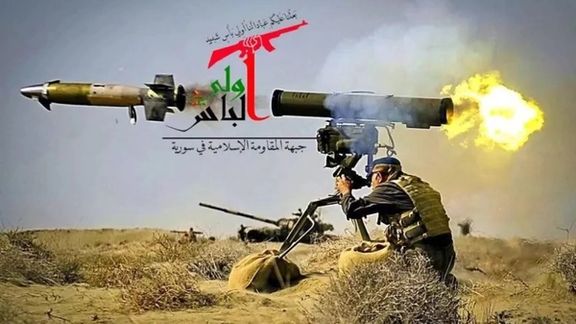
A fighter fires a Kornet-variant anti-tank guided missile in this image released by Uli al-Baas on January 14.

A new Iran-backed militant group, Uli al-Baas, has emerged in Syria, positioning itself against the United States and its regional allies, Newsweek reported on Tuesday.

Newsweek quoted the group, officially known as the "Islamic Resistance Front in Syria - Uli al-Baas," as saying it is aligned with the broader Axis of Resistance, a coalition of Iran-backed political and military actors in the Middle East such as Hamas in Gaza, the Houthis in Yemen, and Hezbollah in Lebanon.

"Uli al-Baas is a faith-based, revolutionary, nationalist movement with an Arab nationalist dimension, unaffiliated with any existing organization in Syria," the group's political office told Newsweek, adding that it does not support the current ruling government.

"It [the group] has its own political project of resistance that guarantees the establishment of a strong, capable, and freedom-supporting state," the group added.

While Uli al-Baas said that it is "not affiliated with any regional party or any country," logos used, particularly the raised Kalashnikov-style rifle, mirrors the signature style of Iran's Revolutionary Guards (IRGC) and has been adopted by other Axis of Resistance groups, including Hezbollah and Iraqi militias.

Newsweek also quoted the group speaking about the Islamic Republic, in what appeared to echo similar manifestos of Tehran's allied groups.

"As for the constant threat posed to the Islamic Republic of Iran, this is because it maintains an independent identity and refuses to submit," Uli al-Baas said,

"However, the truth is that Iran is challenging the advanced state in West Asia, namely the Zionist entity," the group added.

Experts suggest that the group may have originated from Iran’s efforts to maintain influence in Syria, a key Arab ally under the ousted Bashar al-Assad government.

“While UAB’s kinetic capabilities remain unproven, its emergence could signal the early stages of a new Iran-backed militia formation in Syria, an outcome that was always likely post-Assad,” a Washington Institute analysis said in March.

The group has since published the Newsweek story on their Telegram channel.

Most Viewed

Ghalibaf defends Iran-US talks amid hardline backlash
1
INSIGHT

Ghalibaf defends Iran-US talks amid hardline backlash

2
ANALYSIS

From instability to influence: Pakistan’s pivotal role in US-Iran diplomacy

3
ANALYSIS

100 days on: why Iran’s January protests spread across social classes

4

War-hit homeowners feel abandoned as Iran’s reconstruction aid fades

5
INSIGHT

100 days on: the anatomy of Iran’s January crackdown

Banner
Banner

Spotlight

  • The politics of pink: how Iran uses cuteness to rebrand violence
    ANALYSIS

    The politics of pink: how Iran uses cuteness to rebrand violence

  • Bread shortages, soaring prices strain households in Iran, residents say
    VOICES FROM IRAN

    Bread shortages, soaring prices strain households in Iran, residents say

  • War-hit homeowners feel abandoned as Iran’s reconstruction aid fades

    War-hit homeowners feel abandoned as Iran’s reconstruction aid fades

  • 100 days on: the anatomy of Iran’s January crackdown
    INSIGHT

    100 days on: the anatomy of Iran’s January crackdown

  • Ghalibaf defends Iran-US talks amid hardline backlash
    INSIGHT

    Ghalibaf defends Iran-US talks amid hardline backlash

  • From instability to influence: Pakistan’s pivotal role in US-Iran diplomacy
    ANALYSIS

    From instability to influence: Pakistan’s pivotal role in US-Iran diplomacy

•
•
•

More Stories

Iran’s Quds Force oversees weapons transfers to Hezbollah via sea - Al Arabiya

Apr 8, 2025, 15:07 GMT+1

Iran’s Quds Force is overseeing the transfer of weapons, equipment and money to Hezbollah in Lebanon via maritime routes, a Western security source told Al Arabiya on Tuesday.

Iran’s Quds Force is managing the operation through its Unit 190 and Unit 700, according to the unidentified source. Shipments are arriving either directly to Lebanon or through intermediary countries.

Intelli Times also reported the same information about Quds Force involvement, citing the same two units.

“Hezbollah has refocused and reimposed its control over the port of Beirut,” the source said, referring to the facility’s gradual return to normal operations following the August 2020 explosion.

The Iran-backed group turned to sea routes after losing access to overland supply lines through Syria following the fall of former Syrian president Bashar al-Assad and after Lebanese authorities curtailed its influence at Beirut’s Rafic Hariri International Airport following a US-French brokered ceasefire with Israel in November.

The source said Hezbollah operates freely at the port through a network inside customs and port oversight bodies, directed by senior Hezbollah official Wafiq Safa.

“Safa is seeking, through his agents at the port, to facilitate the smuggling of equipment, weapons and money without any inspection or oversight,” the source said.

The source warned that the use of Beirut Port by Hezbollah - designated a terrorist group by countries such as the UK and US - risks Lebanon’s economic interests and may deter foreign investment.

“The Lebanese state must act urgently in light of Hezbollah’s violations and plans, which could repeat the August 2020 catastrophe,” the source said.

Speaking in a separate interview with LBCI aired Sunday, US Deputy Special Envoy for the Middle East Morgan Ortagus said Hezbollah and all militias in Lebanon must be disarmed “as soon as possible.”

“We, of course, always bring up disarming Hezbollah, but not just Hezbollah, all militias in this country,” Ortagus said.

“Only by disarming militant groups could the Lebanese people be ‘free from foreign influence, free from terrorism, free from the fears that have been so pervasive in society.’”

Ortagus added that President Joseph Aoun had made it clear in his inaugural speech that “he wanted the state to have the monopoly of force, he wanted the state to be the one with the weapons. That is a position that we support.”

Iran expanding uranium mining, plans six new sites - UN watchdog

Apr 8, 2025, 13:24 GMT+1

New nuclear watchdog data indicates Iran has significantly expanded its uranium mining, suggesting much larger reserves than previously estimated, with plans to operate six more mines by the first quarter of 2024.

“The AEOI (Atomic Energy Organization of Iran) also indicates that Iran’s uranium reserves are much larger than previously estimated,” said the 2014 biennial Red Book report by the International Atomic Energy Agency (IAEA) and the Nuclear Energy Agency' published Tuesday.

It added that Iran planned to operate six more uranium mines by the end of the first quarter of 2024.

A screengrab of the 'Uranium 2024: Resources, Production and Demand' report showing Iran's mid-term uranium production projections
100%
A screengrab of the 'Uranium 2024: Resources, Production and Demand' report showing Iran's mid-term uranium production projections

Iran could increase its ore production by almost four times, reaching 71 tons this year, according to the report.

In addition to the current Ardakan uranium production facility in Yazd Province, feasibility studies are underway for the development of the Narigan production center, also located in the same province.

Iran has always maintained that its uranium enrichment activities are for peaceful purposes. However, last year, the US-based Institute for Science and International Security said that while Iran's uranium resources could support a nuclear weapons arsenal, they are insufficient to fuel its growing nuclear power reactors.

Last month, the UN nuclear watchdog found that Iran's stock of near-bomb-grade uranium rose to levels which in principle could be refined further into the equivalent of six nuclear bombs.

Iran’s nuclear program remains a focal point of international tensions, particularly following Washington’s withdrawal from the 2015 nuclear deal and the imposition of economic sanctions.

The United States, meanwhile, has reinstated its "maximum pressure" policy on Iran, with President Donald Trump insisting that Tehran must never acquire nuclear weapons and has threatened military action against the country should it fail to reach a deal on its nuclear program.

Trump on Monday said that Tehran and Washington have begun direct talks over Iran's nuclear program and will hold a "very big meeting" at a senior level on Saturday.

Iran’s Revolutionary Guards seize oil tanker in Persian Gulf – State media

Apr 8, 2025, 11:19 GMT+1

Iran’s Revolutionary Guard naval forces have seized an oil tanker in the Persian Gulf over allegations of fuel smuggling, Iranian state media reported on Tuesday.

Fars News Agency said the vessel was intercepted by the Islamic Revolutionary Guard Corps (IRGC) Navy and that six individuals were arrested. It did not specify the nationality of the tanker or those detained. Fars added that 100,000 liters of smuggled fuel were discovered during the inspection of the tanker.

The reported seizure follows an operation last month in which the IRGC detained two foreign tankers allegedly carrying over three million liters of smuggled diesel fuel. Those vessels, intercepted by the IRGC’s Second Naval District, were said to be systematically involved in fuel trafficking and were being moved to the port of Bushehr under judicial orders.

The IRGC regularly announces such actions, saying they are part of efforts to combat fuel smuggling in the Persian Gulf, a vital maritime route through which a significant share of global oil shipments passes.

Iran has previously seized tankers over alleged maritime violations or as retaliatory measures.

In April 2023, the Iranian Navy detained the Advantage Sweet, a Marshall Islands-flagged tanker, in the Gulf of Oman, citing a collision with an Iranian vessel.

In January, Iran seized the St. Nikolas, also Marshall Islands-flagged, in response to a US confiscation of Iranian oil the previous year.

Tensions between Iran and the United States have flared in recent years over a series of maritime incidents in the region, often involving oil shipments and sanctions enforcement.

Iran's rial gains ground over news of US talks set for Saturday in Oman

Apr 8, 2025, 10:25 GMT+1

Iran’s currency strengthened modestly on Tuesday, recovering from historic lows as anticipation grew over high-level indirect talks with the United States scheduled to take place this weekend in Oman.

The rial, which hit a record low of 1,050,000 per US dollar last month, bounced back to about 960,000 rials on Tuesday amid growing anticipation of renewed diplomacy between Tehran and Washington.

Iranian government spokesperson Fatemeh Mohajerani confirmed on Tuesday that the talks will be held indirectly, mediated by Oman’s Foreign Minister Badr bin Hamad Al Busaidi. “In the negotiation, what is important for the people and the national interests will be our focus,” she said.

The Iranian delegation will be led by Foreign Minister Abbas Araghchi, while the US side will be represented by Donald Trump’s Mideast envoy, Steve Witkoff, according to Iranian and US media reports.

While US President Donald Trump has said the talks will be direct and at a senior level, Iranian state-affiliated media said otherwise.

Nournews, a site close to Iran’s Supreme National Security Council, described Trump’s comments as part of a “psychological operation” meant to shift blame and shape public perception.

The rial’s gains follow a period of sharp decline, triggered by the absence of negotiations, ongoing US sanctions and Trump's 'maximum pressure' policy on Iran, and escalating regional tensions fueled by Iran's allies.

Inflation in food and other essentials has soared, with local producers citing rising packaging and transport costs as major drivers. Over one third of Iranians now live below the poverty line in the midst of the worst economic crisis since the founding of the Islamic Republic in 1979.

Iran’s currency has halved in value since President Masoud Pezeshkian took office in August.

Iran responsible for 64% of global executions in 2024, says Amnesty

Apr 8, 2025, 10:03 GMT+1

Iran accounted for 64% of all known global executions in 2024, with at least 972 people executed, according to Amnesty International, in what the rights group says is the government's ongoing campaign of mass suppression of dissent.

The latest figures show an increase of 119 executions from the previous year, when 853 executions were recorded.

Globally, the total number of recorded executions reached 1,518 in 2024, the highest figure since 2015, according to Amnesty International’s annual report on the global use of the death penalty released on Tuesday.

Iran, Iraq, and Saudi Arabia were responsible for an overwhelming 91% of the known global executions, a sharp rise from the previous year's 89%.

“Those who dare challenge authorities have faced the most cruel of punishments, particularly in Iran and Saudi Arabia, with the death penalty used to silence those brave enough to speak out,” said Agnès Callamard, Amnesty International’s Secretary General.

Amnesty said that the vast majority of the executions in Iran last year were linked to political repression, including those involved in the Woman Life Freedom protests sparked by the death in custody of 22 year old Mahsa Amini over alleged hijab law violations.

“In 2024, Iran persisted in their use of the death penalty to punish individuals who had challenged the Islamic Republic establishment during the Woman Life Freedom uprising.

"Last year saw two of those people – including a youth with a mental disability – executed in connection with the uprising following unfair trials and torture-tainted ‘confessions’, proving how far the authorities are willing to go to tighten their grip on power,” Callamard added.

According to Amnesty's report, in 2024, Iran executed 30 women, four individuals for crimes committed when they were under 18, and four people in public.

Over 40% of global executions in 2024 were for drug crimes, a practice Amnesty has criticized as unlawful and ineffective, as international human rights law restricts the death penalty to the “most serious crimes.”

“Drug-related executions were prevalent in China, Iran, Saudi Arabia, Singapore and, while no confirmation was possible, likely Viet Nam. In many contexts, sentencing people to death for drug-related offences has been found to disproportionately impact those from disadvantaged backgrounds, while it has no proven effect in reducing drug trafficking,” said Callamard.

Amnesty said that the figures reported in its annual report do not include the thousands of executions believed to have occurred in China, which it named the world’s leading executioner, nor those in North Korea and Vietnam, where the death penalty is also extensively used.