• العربية
  • فارسی
Brand
  • Iran Insight
  • Politics
  • Economy
  • Analysis
  • Special Report
  • Opinion
  • Podcast
  • Iran Insight
  • Politics
  • Economy
  • Analysis
  • Special Report
  • Opinion
  • Podcast
  • Theme
  • Language
    • العربية
    • فارسی
  • Iran Insight
  • Politics
  • Economy
  • Analysis
  • Special Report
  • Opinion
  • Podcast
All rights reserved for Volant Media UK Limited
volant media logo

Iranian politician says Trump unlikely to accept indirect talks

Behrouz Turani
Behrouz Turani

Iran International

Mar 29, 2025, 13:54 GMT+0Updated: 08:45 GMT+0
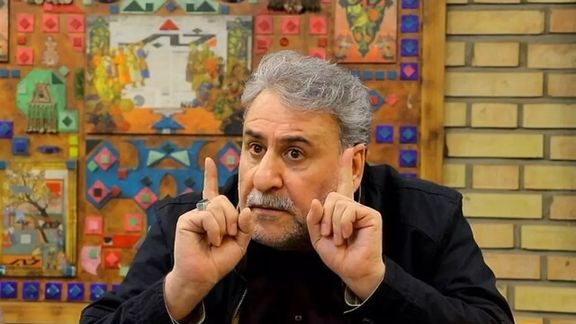
Heshmatollah Falahatpisheh, former head of the Iranian parliament’s Foreign Relations and National Security Committee.

While Iran’s Foreign Minister Abbas Araghchi has repeatedly emphasized that Tehran is committed to holding indirect talks with Washington, a prominent politician in Tehran argues that President Donald Trump is unlikely to accept such negotiations.

Araghchi, widely seen as representing Supreme Leader Ali Khamenei’s position, has stated in multiple interviews and statements that Iran’s current strategy is to engage with the US through intermediaries.

However, Heshmatollah Falahatpisheh, former head of the Iranian parliament’s Foreign Relations and National Security Committee, told the conservative Nameh News website: “Trump will not accept negotiations through intermediaries.”

He also criticized President Massoud Pezeshkian for “lacking a clear foreign policy strategy,” arguing that while Trump appears to have a plan for every possible scenario, Iran’s president has yet to outline a vision for Tehran’s future relations with Washington.

Since Pezeshkian is widely known to have limited authority over foreign policy, the criticism may have been aimed at Khamenei, though the politician would not have dared to address him directly.

“Currently, Trump's plan is to force Iran to the negotiating table through maximum pressure,” Falahatpisheh said, adding that “diplomacy will have a chance if Trump moderates his stance.” He also made it clear that Trump seeks direct talks with Iran.

Falahatpisheh further noted that apart from some Persian Gulf states, most international players are focused on their own interests rather than easing tensions between Iran and the US. He pointed to the recent trilateral meeting between Iran, China, and Russia in Beijing, saying that both China and Russia were primarily advancing their own agendas rather than working to resolve Iran’s standoff with Washington.

Earlier this week, Khamenei's senior adviser Ali Larijani, as well as prominent economists in Tehran said that Iran needs to address its problems with the United States urgently in a bid to lift or reduce US sanctions and give the ailing economy a chance to grow after many years of crises and stagnation.

Iranian economist Mehdi Pazouki, an academic in Tehran told the press that Iran's economy is hostage to the country's failing foreign policy and Iran's inability to have amicable relations with the world.

Ali Ghanbari, another Iranian economist, told Iranian media that the country’s economy is under strain due to its foreign policy, which is not controlled by the Pezeshkian administration. Without explicitly stating that Khamenei, rather than Pezeshkian, oversees Iran’s foreign policy—particularly Tehran’s relations with Washington—Ghanbari described it as “a structural problem beyond the control of Pezeshkian’s government.”

Given this reality, Falahatpisheh outlined two possible scenarios for the future of Iran-US dynamics: “Either a war breaks out between Iran and Israel, with the United States carrying out precision strikes on targets in Iran—an escalation that would not stop there but spread across the region—or there will be no war, but additional countries will join the United States in its maximum pressure campaign against Iran.”

He noted that even China and Russia will cautiously support the United States in this case if Washington guarantees their interests.

Falahatpisheh noted that “Iran has not identified its opportunities in this situation or considered the consequences of what might unfold.” He blamed Pezeshkian’s passivity and inaction for the current state of affairs, suggesting that the president should begin the new year with concrete operational plans. Meanwhile, Pezeshkian’s stated approach has been to push forward Khamenei’s impractical vision of domestic investment as a path to economic recovery—without explaining how it would be implemented.

As inaction continues and unrealistic economic projections persist, the exchange rate for the US dollar in Tehran’s markets has surpassed one million rials. According to former Central Bank governor Mohammad Hossein Adeli, every Iranian household is effectively paying 180 million rials ($180) per month as a hidden cost of US sanctions. He warned that with each Iranian losing money to the sanctions’ impact on non-oil trade, the situation could become a serious security issue for the country before 2029.

Most Viewed

Ideology may be fading in Iran, but not in Kashmir's ‘Mini Iran'
1
INSIGHT

Ideology may be fading in Iran, but not in Kashmir's ‘Mini Iran'

2
INSIGHT

Hardliners push Hormuz ‘red line’ as US blockade tests Iran’s leverage

3
VOICES FROM IRAN

Hope and anger in Iran as fragile ceasefire persists

4

US sanctions oil network tied to Iranian tycoon Shamkhani

5

Iran International says it won’t be silenced after London arson attack

Banner
Banner

Spotlight

  • Hardliners push Hormuz ‘red line’ as US blockade tests Iran’s leverage
    INSIGHT

    Hardliners push Hormuz ‘red line’ as US blockade tests Iran’s leverage

  • Ideology may be fading in Iran, but not in Kashmir's ‘Mini Iran'
    INSIGHT

    Ideology may be fading in Iran, but not in Kashmir's ‘Mini Iran'

  • War damage amounts to $3,000 per Iranian, with blockade set to add to losses
    INSIGHT

    War damage amounts to $3,000 per Iranian, with blockade set to add to losses

  • Why the $100 billion Hormuz toll revenue is a myth
    ANALYSIS

    Why the $100 billion Hormuz toll revenue is a myth

  • US blockade targets Iran oil boom amid regional disruption
    ANALYSIS

    US blockade targets Iran oil boom amid regional disruption

  • Iran's digital economy battered by prolonged blackout
    INSIGHT

    Iran's digital economy battered by prolonged blackout

•
•
•

More Stories

Tehran rejects Trump's demands on missiles and allies - New Arab

Mar 29, 2025, 11:53 GMT+0
•
Niloufar Goudarzi

Iran’s formal response to US President Donald Trump’s recent letter reaffirms longstanding positions: no negotiations on its ballistic missile program or regional allies, and no nuclear talks beyond the framework of the 2015 nuclear deal, The New Arab reported Saturday.

According to the Qatari outlet quoting anonymous sources in Iran, Tehran responded “line by line” to Trump’s message, mirroring its tone and structure. The reply rejected demands viewed as unreasonable and emphasized that any talks on the nuclear file must be based on the Joint Comprehensive Plan of Action (JCPOA) and mutual respect.

Issues addressed by Tehran

The Iranian reply addressed four main areas: the nuclear program, missile and defense capabilities, Iran's ties with regional militant groups, and US threats of more sanctions and military action.

On defense matters, the response rejected any discussion of Iran’s ballistic missile arsenal, which Tehran considers non-negotiable. It also reaffirmed that its military capabilities are essential to national defense and not subject to external bargaining.

In the nuclear section, Iranian officials reiterated that they are open to talks, but only within the original terms of the 2015 JCPOA. They rejected any attempt to expand the scope of negotiations or impose new restrictions on the program, which Iran continues to describe as peaceful.

The letter also addressed regional issues, pushing back on US efforts to curb Iran’s backing of militant groups. “These relationships are based on bilateral agreements,” the sources said. “The allies are independent and do not take orders from us. Any agreement reached with these parties would be welcomed by Iran.”

This position had already been outlined publicly by Iran’s ambassador to Iraq, Mohammad Kazem Al-Sadegh, who said Thursday that Tehran’s support for what it calls the “axis of resistance” in Lebanon, Iraq, and Yemen is non-negotiable. Iran has rejected US conditions seeking to limit its regional influence and missile program. “We only negotiate the nuclear file,” Al-Sadegh said, adding that such talks would only take place if Iran’s full rights were respected. “We do not negotiate our missiles. We do not negotiate our regional alliances.”

The final section of the reply responded to what Iranian officials described as threats included in Trump’s letter. In its reply, Tehran linked any future direct talks to a change in Washington’s tone. The letter said that dialogue would require “dealing with Tehran on the basis of respect, without threats or maximum pressure,” according to The New Arab.

Iran’s decision to send the reply through Oman, rather than the United Arab Emirates—which had delivered Trump’s original letter—was a deliberate one, The New Arab reported. Iranian sources said the move reflected Tehran’s trust in Oman’s longstanding role as a neutral mediator and a rejection of what it saw as an attempt to bypass established channels.

Iran reiterates policy positions in official comments

Iranian officials have since confirmed the delivery and broad content of the response. Foreign Minister Abbas Araghchi said Thursday that the reply had been conveyed “appropriately” through Muscat. He reiterated that Iran remains unwilling to engage in direct talks under what he described as maximum pressure and military threats. “Our policy remains not to negotiate directly with the United States under pressure,” Araghchi said on state television. “Indirect talks can continue, as they did in previous administrations.”

Senior Iranian figures also addressed the letter publicly during Friday’s Quds Day rallies. Parliament Speaker Mohammad Bagher Ghalibaf accused the United States of using nuclear diplomacy to push for Iran’s disarmament. “When the US says negotiation, it means disarmament,” he said. “No wise nation accepts talks under threat.”

Ali Shamkhani, former head of Iran’s Supreme National Security Council, described the response as “restrained” and confirmed it was prepared by multiple institutions. He said indirect negotiations remained possible, but only if conducted on equal terms. “If negotiations are based on parity, we are prepared to proceed,” he said.

Trump’s letter included a two-month deadline for reaching a new nuclear agreement, Axios reported.

The United States reimposed its maximum pressure campaign against Iran in February, seeking to reduce the country’s oil exports to zero and force a broader deal. Alongside calls for limits on Iran’s nuclear and missile programs, Washington has also demanded that Tehran scale back its support for armed groups in the region.

Speaking earlier this month, Trump said Iran would have to return to talks or face consequences. “They’re going to have to speak to us one way or another,” the US president told Fox Business. “We can’t let this happen.”

US keeps pressure on Iran-backed forces with strikes in Yemen

Mar 29, 2025, 10:16 GMT+0

The United States on Friday intensified its campaign against Iran-aligned groups, conducting extensive airstrikes on Houthi-controlled areas in Yemen and pressuring Hezbollah in Lebanon.

Suspected US airstrikes hit Yemen overnight into Saturday, reportedly killing at least one person, as the American military confirmed an earlier strike on a major military site in central Sanaa controlled by Houthi rebels, the Associated Press reported.

According to Houthi-affiliated media, American warplanes carried out 14 airstrikes each on the Yemeni capital Sanaa and the northern city of Saada, as well as several strikes in al-Jawf province.

While full casualty figures remain unclear, the group’s said one person was killed and four injured in Saada, describing the fatality as a civilian. However, such figures may downplay military losses, given the Houthis’ pattern of operating in civilian attire.

The escalation follows Houthi threats and attacks on maritime traffic Since 2023, which the group said were acts of solidarity with Palestinians in Gaza. Between November 2023 and January 2024, Houthi forces targeted over 100 commercial vessels. The US and its allies restarted strikes in Yemen in mid-March after a brief lull.

Meanwhile, the US Treasury Department announced sanctions against five individuals and three companies accused of helping finance Hezbollah through oil smuggling operations tied to Iran’s Islamic Revolutionary Guard Corps’ Quds Force. The department described the network as a commercial front funneling millions of dollars into Hezbollah’s accounts under the oversight of senior financier Muhammad Qasir, who died in late 2024.

“These evasion networks strengthen Iran and its proxy Hezbollah and undermine the courageous efforts of the Lebanese people to build a Lebanon for all its citizens,” said Bradley T. Smith, Acting under secretary for terrorism and financial intelligence in a statement.

The Treasury added that Washington's Rewards for Justice program is offering up to $10 million for information on Hezbollah’s financial infrastructure.

On the same day, Israeli warplanes struck a building in Beirut’s southern suburbs, a Hezbollah stronghold, for the first time since a November ceasefire. Israeli officials said the site was used by the Iran-backed group to store drones.

In Washington, State Department spokesperson Tammy Bruce defended the strike.

"The Government of Lebanon is responsible for disarming Hezbollah," Bruce told reporters. "The reason that any attacks have happened is because terrorists launched rockets into Israel from Lebanon. That is a violation of the cessation of hostilities."

"Israel has to respond as the United States would have to respond," Bruce said. "We stand by Israel."

The US push on multiple fronts highlights a broader effort to limit the influence of Tehran’s allies and proxies in the region.

US President Donald Trump recently sent a letter to Tehran giving Iran a two-month deadline for reaching a new nuclear deal, Axios reported citing one US official and two sources briefed on the letter.

"You've got a lot of stuff going on with Iran, and we sent a letter to Iran," Trump said this week. "You're going to have to be speaking to us one way or the other pretty soon, because we can't let this happen."

Trump has demanded Tehran come to a deal or face a military intervention and warned any attack by Yemen's Houthis would be treated as emanating from Iran.

Iran says it has responded to the letter through Oman.

Why are Iranians turning away from their national football team?

Mar 29, 2025, 09:28 GMT+0
•
Maryam Sinaiee

The absence of the usual jubilation after Iran secured a spot in the 2026 FIFA World Cup earlier this week reflects deep societal and political divisions that extend far beyond the football pitch.

Iran's national football (soccer) team, Team Melli, secured a World Cup spot with a draw against Uzbekistan on Tuesday. In the past, such a victory would have brought millions to the streets in celebration, but this time, the public response was largely indifferent.

Media outlets in Tehran, such as Rouydad24, and numerous social media users noted this apathy. "The national football team qualified for the World Cup, but there was no enthusiasm in the public sphere or on social media. The event seemed so insignificant that people behaved as if they had no connection to the team," journalist Mohammad Parsi wrote on X.

In stark contrast, when Iran qualified for the 1998 World Cup by defeating Australia, millions celebrated in the streets nationwide. The euphoria of that moment, when people danced in public without fear of morality police intervention, remains a historic memory.

Football has long been Iran's most popular sport, but many Iranians say they no longer take pride in their national team. This shift is largely political, rooted in the 2022-2023 "Woman, Life, Freedom" protests, sparked by the death of 22-year-old Mahsa Amini in September 2022 while in morality police custody for allegedly violating hijab laws.

During the nationwide protests, Team Melli initially showed solidarity with the demonstrators. Some players, including forward Sardar Azmoun, openly condemned the brutal crackdown. Many others wore black armbands and refused to sing Islamic Republic's anthem before their World Cup match against England in November 2022, as a gesture of support.

However, under apparent pressure from security forces, the team’s public support for the protesters waned. This led to widespread disillusionment among fans, who began referring to the squad as the government’s or "mullahs' team."

The team's meeting with then-president Ebrahim Raisi before leaving for Qatar angered many supporters who did not expect the players to ignore the continued crackdown on protesters. Legendary striker Ali Daei and outspoken star Ali Karimi, charged in absentia for supporting the protests, said they rejected FIFA and Qatar’s invitation to watch the matches in Doha. The unpopularity of Team Melli reached a peak in February 2024 when thousands celebrated its defeat to Qatar in the Asian Cup tournament.

Inter Milan striker Mehdi Taremi, who scored both goals in Tuesday’s match, has also faced backlash. Taremi, known for his pro-government stance, was criticized for distancing himself from political issues and denying allegations that the team had been coerced into singing the national anthem.

The declining support has also been evident in dwindling stadium attendance—despite the match attended by President Masoud Pezeshkian falling during the New Year holidays, only one-third of Azadi Stadium’s 100,000 seats were occupied.

Trump administration resumes aid for Iran initiatives

Mar 28, 2025, 21:03 GMT+0

The US government has resumed nearly all Iran-related aid programs that were paused under President Donald Trump’s executive order in January, Iran International can confirm based on an obtained document and interviews with grant recipients.

The State Department had suspended funding for numerous initiatives, including Iranian human rights groups, internet freedom programs, and civil society organizations, as part of a broader review of foreign assistance under the administration’s America First policy.

The freeze, announced on January 20, was initially set for 90 days but the review process appears to have concluded in time, with all but a few of projects focusing on Iran colored green in a list of State Department “active grants” obtained by Iran International.

The State Department did not comment on the specifics of Iran-related grants when contacted by Iran International but confirmed that funding for some programs is proceeding.

"While the US Government's review of all foreign assistance is ongoing, some approved programs are continuing to advance US national interests. This includes some programs in support of the Iranian people," a State Department spokesperson said.

Multiple grantees have also confirmed to Iran International that their funding has been reinstated and that their operations will restart.

Ahmad Ahmadian, an advocate of internet freedom in Iran who leads the efforts of the California-based NGO, Holistic Resilience, in research and development of censorship circumvention technologies.

Welcoming the decision to reinstate funds to organizations like his, Ahmadian suggested that pressuring the rulers of Iran and supporting its people at the same time is not only possible but necessary if the United States wants to effect real change in the country—and beyond.

“The Trump administration’s policy is focused on increasing efficiency and avoiding the start of a new war,,” he told Iran International. “Iranian civil society remains the most promising option to achieve this goal and to change the behavior of the Iranian government.”

Ahmadian agreed that some reform toward efficiency and effectiveness might be required with the State Department grants.

“I believe new projects should demonstrate a clear return on investment, operate with greater transparency, highlight the shared values between the Iranian and American people, and focus more on tangible results,” he added.

Prior to the pause in foreign aid, Washington funded several Virtual Private Network (VPN) services that helped Iranians bypass government censorship. U.S. funding also supported projects aimed at promoting media freedom, strengthening civil society, and documenting human rights in Iran. All of these initiatives were affected by the executive order.

The halt in funding—announced on Trump’s first day in office—was widely criticized by Iranian activists who argued that the decision benefited Tehran’s theocratic rulers above all. The resumption, those affected believe, would turn the table and more.

“The Islamic Republic tried to use the temporary suspension of funds as a propaganda tool, claiming that these projects lacked usability and impact. But the reality is that many have had tangible effects on Iranian society,” one State Department grantee told Iran International, asking to remain unnamed.

“The Trump administration showed that it values Iran-related projects. I anticipate even more funding flowing into this sector. These projects are aligned with the America First policy,” the grantee added.

The State Department has not publicly commented on the status of the review or the reasons for reinstating aid. Both the pause and resumption of funding happened at a time of heightened tensions between Washington and Tehran.

President Trump has ramped up economic and diplomatic pressure on Tehran, issuing an ultimatum to Supreme Leader Ali Khamenei to agree to a deal that curtails Iran’s nuclear program or face severe consequences.

Khamenei has rejected direct talks while pressure persists and rises, asserting that Iran would not bow to American demands.

With both sides hardening their positions, concerns are growing over further escalation, particularly as the US bolsters its military presence in the Middle East and the Indian Ocean.

The most recent US intelligence assessment pointed to Tehran’s diminished influence in the region and the potential of growing discontent at home giving rise to mass protests like those seen in recent years.

The decision to reinstate grants may have had such assessments at heart.

Iran-born Canadians denied US entry - Globe and Mail

Mar 28, 2025, 20:06 GMT+0

Canadian citizens born in Iran are being blocked from entering the United States after undergoing questioning at the border, the Canadian daily newspaper Globe and Mail reported citing immigration lawyers and advisers.

The report said that after President Donald Trump signed an executive order on his first day in office on Jan. 20 mandating enhanced scrutiny of foreign nationals Iranian-Canadians have faced heightened border security.

The report highlighted specific cases since that time, citing immigration lawyer Melissa Babel, who described two Iranian-Canadians who were recently denied entry.

According to Babel, both individuals, who had lived in Canada for decades, were questioned closely about their military service in Iran. US border agents asked them to provide proof that they had never served in the Iranian military, which is a major concern due to the US designation of the Iran's Revolutionary Guards (IRGC) as a terrorist organization​.

One of the men, who frequently traveled to the US for business, was denied entry and later found that his Nexus card—used for expedited US border processing—had been canceled. The other man, traveling with his Iranian-Canadian wife and Canadian-born daughter, was also refused entry​.

The report cited legal experts who have called on Ottawa to issue a travel advisory warning that Canadian citizens and residents from Iran risk being denied entry, having their visas or Nexus cards revoked, or even being detained or deported when traveling to the US.

Earlier this month, Reuters reported citing informed sources and an internal memo that the Trump administration is considering issuing sweeping travel restrictions for the citizens of dozens of countries as part of a new ban.

The memo lists a total of 41 countries divided into three separate groups. The first group of 10 countries, including Afghanistan, Iran, Syria, Cuba, and North Korea among others, would be set for a full visa suspension​.