• العربية
  • فارسی
Brand
  • Iran Insight
  • Politics
  • Economy
  • Analysis
  • Special Report
  • Opinion
  • Podcast
  • Iran Insight
  • Politics
  • Economy
  • Analysis
  • Special Report
  • Opinion
  • Podcast
  • Theme
  • Language
    • العربية
    • فارسی
  • Iran Insight
  • Politics
  • Economy
  • Analysis
  • Special Report
  • Opinion
  • Podcast
All rights reserved for Volant Media UK Limited
volant media logo

Israel says it foiled Iranian spy plot targeting Dimona nuclear facility
Mar 2, 2025, 13:23 GMT+0
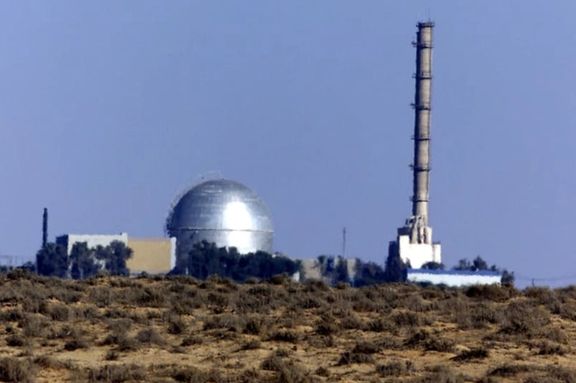
 A view of the Israel's Shimon Peres Negev Nuclear Research Center in the Negev Desert outside Dimona
A view of the Israel's Shimon Peres Negev Nuclear Research Center in the Negev Desert outside Dimona

Israeli authorities say they have thwarted a new Iran-backed spy plot targeting Dimona nuclear facility as Iran continues to escalate its operations in the Jewish state.

“Following a joint investigation by the Israeli Defense Forces in Lahav 433 and the Shin Bet, a Beer Sheva resident was arrested on suspicion of initiating contact with intelligence elements in the Iranian regime and offering to sell information, among other things, claiming that he had access to the nuclear research complex,” the statement from Israel Police said.

Last month, Doron Buchovze, an Israeli citizen and resident of Beer Sheva, was arrested after being suspected of having committed security offenses for several months involving contact with Iranian agents and carrying out missions, including photographing installations and transmitting information for financial gain.

Doron Bochboza
100%
Doron Bochboza

The investigation also revealed that Bukhobza initiated the contact, with the full understanding that he was in contact with an Iranian operator, and that it could cause harm to the state's security, the police said.

Israel Hayom reported that he had received 3,750 shekels ($1,000) in digital currency from an Iranian agent.

An indictment was filed against Buchovza on Sunday, charging him with the offenses of contacting a foreign agent and passing information to an enemy state.

It is the latest case as dozens have been foiled since the beginning of the Gaza war while Iran steps up its operations against its archenemy.

Asher Ben Artzi, the former head of Israeli Interpol and a research associate at The International Institute for Counter-Terrorism, told Iran International: “We are witnessing a further escalation in Iranian intelligence activity.

“This is no longer a weakened population with no connection to the state, this is a native Israeli who approached them on his own initiative and even carried out several missions for them. This is about treason against the State of Israel, the suspect who was arrested is a traitor. Treason in time of war. This is the most serious offense.”

Previous plots have targeted the country's military and political leaders, military facilities and nuclear research centers.


Most Viewed

Ghalibaf defends Iran-US talks amid hardline backlash
1
INSIGHT

Ghalibaf defends Iran-US talks amid hardline backlash

2
INSIGHT

A nation in limbo: 100 days after the massacre, has the world moved on?

3
ANALYSIS

From instability to influence: Pakistan’s pivotal role in US-Iran diplomacy

4
ANALYSIS

100 days on: why Iran’s January protests spread across social classes

5

War-hit homeowners feel abandoned as Iran’s reconstruction aid fades

Banner
Banner

Spotlight

  • War-hit homeowners feel abandoned as Iran’s reconstruction aid fades

    War-hit homeowners feel abandoned as Iran’s reconstruction aid fades

  • 100 days on: the anatomy of Iran’s January crackdown
    INSIGHT

    100 days on: the anatomy of Iran’s January crackdown

  • Ghalibaf defends Iran-US talks amid hardline backlash
    INSIGHT

    Ghalibaf defends Iran-US talks amid hardline backlash

  • 100 days on: why Iran’s January protests spread across social classes
    ANALYSIS

    100 days on: why Iran’s January protests spread across social classes

  • From instability to influence: Pakistan’s pivotal role in US-Iran diplomacy
    ANALYSIS

    From instability to influence: Pakistan’s pivotal role in US-Iran diplomacy

  • A nation in limbo: 100 days after the massacre, has the world moved on?
    INSIGHT

    A nation in limbo: 100 days after the massacre, has the world moved on?

•
•
•

More Stories

Iran calls for regional unity among Muslims against Israel

Mar 1, 2025, 18:40 GMT+0

Iran's deputy foreign minister called for unity among Muslim nations in response to what he called Israeli destabilizing actions and provocations in the region, Iranian state media reported.

Majid Takht-Ravanchi made the remarks in a Saturday meeting in Abu Dhabi with the UAE president's diplomatic advisor Anwar Gargash.

The two sides also discussed bilateral relations as well as pressing regional and international issues, according to Iran's official news agency IRNA.

Takht-Ravanchi underlined Iran’s commitment to forging closer ties with neighboring countries, expressing Tehran's preparedness to enhance relations with the UAE based on mutual interests.

The UAE and Iran repaired their diplomatic ties in 2022, about six years after Abu Dhabi cut diplomatic relations in allegiance with Saudi Arabia after the 2016 looting of the Saudi embassy in Tehran.

Two members of IRGC's Basij killed in Iran’s restive southeast

Mar 1, 2025, 16:25 GMT+0

Two members of the IRGC's Basij paramilitary forces were assassinated on Saturday in Iran's restive Sistan-Baluchestan province, the Quds Base of the IRGC Ground Forces announced.

According to the statement, "Hojatoleslam Sadegh Mahmoudi and Milad Damankesh were targeted by terrorists while traveling home from work in a private vehicle and were martyred in the attack." The two were part of the Shahid Sajjad Security Plan.

Sunni militant group Jaish al-Adl in a statement on Saturday claimed responsibility for the attack.

Iran's Sistan-Baluchestan province has long been a flashpoint for violence, frequently targeted by Jaish al-Adl, which is known for ambushes, bombings, and armed attacks that have claimed the lives of both civilians and security forces.

The incident follows a surge in violence in the province. In February, the group took responsibility for a bombing in Chabahar that destroyed a government coordination office, as well as an armed assault on a Housing Foundation building.

Jaish al-Adl said those attacks were in retaliation for policies displacing local Baluch communities. The Baluch are one of the poorest ethnic groups in Iran, suffering from lack of decent public services and infrastructure.

Both Iran and the United States have designated Jaish al-Adl as a terrorist organization. The group has carried out multiple attacks on Iranian military and IRGC positions in recent years.

In November, four members of the Islamic Revolutionary Guard Corps were killed in clashes during a military drill in Rask County. In October, Jaish al-Adl claimed responsibility for an attack that killed ten Iranian military personnel.

Beirut eyes revival of $3 billion of Saudi aid in pivot from Tehran

Feb 28, 2025, 20:38 GMT+0

Lebanon will ask Saudi Arabia to resume a $3 billion aid package to the Lebanese army which was halted in 2016 after Beirut failed to condemn attacks on the Kingdom's diplomatic missions in Tehran, Lebanon's president said on Friday.

Joseph Aoun, Lebanon’s former army chief, will meet Saudi Crown Prince Mohammed bin Salman on Monday in his first foreign trip as president.

The US and Arab-backed president has expressed a desire for the Lebanese state to have a monopoly on weapons after Iran-back Hezbollah was mauled in a 15-month war with Israel.

A financial endorsement from Riyadh could further solidify Lebanon’s alignment away from Tehran.

Aoun said he would ask Saudi Arabia "if it is possible to reactivate the grant," in an interview with Riyadh-based television Asharq.

"I hope and I await from Saudi Arabia - and especially the Crown Prince - to correct the relationship in the interests of both countries," Aoun added.

Saudi Arabia halted the aid package—originally intended to supply the Lebanese army with French weapons—after pro-Islamic Republic vigilantes stormed and set fire to the Saudi embassy in Tehran and consulate in Mashhad in January 2016.

The attacks came in response to Saudi Arabia’s execution of prominent Shia cleric Nimr al-Nimr, prompting Riyadh to sever diplomatic ties with Tehran.

Iran's Supreme Leader Ali Khamenei called the execution of Nimr "a political mistake and a great sin."

Hezbollah's former Secretary-General Hassan Nasrallah also condemned the execution, describing it as a "heinous crime."

In 2021, Iraq initiated a mediatory effort to reconcile Tehran and Riadh which led to an agreement in March 2023 to resume their diplomatic relations.

Why does Iran help fuel the cycle of Israeli-Palestinian violence?

Feb 28, 2025, 16:31 GMT+0
•
Negar Mojtahedi

To understand why a peaceful resolution between Israel and Palestine remains so elusive, author and foreign correspondent Yardena Schwartz told Eye for Iran, one must first recognize that the conflict extends far beyond the two peoples.

“The Palestinians become pawns,” said Schwartz, “particularly by the Islamic Republic of Iran.”

According to Schwartz, the plight of the Palestinians serves the interests of the clerical rulers of Iran as a geopolitical tool in its broader quest for regional dominance.

"It's a regional problem," said Schwartz.

Since the inception of the Islamic Republic, the leader of the revolution Ayatollah Ruhollah Khomeini, coined the term "little Satan" to refer to Israel and "big Satan" to reference the United States.

Iran’s clerical rulers have pledged to destroy Israel for more than four decades. The country’s supreme leader Ayatollah Ali Khamenei often appears in public wearing a black-and-white checkered kaffiyeh to symbolize Palestinians.

Since the Oct. 7, 2023 attacks on Israel by Iran-backed Hamas militants, Iran’s fingerprints are seemingly everywhere as the Middle East has descended into turmoil.

Hezbollah in Lebanon, the armed Houthi movement in Yemen and Iraqi militias - all equipped and trained by Tehran - have taken shots at Israel with missiles and drones.

Iran’s supreme leader told Hamas’  deceased top leader Ismail Haniyeh that the elimination of Israel was a divine promise and is feasible in May 2024..
100%
Iran’s supreme leader told Hamas’ deceased top leader Ismail Haniyeh that the elimination of Israel was a divine promise and is feasible in May 2024..

The Wall Street Journal, citing a Hamas source, reported on Oct 8, 2023, that Iran helped plot the attack, with the greenlight being given in Beirut during a meeting.

US intelligence, however, suggests that the attack came as a surprise to Iran.

While it’s not clear if Tehran coordinated the exact timing of the attack, what is certain is Iran has funded, trained and armed Hamas for decades. Iran has provided $100 million annually to Palestinian militant groups, including Hamas, according to the US State Department in 2020.

"That money didn't go to improving the lives of the people of Gaza - the opposite, and went to building their vast tunnel network to building up their rockets and their weapons," said Schwartz.

The Hamas-Iran relationship: a paradox

The Shia-led theocracy in Iran and Sunni-led Hamas in Gaza adhere to diverging creed but have a common enemy in Israel.

Their ardor is fueled by extremism driving both sides of the conflict, Schwartz said.

"There is extremism on both sides. There are extremists on the Jewish side as well. There are Jewish extremists in the West Bank who are attacking Palestinians in the West Bank, and there's no excuse for that," said Schwartz.

"People often forget that the name of Hamas means the Islamic Resistance Movement," she added "this weaponization of Islam is only hurting the Palestinian people and making the prospects for peace ever more distant."

As the conflict drags on, Schwartz observes a shift within Israeli society, particularly in the wake of the Oct. 7 attacks.

"Many of the Jews who were killed and kidnapped on Oct. 7 were left wing Israelis. Many of them were peace activists. And as we've seen over the course of the last 16 months, many in Israel have shifted rightward," Schwartz said.

That shift has a historical parallel in the 1929 Hebron Massacre, about which Schwartz has written a book.

She contends the obscure atrocity set in motion a cycle of violence that continues to shape the region today.

In 1929, Arabs set upon the Jewish community of the holy city of Hebron now in the Israeli-occupied West Bank and killed nearly 70 people.

Many those killed or injured were pious Jews opposed to a political Zionist movement, viewing it as a secular movement.

The attack, however, hardened many survivors into advocates of a Jewish state.

While the origins of that cycle of violence are not rooted in Iran, the violence between two peoples with suing conflict has only been exacerbated by Tehran, Schwartz said, creating more obstacles to lasting peace.

Peace in the holy land, which Schwartz believes is destined for both peoples to share, can't happen without both sides having self-determination. But peaceful coexistence is not feasible, argues Shwartz with the long arm of the Iranian establishment reaching the shores of the Mediterranean Sea.

"I do think that the only way we will see peace and an end to this never-ending war is when both people have self-determination."

You can watch the full episode of Eye for Iran with award winning author Yarden Schwartz on YouTube, or listen on Spotify, Apple, Castbox, Amazon or any major podcast platform.

Iran says PKK disarmament call is a step toward peace

Feb 28, 2025, 12:20 GMT+0

Iran has welcomed the call for the Kurdistan Workers' Party (PKK) to lay down its arms, viewing it as a significant step toward ending violence and promoting regional security.

Esmaeil Baghaei, spokesperson for Iran's Foreign Ministry, praised the announcement made by jailed PKK leader Abdullah Ocalan, who urged the group to dissolve itself in a letter read by Turkey’s pro-Kurdish DEM Party.

“The Islamic Republic of Iran supports any process that leads to the cessation of terrorism and strengthens security in neighboring Turkey,” Baghaei said Friday, expressing hope that this development would have positive effects throughout the region.

Ocalan’s statement comes amid shifting dynamics in the Middle East following the collapse of the Assad government in Syria. The new Syrian administration, backed by Ankara, is seeking to consolidate control over Kurdish-held areas in the north, while Turkey has intensified its push to dismantle Kurdish militant groups in both Syria and Iraq.

Last month, Turkish Foreign Minister Hakan Fidan called on Iran to align its stance with Ankara’s efforts against the PKK, saying, “There are some who think differently about the PKK in Iran, but we urge all countries, including Iran, to cease support for the group.” His remarks followed reports of an alleged meeting between Iran’s IRGC Quds Force Chief Esmail Qaani and leaders of the PKK-linked YPG in Syria.

Ankara, which classifies the YPG as a terrorist organization, has repeatedly warned that it will take military action if Kurdish militants do not disarm and withdraw. The disbandment of the PKK could reshape security dynamics in the region, particularly in oil-rich northern Iraq, where the group has maintained a base for decades.





