• العربية
  • فارسی
Brand
  • Iran Insight
  • Politics
  • Economy
  • Analysis
  • Special Report
  • Opinion
  • Podcast
  • Iran Insight
  • Politics
  • Economy
  • Analysis
  • Special Report
  • Opinion
  • Podcast
  • Theme
  • Language
    • العربية
    • فارسی
  • Iran Insight
  • Politics
  • Economy
  • Analysis
  • Special Report
  • Opinion
  • Podcast
All rights reserved for Volant Media UK Limited
volant media logo

Iranian politicians, media say talks depend on Trump’s tone

Feb 16, 2025, 09:35 GMT+0

Some Iranian politicians and media are attempting to soften Iran’s stance on negotiations with the United States after Supreme Leader Ali Khamenei’s rejection of talks, framing it as a call for President Donald Trump to change his public tone.

Meanwhile, several politicians and commentators have maintained a defiant stance, while others, including President Pezeshkian, have remained in denial about the talks, insisting they can address Iran's problems without the need to lift sanctions.

For the second time in less than a week, Jomhouri Eslami—a daily linked to Khamenei's office but often critical of hardline policies—argued in a February 15 article that negotiations between Tehran and Washington remain possible if Trump moderates his tone toward the Islamic Republic.

The daily accused Trump of "naivety," stating, "The responses he received from Iranian officials should have shown him that arrogant rhetoric does not work with Iran." It also addressed Trump directly, asserting, "Iran is not opposed to negotiations—it is opposed to blackmail."

Meanwhile, former Justice Minister and security official Mostafa Pourmohammadi told Entekhab news website on February 15 that "Khamenei has never forbade negotiations with the United States." However, this statement was in a clear and sharp contrast with Khamenei's latest remarks.

Pourmohammadi commented, "Khamenei has never closed the door to negotiations. On the contrary, it is US officials who want to portray Iran as unwilling to negotiate. In reality, we are a rational state with a strong foundation and an educated nation always ready for dialogue with the world."

Elsewhere in the interview, he contradicted himself, saying, "We would never negotiate with arrogant individuals who first slap us in the face and then say, 'Let's kiss and talk.'" His remarks closely echoed Pezeshkian’s February 10 speech on the anniversary of the 1979 revolution, where he dismissed negotiations with Trump and called his behavior "unmanly."

The conservative Nameh News website quoted ultraconservative commentator Foad Izadi, frequently presented by Iranian state TV as a US politics expert, as saying, "Trump will attack Iran if he believes the cost will be low or manageable. However, if he sees that such an attack would come at a high price, he will never go through with it."

Nameh News described Tehran and Washington as being at a historic turning point in their relations. The outlet noted that Pezeshkian had hoped to engage in talks with Trump under the conditions set by his administration in 2018. However, Trump’s latest stance—implying that Iran could avoid Israeli airstrikes if it agreed to negotiate—has left Tehran in a state of uncertainty.

The Iranian Labor News Agency (ILNA) quoted Iran's security chief, Ali Ahmadian, as saying that Iran has no ideological opposition to negotiating with the United States. However, he asserted that Tehran refuses to engage with Washington due to its "arrogant behavior" before and during the 2015 nuclear negotiations, as well as its failure to uphold commitments after the deal was reached.

Meanwhile, some Iranian politicians and commentators, including conservative figure Nasser Imani, have advocated strengthening ties with China and Russia instead of engaging with the United States. The Rouydad24 website quoted Imani as saying, "There is no point in making a deal with America. We have to pivot toward China and Russia."

At the same time, Ahmad Bakhshayesh Ardestani, a member of the parliament's national security committee, addressed US concerns over Iran’s potential nuclear weaponization. In what appeared to be support for developing nuclear weapons, he stated, "Whether we have a bomb or not, US sanctions will continue." However, echoing moderate politicians and media, Ardestani added, "We will negotiate with America if Trump adopts a softer tone and rhetoric."

Most Viewed

Ideology may be fading in Iran, but not in Kashmir's ‘Mini Iran'
1
INSIGHT

Ideology may be fading in Iran, but not in Kashmir's ‘Mini Iran'

2
INSIGHT

Hardliners push Hormuz ‘red line’ as US blockade tests Iran’s leverage

3
VOICES FROM IRAN

Hope and anger in Iran as fragile ceasefire persists

4

US sanctions oil network tied to Iranian tycoon Shamkhani

5

Iran International says it won’t be silenced after London arson attack

Banner
Banner

Spotlight

  • Hardliners push Hormuz ‘red line’ as US blockade tests Iran’s leverage
    INSIGHT

    Hardliners push Hormuz ‘red line’ as US blockade tests Iran’s leverage

  • Ideology may be fading in Iran, but not in Kashmir's ‘Mini Iran'
    INSIGHT

    Ideology may be fading in Iran, but not in Kashmir's ‘Mini Iran'

  • War damage amounts to $3,000 per Iranian, with blockade set to add to losses
    INSIGHT

    War damage amounts to $3,000 per Iranian, with blockade set to add to losses

  • Why the $100 billion Hormuz toll revenue is a myth
    ANALYSIS

    Why the $100 billion Hormuz toll revenue is a myth

  • US blockade targets Iran oil boom amid regional disruption
    ANALYSIS

    US blockade targets Iran oil boom amid regional disruption

  • Iran's digital economy battered by prolonged blackout
    INSIGHT

    Iran's digital economy battered by prolonged blackout

•
•
•

More Stories

Tehran slams US deportation of Iranian illegal migrants

Feb 15, 2025, 10:30 GMT+0

Iran’s government on Saturday condemned the treatment of Iranian nationals deported from the United States to Panama, calling it harsh and inhumane.

This marks the latest in a series of deportations under policies implemented during Donald Trump’s presidency, which have sent undocumented migrants to countries including Colombia, Venezuela, Brazil, Guatemala, Panama and the Guantanamo Bay military base in Cuba.

Iran’s Foreign Ministry spokesperson Esmail Baghaei urged the US to uphold international norms in its treatment of immigrants. He said that Iran “will spare no effort in protecting its citizens abroad,” adding that the Iranian Interests Protection Office in Washington and diplomatic missions in South America have been instructed to assist deported Iranians.

“Iran is the homeland of all Iranians, and our compatriots can freely return to their homeland and travel,” Baghaei said.

This follows the deportation of at least 12 Iranian migrants who had illegally entered the US via Mexico. The migrants were detained and flown to Panama on a US military plane, a move that has drawn significant scrutiny.

The deportees say they were shackled and handcuffed during the transfer and are now confined to a Panamanian hotel under US government oversight. According to the deportees, the US appears intent on erasing any evidence that they had ever entered the country.

It is not clear how many applied for political asylum in the US, but some report being stranded without money, internet access, or legal counsel, and they fear being sent back to Iran.

Among them is Artemis Ghasemzadeh, who told Iran International TV that she and others were initially told they were being moved to a camp in Texas.

“The security personnel didn’t tell us where we were going, and when we landed, we saw Panama’s flag on their uniforms,” she said.

Ghasemzadeh described their current confinement, saying, “We are monitored, denied legal help, and terrified we might be sent back to Iran.”

Ghasemzadeh also said that many of the group had entered the US legally before or shortly after Trump took office. “The US says we are illegal immigrants, but we are not. We have all approved documents,” she added.

The deportees say they fled Iran to escape persecution for their involvement in anti-government protests or religious conversion to Christianity—both punishable by severe measures in Iran, including imprisonment or execution.

Iran has faced international criticism for its crackdown on dissent, with thousands arrested and hundreds killed during protests since the 2022 death of Mahsa Amini in custody. Several protesters have been executed without fair trials, and many others are at imminent risk of execution.

Panamanian officials have said the deportees will remain in shelters temporarily before being repatriated to their home countries. However, the group’s future remains uncertain as they contend with the fear of life-threatening consequences should they return to Iran.

Iran says it is in indirect talks with Syria’s new government

Feb 15, 2025, 08:54 GMT+0

Tehran has exchanged positive messages with Syria’s new government, an official revealed, but will make its final decision on its future role in the country “at the appropriate time.”

“We are monitoring the developments in Syria with deliberation and patience and will make our specific decision when the time is right,” Mohammadreza Raouf Sheibani, Iran’s special representative for West Asia, said in an interview published Saturday.

He confirmed the recent remarks of Syrian Foreign Minister Asaad Hassan al-Shibani about an exchange of “positive messages” between Tehran and Damascus following the overthrow of Bashar al-Assad’s government in December.

Iran's Shiite clerical government became deeply involved in Syria's civil war early in the conflict, sending regular and proxy forces to defend Bashar al-Assad's rule.

Al-Shibani, speaking at the World Government Summit in Dubai earlier this week, stressed that while Syria has received “clear and positive messages” from both Iran and Russia, these messages need to be translated into “a clear policy that makes the Syrian people feel reassured.”

Iran and Russia, Assad’s main backers during the brutal conflict that began in 2011, played key roles in maintaining his grip on power until a rapid rebel offensive last December forced him into exile in Moscow. Since then, both countries have sought to maintain influence in Syria while navigating the new political landscape.

Europe has taken a clear stance in supporting Syria’s new leadership, with French President Emmanuel Macron pledging assistance in countering terrorism and preventing the return of Iranian-backed militias. “The priority is ensuring that Syria does not become a logistical platform for militias linked to Iran, which pursue a regional destabilization agenda,” Macron said at a recent conference in Paris attended by key regional and Western powers.

Iran, which invested heavily in Assad’s survival—reportedly spending at least $30-$50 billion—now faces the challenge of recalibrating its strategy. Supreme Leader Ali Khamenei has vowed on multiple occasions to reclaim Iran’s influence in Syria, adding further tension to an already complex situation.

To free Israeli hostages Iran must feel the pain, ex-intel officer says

Feb 14, 2025, 22:00 GMT+0
•
Negar Mojtahedi

An ultimatum by US President Donald Trump to Hamas is doomed to fail unless Tehran faces a genuine threat and consequences for backing the group, Michael Pregent, a former US Intelligence officer and military adviser told Eye for Iran podcast.

“Tehran needs to feel under threat, and they need to feel pain,” said Pregent.

"What kind of pressure can the Trump administration put on Iran to get those hostages released? They just simply have to say, you are going to be held accountable for every hostage that's killed or delay in the release of every hostage."

The United States, Pregent said, should exert economic pressure on Iran, discourage Iraqi cooperation with Tehran and more directly confront armed affiliates in the region such as the Houthis in Yemen, Lebanese Hezbollah and Hamas itself.

"If the regime told Hamas to release, they would release," Pregent said, referring to Iranian authorities and Israeli hostages Hamas seized in an Oct. 7, 2023 attack.

Trump on Monday warned of dire consequence if all the remaining hostages are not released on Saturday.

“As far as I’m concerned, if all of the hostages aren’t returned by Saturday at 12 o’clock – I think it’s an appropriate time – I would say, cancel it (ceasefire) and all bets are off and let hell break out,” the president told reporters in the White House.

Trump’s comments represent one of the most direct threats aimed at the Iran-backed group by any Western leader. He also says he seeks to seize and control Gaza, the coastal enclave that has been run by Hamas.

The Islamic Republic provides material, financial and ideological support to its Palestinian ally. According to a 2020 US state department report, Iran provides about $100 million annually to Palestinian militant groups, including Hamas.

Qatar's role

Pregent, who served under former director of the Central Intelligence Agency, General David Petraeus in Iraq, describes Trump as a tough and effective leader.

The Republican President understands the Middle East, Pregent said, but added that some members of the administration are too close to Qatar.

“That funding either silences a critic or results in praise for what Qatar is doing. We hear these things like Qatar is doing God's work,” said Pregent. “When it comes to Witkoff, we know that they bought a property in New York for $623 million. That's in The New York Times. I'm not saying that he's bought and paid for.”

Steve Witkoff, once a prominent real estate investor, is the US Special Envoy to the Middle East, who played a pivotal role in brokering a major ceasefire and hostage exchange agreement between Israel and Hamas.

A New York Times report alleges that Witkoff was involved with two sovereign wealth funds when he bought and sold a Manhattan hotel in 2018 prior to working in government. The Qatar investment authority purchased the hotel for $623 million helping to secure a buyout for Witkoff and his partners.

The most senior leader of Hamas outside of Gaza was living in Qatar up until recently, but the political office of Hamas in Doha is now permanently closed, Qatar’s foreign ministry spokesperson told various Western-media outlets.

Qatar, a tiny island in the Persian Gulf, has become the world’s lead hostage-negotiator. The small energy-rich state, with the help of Egypt, has been working with the US and Israel on a Israel-Gaza ceasefire for much of the conflict.

In 2023, just before October 7, Doha brokered a deal between Washington and Tehran that saw the release of US hostages inside Iran in exchange for the release of 6 billion to Tehran in frozen assets.

“You cannot succeed if you continue to play into the hands of the arsonist playing firefighter, you know, in the role of Qatar. If you really want to get a release, Tehran needs to be involved,” said Pregent.

Pregent said while Iran influences Hamas, Qatar influences the US.

“What I'm saying is it’s pretty hard to criticize Qatar when they buy you out of a financial situation that you are in. That's what I'm talking about with this influence,” added Pregent.

If Doha continues to lead negotiations, and Tehran doesn't face consequences for its support of Hamas, Pregent insisted, there can be no progress to end the conflict.

"If that doesn't happen, then nothing."
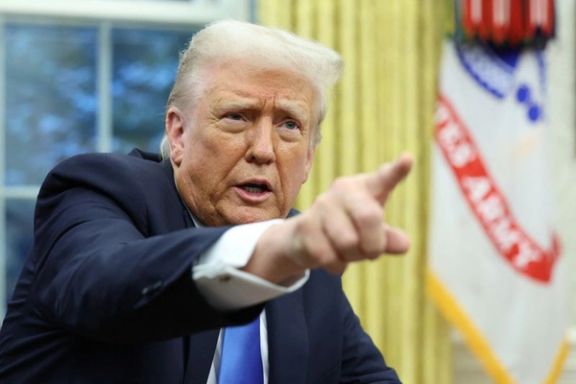
Iranian state cleric suggests Trump is the one-eyed Islamic Antichrist

Feb 14, 2025, 19:30 GMT+0

A senior cleric appointed by Iran's Supreme Leader suggested in a sermon on Friday that US president Donald Trump was the one-eyed Islamic equivalent of the Antichrist prophesied to menace humanity around judgment day.

"He is completely one-eyed, and this is a sign of the end times," Seyyed Hassan Ameli told congregants in a sermon for Islamic Friday prayers according to the Tehran-based Didban News website.

Ameli is Ali Khamenei's representative to deliver the weekly sermon in the large northwestern city of Ardabil, and Friday prayer-leaders' remarks reflect official thinking in the theocracy.

In Islamic eschatology, a figure called Dajjal is a false messiah who will emerge in the end times, spreading corruption and misleading people with false promises of power and prosperity before being ultimately defeated by a righteous messiah.

His description in Islamic scripture as "one-eyed" has been interpreted to refer to his deception and ability to manipulate others for personal gain.

"The new US president has a completely one-sided view," Ameli said.

"He sees the world purely through a materialistic lens and openly declares that America is a business corporation."

"He covets wealth wherever it exists—whether it's Middle Eastern oil, Syrian oil, or Ukraine’s minerals," he continued.

Ameli further criticized Trump’s approach to foreign relations, saying that the US president has used intimidation tactics to pressure countries into submission, expecting Iran to comply in the same way.

Reimposing the so-called "maximum pressure" campaign of sanctions on Iran from his first term this month, the hawkish Republican president has said he much prefers a deal on Iran's disputed nuclear program over any military attack on the country.

Trump then shocked Mideast leaders by saying he planned to seize and re-develop the Gaza Strip into the "riviera of the Middle East" after a 15-month incursion by US-allied Israel flattened much of the coastal enclave.

Khamenei appeared to promptly blast that idea, rejecting Trump's territorial ambitions as a fantasy.

Talks with Tehran would betray the Iranian people, prominent activist says

Feb 14, 2025, 15:17 GMT+0

Negotiating with the Islamic Republic gives Tehran's rulers legitimacy and betrays the people of Iran, exiled journalist and activist Masih Alinejad said on Friday.

"Supporting the Islamic Republic in any form, through negotiations or financial relief, betrays the Iranian people and strengthens a dictatorship that will never reform," she said in a post on X.

"Western policymakers must learn from past mistakes," she added in a shark rebuke to the idea of talks mooted by US President Donald Trump.

"The 2015 nuclear deal (JCPOA) failed because it provided a financial lifeline of billions of dollars to the regime, which it spent on its military and security forces rather than improving the lives of ordinary Iranians," she added.

Trump pulled out of that international deal in 2018 and imposed his so-called "maximum pressure" campaign of sanctions, which he renewed this month.

Still, Trump said he much preferred a deal over Iran's disputed nuclear program over any military action.

Alinejad, who is based in the United States, is a prominent voice advocating for women's rights and the overthrow of Iran's nearly 50-year-old theocracy. Iran's Islamic Revolutionary Guard Corps has plotted to kill her in exile, US law enforcement alleges.

She is in Germany for the Munich Security Conference, the premier annual forum for discussion of international security policy among top leaders.

For the third consecutive year, the organizers have excluded Iranian government representatives.

"I am pleased that Javad Zarif and Abbas Araghchi have been excluded from this conference despite all their efforts," she told Iran International in an interview on the sidelines of the conference.

"This is a positive step, but it is not enough. The West must take more fundamental steps to expel and isolate this terrorist government from all global arenas, which is certainly not an easy task," she added.

In a video post on X the previous night, referring to Iran’s exiled crown prince Reza Pahlavi's exclusion from the event, Alinejad said, "The exclusion of one of the opponents of the Islamic Republic from the Munich Security Conference is unacceptable."