• العربية
  • فارسی
Brand
  • Iran Insight
  • Politics
  • Economy
  • Analysis
  • Special Report
  • Opinion
  • Podcast
  • Iran Insight
  • Politics
  • Economy
  • Analysis
  • Special Report
  • Opinion
  • Podcast
  • Theme
  • Language
    • العربية
    • فارسی
  • Iran Insight
  • Politics
  • Economy
  • Analysis
  • Special Report
  • Opinion
  • Podcast
All rights reserved for Volant Media UK Limited
volant media logo

Iran, Oman aim to boost trade
Jan 26, 2025, 19:37 GMT+0Updated: 11:48 GMT+0
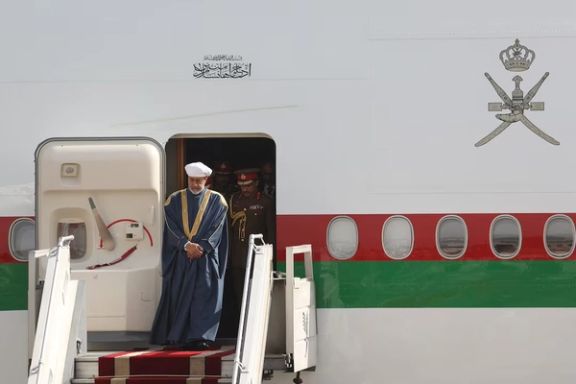
Oman's Sultan Haitham bin Tariq arrives at Mehrabad Airport in Tehran, Iran May 28, 2023.

Iran and Oman have taken significant steps to boost bilateral trade, including resolving key banking issues and eliminating trade tariffs, the head of the Iran-Oman Joint Chamber of Commerce said on Sunday.

In an interview with state-affiliated ILNA, Jamal Razeghi Jahromi said that economic stakeholders can now open accounts for both personal and corporate purposes, adding that the changes aim to unlock the full potential of the two nations' ties and reach a target of $20 billion in annual trade.

“The main challenge Iranian investors faced in Oman was the inability to open bank accounts there. Part of these issues has been resolved, and the rest are under review," he said.

Iran is under tough US banking sanctions and on the blacklist of international watchdog, the Financial Action Task Force, FATF. If Iranian companies open bank accounts in Oman, it can help them maintain business ties with other countries. However, many of these companies are government owned entities or controlled by Iran's military.

Razeghi added that Iran and Oman have had a historically strong political relationship over the past 70 years, but trade has not kept pace.

Despite annual trade growth between 42% and 60% in the last three years, the initial trade volume was low, preventing the achievement of the targeted $5 billion in trade for the current Iranian year, which ends on March 20. He projects trade to reach $3-$3.5 billion by the year's end.

"The value of trade between Iran and Oman should reach at least $20 billion per year, and if this figure is not achieved, the friendly political relations between the two countries will not have any achievements for either side," Razeghi said.

To address this, a joint committee has been established to identify and resolve obstacles hindering trade growth, he added.

“Trade tariffs were one of the obstacles hindering trade between the two countries. This obstacle was resolved thanks to the new agreement that can effectively reduce trade tariffs to zero when implemented,” he said, referring to a deal signed during a recent visit by Iran's Minister of Industry, Mines and Trade Mohammad Atabak to Muscat.

At the 21st Joint Cooperation Meeting in Muscat last week, Atabak announced the tariff agreement, saying, “The elimination of tariffs between Iran and Oman marks an important step in fostering economic cooperation, and the implementation will begin next week.”

Measures to streamline logistics were also discussed during the minister’s trip to Muscat. A major challenge in Iran-Oman trade has been the lack of a direct and regular shipping line.

Oman has now agreed to subsidize 50% of the costs for such a line for six months to a year, with Iran's Trade Promotion Organization covering the remainder.

While this subsidy is crucial to address underutilized shipping capacity, Razeghi stressed the need for increased trade volume to make the shipping line economically viable in the long term.

Razeghi also talked about a two-year-old initiative encouraging Iranian manufacturers to complete the final 30% of their production chain in Oman.

This strategy potentially allows them to leverage Oman's existing zero-tariff trade agreements with 16 other countries, including the United States. It will also allow Iranian products manufactured in Oman to enter international markets tariff-free.

Oman attracted approximately $140 billion in foreign investment last year, demonstrating its potential as a regional economic hub, Razeghi said, noting that while cooperation opportunities exist across various industries, overcoming sanctions and addressing Iran's non-membership in the Financial Action Task Force (FATF) remain crucial for realizing the full potential of the bilateral economic relationship.

Oman's potential role as mediator

Beyond trade, Oman continues to play a vital role as a mediator between Tehran and Washington.

Last month, the Iraqi newspaper Baghdad Alyoum reported that Iran received a message from US President Donald Trump, delivered through Oman, proposing high-level talks on issues including the nuclear program, according to a source close to Iranian President Masoud Pezeshkian’s administration.

Additionally, during Joe Biden's administration, the Iranian mission to the United Nations confirmed that indirect contact between the US and Iran through Oman had been an ongoing process. The administration also authorized Iraq to transfer $10 billion in restricted Iranian funds to Oman.


Most Viewed

100 days after carnage: Iran economy reels from war, inflation, unemployment
1
INSIGHT

100 days after carnage: Iran economy reels from war, inflation, unemployment

2
INSIGHT

Ghalibaf defends Iran-US talks amid hardline backlash

3
INSIGHT

A nation in limbo: 100 days after the massacre, has the world moved on?

4
ANALYSIS

From instability to influence: Pakistan’s pivotal role in US-Iran diplomacy

5
ANALYSIS

100 days on: why Iran’s January protests spread across social classes

Banner
Banner

Spotlight

  • War-hit homeowners feel abandoned as Iran’s reconstruction aid fades

    War-hit homeowners feel abandoned as Iran’s reconstruction aid fades

  • 100 days on: the anatomy of Iran’s January crackdown
    INSIGHT

    100 days on: the anatomy of Iran’s January crackdown

  • Ghalibaf defends Iran-US talks amid hardline backlash
    INSIGHT

    Ghalibaf defends Iran-US talks amid hardline backlash

  • 100 days on: why Iran’s January protests spread across social classes
    ANALYSIS

    100 days on: why Iran’s January protests spread across social classes

  • From instability to influence: Pakistan’s pivotal role in US-Iran diplomacy
    ANALYSIS

    From instability to influence: Pakistan’s pivotal role in US-Iran diplomacy

  • A nation in limbo: 100 days after the massacre, has the world moved on?
    INSIGHT

    A nation in limbo: 100 days after the massacre, has the world moved on?

•
•
•

More Stories

Iranian lawmaker says government barred from direct talks with the US

Jan 26, 2025, 10:23 GMT+0

A member of Iran’s parliamentary national security and foreign policy committee says the government is not currently permitted to engage in direct negotiations with the US.

"The government has only been authorized to negotiate with European countries," Fada-Hossein Maleki said in an interview with the Didban Iran website in Tehran published Sunday.

"Iran is not the first, second, or even third priority for [Donald] Trump," Maleki added, the two countries not having diplomatic ties since 1980.

Maleki also highlighted that Iran has never entirely closed the door to negotiations in recent years.

"Some mediating countries, like Oman, have consistently maintained contact with both the Iranian side and Western parties, including the Americans," he said.

He emphasized that the Islamic Republic has always kept the path to dialogue open to demonstrate its adherence to international principles and norms, blaming the US for violating commitments by withdrawing from the JCPOA.


Middle class poverty could spark revolt in Iran, sociologist warns

Jan 26, 2025, 08:38 GMT+0
•
Behrouz Turani

An Iranian sociologist has warned that middle-class citizens pushed below the poverty line by persistently high inflation and forced into the lower class are the most likely to spark a revolt against the ruling system.

Ardeshir Geravand told the Didban Iran website in Tehran, "When legitimate paths to power and wealth remain open, members of the middle class can maintain their status. However, when these avenues are blocked, it can lead to social unrest and, ultimately, revolution."

Iran has endured approximately 40% annual inflation over the past five years, with its currency losing 95% of its value since 2018. This crisis has not only left ordinary workers struggling to afford basic necessities but has also pushed many middle-class citizens into poverty.

"Injustice, special privileges for a well-connected few, bureaucratic obstacles, and the obscure political relations push people toward revolt and violence," Geravand said. He added, "Revolutions begin when legitimate pathways to a normal life are not accessible to everyone."

Using the recent killing of two notorious judges in Tehran as a case study, Geravand argued, "Poverty alone does not necessarily lead to violence unless it is coupled with conditions that make living a normal, ordinary life impossible."

Ardeshir Geravand (file photo)
100%
Ardeshir Geravand

Didban Iran columnist Parisa Hashemi noted that former President Ebrahim Raisi had pledged to eradicate poverty in Iran by 2021 or 2022, a promise that was clearly unfulfilled. She added that poverty has become deeply entrenched in Iran due to the poor performance of the ruling system, which has pushed millions of Iranians below the official poverty line and left many breadwinners humiliated in front of their families.

Hashemi further remarked, "In recent years, soaring prices have left many Iranian families unable to make ends meet. Faced with this harsh reality, many breadwinners have either abandoned their families or tragically taken their own lives."

Hassan Mousavi Chalak, chairman of the Iranian Social Workers' Association, highlighting a rise in breadwinners abandoning their families due to the economic crisis, warned that some may turn to criminal gangs.

Geravand explained that such individuals may justify turning to violence as a means of restoring justice. However, he emphasized, "Violence arises when a person concludes that changing their circumstances and escaping poverty is impossible."

Addressing the shifting dynamics of Iran's middle class, Geravand observed, "Many who once led affluent lives have now fallen into poverty. When a middle-class individual becomes impoverished, especially if they find no support within society, they may rebel out of sheer frustration."

The ongoing issue of Iran's political and economic deadlock was the focus of a recent debate between reformist political scientist Hatam Ghaderi and conservative philosophy professor Saeed Zibakalam on a YouTube channel not subject to direct censorship.

Professor Zibakalam rejected the notion of a deadlock in Iranian society, arguing that "it is a psychological trait of Iranians to traditionally submit to the conditions imposed by the government and accept their own inferiority." However, he acknowledged that this mindset must change.

Dr. Ghaderi, in contrast, asserted, "We are in a state of political impasse. The government blocks any possibility for change, and if this continues, it will only perpetuate backwardness." He further noted, "The transitions from the Qajar period to the Pahlavi era in 1925 and the 1979 revolution were both outcomes of political deadlock. Today, we are once again facing the same situation."

Iranian money-laundering tycoon back in headlines with crypto plans

Jan 25, 2025, 17:15 GMT+0

Unofficial reports surrounding the activities of Babak Zanjani, once Iran's richest man and a figure synonymous with corruption and sanctions evasion, have reignited public and media interest.

Recent reports in Iranian media suggest that Zanjani, despite being officially incarcerated, may be laying the groundwork for ambitious economic projects, including ventures in cryptocurrency, aviation, and oil transport.

The conservative Khorasan daily recently questioned reports about Zanjani's involvement in launching a cryptocurrency bank named Bit Bank. Social media users have said that a sign bearing the bank's name has been spotted on a building in Tehran, fueling speculation about Zanjani's return to economic activities.

"Are the claims regarding Babak Zanjani's new activities true? If so, will he be released from prison, granted conditional freedom as previously mentioned by his lawyer, or will he launch a new round of economic activities from inside prison?" Khorasan asked in a recent editorial.

A video uploaded to a YouTube account in December attributed to Zanjani detailed plans for a blockchain-based economic initiative, describing Iran's economy as fertile ground for such innovations.

100%

The timing of these activities raises eyebrows, given the Trump administration’s potential return to a maximum pressure policy against Iran. Cryptocurrency, particularly projects pegged to stable assets like the dollar, could serve as a tool for evading sanctions. However, no concrete evidence links Zanjani directly to these developments beyond the circulating social media claims.

Adding to the intrigue are notes attributed to Zanjani on social media suggesting the establishment of an airline, Dot One, which promises to transform Iran's aviation industry.

Another report said that Zanjani intends to launch a large-scale oil transport operation involving thousands of tanker trucks. While the authenticity of these statements remains uncertain, the ambitious tone mirrors the bold projects Zanjani was associated with during his heyday.

Conservative media outlets in Iran have called on judiciary officials to clarify Zanjani’s legal and operational status.

In response to speculation about Zanjani’s release from prison, judiciary spokesperson Asghar Jahangir earlier said: "Babak Zanjani has neither been released nor is he on leave." The official said that no recent developments support claims of Zanjani’s release.

Nevertheless, Zanjani’s lawyer, Rasoul Kouhpayeizadeh, fueled speculation by posting a photo on Instagram showing Zanjani with an individual dressed as someone from a Persian Gulf Arab country, tagged at a location in Tehran. The post’s ambiguous nature has only added to the mystery surrounding Zanjani’s exact status and whereabouts.

A Legacy of Controversy

Zanjani’s rise and fall remain one of the most contentious episodes in Iran’s recent economic history. Once valued at $13.5 billion, Zanjani was seen as a key player in circumventing sanctions under President Mahmoud Ahmadinejad. His networks laundered billions through complex schemes spanning Turkey, Indonesia, and Central Asia. Arrested in Iran in 2013, Zanjani was convicted of embezzling $1.9 billion in oil revenues, earning him a death sentence later commuted to 20 years in prison. The government charged that he pocketed money from oil exports insted of returning it to the treasury.

While some officials have praised Zanjani for eventually returning the assets, many argue that his extensive operations were enabled by high-level complicity. The secrecy surrounding his dealings and cooperation with authorities have led many to view him as a figure too well-connected to face the full consequences of his actions.

Zanjani's resurgence coincides with Iran’s ongoing economic crisis. As sanctions persist, limiting oil exports and access to international banking, the government struggles with budget deficits and hyperinflation. Cryptocurrency projects and privatized oil transport ventures, if materialized, could offer alternative revenue streams for Iran’s beleaguered economy.

Yet, the ambiguity surrounding Zanjani’s activities and the lack of official acknowledgment leave more questions than answers.

Maximum pressure set to define Trump's Iran policy, Mideast scholar says

Jan 24, 2025, 20:00 GMT+0

Reviving the so-called maximum pressure campaign on Iran will likely define US President Donald Trump’s strategy toward Washington's arch-foe in the Middle East from day one, Middle East policy expert Patrick Clawson told Iran International.

In an interview with Iran International’s Samira Gharaei, Patrick Clawson, Director for Research at the Washington Institute described the potential impact on Iran of a widely expected renewed hard line from Washington.

Clawson anticipates a return to the so-called maximum pressure approach from Trump's first term, primarily through intensified enforcement of existing sanctions. He acknowledged, however, that logistical challenges could delay new sanctions.

"The Trump Administration is likely to start thinking from day one about what additional steps to take but it may be a while before we see them actually able to implement those kinds of steps," Clawson said.

"The Trump administration will need to prioritize enforcement, especially given competing sanctions efforts against Russia and others."

The former president’s personal feelings towards Iran— stemming from an alleged assassination plot by Tehran—could influence his approach.

Trump will seek the restoration of United Nations sanctions on Iran which were lifted by the 2015 nuclear deal, newly sworn-in secretary of state Marco Rubio told congress this week.

The newly-minted head of state whose sanctions piled pressure on Iran's oil revenue in his first term and hit Tehran's spending on armed allies in the region, also ordered a deadly drone strike on a top Iranian commander, Qassem Soleimani.

Potential Iran-US talks

Despite the potential for increased pressure, Clawson raised the possibility of renewed talks, highlighting the former president's self-perception as a dealmaker.

"Trump has a long memory, and he takes personal slights seriously," he noted. "While he might entertain the idea of a deal, Iran’s leadership, particularly Khamenei, remains deeply skeptical."

Whether Tehran is willing to engage in new talks remains uncertain as Iranian officials and media remain sharply divided on relations with Washington with Trump back in the White House.

Clawson highlighted the recent setbacks for Iran's armed allies in the region, such as Hamas and Hezbollah, as a potential motivator for seeking a deal.

"Iran’s recent failures may create an opening for diplomacy," he suggested. "However, Khamenei’s uncompromising nature often leans toward retaliation rather than reconciliation."

Regarding Israel, Clawson acknowledged Prime Minister Benjamin Netanyahu's past caution on military action against Iran but also noted a shift in the Israeli military's posture. He suggested that recent Israeli military successes might embolden them.

"Israel, with its recent military successes, is more confident than ever in confronting Iranian threats."

While acknowledging the significant changes in the region, Clawson cautioned against premature pronouncements of a "new Middle East," pointing out the region's history of unexpected developments.

"The Middle East has a remarkable ability to throw up new problems, and I would anticipate that we're going to see new problems in the region, things we hadn't expected."

Iran's nuclear program and a post-Khamenei future

Clawson expressed concern about Iran's advancing nuclear program and the potential for a more aggressive stance after Khamenei's departure.

"Khamenei’s micromanagement has kept the system intact," he said, arguing that without him, there’s a real risk of power struggles that could lead to a hardline push for a nuclear weapon.

"I suspect that in the political maneuverings in Tehran that they're going to be some people who say, 'Let's go ahead and do that bomb.' I am concerned that in what's likely to be a rather unsettled situation after Khamenei passes from the scene."

The head of Iran’s Armed Forces Judiciary emphasized earlier in the week that the Supreme Leader has forbidden the development of nuclear weapons, sounding a conciliatory note as Tehran seems to be exploring talks to ease sanctions.

Iranian president heckled in poor oil-rich province

Jan 24, 2025, 17:10 GMT+0

Iran's President Masoud Pezeshkian was heckled during a visit to oil-rich yet underprivileged Khuzestan Province on Thursday, as residents voiced frustration over rising unemployment and other economic concerns.

A local state TV reporter disrupted the President's speech on Thursday by shouting questions about dire conditions in Khuzestan, according to Rouydad24, a relatively independent news outlet. A crowd quickly joined in, chanting slogans highlighting financial hardships and the province's persistent water and power issues.

Pezeshkian attempted to calm the crowd. "I have come here to listen to you, but you do not allow me to speak."

While he claimed to be ready to hear their concerns, he insisted on continuing his speech. Critics in the media later commented that his remarks sounded more like those of an opposition figure than a responsible state official.

Later in the day, Pezeshkian and one of his vice presidents posed for photos dressed as construction workers while laying bricks for the construction of a school in Khuzestan.

Sazandegi, a pro-government publication praised Pezeshkian’s brick-laying gesture as "beautiful." But independent reporter Azadeh Mokhtari remarked on social media: "To prove this wasn’t just a show, the president and his aide should have completed the building!"

100%

"The exchange rate for every US dollar has soared to 838,000 rials, and the president is busy shoveling dirt and cement," one user on X quipped.

Another anonymous user, a cleric, commented, "If the previous ultraconservative President (Mahmoud) Ahmadinejad had done the same, the media would have criticized him with all kinds of harsh words."

Conservative journalist Ali Gholhaki also posted on X: "The country is engulfed in the flames of mismanagement and countless other problems. Who advised the President to stage such a spectacle?"

"I have no idea why Khuzestan has so many problems," media outlets quoted Pezeshkian as saying, adding, "I will change the situation in Khuzestan." Similar promises made by former Presidents Ahmadinejad and Hassan Rouhani did little to improve standards of living in the province.

Over the past 20 years, Khuzestan has been the epicenter of several major protests. Many of those killed during the 2019 nationwide protests in Iran were from Khuzestan, according to human rights organizations.

The Iranian Human Rights News Agency (HRNA) reported that security forces in the province recently arrested dozens of cultural and public figures. The crackdown was carried out to suppress dissent, HRANA reported citing local sources, especially after the fall of the Iran-allied government of Bashar al-Assad in Syria.

Pezeshkian pledged to solve the problems of water supply, unemployment and insufficient educational facilities in the province. "I have inherited these problems from the previous governments," he said.

"I have realized that factories in the province were shut down before my arrival to ensure I see clear skies," the pro-government centrist website Entekhab quoted Pezeshkian as saying. "But you can't fool me! I know this province suffers from pollution all the time."

In an interview, local MP Mojtaba Yousefi highlighted the severe infrastructure challenges in Khuzestan Province, saying, "The government has consistently failed to fulfill its promises to address the province’s water and sewage system issues."

"Despite Khuzestan producing 78 percent of the country’s oil and gas output and being home to five major rivers and six dams, we still struggle to provide clean and fresh water to the local population."