• العربية
  • فارسی
Brand
  • Iran Insight
  • Politics
  • Economy
  • Analysis
  • Special Report
  • Opinion
  • Podcast
  • Iran Insight
  • Politics
  • Economy
  • Analysis
  • Special Report
  • Opinion
  • Podcast
  • Theme
  • Language
    • العربية
    • فارسی
  • Iran Insight
  • Politics
  • Economy
  • Analysis
  • Special Report
  • Opinion
  • Podcast
All rights reserved for Volant Media UK Limited
volant media logo

Iranian woman dies in prison due to lack of medical care - rights group

Jan 12, 2025, 19:32 GMT+0Updated: 20:16 GMT+0
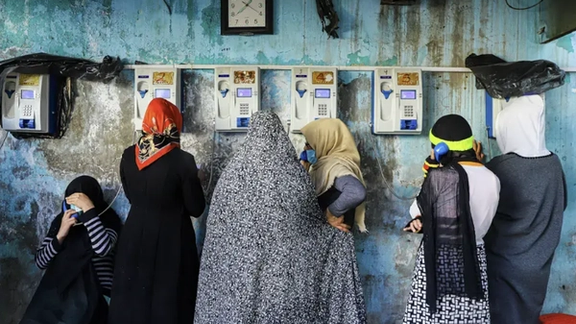
Women prisoners in Qarchak Prison in Tehran Province

Farzaneh Bijanipour, a prisoner held in the notorious Qarchak Prison in southern Tehran, passed away on Saturday evening due to lack of medical care, a Norway-based human rights organization reported on Sunday.

According to the report by the Iran Human Rights Organization, Bijanipour visited the prison's infirmary in poor condition, but the doctor accused her of feigning illness and, after a subsequent visit, only prescribed a painkiller.

Later on Saturday evening, she became unconscious and passed away after being transferred to the infirmary, the IHR said. Prison authorities transferred her to the hospital once she was already dead.

Widespread violations of the right to healthcare have been reported in Iranian prisons over the past decades, with a number of prisoners losing their lives due to the neglect of prison authorities and deprivation of access to medical services.

Last year, UN human rights experts voiced deep concern over Iran's persistent refusal to grant "timely and adequate healthcare" to human rights defenders and other detainees.

They highlighted a troubling pattern of ill-treatment among Iranian detainees, marked by inadequate access to essential medical care, with a particular emphasis on the plight of human rights activist and Nobel Peace Prize laureate Narges Mohammadi.

“Our deep concerns about the physical and mental integrity of Narges Mohammadi have been communicated to the Iranian Government,” the experts said in a statement released on the UN website in August.

The experts emphasized that “the healthcare of prisoners, as well as the obligation not to expose any prisoner to ill-treatment, is the responsibility of the State,” reminding that the Islamic Republic of Iran is a party to the International Covenant on Economic, Social and Cultural Rights (ICESCR) and the International Covenant on Civil and Political Rights (ICCPR).

“Prisoners have the right to equivalent healthcare available in the community and must be given prompt access to medical attention in urgent cases,” the experts underscored.

Amnesty International has underscored the gravity of the situation, asserting that Iranian officials have effectively turned the nation’s prisons into "waiting rooms of death."

According to a 2022 report by Amnesty International, Iranian authorities are perpetrating alarming violations of the right to life by deliberately denying ailing prisoners access to lifesaving healthcare. This "deadly cruelty" involves both blocking or delaying emergency hospitalization and consistently denying adequate medical care throughout imprisonment. As a result, prisoners' health deteriorates, leading to unnecessary pain and suffering and, in some cases, preventable loss of life.

The rights group further highlighted that numerous cases of suspicious deaths in custody, potentially linked to the denial of medical care, have emerged in recent years, underscoring a troubling crisis of impunity for violations of the right to life.
Most Viewed

Ghalibaf defends Iran-US talks amid hardline backlash
1
INSIGHT

Ghalibaf defends Iran-US talks amid hardline backlash

2
ANALYSIS

From instability to influence: Pakistan’s pivotal role in US-Iran diplomacy

3
ANALYSIS

100 days on: why Iran’s January protests spread across social classes

4

War-hit homeowners feel abandoned as Iran’s reconstruction aid fades

5

Iran says no decision yet on talks as Pakistan prepares to host US team

Banner
Banner

Spotlight

  • Iran diplomacy wobbles as factions compete to avoid looking soft on US
    INSIGHT

    Iran diplomacy wobbles as factions compete to avoid looking soft on US

  • The politics of pink: how Iran uses cuteness to rebrand violence
    ANALYSIS

    The politics of pink: how Iran uses cuteness to rebrand violence

  • Bread shortages, soaring prices strain households in Iran, residents say
    VOICES FROM IRAN

    Bread shortages, soaring prices strain households in Iran, residents say

  • 100 days on: the anatomy of Iran’s January crackdown
    INSIGHT

    100 days on: the anatomy of Iran’s January crackdown

  • Ghalibaf defends Iran-US talks amid hardline backlash
    INSIGHT

    Ghalibaf defends Iran-US talks amid hardline backlash

  • From instability to influence: Pakistan’s pivotal role in US-Iran diplomacy
    ANALYSIS

    From instability to influence: Pakistan’s pivotal role in US-Iran diplomacy

•
•
•

More Stories

Iranian theologian slams masturbation for sperm collection at infertility clinics

Jan 12, 2025, 15:30 GMT+0

A member of Theology Faculty at Iran's University of Tabriz has raised concerns about sperm collection practices at some Iranian infertility clinics, citing religious objections to masturbation.

Ahmad Mortazi said on Sunday that "illegitimate methods, including masturbation, are used for sperm collection in some infertility centers, and this method is contrary to Sharia principles."

He did not mention any Sharia-compliant alternatives.

Referring to the establishment of sperm banks, Mortazi added that some Islamic jurists consider semen impure, which makes its trade not permissible.

Last week, Iran’s Ministry of Science called for the removal of educational content deemed to discourage childbearing as the country is intensifying efforts to combat declining fertility rates.

Government efforts to encourage higher birth rates in Iran have failed to produce results, according to data from the National Organization for Civil Registration.

Births declined by more than 17,000 in the Iranian year that began on March 21, 2023, compared to the previous year, with the average children per family down from six to three.

Protest against land seizure suppressed by security forces

Jan 12, 2025, 15:24 GMT+0

Police in a southern Iranian town used pepper spray to disperse a protest on Sunday against the seizure of lands by administrators of a major shrine, in the latest demonstration to be quelled by force.

Eyewitness videos obtained by Iran International show protesters being confronted by government forces, who used the pepper spray to disperse the crowd.

The dispute centers around claims by the administrators of the Shah Cheragh shrine that large portions of Meymand are part of a religious endowment, or "waqf," dating back to historical documents they allege validate their ownership.

However, the people of Meymand have strongly rejected the claims, insisting that the documents are fraudulent and that their land rights have been wrongfully taken.

Meymand, located about 70 miles from Shiraz, is home to over 10,000 people, many of whom rely on the manufacture and sale of rose water, a product sold across Iran.

The local community has expressed growing frustration over the years, accusing shrine administrators of obstructing the delivery of public services to the city.

Abbas Sharifi, a spokesperson for the Firuzabad County Council, explained, "Over the past decade, the administrators of the Shah Cheragh shrine have prevented local authorities from providing services to the people of Meymand through various correspondences with government departments."

The clash highlights broader tensions between local communities and religious authorities over land rights, with residents of Meymand feeling that their livelihoods and autonomy are being threatened.

Italy releases Iranian national detained on terrorism charges, Tehran says

Jan 12, 2025, 13:20 GMT+0

Italian authorities on Sunday released Mohammad Abedini Najafabadi, a 38-year-old Swiss-Iranian wanted on terrorism charges by the US, Iran's Judiciary said, a few days after the Islamic Republic released an Italian journalist detained in Tehran after Abedini's arrest in Milan.

Abedini arrived in Tehran on Sunday afternoon, the Iranian Judiciary's news website Mizan reported Sunday.

"Abedini was arrested over a misunderstanding, which was resolved through the efforts of Iran's Ministry of Foreign Affairs and negotiations between the relevant departments of Iran's Ministry of Intelligence and the Italian intelligence service," the report added.

"Abedini was released thanks to the efforts of Iran's diplomatic apparatus," said Foreign Ministry spokesman Esmail Baghaei.

Abedini, accused of transferring drone technology to Iran, was arrested at Milan Airport under a US warrant in December. Washington alleges that the technology was used in a February attack near the Jordan-Syria border, which killed three American soldiers—an accusation Iran denies.

His arrest has been linked to the detention of Italian reporter Cecilia Sala, who was seized in Tehran last month while working under a standard journalistic visa and released earlier this week.

Abedini's alleged release came after Italian Justice Minister Carlo Nordio filed a formal request with the Milan Court of Appeal to revoke his pre-trial detention.

In his intervention, Nordio invoked a specific provision of Italy’s Code of Criminal Procedure, which allows the Justice Minister to request or revoke precautionary measures during extradition proceedings.

Iran's consulate in Italy had requested Italian authorities to allow Abedini to leave detention facilities in return for guarantees that he would stay in a known location.

Milan's attorney general argued last week that Iranians' guarantees--including housing and financial assistance, potential travel restrictions and mandatory check-ins--would be insufficient to address the risk of flight for the individual sought by the United States for extradition.

Fatah accuses Hamas of sacrificing Palestinian interests for Iran

Jan 12, 2025, 13:02 GMT+0

Fatah, the ruling authority in the West Bank, has criticized Hamas for aligning itself with Iran, accusing the group of jeopardizing Palestinian interests and resources.

"Hamas sacrificed the interests of the Palestinian people for Iran and caused destruction in the Gaza Strip, to replicate its actions in the West Bank," Fatah said on Saturday, stressing its determination not to let Hamas repeat the same scenario in the West Bank as the war in Gaza rages on in the wake of the group's October 7, 2023 attacks on Israel.

The statement also underscored Fatah's resolve to prevent Hamas from spreading its influence into the West Bank, where the group remains a significant rival to Fatah’s Palestinian Authority.

As part of its strategy to consolidate control, Fatah has been ramping up security operations, particularly in Jenin, which has become a stronghold for armed factions, including Iran-backed Hamas and the Palestinian Islamic Jihad (PIJ).

The Palestinian Authority's growing military presence is a signal that it will not tolerate Hamas-like governance in the West Bank, particularly given the ongoing unrest in Gaza. It is also a sign to the incoming Trump administration that it has control over the contested territory.

Fatah holds Hamas directly responsible for the devastating consequences of the October 7 attack, which left approximately 1,200 Israelis dead and triggered a massive Israeli military response.

The Israeli strikes have resulted in more than 46,000 Palestinian deaths in Gaza, according to the Hamas-run Health Ministry.

In turn, tens of thousands of Palestinians in the West Bank have since been banned from entering Israel for work, and the economy has been left in ruins since the outbreak of war.

"Hamas is now attempting to stir security chaos in the West Bank, thereby continuing its policy that brought disaster upon the Palestinian people," Fatah added.

Israel’s Defense Minister said on Tuesday that Iran is pivoting toward arming Palestinian militants in the occupied West Bank following the downfall of Tehran’s ally Bashar al-Assad in Syria.

"Judea and Samaria has become a central arena in the map of threats to Israel and we are preparing to respond accordingly," Katz said, using the Biblical names for lands on the west bank of Jordan River which Israel seized in a 1967 war.

"We are seeing increasing efforts to promote Palestinian terrorism in Israel through the smuggling of advanced weapons, funding and guidance both on the part of the Iranian axis and on the part of the radical Sunni Islamic axis that is strengthening its grip on the region after the events in Syria,” he added.

Culture minister expresses concern over Iranian youth's growing interest in K-pop

Jan 12, 2025, 11:40 GMT+0

Iran's Culture Minister on Sunday expressed concern over the rising popularity of South Korean music among Iranian youth. "Where did we go wrong, and where are we going wrong, that we are changing Iran's musical taste in this way?" Abbas Salehi said.

K-Pop, or Korean popular music, has become a global cultural phenomenon in recent years, captivating audiences worldwide with its distinctive blend of catchy pop melodies, synchronized choreography, and high-production-value music videos.

The influence of K-Pop has also extended to Iran, where it has garnered a substantial and enthusiastic following among young people.

Despite the Islamic Republic’s restrictions on Western media and music, K-Pop has found a foothold through online platforms and social media. Iranian youth have embraced not only the music itself but also aspects of Korean culture, such as language, fashion, and entertainment.

This burgeoning interest has led to the development of dedicated online spaces, including websites and social media groups, where Iranian K-Pop fans can connect, share their passion, and stay updated on the latest news and trends.






