• العربية
  • فارسی
Brand
  • Iran Insight
  • Politics
  • Economy
  • Analysis
  • Special Report
  • Opinion
  • Podcast
  • Iran Insight
  • Politics
  • Economy
  • Analysis
  • Special Report
  • Opinion
  • Podcast
  • Theme
  • Language
    • العربية
    • فارسی
  • Iran Insight
  • Politics
  • Economy
  • Analysis
  • Special Report
  • Opinion
  • Podcast
All rights reserved for Volant Media UK Limited
volant media logo

Some Iranian politicians push for talks with Trump administration

Jan 1, 2025, 12:20 GMT+0Updated: 11:58 GMT+0

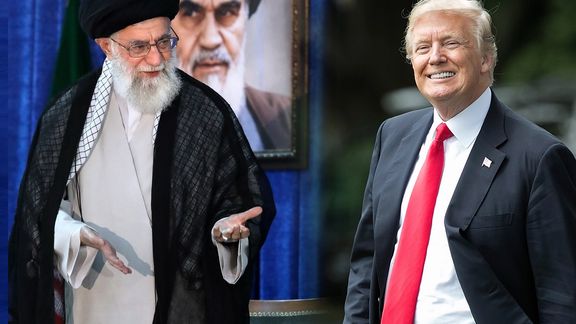
Some Reformist politicians in Iran are urging direct talks with Donald Trump to help resolve the country's serious economic crisis. However, others prefer indirect talks, highlighting hesitations among establishment figures.

In an interview with Etemad daily, prominent Reformist figure Ali Shakuri-Rad said on Tuesday that if Iran can carry out direct talks with the United States, it might even be able to stop Israeli Prime Minister Benyamin Netanyahu from what he called his outrageous behavior.

Referring to recent developments, including Elon Musk's reported meeting with Iran's UN ambassador, the visits of a Japanese deputy foreign minister Takehiro Funakoshi and Oman's Foreign Minister Sayyid Badr Albusaidi’s trips to Tehran, Shakuri-Rad stated that these “are clear signals indicating the United States is reaching out to Iran."

Remembering that Trump’s reported message carried by former Japanese Prime Minister Shinzo Abe in 2019 was ignored by Khamenei, Shakuri-Rad warned that "Tehran should avoid that kind of reaction to the US outreach." He said, "ignoring that particular message created serious problems for Iran."

Reformist politician, Ali Shakuri-Rad
100%
Reformist politician, Ali Shakuri-Rad

"Such messages should not be left unanswered," the analyst said, adding that "Iran should not avoid direct talks with Washington, and should not give negative responses to the United States' messages as they provide opportunities for Tehran."

"Iran should not close the doors to negotiations with Trump," he said, adding, "We should negotiate with Trump and hope to protect our national interests through the talks."

Meanwhile, in an interview with pro-reform Jamaran News website, Mohammad Ghoochani a member of the government's news dissemination team said that "Iran will certainly hold indirect talks with the United States sometime during the next months although it might be in Tehran's interest to conduct direct negotiations."

Ghoochani said he personally believes that "It is essential to hold direct talks with America," adding that "holding direct talks does not mean we will accept whatever Trump might say."

Ruling out former security chief Ali Shamkhani's claim about being in charge of Iran's nuclear negotiations, Ghoochani reiterated that "the Foreign Ministry and Foreign Minister Abbas Araghchi will be leading the Iranian delegation in the talks."

However, he noted that Khamenei's advisor, Ali Larijani, "might also play a key role in negotiations with the United States," but he did not provide further details.

Recently, other moderate politicians including former Vice President Es'haq Jahangiri also called for direct talks with the United States and said Iran's ailing economy needs urgent attention.

According to centrist Entekhab website, Former President Hassan Rouhani, who has always supported negotiation with the West, also told his political allies in a meeting that "Iran's problems will not be solved without constructive interaction with the world." He said, "Lifting of sanctions and accepting FATF protocols are prerequisites for engagement with the West. He also pointed out that the government in Tehran should listen to the people's demands.

In a related development, a Reformist commentator highlighted the severity of the country's economic crisis in the Etemad newspaper. "The government is running out of time as the hardships in Iran have become unbearable," he warned. In what appeared to be a reference to Khamenei, he added, "It would be a mistake for the broader political structure to believe that only the presidential administration is responsible for resolving these issues. If the government fails, everyone fail.”

Most Viewed

Ghalibaf defends Iran-US talks amid hardline backlash
1
INSIGHT

Ghalibaf defends Iran-US talks amid hardline backlash

2
ANALYSIS

From instability to influence: Pakistan’s pivotal role in US-Iran diplomacy

3
ANALYSIS

100 days on: why Iran’s January protests spread across social classes

4

War-hit homeowners feel abandoned as Iran’s reconstruction aid fades

5
INSIGHT

100 days on: the anatomy of Iran’s January crackdown

Banner
Banner

Spotlight

  • Bread shortages, soaring prices strain households in Iran, residents say
    VOICES FROM IRAN

    Bread shortages, soaring prices strain households in Iran, residents say

  • War-hit homeowners feel abandoned as Iran’s reconstruction aid fades

    War-hit homeowners feel abandoned as Iran’s reconstruction aid fades

  • 100 days on: the anatomy of Iran’s January crackdown
    INSIGHT

    100 days on: the anatomy of Iran’s January crackdown

  • Ghalibaf defends Iran-US talks amid hardline backlash
    INSIGHT

    Ghalibaf defends Iran-US talks amid hardline backlash

  • 100 days on: why Iran’s January protests spread across social classes
    ANALYSIS

    100 days on: why Iran’s January protests spread across social classes

  • From instability to influence: Pakistan’s pivotal role in US-Iran diplomacy
    ANALYSIS

    From instability to influence: Pakistan’s pivotal role in US-Iran diplomacy

•
•
•

More Stories

Iran, European powers to resume nuclear talks

Jan 1, 2025, 09:05 GMT+0

Britain, France, and Germany will begin a new round of talks with Iran over its nuclear program in Geneva on January 13, Iranian foreign ministry announced on Tuesday.

Iran and the three European powers, commonly referred to as the E3, agreed in November to continue negotiations in an effort to resolve the deadlock over Tehran’s nuclear program.

The announced date is a week before Donald Trump's inauguration and may be viewed by both sides as the final opportunity for a breakthrough before US policy hardens.

Trump is expected to resume his first term strategy of Maximum Pressure upon returning to the White House on January 20.

Meanwhile, Iran has agreed to stricter monitoring by the UN nuclear agency at its Fordow site after significantly accelerating uranium enrichment to near weapons-grade levels, the watchdog stated in a report seen by Reuters.

UN nuclear watchdog chief Rafael Grossi said in December that Iran is dramatically accelerating its enrichment of uranium to up to 60% purity, closer to the roughly 90% level needed for building a bomb. Tehran denies pursuing nuclear weapons and says its program is peaceful.

In 2018, the then administration of Donald Trump withdrew from Iran's 2015 nuclear pact with six major powers and reimposed harsh sanctions on Iran. In response, Tehran violated the pact's nuclear limits, with moves such as rebuilding stockpiles of enriched uranium, refining it to higher fissile purity and installing advanced centrifuges to speed up output.

Indirect talks between US President Joe Biden's administration and Tehran aimed at reviving the pact have failed.

Trump said during his election campaign in September, "We have to make a deal, because the consequences are impossible. We have to make a deal".

US sanctions IRGC-linked entity over 2024 election meddling

Dec 31, 2024, 16:56 GMT+0

The United States on Tuesday imposed sanctions on entities in Iran and Russia, accusing them of orchestrating campaigns to meddle in the 2024 US presidential election.

The Iranian entity sanctioned is the Cognitive Design Production Center, a subsidiary of Iran's Revolutionary Guards Corps (IRGC), which planned influence operations since at least 2023, according to the US Treasury.

"The Governments of Iran and Russia have targeted our election processes and institutions and sought to divide the American people through targeted disinformation campaigns," said Bradley Smith, Treasury's Acting Under Secretary for Terrorism and Financial Intelligence.

“The United States will remain vigilant against adversaries who would undermine our democracy,” he added.

The new measure comes in the wake of Donald Trump taking office as US president. The president-elect has promised to resume his maximum pressure campaign against Iran.

In October, the Treasury sanctioned seven agents working for the Islamic Republic for their efforts to influence the US presidential elections in 2020 and 2024. Before that, the treasury had designated Emennet Pasargad, believed to be the key component of IRGC’s cyber operation.

Findings by cybersecurity researcher Nariman Gharib and whistleblower group Lab Dookhtegan has underscored the role of Emennet Pasargad that, according to their joint report, carried out a campaign to “disrupt and incite tension in the elections, particularly in swing states.”

The measure announced on the last day of 2024 also includes the Moscow-based Center for Geopolitical Expertise (CGE), which the Treasury says circulated disinformation about candidates in the election and directed and subsidized the creation of deepfakes.

The CGE also manipulated a video to produce "baseless accusations concerning a 2024 vice presidential candidate," the US Treasury said without naming the targeted candidate.

"We remain committed to promoting accountability for those who seek to undermine our democratic institutions," the US State Department spokesman Matthew Miller posted on X.

Tehran politicians warn of unrest as governance crisis deepens

Dec 31, 2024, 13:44 GMT+0
•
Behrouz Turani

A day after protests erupted at two of Tehran's traditional bazaars over the worsening economic crisis and soaring inflation, the goldsmiths bazaar joined the strike on Monday, December 30.

The unrest in Tehran's largest traditional market comes amid growing warnings from politicians and economists about Iran's dire economic state. Reformist politician Ali Mohammad Namazi told conservative outlet Nameh News, "The situation of the Iranian economy is alarming."

Namazi criticized President Masoud Pezeshkian for failing to deliver on campaign promises to "lift sanctions, facilitate international trade, and expand relations with other countries." He added, "The public is now demanding accountability for these unfulfilled promises."

"Iranians are uncertain about their future," Namazi said, warning that unresolved problems could escalate into crises. He also noted that the current instability benefits those with access to insider information while making long-term planning impossible for ordinary citizens.

Namazi further highlighted the structural challenges facing Iran, even if sanctions were lifted. "Even in the best-case scenario, restoring oil production to normal levels would require at least four months of intensive work due to neglected maintenance of oil wells," he explained.

Economic strains and potential unrest

Nameh News emphasized the falling value of the rial and persistent high inflation as key issues plaguing Iran's economy. In response, IRGC commanders and Iran's judiciary chief have stated they are prepared to handle potential unrest. Namazi warned that if the economic freefall, particularly the decline of the rial, is not controlled, widespread protests could ensue.

Geopolitical complications

Iranian foreign policy analyst Ghasem Mohebali told Nameh News that hardliners within Iran oppose lifting sanctions because a normalized economy could weaken their influence. "Hardliners in Iran, like their counterparts in the region and beyond, benefit from ongoing tensions," Mohebali said. He pointed out that global players, including Iran, Russia, the United States, and even China, have vested interests in maintaining instability in the Middle East to advance their own agendas.

"China, for instance, prefers regional tensions to keep the US and Europe distracted from focusing on the war in Ukraine and applying pressure over East Asia," Mohebali added.

Political pressures on the Pezeshkian administration

Amid the crisis, President Pezeshkian faces pressure from reformists and hardliners alike. The IRGC-linked Javan newspaper reported that reformist figures, including former President Mohammad Khatami and former Majles Speaker Ali Akbar Nateq Nouri, are urging Pezeshkian to tell Supreme Leader Ali Khamenei that the government cannot resolve the crisis without negotiating with the West.

Former Vice President Es'haq Jahangiri echoed this sentiment, stating, "Iran is in a difficult situation, and Tehran needs to negotiate with Trump and accept his conditions."

Meanwhile, the hardliner Kayhan newspaper, linked to Khamenei’s office, criticized Pezeshkian’s advisers and called for a government reshuffle. "The current deadlocks are the result of poor advice given to the President," Kayhan warned, adding that advisers suggesting the government is incapable of solving the crisis "are not well-wishers."

Unlike reformists advocating negotiations with the Trump administration, hardliners like Kayhan cautioned against trusting the US and its allies. "How many more times must we try to deal with the 'Great Satan' and its followers?" the publication asked.

A nation at a crossroads

As economic pressures mount and political divisions deepen, Iran's government faces an uncertain path forward. With internal protests and geopolitical complexities converging, Pezeshkian’s administration must navigate mounting challenges while addressing growing calls for accountability and decisive action.

Khamenei allows policy review to ease Iran's trade restrictions

Dec 31, 2024, 12:54 GMT+0

Iran’s economy minister announced on Tuesday that the Supreme Leader has approved revisiting two critical international conventions required to ease banking restrictions resulting from Iran's blacklisting by the money laundering watchdog, the Financial Action Task Force (FATF).

Abdolnaser Hemmati wrote on X, "The president informed me that the Supreme Leader has approved revisiting the Palermo and CFT bills related to the FATF in the Expediency Discernment Council."

The Expediency Discernment Council, which mediates disputes between parliament and the Guardian Council (a constitutional watchdog), became involved after parliament approved the legislation but the Guardian Council rejected the two bills concerning the Palermo and CFT conventions regulating money laundering and financing of terror groups.

The Financial Action Task Force (FATF), established by the G7 member countries to safeguard the international financial system, influences banking policies in most countries and guides businesses aiming to protect their own integrity and reputations.

Iran's status on the FATF blacklist has had a major impact on its international banking operations. The country remains on the list of high-risk countries with serious strategic deficiencies in countering money laundering, terrorist financing, and proliferation financing.

Iran needs to finalize legislation enabling the enactment of two international conventions: the International Convention for the Suppression of the Financing of Terrorism (CFT) and the UN Convention against Transnational Organized Crime (Palermo Convention).

The dispute between the parliament and the Guardian Council was referred to the Expediency Council in 2019 for arbitration.

The Expediency Council has stalled the matter since then, neither approving nor rejecting the bills. The inaction is apparently due to objections from hardliners, such as the Chairman of the Expediency Council Sadeq Amoli Larijani, who argue that joining the conventions would harm Iran's national security by exposing its dealings with regional Tehran-backed allies—precisely the activities these international agreements are designed to address.

“If you ask my personal opinion, Palermo and CFT are extremely detrimental to national security,” Larijani said in 2020.

Iran will remain on the FATF's list of High-Risk Jurisdictions Subject to a Call for Action until it fully implements its action plan, including ratifying the Palermo and CFT. Only then will the FATF consider next steps, such as suspending countermeasures.

The FATF says it remains concerned about the terrorist financing risk from Iran and its threat to the international financial system until these measures are implemented.

Even if Iran joins the FATF, more must be done to attract foreign investment, Mohammad Khazaei, Secretary-General of the Iranian Committee of the International Chamber of Commerce (ICC), said earlier in the year.

Iran faces nuclear crossroads as second Trump era looms

Dec 31, 2024, 09:40 GMT+0

A prominent centrist political analyst in Tehran has warned that the benefits Iran once expected from the 2015 nuclear deal are rapidly fading as the country’s economy continues its downward spiral since last summer.

In an interview with Khabar Online, Mohammad Atrianfar cautioned, "If Iran cannot overcome sanctions, Tehran should prepare for major domestic political challenges." He attributed the current economic decline to the suspension of negotiations with the West since 2021, stating, "The damage to Iran's economy stems from the stalemate in talks."

Khabar Online also noted that lifting sanctions remains a priority for the Pezeshkian administration, as officials recognize that improving Iranians’ living standards hinges on resuming effective negotiations with the West. In her analysis, commentator Fereshteh Saemi observed, "Aware of this reality, the government has shifted its approach since 2021."

This renewed focus on negotiations reflects growing concerns about the economic and political repercussions of prolonged sanctions on Iran, and the coming Trump administration.

This follows comments by Khabar Online columnist Rassoul Salimi, who blamed Iran's hardliners for halting the negotiations led by then-Deputy Foreign Minister Abbas Araqchi in Vienna in April-June 2021. Salimi argued that talks were stopped at a critical moment when the West was reportedly prepared to offer significant concessions to Iran.

According to Salimi, hardliners believed they could extract even greater concessions, especially with Ebrahim Raisi widely expected to win the June 2021 presidential election. He claimed their objective was to undermine outgoing President Hassan Rouhani’s efforts to secure a deal with the United States and instead position Raisi’s incoming administration for a political victory.

Under the Raisi administration, negotiations were pursued by chief nuclear negotiator Ali Bagheri between November 2021 and March 2022, but came to a halt with Iran's overt support for Russia in the Ukraine war. During this time, Tehran’s hardliners actively worked to derail the talks, according to Rassoul Salimi.

While Iranian officials and media anticipate a potential new round of negotiations after Donald Trump takes office in late January, other officials, including Kamal Kharrazi, secretary of the Strategic Council for Foreign Relations—a body affiliated with Supreme Leader Ali Khamenei’s office—have indicated that Iran will enter talks on its own terms. However, Kharrazi has not specified what those conditions entail.

Speaking to Al-Mayadeen TV in Lebanon, Kharrazi stated that "Iran will decide its next steps based on the new US policy." He added, "Iran is equally prepared for negotiations or for countering Western pressures. Our response will be proportional to the West's behavior."

This has long been Tehran's standard approach, but it might not be effective at this juncture when the government is under heavy economic pressure and has sustained serious setbacks in Syria and Lebanon.

Former Vice President Es'haq Jahangiri warned in a recent statement that "hard days lie ahead for Iran" as the country's economy continues to suffer under crippling US sanctions.

In an interview with Khabar Online, political analyst Mohammad Atrianfar echoed similar concerns, highlighting the resistance within the top leadership to re-engage in negotiations. "There is an undesirable resistance in Iran to any negotiations, with hardliners questioning the ability of Iranian negotiators to protect Tehran’s interests," Atrianfar said. "They argue: 'If we are going to lose in negotiations, why should we participate at all?'"

Atrianfar further explained the challenges posed by such attitudes, stating, "Radical stances restrict the actions of reasonable politicians. However, radicalism is destined to fail if we empower moderates."

Meanwhile, the pro-reform website Fararu recently issued a stark warning, noting that "the trigger mechanism of the 2015 nuclear deal will be activated, and all pre-2015 sanctions on Iran will be reinstated if Tehran fails to reach an agreement with the United States before August 2025."