• العربية
  • فارسی
Brand
  • Iran Insight
  • Politics
  • Economy
  • Analysis
  • Special Report
  • Opinion
  • Podcast
  • Iran Insight
  • Politics
  • Economy
  • Analysis
  • Special Report
  • Opinion
  • Podcast
  • Theme
  • Language
    • العربية
    • فارسی
  • Iran Insight
  • Politics
  • Economy
  • Analysis
  • Special Report
  • Opinion
  • Podcast
All rights reserved for Volant Media UK Limited
volant media logo

Russia urges IAEA to be impartial in monitoring Iran nuclear program

Dec 25, 2024, 17:25 GMT+0
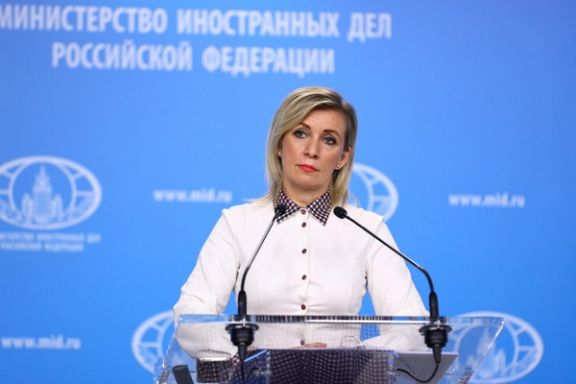
Russian Foreign Ministry spokeswoman Maria Zakharova

Russia has called on the UN nuclear watchdog to adopt an impartial approach to the monitoring of Tehran's nuclear facilities, after the International Atomic Energy Agency (IAEA) warned Tehran is rapidly nearing the position of a nuclear state.

"We hope that the IAEA will be able to ensure the objectivity and impartially of the monitoring within the framework of its technical mandate, without getting politicized, without succumbing to absolutely perverted tricks by the Western camp," Russian Foreign Ministry spokeswoman Maria Zakharova said Wednesday.

"We see this as a necessary guarantee of constructive cooperation between the agency and Iran the strengthening of which we have invariably supported," she noted during a briefing.

The Russian diplomat made the remarks in reaction to IAEA Director-General Rafael Grossi's warning about the Islamic Republic's march toward a nuclear weapon.

"Iran is enriching uranium close to military levels and is rapidly moving towards becoming a nuclear state," Grossi said in an interview with Italy's ANSA news agency earlier this month.

He said the 2015 Iran nuclear deal, known as the Joint Comprehensive Plan of Action (JCPOA), is no longer sufficient to curb Tehran’s uranium enrichment which has exceeded international limits.

"The philosophy of the original accord with Iran can be used, but that agreement is no longer useful," he added.

On December 6, the IAEA reported that Iran had significantly accelerated its production rate of 60% enriched uranium, which is now approximately five times higher than a month ago. Iran is now believed to possess enough 60% enriched uranium to produce four to five atomic bombs, should it choose to pursue nuclear weapons.

Most Viewed

Ghalibaf defends Iran-US talks amid hardline backlash
1
INSIGHT

Ghalibaf defends Iran-US talks amid hardline backlash

2
ANALYSIS

From instability to influence: Pakistan’s pivotal role in US-Iran diplomacy

3
ANALYSIS

100 days on: why Iran’s January protests spread across social classes

4

War-hit homeowners feel abandoned as Iran’s reconstruction aid fades

5

Iran says no decision yet on talks as Pakistan prepares to host US team

Banner
Banner

Spotlight

  • The politics of pink: how Iran uses cuteness to rebrand violence
    ANALYSIS

    The politics of pink: how Iran uses cuteness to rebrand violence

  • Bread shortages, soaring prices strain households in Iran, residents say
    VOICES FROM IRAN

    Bread shortages, soaring prices strain households in Iran, residents say

  • War-hit homeowners feel abandoned as Iran’s reconstruction aid fades

    War-hit homeowners feel abandoned as Iran’s reconstruction aid fades

  • 100 days on: the anatomy of Iran’s January crackdown
    INSIGHT

    100 days on: the anatomy of Iran’s January crackdown

  • Ghalibaf defends Iran-US talks amid hardline backlash
    INSIGHT

    Ghalibaf defends Iran-US talks amid hardline backlash

  • From instability to influence: Pakistan’s pivotal role in US-Iran diplomacy
    ANALYSIS

    From instability to influence: Pakistan’s pivotal role in US-Iran diplomacy

•
•
•

More Stories

Biden admin says briefing Trump's team on 'real risk' of Iran building a nuke

Dec 22, 2024, 17:23 GMT+0

The outgoing Biden administration is briefing President-elect Donald Trump's team on the growing risk of Tehran pursuing the development of a nuclear weapon, US National Security Advisor Jake Sullivan said on Sunday.

There is now a "real risk" that Iran will revise its position that "we're not going for a nuke," Sullivan told CNN.

"It's a risk we are trying to be vigilant about now. It's a risk that I'm personally briefing the incoming team on," Sullivan added.

Since May, top Iranian officials including Supreme Leader Ali Khamenei's adviser, Kamal Kharrazi, have warned that if Iran's nuclear installations are attacked, the Islamic Republic will shift its nuclear doctrine. So far, Tehran has been insisting that its nuclear program is entirely peaceful, in spite of having exceeded international limits on uranium enrichment and accelerating its nuclear program.

In October, 39 lawmakers called for changing the nuclear doctrine without mentioning an attack on nuclear facilities but citing tensions with Israel.

The calls for the pursuit of nuclear weapons have grown in Iran following the Israeli airstrikes destroying the Islamic Republic's air defense batteries.

"It's no wonder there are voices (in Iran) saying 'Hey, maybe we need to go for a nuclear weapon right now... Maybe we have to revisit our nuclear doctrine'," Sullivan told CNN, referring to the decrease in Tehran's "conventional capabilities" following Israeli air raids.

"The Israeli military believes that Iran — isolated after the fall of the Bashar al-Assad regime and the weakening of its main proxy group Hezbollah in Lebanon — may push ahead further with its nuclear program and develop a bomb as it scrambles to replace its deterrence," The Times of Israel reported earlier this month citing military officials.

Following the weakening of Iran's proxy groups in the Middle East and the dramatic fall of the Assad government in Syria, the IDF believes there is an opportunity to strike Iran’s nuclear facilities, and the Israeli Air Force has therefore continued to increase its readiness and preparations for such potential strikes in Iran, the report said.

Rouhani says nuclear arms quest would give US, Israel pretext for war

Dec 19, 2024, 15:39 GMT+0

Iran’s former president Hassan Rouhani criticized calls from top government officials for a shift toward pursuing nuclear weapons, saying they give Israel and the United States an excuse to attack.

In a meeting on Monday with his former top officials, Rouhani argued that any such moves would only empower Iran's adversaries.

“Given the sensitive regional and international conditions, we must avoid providing any excuses to our enemies. The remarks made by some individuals these days, suggesting that Iran's nuclear doctrine will change, are exactly what American and Israeli hardliners want to hear to pave the way for war,” the former president said, according to Etemad newspaper in Tehran.

Since May, top Iranian officials including Supreme Leader Ali Khamenei's adviser, Kamal Kharrazi, have warned that if Iran's nuclear installations are attacked, the Islamic Republic will shift its nuclear doctrine. So far, Tehran has been insisting that its nuclear program is entirely peaceful, in spite of having exceeded international limits on uranium enrichment and accelerating its nuclear program.

In October, 39 lawmakers called for changing the nuclear doctrine without mentioning an attack on nuclear facilities, but citing tensions with Israel.

Rouhani said that those advocating change of doctrine are merely helping the US and Israel to justify an attack on Iran.

“They [enemies] aim to convince global public opinion that if military action against Iran is not taken, Iran will be just days away from a nuclear bomb. Unfortunately, uninformed individuals in the media, and even on state television, are making statements that, at this critical juncture, work against us and provide ammunition to our enemies," he said.

Rouhani also highlighted the country’s political and economic difficulties as a serious energy shortage has closed all government offices and schools for the past week. Most industries have stopped work due to long power outages.

Iran slams UN nuclear chief over 'provocative' remarks

Dec 18, 2024, 13:08 GMT+0

The head of Iran’s Atomic Energy Organization on Wednesday criticized the director of the UN nuclear watchdog for making what he described as provocative statements regarding Tehran’s nuclear program.

Mohammad Eslami said Wednesday that in spite of Iran accepting limitations on its program in order to build trust and in exchange for the lifting of sanctions, the agency is misrepresenting Tehran.

“It is not acceptable for an international institution to address just one aspect of the issue, in a provocative manner at that, and refuse to point to the main aspect, which is the obligated parties’ non-commitment,” he said. “We expect the agency’s director-general, who is a veteran diplomat, to observe these matters.”

It comes after Rafael Grossi, the head of the International Atomic Energy Agency (IAEA), said Monday that the 2015 Iran nuclear deal, known as the Joint Comprehensive Plan of Action (JCPOA), is no longer sufficient to curb Tehran’s uranium enrichment which has exceeded international limits.

"Iran is enriching uranium close to military levels and is rapidly moving towards becoming a nuclear state," Grossi told the ANSA news agency. "The philosophy of the original accord with Iran can be used, but that agreement is no longer useful," he added.

Iran’s deputy foreign minister for legal and international affairs, Kazem Gharibabadi, also reacted to Grossi's remarks, saying, "The Director General of a specialized organization is expected to speak based on facts and technical reports from the Agency's inspectors. Reading intentions based on hypothetical scenarios is not part of the Director General's duties and is contrary to the letter and spirit of the Agency's statute.”

On December 6, the IAEA reported that Iran had significantly accelerated its production rate of 60% enriched uranium, which is now approximately five times higher than a month ago. Iran is now believed to possess enough 60% enriched uranium to produce four to five atomic bombs, should it choose to pursue nuclear weapons.

After the US withdrew from the JCPOA, Iran breached its nuclear commitments, increasing uranium enrichment to 60%, near weapons-grade levels. Subsequent negotiations with the US and E3, France, Germany and Great Britain, failed to revive the deal or secure a new agreement. Ten months remain until the “Termination Day” for UN resolution 2231, which sealed the deal, while the impasse on restoring the JCPOA persists.

UN Security Council meets to discuss nuclear deal

Eslami’s remarks came a day after a UNSC session on the 2015 nuclear accord, and implementation of resolution 2231 which endorsed it.

During the meeting, the European parties to the deal, as well as the US, warned that Iran is continuously deviating from its commitments under the JCPOA. They demanded that Tehran take immediate steps to curtail its activities and reverse its nuclear program and threatened that they will trigger the so-called snapback mechanism, which renews the UN sanctions lifted by the JCPOA.

UK deputy representative to the UN, James Kariuki, said, “Iran is not only failing to uphold its commitments, it is peddling dangerous and escalatory rhetoric around its nuclear capability and doctrine.”

Referring to recent reports by the UN watchdog, he said Iran’s stockpile of enriched uranium is already more than 32 times the limits allowed in the accord.

“The UK and our E3 partners are determined to reach a diplomatic solution. We will continue to engage Iran to find a constructive way forward. But let us be clear. With UNSCR 2231 set to expire next October, we are reaching a critical juncture,” Ambassador Kariuki said during the UNSC meeting.

US envoy to the UN Robert Wood echoed similar sentiments. “Iran’s actions suggest it is not interested in demonstrating verifiably that its nuclear program is exclusively peaceful," he said.

He pointed out that Iran's disregard for UN resolutions and IAEA concerns undermines global nuclear security.

“Iran has the opportunity to change course and engage in diplomacy,” he added. “Instead of expanding its program and stirring up speculation about its intentions, Iran should take actions that build international confidence and deescalate tensions.”

Iran's UN ambassador Amir Saeid Iravani rejected any threats of invoking the snapback, calling it unlawful and counterproductive.

“Let’s make it clear once and for all: the so-called ‘Snapback’ is not a tool in your hand to be abused for threatening Iran. Iran has made it very clear that such a provocative move will be reciprocated by a firm and proportionate response,” he said.

Iravani said that Iran engaged in good-faith negotiations to revive the deal but the unrealistic demands and lack of political will from the US and E3 led to the failure of the talks. "Blaming Iran for the failure to conclude the negotiations is both unjust and factually incorrect,” he added.

UN Under-Secretary-General for Political and Peacebuilding Affairs. Rosemary A. DiCarlo, who chaired the UNSC meeting, stressed the need for a solution amid the growing concerns about Iran’s nuclear advances amid a simmering Middle East.

“Against this backdrop, the need for a comprehensive, long-term-solution that would restore the objectives of the [JCPOA] plan has never been greater,” she said.
Iran's nuclear chief vows 'no limits' on atomic technology

Dec 17, 2024, 08:53 GMT+0

Iran’s nuclear chief said on Tuesday that the country’s nuclear technology will not be restricted, despite demands from the United States and European powers to halt high-level uranium enrichment.

Mohammad Eslami, head of Iran’s Atomic Energy Organization, speaking in Isfahan (Esfahan), home to the Natanz nuclear facility, said: "We must continue on the path of progress with effort and perseverance, and Iran's nuclear technology will never be restricted."

The Islamic Republic began violating the enrichment limits set by the 2015 JCPOA nuclear agreement after the United States withdrew from the accord in 2018. Following President Joe Biden’s election, Tehran announced an increase in uranium enrichment to 20% purity, later escalating to 60%, a level widely regarded as just short of the threshold needed for producing fissile material suitable for nuclear weapons.

Subsequent negotiations with the US and the European E3 countries — the UK, France, and Germany — failed to resolve key differences, revive the JCPOA, or establish a new agreement. As a result, Iran is now believed to possess enough 60% enriched uranium to produce 4 to 5 atomic bombs, should it choose to pursue nuclear weapons.

"Science and technology are considered key factors in creating power and authority," Eslami added, in spite of Iran's pursuit of nuclear power contributing to its isolation on the world stage.

"A country can maintain its independence and progress only if it pursues its development without reliance on others, especially the dominant global powers," he said.

This strategy, mainly directed against the West, has inflicted major harm on Iran’s economy, which now suffers from 50% annual inflation and a currency that has fallen 11,000-fold in the past 45 years.

Widespread energy shortages have forced the government to close offices, factories and schools in many provinces this week, while the country holds the second largest natural gas reserves in the world.

Iran’s nuclear program has cost the country hundreds of billions of dollars in lost revenue and economic growth due to 15 years of international and US-imposed sanctions.

With Donald Trump set to assume the presidency in the US, Tehran faces his “maximum pressure” policy, which includes stricter enforcement of sanctions and potentially additional restrictions.

Trump keeps mum on any preemptive strike plans on Iran nuclear sites

Dec 16, 2024, 20:36 GMT+0
•
Negar Mojtahedi

US President-elect Donald Trump declined to answer reporters who asked him on Monday whether he was considering a preemptive strike on Iran’s nuclear facilities during a press conference at his Florida residence, Mar-a-Lago.

“Is that a serious question?” asked the president-elect in his first formal press conference since winning the election last month.

“I can’t tell you that,” said Trump, “Am I going to do preemptive strikes, why would I say that? Can you imagine if I said yes or no? You would say that was strange that he answered that question”

Another reporter followed up by asking if Trump would support Israeli airstrikes on Iran’s nuclear program.

“How could I tell you a thing like that now? You don’t talk about that before something may or may not happen,” Trump responded.

A recent Wall Street Journal report, citing U.S. transition officials, said Trump is weighing the idea of preemptive strikes to stop Iran from building a nuclear bomb, and discussed concerns over Iran's nuclear program with Israeli Prime Minister Benjamin Netanyahu in a phone call.

Throughout the lengthy press conference, the soon-to-be 47th president confirmed his phone conversation but would not provide details other than to say the Middle East will be easier to resolve than the Ukraine-Russia conflict.

“We just had a very good conversation. The real conversations will start on the 20th,” said Trump. “I think we're going to be in a good place in the Middle East. I think actually more difficult is going to be the Russia Ukraine situation.”

Members of Trump’s transition team are reviewing a military option, according to the Wall Street Journal report, following the collapse of Syria’s Bashar Al-Assad and the weakening of Iran’s allies Hamas and Hezbollah.

Iran has enough highly enriched uranium to build four nuclear bombs, according to the United Nations nuclear watchdog.

Tehran has maintained that its nuclear program is for peaceful purposes.

The president-elect was similarly non-committal in an interview last week with Time magazine, which named him 2024 “Person of the Year”.

"Anything can happen. Anything can happen. It's a very volatile situation," he said.






