• العربية
  • فارسی
Brand
  • Iran Insight
  • Politics
  • Economy
  • Analysis
  • Special Report
  • Opinion
  • Podcast
  • Iran Insight
  • Politics
  • Economy
  • Analysis
  • Special Report
  • Opinion
  • Podcast
  • Theme
  • Language
    • العربية
    • فارسی
  • Iran Insight
  • Politics
  • Economy
  • Analysis
  • Special Report
  • Opinion
  • Podcast
All rights reserved for Volant Media UK Limited
volant media logo

Houthi leaders leave Yemeni capital amid fears of Israeli retaliation - reports

Dec 21, 2024, 14:58 GMT+0Updated: 16:21 GMT+0

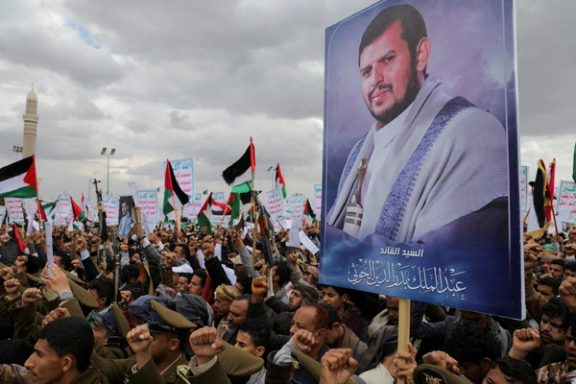
Houthi commanders have left Sanaa and relocated to other areas due to concerns about a potential attack by Israel or the US following the early Saturday attack on Tel Aviv, Al-Arabiya reports.

Houthi officials have also advised their leaders to minimize their movements, according to Sky News Arabia.

The reports came hours after a missile launched by the Iran-aligned rebels struck a public park in southern Tel Aviv. The impact of the ballistic missile caused sirens to sound across central Israel at 3:44 a.m., sending millions of residents rushing to shelters. This was the second such attack on Tel Aviv since Thursday.

The explosion injured 16 people, mostly with minor injuries from shattered glass, including a three-year-old girl. Another 14 individuals sustained bruises while rushing to shelter. Footage from the site revealed a crater in the park caused by the missile.


Most Viewed

Iran International says it won’t be silenced after London arson attack
1

Iran International says it won’t be silenced after London arson attack

2
VOICES FROM IRAN

Hope and anger in Iran as fragile ceasefire persists

3

Iran halts petrochemical exports to supply domestic market

4
INSIGHT

How Tehran bends its own red lines to boost state rallies

5

US arrests Iranian national over alleged Basij-linked visa fraud

Banner
Banner

Spotlight

  • Hardliners push Hormuz ‘red line’ as US blockade tests Iran’s leverage
    INSIGHT

    Hardliners push Hormuz ‘red line’ as US blockade tests Iran’s leverage

  • Ideology may be fading in Iran, but not in Kashmir's ‘Mini Iran'
    INSIGHT

    Ideology may be fading in Iran, but not in Kashmir's ‘Mini Iran'

  • War damage amounts to $3,000 per Iranian, with blockade set to add to losses
    INSIGHT

    War damage amounts to $3,000 per Iranian, with blockade set to add to losses

  • Why the $100 billion Hormuz toll revenue is a myth
    ANALYSIS

    Why the $100 billion Hormuz toll revenue is a myth

  • US blockade targets Iran oil boom amid regional disruption
    ANALYSIS

    US blockade targets Iran oil boom amid regional disruption

  • Iran's digital economy battered by prolonged blackout
    INSIGHT

    Iran's digital economy battered by prolonged blackout

•
•
•

More Stories

We set back Iran’s role in the Mideast by 40 years, says Syria's new leader

Dec 20, 2024, 15:21 GMT+0

Iran’s influence in the region has been significantly diminished by its ally President Bashar al-Assad's fall, Syria's de facto new leader Ahmed al-Sharaa said in an interview with Asharq Al-Awsat.

Sharaa, whose radical Sunni Islamist group Hayat al-Tahrir Sham (HTS) swiftly defeated Assad's forces this month said Syria's opposition had “set the Iranian project in the region back by 40 years,” signaling a major shift in Syria’s stance toward Iran.

“By removing Iranian militias and closing Syria to Iranian influence, we’ve served the region’s interests—achieving what diplomacy and external pressure could not, with minimal losses.”

Sharaa's remarks to the Saudi-owned outlet appeared aimed at placating Arab nations and rejected any notion of Syria becoming a threat to its neighbors.

“We are now focused on state-building. Syria will not be a platform to threaten or unsettle any Arab or Gulf country,” he said.“The Syrian revolution ended with the regime's fall, and we will not allow it to spread elsewhere.”

The Assad dynasty was a key Arab ally of Tehran, which had been backing its fight against HTS and other rebel groups for over a decade.

He stressed that Syria will no longer serve as a base for actions that destabilize neighboring Arab or Gulf countries, indirectly criticizing Tehran’s past involvement. He pointed to how Syria had previously been used as a platform for Iran to exert control over key Arab capitals, fuel conflicts, and destabilize the Gulf region through activities such as the trafficking of drugs like Captagon.

Iran's Islamic government has been rattled by events in Syria, where it helped keep Assad in power since anti-government protests erupted in 2011. Its exit from Syria followed defeats its other ally, Hezbollah, suffered in Lebanon.

Criticism of Iran’s Influence

Al-Sharaa criticized Assad's reliance on Iran, accusing it of undermining Arab unity. He revealed that during a meeting with Jordanian officials, the ousted Syrian government was asked why it continued exporting Captagon to Jordan.

“The response was that it would not stop unless sanctions were lifted,” Al-Sharaa said, describing such policies as damaging and counterproductive.

According to some former Iranian officials, Tehran spent around $50 billion in Syria in the past decade, where it maintained a large military presence.

Rebuilding Relations with Arab Neighbors

Al-Sharaa highlighted Syria's goal of rebuilding and strengthening relations with Arab nations based on mutual respect and non-interference.

He pointed to the Gulf's advancements, particularly Saudi Arabia's Vision 2030, as a development model Syria aims to emulate. Addressing concerns about Lebanon, he stressed Syria's commitment to balanced relations without interference in Lebanon's internal affairs, focusing instead on addressing its own domestic challenges.

Al-Sharaa emphasized the need for inclusivity in shaping Syria’s future, recognizing the diversity of opinions within the country and describing it as a natural and constructive element of society.

He highlighted his commitment to fostering national unity through adherence to the rule of law. Reflecting on the significance of holding the interview at the Presidential Palace, a site previously occupied by Assad, Al-Sharaa noted that it should be a space accessible to the people, symbolizing openness and a connection to the broader community.

The new administration’s approach, Al-Sharaa concluded, is centered on restoring Syria as a trusted member of the Arab world, free from external agendas.

As Trump era looms, US imposes more sanctions on Iran and Yemen's Houthis

Dec 20, 2024, 07:52 GMT+0

The United States imposed sanctions against entities linked to Iran and its allies the Houthis in Yemen on Thursday just weeks before the inauguration of President-elect Donald Trump is due to herald even harsher pressure on Tehran.

“Today, the United States is taking action to stem the flow of revenue that the Iranian regime uses to support terrorism abroad, as well as to oppress its own people," the Treasury Department said in a statement. "The Department of State is imposing sanctions on four entities engaged in the Iranian petroleum trade and identifying six vessels as blocked property.”

The sanctions include individuals, companies, and vessels tied to the trade of Iranian petroleum and petrochemicals, a critical source of revenue for Tehran’s leadership. According to the Treasury, these funds support Iran’s nuclear program, ballistic missile development, and the financing of proxy groups such as Hezbollah, Hamas, and the Houthis.

Also, Iran’s Ghezel Hesar Prison was designated for gross violations of human rights, the Treasury Department announced.

The designation, made under Section 106 of the Countering America's Adversaries Through Sanctions Act (CAATSA), identifies the prison as responsible for cruel, inhuman, and degrading treatment or punishment against individuals in Iran exercising their internationally recognized right to freedom of expression.

The Department of State and the Treasury's Office of Foreign Assets Control (OFAC) jointly listed the facility for its role in these abuses, reinforcing US efforts to hold accountable those involved in human rights violations.

The designation blocks all property and interests of Ghezel Hesar Prison within the United States, largely a symbolic act, and prohibits US persons from engaging in transactions with the institution.

Bradley Smith, acting undersecretary for terrorism and financial intelligence, emphasized in a statement that the United States remains committed to disrupting Iran’s revenue streams that fund destabilizing activities. He pointed to a "shadowy network" of vessels, companies, and facilitators used by Iran to sustain these operations.

The vessels sanctioned include the Djibouti-flagged crude oil tanker MS ENOLA, owned by Journey Investment Company; the San Marino-flagged MS ANGIA; and the Panama-flagged MS MELENIA. The latter two are managed and operated by Liberia- and Greece-registered Rose Shipping Limited.

In addition to targeting the vessels, the Treasury imposed sanctions on 12 individuals involved in Houthi procurement and financing activities.

Among them is Hashem Ismail Ali Ahmad al-Madani, head of the Houthi-aligned central bank in Sanaa. These individuals are accused of roles in arms trafficking, money laundering, and shipping illicit Iranian oil to benefit the Houthis.

The sanctions freeze all property and interests in the United States of the designated parties. US persons and entities dealing with them risk sanctions or enforcement actions, including fines. Iran continues to assert that its nuclear program is intended solely for peaceful purposes.

Israel blames Iran for Houthi strike on school, launches wave of attacks

Dec 19, 2024, 07:27 GMT+0

Israel launched a series of airstrikes across Yemen on Thursday morning targeting key infrastructure in territories controlled by Iran’s Houthi allies in the wake of a missile strike overnight.

Since October 7, when Iran-backed Hamas invaded Israel sparking the Gaza war, Iran’s Houthis in Yemen have launched more than 200 missile and 170 drones at Israel, most of which were intercepted before reaching Israeli territory.

But the early Thursday morning attack, which badly damaged a school in Ramat Gan, north of Tel Aviv, triggered a wave of counterattacks, after almost daily firing from Yemen over recent weeks.

Israel sent 14 fighter jets that flew a distance of more than 1,700 kilometers, among the targets, the ports of Ras Issa, Hodeidah and al-Salif. A total of eight tugboats were attacked and in Sana'a, fuel tanks, oil, and a power plant were hit. Nine people were believed to have been killed in Yemen so far.

The attacks, which followed the missile strike on Israel at 2:38am, began at 3:15am, the first wave in the coastal area of ​​Yemen, and the second wave at 4:30am in the Sana'a area.

The Houthis have been targeting Israel directly along with imposing a maritime blockade on the Red Sea region. Initially aimed at forcing a ceasefire in Gaza, and targeting Israeli-linked shipping, it has since expanded to all international shipping, with dozens of international seamen taken hostage since it began in November 2023.

A statement from the Israeli military said IAF fighter jets worked with the direction of the Intelligence Directorate and the Israeli Navy.

Calling out Iran for its role in the more than one year bombardment, having funded, trained and armed the group, designated terrorists by countries including the US and UK, the military said: “The targets struck by the IDF were used by the Houthi forces for military purposes. The strikes degrade the Houthi terrorist regime, preventing it from exploiting the targets for military and terrorist purposes, including the smuggling of Iranian weapons to the region.

“Over the past year, the Houthi terrorist regime has been operating with the direction and funding of Iran, and in cooperation with Iraqi militias in order to attack the State of Israel and Israeli civilians, undermine regional stability and disrupt global freedom of navigation.”

Israeli Prime Minister Benjamin Netanyahu said on Thursday that the strikes represent the further collapse of Iran's network of military allies which Israel has been fighting in the wake of last year's Iran-backed Hamas invasion of Israel on October 7.

"After Hamas, Hezbollah and the Assad regime in Syria, the Houthis are almost the last arm of Iran's axis of evil. They are finding out, and will find out, the hard way that whoever harms Israel – will pay a very heavy price," he said, referring to a devastating campaign against Iran's largest ally, Hezbollah, in recent months, and more than a year of war against Gaza-based Hamas, which has left the group massively weakened.

In July, the US levied yet more sanctions against members of the Houthis for involvement in financing. “The Houthis in Yemen continue to receive vast revenues from the illicit shipment of Iranian commodities. This funding stream enables the Houthis’ ongoing attacks against commercial shipping in the Red Sea and surrounding waterways,” a statement from Matthew Miller, the State Department spokesman said.

According to the Council of Foreign Relations, Iranian military support to the Houthis began as early as 2009, amid the Houthis’ first war against Yemen’s government.

“Most experts agree that the Houthis were receiving weapons from Iran by 2014, the year they captured Sanaa. In both cases, military intervention against the Houthis by Iran’s regional rival, Saudi Arabia, likely catalyzed Tehran’s increased interest in the group,” research from the think tank found.

The group, like Hezbollah in Lebanon and Hamas in Gaza, have become part of what is known as Iran’s ‘axis of resistance’ of militia around the region, formed by Supreme Leader Ali Khamenei as a means to bolster power and bring down Israel and the US presence in the Middle East.

Israeli Defense Minister Israel Katz said on Thursday morning: ”We attacked strategic targets of the Houthi terrorist organization in Yemen once again tonight … We will not accept rockets being fired at Israel, nor damage to shipping lanes. We will strike with force and will not allow the continuation of the situation of shooting and threats against the State of Israel."

In the aftermath of the attacks, Muhammad al-Bahithi from the Houthi political bureau, said that "the American-Israeli attack on civilian facilities in Yemen, power plants and ports, exposes the hypocrisy of the West”, though Israel and the US had not confirmed their involvement in the strikes overnight.

The US and UK have, however, launched a series of joint strikes against the Houthis since the blockade began last year, the US heading an international coalition to combat the action which has massively impacted global shipping.

“Our military operations in support of Gaza will continue, escalation will be met with escalation until the genocide in Gaza stops and food, medicine and fuel are brought in for the residents,” al-Bahithi said.

On Thursday, the Israeli military said that an interception had led to shrapnel damage in the wake of the attack.

"It is likely that the damage was caused by partial interception of the missile launched from Yemen and that the missile warhead was the part that exploded and damaged the school," a statement said, an investigation underway.
Iran fuels Sudanese civil war with arms, seeks Red Sea base - Bloomberg

Dec 18, 2024, 17:34 GMT+0

Iran is backing Sudanese army forces with weapons and drones in a grueling civil war, according to a Bloomberg report, and Tehran along with Russia is seeking military bases in Port Sudan on the Red Sea.

Iran has delivered arms to Sudanese army forces and provided them with dozens of drones, the news outlet reported, helping tip the conflict against militia opponents.

Russia, which has provided fuel and weapons components, along with Iran have both been in talks with Sudan's generals on building military bases astride the Red Sea, Bloomberg reported citing Sudanese and Western officials.

The support puts Tehran and Moscow on the winning side of the war, in contrast to their epochal setback in Syria where their mutual ally Bashar al-Assad was toppled this month by rebels they had been fighting for years.

Iran re-established diplomatic ties with Sudan in late 2023 after a seven-year deep freeze after Khartoum joined a Saudi-led military intervention in Yemen against Tehran's allies in the armed Houthi movement.

Militias fighting the army felled a domestically crafted drone made with Iranian parts, Bloomberg reported citing Wim Zwijnenburg, a researcher at Dutch pro-peace organization PAX.

Zwijnenburg located an Iranian military drone on an air strip outside the capital earlier this year, Bloomberg wrote.

It cited the Conflict Observatory monitor saying at least seven flights operated by Qeshm Fars Air traveled between Tehran and Port Sudan in the first half of the year.

The firm, which is under US sanctions, is affiliated with the external operations arm of the Islamic Revolutionary Guard Corps (IRGC).

Admiral warns Iran may lose race of arms and ideas

Dec 16, 2024, 17:26 GMT+0

A senior Iranian military officer has expressed concern over the ideological influence of Iran's enemies and the risk of losing out in a technological race for armaments, in a potential sign of greater official unease following regional setbacks.

"The enemies aim to dominate a nation and its land by taking control of minds; we must protect minds, because if they gain control over them, other efforts will be ineffective," Admiral Habibollah Sayyari said in a speech on Monday.

Since nationwide protests in December 2017, there have been increasing signs that many younger Iranians in particular question the Islamic tenets of the governing establishment and oppose regional adventures in Syria, Lebanon and Yemen.

"Ignoring new threats and technologies will undoubtedly lead to strategic surprises for us," Sayyari added. "It is also essential to pay attention to disruptive concepts in warfare."

Israel’s edge in military tactics and weapons have inflicted serious losses on Iran’s main military proxy, the Lebanese Hezbollah in recent months, and have seriously weakened Hamas, its other ally in the region. The fall of Bashar al-Assad in Syria was the latest serious blow to Tehran’s regional influence.

Israel launched a large-scale air attack against Iran in October, devastating its air defenses and several military installations without encountering any serious defense or retaliation.

These led to more expressions of doubt about the Islamic Republic’s foreign and military policy, which openly declares enmity with Israel.

Even many politicians and commentators linked to the governing establishment in Iran have in recent month called for a review of these policies and a serious attempt to improve relations with the West.

Hossein Salami, the commander-in-chief of the IRGC, referred to the developments in Syria as a bitter lesson on Sunday and said that it stands alongside the lessons learned from the Iran-Iraq War.

Sayyari emphasized the importance of social awareness in confronting enemies and referred to inspiring the politically agnostic within society - a group he referred to as the gray spectrum.

"The best way to counter cognitive warfare is to raise awareness among the gray spectrum and increase public vigilance," the admiral said. "The gray spectrum is influential everywhere, and their intelligence and level of awareness must be enhanced for us to effectively prevent this type of warfare."






