• العربية
  • فارسی
Brand
  • Iran Insight
  • Politics
  • Economy
  • Analysis
  • Special Report
  • Opinion
  • Podcast
  • Iran Insight
  • Politics
  • Economy
  • Analysis
  • Special Report
  • Opinion
  • Podcast
  • Theme
  • Language
    • العربية
    • فارسی
  • Iran Insight
  • Politics
  • Economy
  • Analysis
  • Special Report
  • Opinion
  • Podcast
All rights reserved for Volant Media UK Limited
volant media logo

Renewed US sanctions waiver for Iran stokes Republican ire

Dec 11, 2024, 17:15 GMT+0Updated: 12:11 GMT+0
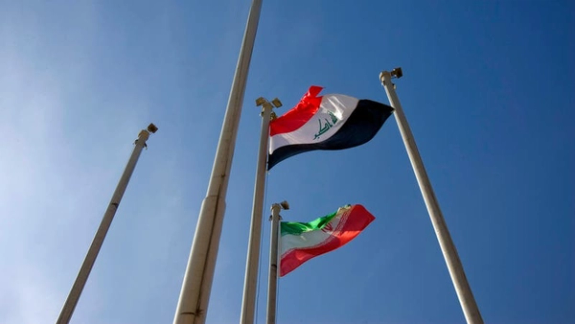
Flags of Iran and Iraq

A decision to renew a sanctions waiver for Iran in the waning days of the Joe Biden administration has raised hackles among Republicans who argue the outgoing president has consistently allowed Tehran to replenish its coffers.

Totaling $10 billion, the funds are Iraqi payments for electricity provided by neighboring Iran.

The move was made two days after the November presidential election, the state department confirmed last week, riling Biden's critics.

“The House voted to eliminate these waiver authorities - twice. But the Biden administration is still waiving the sanctions, putting more money in the Iranian regime’s pockets to fund its terrorist proxies and nuclear weapons program," Republican Michael McCaul said on X.

"The US should not be subsidizing Iran’s malign activities.”

On November 8, Secretary of State Antony Blinken announced: "it is in the national security interest of the United States" to waive mandatory economic sanctions that bar Iraq from transferring upward of $10 billion to Iran in electricity import payments.”

Republicans have objected to the move, warning that the money will not be used for the benefit of Iran’s cash-strapped population - one third of which now live below the poverty line - but will instead be funneled toward Tehran’s militant allies in the region.

The administration previously signed off on renewing the waiver one month after Hamas's October 7 attack on Israel, the Washington Free Beacon reported on Tuesday. Iran has armed, funded and trained the Palestinian militant group.

Last year, the US unfroze $6 billion in Iranian funds to bank accounts in Qatar in exchange for the release of five US-Iranian prisoners held by Tehran. That move was lambasted by Republican critics as indulging Iranian hostage diplomacy.

Amid bipartisan pressure following the Oct. 7 attack by Iran-backed Hamas against Israel, the Biden administration told lawmakers it would effectively refreeze those funds for the foreseeable future.

The most recent waiver lifted sanctions for 120 days and will overlap with the incoming administration of Donald Trump, whose punishing sanctions gutted Iranian finances.

Given the pledge by incoming Trump administration officials to renew that “maximum pressure” stance on Iran, the waiver could be scrapped.

During the previous Trump administration the waiver was in force but access to the funds was stricter, according to the Beacon, which regularly lampoons Democrats and supports Republicans.

“The Biden State Department tweaked the waiver last year to allow Tehran to convert the funds from Iraqi dinars to euros, then hold those euros in bank accounts based in Oman,” the Beacon reported.

“Access to a widely traded currency like the euro enables Iran to more easily spend the cash in international markets. Under the first Trump administration, Iran had to keep the cash in an escrow account in Baghdad, making it more difficult to access.”

State Department deputy spokesman Vedant Patel told reporters in a briefing on Nov. 7 that the administration still considered Iran an adversary but wanted to facilitate the provision of Iranian electricity to Iraq.

"We remain committed to reducing Iran's malign influence in the region,” he said. The United States last year designated Iran the world’s top state sponsor of terrorism.

"Our viewpoint is that a stable, sovereign, and secure Iraq is critical to these efforts.”

The funds are mandated for use on humanitarian needs such as medicines, according to the Biden State Department instructions.

However, its Republican detractors maintain that the money is fungible, allowing Tehran to divert its dwindling cash reserves to regional allies such as Hamas, Hezbollah, and the Houthi rebels in Yemen.

"Joe Biden and his team are taking credit for bringing down Assad just a few weeks after renewing a sanctions waiver to give Iran access to billions of dollars," Richard Goldberg, a former White House National Security Council member who worked on the Iran portfolio, told the Beacon.

"Give me a break. This policy of appeasement needs to end on January 20, and locking down these accounts so Iran can't get access should be priority one.”

Western countries stepped up sanctions on Iran this year over its human rights record and support of Russia in its war on Ukraine.

Iran has managed to circumvent many of the sanctions and boost revenue from oil exports during Biden's term, leading critics including some Democrats to urge a more muscular approach.
Most Viewed

Iran negotiators ordered to return after internal rift over Islamabad talks
1
EXCLUSIVE

Iran negotiators ordered to return after internal rift over Islamabad talks

2
INSIGHT

Iran's digital economy battered by prolonged blackout

3
ANALYSIS

US blockade enters murky phase as tankers spoof signals and buyers hesitate

4
ANALYSIS

Why the $100 billion Hormuz toll revenue is a myth

5

US tightens financial squeeze on Iran, warns banks over oil money flows

Banner
Banner

Spotlight

  • Hardliners push Hormuz ‘red line’ as US blockade tests Iran’s leverage
    INSIGHT

    Hardliners push Hormuz ‘red line’ as US blockade tests Iran’s leverage

  • Ideology may be fading in Iran, but not in Kashmir's ‘Mini Iran'
    INSIGHT

    Ideology may be fading in Iran, but not in Kashmir's ‘Mini Iran'

  • War damage amounts to $3,000 per Iranian, with blockade set to add to losses
    INSIGHT

    War damage amounts to $3,000 per Iranian, with blockade set to add to losses

  • Why the $100 billion Hormuz toll revenue is a myth
    ANALYSIS

    Why the $100 billion Hormuz toll revenue is a myth

  • US blockade targets Iran oil boom amid regional disruption
    ANALYSIS

    US blockade targets Iran oil boom amid regional disruption

  • Iran's digital economy battered by prolonged blackout
    INSIGHT

    Iran's digital economy battered by prolonged blackout

•
•
•

More Stories

Iran agrees to tougher oversight at nuclear site, IAEA reports

Dec 11, 2024, 12:23 GMT+0

Iran has accepted tougher monitoring by the UN nuclear agency at its Fordow site after it greatly accelerated uranium enrichment to close to weapons grade there, the watchdog said on Thursday in a report seen by Reuters.

"Iran agreed to the Agency's request to increase the frequency and intensity of the implementation of safeguards measures at FFEP (Fordow Fuel Enrichment Plant) and is facilitating the implementation of this strengthened safeguards approach," the International Atomic Energy Agency said in the confidential report to member states.

On Wednesday, Laurence Norman of the Wall Street Journal tweeted that Iran will give more access to monitors from the UN’s International Atomic Energy Agency (IAEA) after banning one third of the agency's team last year, citing officials. Measures are being put in place “to ensure Tehran’s increased 60% production doesn’t lead to diverted fissile material or a sudden push to weapons grade” uranium, he said.

Norman wrote that among the measures, there will be “more frequent IAEA inspections of Fordow and a few more inspectors”.

It is a turnaround for Tehran which last year banned around one third of the IAEA’s inspectors, accusing them of being politically motivated.

“The inspections to Fordow won’t however be daily,” Norman added, expecting an updated IAEA report soon.

Last week, the IAEA’s chief, Rafael Grossi, said: "Today the agency is announcing that (Iran's) production [uranium] capacity is increasing dramatically of the 60% inventory."

In an interview with Reuters in Bahrain, he said that Iran had been producing uranium enriched to up to 60% at a rate of approximately 5-7 kilograms per month, adding that the figure is now expected to increase significantly, "seven, eight times more, maybe even more."

Norman said that the latest move by Tehran “gives Iran an easy leverage item next time they face a censure”.

Writing on X, he said: “They can threaten to withdraw additional oversight. But it’s worth noting that would be a comp safeguards breach. Not a JCPOA breach. So that would be a more serious issue.”

Also last week, a US intelligence report from November revealed that Iran could rapidly build a nuclear weapon should it decide to do so.

"The Intelligence Community continues to assess that as of 26 September 2024, Iran is not building a nuclear weapon. Tehran has, however, undertaken activities that better position it to produce one, if it so chooses," the Office of the Director of National Intelligence report said.

"Iran has continued to increase its stockpiles of 20-percent and 60-percent enriched uranium, manufacture and operate an increasing number of advanced centrifuges, and publicly discuss the utility of nuclear weapons," the report added.

Hardline media admits losses after Assad’s fall in Syria

Dec 11, 2024, 10:05 GMT+0
•
Azadeh Akbari

The fall of Bashar al-Assad’s government has prompted rare admissions of setbacks from Iran’s hardline media, with an outlet linked to the IRGC acknowledging losses for Iran's military allies across the region.

“The blows inflicted on the resistance movement should not be denied, nor should false remedies be applied to conceal the pain,” IRGC-affiliated Javan newspaper said Tuesday.

Specifically, Iran's largest militia, Hezbollah in Lebanon, considered a terrorist organization by countries including the US and UK, has seen huge blows since September as Israel ramped up airstrikes and targeted killings. It has seen massive losses to its military infrastructure and leadership.

Iran's Gaza-based ally, Hamas, also considered a terrorist organization by countries such as the US and UK, has also suffered huge blows since the retaliatory offensive launched by Israel in the wake of the group's invasion of Israel on October 7 last year.

The IRGC-linked paper focused on the implications of Assad’s fall for Iran’s proxy groups, known as the 'axis of resistance'. Syria, under the rule of Bashar Al-Assad, has long been a key component for these groups.

The paper acknowledged that Syria’s strategic location and logistical role made it a vital connection point for Iran and its allies, including Hezbollah. "Syria was both a cornerstone of the resistance axis and a vital link connecting Iran to Hezbollah in Lebanon," Javan wrote, warning that its loss disrupts coordination and weakens the operational capacity of the resistance axis, Syria a key smuggling route to Lebanon for Tehran.

The paper also addressed Israel's targeted assassinations, which saw top levels of the group killed including long-time leader Hassan Nasrallah, described as a significant blow, both symbolically and strategically.

Despite the admissions, Javan argued that the ‘resistance axis’ is built to endure such challenges. "The resistance is not overly reliant on individuals or states," the article said, adding that its structure prevents the loss of leaders or allies from crippling the movement entirely.

The article concluded with drawing on the Houthis in Yemen as an example of the “continued path of resistance” and comparing the ‘axis of resistance’ to a river that "always finds its way to the sea despite obstacles."

Kayhan ties Assad’s fall to Western compromise and internal missteps

The hardline daily Kayhan newspaper, closely aligned with Supreme Leader Ali Khamenei’s office, framed Assad’s fall as a cautionary tale on the dangers of compromising with Western adversaries, while justifying Iran’s expenditures in support of his government in Syria.

Kayhan argued that Iran’s involvement in Syria was essential, writing: “Our costs in Syria were never wasted. The threat of ISIS near Iran’s borders justified these expenses, which have brought security to the nation. Without this investment, Iran’s current situation could have been unpredictable.”

The paper attributed Assad’s fall to internal factors, including a lack of motivation within the Syrian army, intelligence compromises among officials, and economic mismanagement. “The Syrian government lacked the moral readiness to continue resisting, and Iran could not shoulder these costs alone,” Kayhan said.

In an editorial criticizing President Masoud Pezeshkian’s administration, Kayhan linked Syria’s crisis to leniency towards Western powers. “Compromising with the enemy brings nothing but losses,” it said. “The pro-Western approach weakens internal power structures and paves the way for the enemy. Syria’s recent collapse demonstrates the failure of such strategies.”

The paper also accused the media of discrediting Assad among Syrians and argued that infiltration projects and economic neglect contributed to his fall. Kayhan concluded by warning against compromise with the West and asserting: “Assad's failure and the fall of his government was turning away from the resistance front and leaning towards the West and Arab countries. Once again, it has been proven that the cost of compromise outweighs the cost of resistance.”

As Khamenei prepares his address on Wednesday, experts argue his speech is likely to reinforce this narrative, underscoring Iran's defiance in the face of adversity and its determination to sustain the ‘resistance axis’ despite the challenges.


Khamenei blames US, Israel for Assad's ouster in first public remarks

Dec 11, 2024, 07:52 GMT+0

Iran’s Supreme Leader Ali Khamenei accused the United States and Israel of orchestrating the overthrow of Bashar al-Assad, Syria's longtime president and a close ally of Tehran.

The remarks were Khamenei's first since Assad fled the country for Russia on Sunday in the face of a shock rebel advance, but offered little indication of what Iran's next strategic move would be after suffering the epochal setback.

“There should be no doubt that what has happened in Syria is the result of a joint American and Zionist plan. Yes, a neighboring country of Syria has played a clear role in this regard, continues to do so even now—this is evident to everyone. But the main conspirator, the primary planner, and the central command rooms are in the US and the Zionist entity," he said in his first remarks on the Syrian uprising since Assad's departure on Sunday.

Khamenei’s reference to a neighboring country was widely interpreted to mean Turkey. Over the years, Turkey has been a key backer of Syrian armed opposition groups. The power vacuum created by Assad’s fall has boosted Ankara’s regional position, weakening the influence of Iran and Russia on Syrian affairs.

“The aggressors I mentioned each have their own motives. Their goals are different—some seek to occupy land in northern or southern Syria, while America aims to solidify its foothold in the region," Khamenei added.

"These are their objectives, and time will show that, God willing, none of them will achieve these goals. The occupied regions of Syria will be liberated by the brave Syrian youth; have no doubt, this will happen,” he said.

Assad’s ouster has not only deprived Tehran of a strategic ally but also disrupted Iran’s ability to transport weapons to its biggest military ally, Hezbollah in Lebanon, through its land corridor. This route was a cornerstone of what is described as Iran’s Shia crescent, linking Tehran to the Mediterranean via Baghdad and Damascus.

In spite of the massive setbacks Israel has inflicted in recent months on both Hezbollah and Hamas in Gaza, also supported by Tehran, Khamenei said the Resistance - a term for Iran-backed militias across the region - would grow stronger.

"The more pressure you exert, the stronger the resistance becomes. The more crimes you commit, the more determined it becomes. The more you fight against it, the more it expands," Khamenei said. "Iran is strong and powerful—and will become even stronger."

The new government in Damascus, comprised of Sunni insurgents, signals a significant shift in the balance of power in the region. Syria's significance for Iran and the Islamic Republic's support for Hezbollah in Lebanon were so substantial that, over the years, Israel has also targeted several IRGC commanders in Syria as part of its efforts to counter Tehran and its regional influence.

In April, Israel struck the Iranian consulate compound in Damascus, killing Quds Force commander Mohammad Reza Zahedi, and other senior IRGC figures, triggering Iran's first ever direct attack on Israel in the same month.

Even after Assad's fall, Israel has continued to deliver significant blows to the remnants of both Assad's military forces and arsenal, and IRGC facilities, with around 300 airstrikes carried out since Sunday as Israel destroys any potential weapons falling into the hands of Syria's new extremist groups.

Iranian Islamic Revolutionary Guard Corps (IRGC) forces and militias such as the Fatemiyoun and Zainabiyoun brigades were deeply involved in defending Assad during Syria’s civil war.

These militias, composed mainly of Afghan and Pakistani recruits residing in Iran, were promised financial incentives and residency permits in exchange for their service. Despite Iran’s consistent denials of direct military intervention, these groups played a critical role on the ground.

Iran's currency plumbs new lows after Assad's ouster

Dec 10, 2024, 21:26 GMT+0

The Iranian rial has hit new lows in the wake of Bashar al-Assad’s fall in Syria, in a sign that the ouster of Tehran's main Arab ally may be hollowing out economic confidence.

The dollar was trading at more than 730,000 rials in Tehran’s free exchange market on Tuesday, up from 700,000 just a week ago.

The downfall of Assad, whose ruling family has been the one of the Islamic Republic's earliest and strongest allies since 1979, severs Iran's land corridor to Lebanon which supplied weapons to Hezbollah for its periodic confrontations with Israel.

The slide adds to Iran’s vulnerabilities and could indicate its relative weakness in the region.

In addition to recent regional setbacks, the Islamic Republic faces the imminent challenge of Donald Trump assuming office in the United States, who will likely ramp up economic pressure on Tehran.

The euro was trading at almost 770,000 rials, as most other hard currencies rose in tandem with the US dollar in Tehran. The rial has fallen 18-fold since 2018, when the United States withdrew from the JCPOA nuclear deal and imposed sanctions on Tehran.

Before the establishment of the Islamic government in 1979, the US dollar was worth just 70 rials.

The rial’s steady decline signals further price hikes in Iran as imports grow more expensive, with inflation already nearing 50 percent. Meanwhile, oil exports constrained by sanctions have fail to generate sufficient foreign currency to stabilize the rial.

The only recourse for Tehran is to convince the US to lift its economic sanctions, but so far, Iran has not made sufficient concessions on its ambitious nuclear program or its regional policies to sway Washington.

Iran defends enrichment acceleration in face of European criticism

Dec 10, 2024, 20:29 GMT+0

Iran's Foreign Ministry has rejected the joint statement issued by the United Kingdom, France, and Germany criticizing Tehran for enriching uranium to near weapons-grade, saying Tehran was acting within its international rights.

Iran’s decision to employ advanced centrifuges and enrich uranium to higher levels falls within its rights under the Non-Proliferation Treaty (NPT), the ministry 's spokesperson Esmail Baghaei argued on Tuesday. These measures comply with International Atomic Energy Agency (IAEA) oversight protocols, he added.

"The Islamic Republic of Iran, as a responsible member of the IAEA, has proven its commitment to cooperation with this body," Baghaei said, referring to recent discussions with IAEA Director General Rafael Grossi in Tehran.

"It is regrettable that these European countries, instead of building on the constructive engagements, continue with unhelpful and confrontational approaches."

The European trio, collectively known as the E3, issued a statement on Tuesday condemning Iran's actions as undermining the Joint Comprehensive Plan of Action (JCPOA), the 2015 nuclear deal. Their statement highlighted concerns over uranium enrichment at the Fordow facility to near-weapons-grade levels and an increase in the number of centrifuges in operation.

"Iran’s actions have further hollowed out the JCPOA," they wrote, urging Tehran to reverse course and adhere to international safeguards.

Baghaei dismissed these remarks, insisting that the current nuclear standoff stems not from Iran’s actions but from the US's withdrawal from the JCPOA in 2018 and the failure of European signatories to uphold their commitments under the deal.

Iran has long contended that its nuclear program is peaceful and that its uranium enrichment—reported to have reached 60% purity, just short of the 90% threshold for weapons-grade material—serves civilian purposes. However, this has been met with skepticism from Western nations, who argue there is no credible civilian justification for such enrichment levels.

The ongoing dispute has fueled fears of regional instability. IAEA Chief Rafael Grossi has acknowledged in recent statements that dialogue with Iran is indispensable.

However, he has warned that the lack of implementation of safeguards continues to pose significant challenges.

While the IAEA continues its efforts to mediate between Tehran and the west, diplomatic progress remains elusive.