• العربية
  • فارسی
Brand
  • Iran Insight
  • Politics
  • Economy
  • Analysis
  • Special Report
  • Opinion
  • Podcast
  • Iran Insight
  • Politics
  • Economy
  • Analysis
  • Special Report
  • Opinion
  • Podcast
  • Theme
  • Language
    • العربية
    • فارسی
  • Iran Insight
  • Politics
  • Economy
  • Analysis
  • Special Report
  • Opinion
  • Podcast
All rights reserved for Volant Media UK Limited
volant media logo
TEHRAN INSIDER

You think it's bad today? Wait till you see tomorrow

Tehran Insider
Tehran Insider

Firsthand reports from contributors inside Iran

Dec 9, 2024, 18:07 GMT+0Updated: 15:33 GMT+0
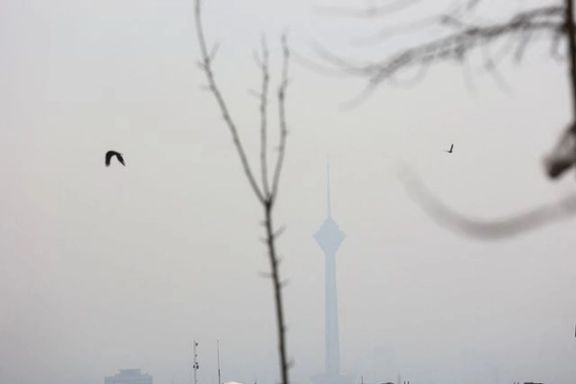
The Milad Tower in Tehran enveloped in smog, December 8, 2024

Mahmoud looks spent; he’s 45 but looks older. Grey-haired, unshaven, bespectacled — financial anxiety has worn him out. He owns no home, holds no significant assets and dares not think about the future. "Let’s make it to tomorrow is our motto," he says.

Official figures put Iran’s annual inflation rate at around 34 percent. Unofficial estimates are higher. Prices are soaring. The currency is in free fall: 72,000 tomans buys one US dollar. The exchange rate impacts nearly all goods and services but its psychological effects defy metrics.

For over five years, Iranians have been enduring severe economic pressure. In 2019, inflation jumped from 10% to over 50%, with food prices soaring over 85%. Millions of people have been thrust below the poverty line—almost one in three, according to government officials.

The story of Mahmoud, whose full name is being withheld for his safety, mirrors that of untold numbers of hard-working but frustrated Iranians whose ambitions have been dashed by the moribund economy.

In 2019, Mahmoud worked in the marketing department of an Iranian app store. He earned 7 million tomans a month ($540 back then), almost half of which he paid as rent for a modest apartment in Tehran. He tried to save a little every month.

That summer, Donald Trump’s “maximum pressure” campaign began to bite. Life was evidently costing more. Many Iranians scrambled to convert their meager savings into more stable assets—gold, land, a small apartment on the outskirts of larger cities, a vehicle even.

Mahmoud had 35 million tomans in the bank. He could buy 2,700 dollars. But then his employer offered to match his savings with a loan. He now had enough to purchase a domestically assembled foreign car or a small apartment outside Tehran. He felt he had to ask around and make an informed decision. That 70 million tomans was all he had.

“I never thought an apartment I had viewed and could almost afford would cost almost three times as much a few weeks later,” Mahmoud recalls. The hesitation had proven costly.

Mahmoud had flashbacks of a similar blow six years prior. During yet another inflationary spike in 2013, Mahmoud’s father sold his home to buy a larger one. By the time the deal was closed, the money he had received could not buy the property he had just sold, let alone a better one.

“That was a big chunk of what dad had gathered in a lifetime. Gone, vanished in a month,” Mahmoud recalls with pain. “I never thought it would happen to me. I was sure I could move fast because I wasn’t selling a house. I had cash.”

He was indeed fast. Just not fast enough. The tiny apartment he could just about afford was now firmly out of reach. And this was not even in Tehran. It was more than 10 miles outside the capital—in a monstrous assembly of shoddy blocks built by the government.

The Mehr Housing Project was intended to provide affordable housing for low-income families. But it became yet another money-making machine for well-placed speculators who purchased them in bulk and rented them to the very people the project was meant to serve.

Mahmoud, priced out of a property he would have sneered at a few years prior, decided to invest his fast-dwindling savings in stocks. The company he worked for offered shares at a discounted price. It was aiming to go public the following year, promising good returns.

Five years later, the company is still not listed.

“My investment has grown but not much,” Mahmoud laments. “Had I bought a car instead, it would be double what my shares are worth today. And I’m reluctant to sell it now, fearing the company going public the minute I cash out.”

Mahmoud has had to move three times in the past five years, each time to a less pleasant neighbourhood. He earns four times what he earned in 2019. But the dollar, a rough indicator of cost of living in Iran, is more than five times what it was then. He feels---and he is, in real terms---considerably poorer.

"My rent was half my salary then. Now it's two-thirds," Mahmoud says, his voice rising and shaking. "We earn in tomans and spend in dollars. A decent apartment in a decent neighborhood in Tehran costs around $300,000 dollars. That's comparable to prices in the US. It's just that our wages are not even a tenth of theirs."

Inflation in Iran shows no sign of abating. Low productivity, mismanagement, and long-lasting US-led sanctions have created chronic inflation that makes the vast majority of Iranians poorer by the year, if not month.

“You know the so-called five stages of grief, right? Denial, anger, bargaining, depression, and acceptance,” Mahmoud says with a bitter smile. “Well, most people I know are somewhere between four and five. And they all earn well above average.”

Most Viewed

Iran negotiators ordered to return after internal rift over Islamabad talks
1
EXCLUSIVE

Iran negotiators ordered to return after internal rift over Islamabad talks

2
ANALYSIS

US blockade enters murky phase as tankers spoof signals and buyers hesitate

3
ANALYSIS

Why the $100 billion Hormuz toll revenue is a myth

4

US tightens financial squeeze on Iran, warns banks over oil money flows

5
ANALYSIS

US blockade targets Iran oil boom amid regional disruption

Banner
Banner

Spotlight

  • Hardliners push Hormuz ‘red line’ as US blockade tests Iran’s leverage
    INSIGHT

    Hardliners push Hormuz ‘red line’ as US blockade tests Iran’s leverage

  • Ideology may be fading in Iran, but not in Kashmir's ‘Mini Iran'
    INSIGHT

    Ideology may be fading in Iran, but not in Kashmir's ‘Mini Iran'

  • War damage amounts to $3,000 per Iranian, with blockade set to add to losses
    INSIGHT

    War damage amounts to $3,000 per Iranian, with blockade set to add to losses

  • Why the $100 billion Hormuz toll revenue is a myth
    ANALYSIS

    Why the $100 billion Hormuz toll revenue is a myth

  • US blockade targets Iran oil boom amid regional disruption
    ANALYSIS

    US blockade targets Iran oil boom amid regional disruption

  • Iran's digital economy battered by prolonged blackout
    INSIGHT

    Iran's digital economy battered by prolonged blackout

•
•
•

More Stories

Iran sees over 30% drop in rainfall as drought worsens

Dec 9, 2024, 14:58 GMT+0

Rainfall across 29 Iranian provinces has dropped by nearly a third since October, according to the Iran Meteorological Organization, as the country continues to struggle with water scarcity.

The country has experienced an overall rainfall reduction of 31.9% during this period, with the southern provinces of Sistan-Baluchestan and Hormozgan seeing the most dramatic declines at nearly 90% and just over three-quarters, respectively.

Mansour Shishehforoush, the Director General of Crisis Management for Isfahan Province, highlighted the severity of the situation earlier this year.

"Isfahan has a dry and semi-dry climate, and over 80% of its area is experiencing drought conditions," he said in July, noting that water tankers were being used to supply over 300 villages. Isfahan has since recorded a 68% reduction in autumn rainfall.

Despite the alarming trends, some regions have bucked the pattern. South Khorasan and Mazandaran have reported slight increases in rainfall, rising by 1.1% and 14.3%, respectively. These exceptions provide little relief, as other provinces, including Golestan and Gilan in the north, have experienced reductions of 16.6% and 7.8%, exacerbating the broader drought.

Sadegh Ziaeian, head of the National Center for Weather Forecasting and Crisis Management, flagged an additional concern: reduced water inflow into the Caspian Sea from neighboring countries, contributing to a decline in the sea's water level.

The rainfall deficit follows a year of weather extremes, including heavy flooding earlier in central and southeastern regions. These floods caused extensive damage, destroying homes and severing transport routes, highlighting the volatility of Iran's climate and the challenges it poses for crisis management.

Amputations in Iran hit record high, stoking international criticism

Dec 9, 2024, 12:40 GMT+0
•
Azadeh Akbari

Iran has carried out an unprecedented number of amputations for theft over the past three years, a punishment based on Islamic law that breaks international human rights laws.

"If theft is proven under the conditions set by Islam, the thief's fingers must be amputated," said Gholamhossein Mohseni Ejei, the judiciary chief, during a speech at Tehran’s Islamic Azad University on Saturday.

"This is a ruling from God that has been implemented and continues to be implemented, despite the pressure we face from various organizations. The majority of hadd punishments [fixed punishments prescribed under Islamic law] for theft carried out in the past three years have been this ruling."

Hand amputation sentences became a formalized aspect of the Islamic Republic's judicial system following the 1979 revolution. Since then, Iran has long faced criticism for its enforcement of amputations and other corporal punishments which are banned under international law.

Reports suggest that authorities have tried to limit publicity around these punishments in recent years due to international pressure. Despite this, numerous cases have been documented.

On October 13, the state-affiliated Iran daily newspaper reported that eight theft suspects had been indicted and referred to Tehran's Criminal Court, facing potential amputation sentences.

Another case, reported on October 29, saw the amputation of four fingers from two brothers in Urmia prison after they were convicted of theft.

On November 9, Tehran based Etemad reported that two suspects accused of robbing safety deposit boxes at the National Bank were sentenced to hand amputations.

At least 237 individuals in Iran were sentenced to amputation between 1 January 2000 and 24 September 2020, with at least 129 of those sentences carried out, according to Ravina Shamdasani, spokesperson for the UN Human Rights Office.

Shamdasani called on Iran to halt such punishments and comply with its international human rights obligations, urging an end to corporal punishment, including amputations, flogging, and stoning.

Amputation sentences contravene international human rights standards, including the International Covenant on Civil and Political Rights, which Iran has signed. This treaty explicitly prohibits inhumane or degrading punishments. Human rights advocates argue that these practices violate the principle of human dignity, a cornerstone of international law.

"Iran has carried out amputations for years, and the actual numbers are much higher than what is reported in media outlets like Etemad newspaper, as most cases are not officially announced," Mahmood Amiry Moghadam, director of the Oslo-based rights group, Iran Human Rights, told Iran International.

"This is an inhumane, cruel, and degrading punishment. It is not only in violation of ethical and human principles but also illegal under international laws. It constitutes a serious violation of the conventions that the Islamic Republic of Iran has signed and pledged to uphold. These practices are far from acceptable."

Iran remains one of the few countries in the world to enforce corporal punishments, including amputations for theft and other crimes. The country has not signed the UN Convention Against Torture, despite facing repeated calls from human rights organizations to abolish such practices.

Sentences like flogging, amputations, and even stoning continue to be carried out, underscoring the Islamic Republic's defiance of international human rights standards.

Since 2022, its rights abuses, including the killing of hundreds of protesters by state security forces and often violent crackdowns on women and girls to comply with Islamic dress codes, have seen further sanctions imposed on the country from nations including the US, UK and EU.

Syrian army 'failed to resist', says Iranian FM

Dec 9, 2024, 12:20 GMT+0

Iranian Foreign Minister Abbas Araghchi spoke of Iran's surprise at the sudden fall of the Syrian government in the face of insurgents during a televised interview on Sunday night.

"The rapid withdrawal of the army was unexpected. All information had been shared in advance. The Syrian army failed to resist, which was largely psychological—no one believed it would happen," he said.

Araghchi said that joint Iranian intelligence had thoroughly assessed the situation, Iran sharing warnings about opposition movements in Idlib with the Syrian government. However, he stopped short of explaining why Iranian forces, a key Assad ally, did not intervene to counter the rapid developments.

“What was surprising was, first, the Syrian army's inability to confront the situation, and second, the rapid pace of developments,” he added.

Araghchi said that while Tehran had a role in the 2017 Astana process - an initiative to build dialogue with opposition groups co-chaired with Russia and Turkey - direct military intervention was not part of Iran’s responsibilities in spite of the country having helped prop up the Assad government for over a decade.

The foreign minister acknowledged Assad’s own shock, saying, “Even Bashar al-Assad himself was surprised by the performance of his army. It was evident there was no accurate analysis within Syria.”

Top rebel commander Muhammad al-Julani speaks to a crowd at Ummayad Mosque in Damascus, after Syrian rebels announced that they have ousted President Bashar al-Assad, Syria December 8, 2024.
100%
Top rebel commander Muhammad al-Julani speaks to a crowd at Ummayad Mosque in Damascus, after Syrian rebels announced that they have ousted President Bashar al-Assad, Syria December 8, 2024.

Araghchi also addressed Iran's frustration with recent developments undermining the Astana agreements. “One of the objectives of Astana was to help the government and opposition engage in dialogue. While we made slow progress in this direction, it did not proceed well because Assad’s government showed little flexibility,” he said, in a rare criticism of the decades-long president.

On Saturday, Araghchi participated in the Astana Meeting in Doha, where he met with the Emir of Qatar and other Arab officials.

For now, the situation remains unclear as to Iran's future role in the country, Iran's Supreme Leader set to address the issue in a speech on Wednesday. Ahmad Naderi, a member of the Iranian parliament, said: “Iran's future approach towards Syria depends on the behavior of those who have taken power in the country.”

European Union foreign policy chief Kaja Kallas called the rapid fall of the Syrian government a sign of the weakening of both Moscow and Tehran, while US Secretary of State Antony Blinken linked the collapse to Assad’s refusal to engage politically.

Iran hopes to build ties in bid to retain influence in Syria

Dec 9, 2024, 10:55 GMT+0

With the fall of the Assad government threatening Iran's key strategic foothold in the Levant, Tehran signals an interest in forging ties with Syria's new power holders, according to an Iranian official.

Long-time President Bashar al Assad fled the country at the weekend, leaving a vacuum in the country after both Iran and Russia had since 2011’s civil war, supported.

Reuters reported that talks had begun in an attempt to "prevent a hostile trajectory" between the countries after a rapid takeover saw the 50-year Assad family rule collapse in days.

The senior official told Reuters that Iran's clerical rulers, facing the loss of an important ally in Damascus and the return of Donald Trump to the white House in January, were open to engaging with Syria's new leaders.

Iran had multiple military bases across Syria, having controlled airports and sea ports which have been a key smuggling route to Iran’s military allies in the region, including its largest, Hezbollah in Lebanon. It is not clear if there is an Iranian presence left in Assad's traditional bastion, the Alawite coastal regions.

Syria was also a location for Iran’s oil sales amid global sanctions, allowing the Islamic Republic to circumvent the crippling economic grip imposed by the US and other nations.

"This engagement is key to stabilize ties and avoiding further regional tensions," the official said.

The fall of the Assad government came after the unification of multiple Sunni militia forces, led by Hay'at Tahrir al Sham, a former al Qaeda ally.

However, it is led by Muhammad al Jolani who, though a Sunni, is known to share Iran's hatred of Israel. His grandfather was displaced to Syria from the now Israeli occupied Golan Heights in 1967.

In a rare Western media interview in 2021 with PBS Frontline, he said he was radicalized by the second intifada in 2000, one of the bloodiest periods in the Palestine-Israel conflict.

Just like Iran's backing of Gaza-based Hamas, the alliance would not be the first time Iran had aligned with Sunni militants in a bid to erase its archenemy, Israel.

“I was 17 or 18 years old at the time, and I started thinking about how I could fulfil my duties, defending a people who are oppressed by occupiers and invaders,” he said at the time.

It is not only Iran which is worried about the new transition, in spite of the global relief of the fall of a man known as a brutal dictator, and whose rule saw the deaths of at least 300,000 civilians, including hundreds in a chemical weapons attack in 2013.

The US carried out dozens of targeted airstrikes on ISIS members and facilities as fears of a resurgence of extremism remained a priority.

“There should be no doubt – we will not allow ISIS to reconstitute and take advantage of the current situation in Syria,” CENTCOM Commander General Michael Erik Kurilla said in a statement.

“All organizations in Syria should know that we will hold them accountable if they partner with or support ISIS in any way.”

Iranian oil tanker bound for Syria changes course after Assad’s fall

Dec 8, 2024, 20:46 GMT+0

In the wake of the collapse of Bashar al-Assad’s government in Syria, an Iranian tanker carrying oil to Syria has reversed its course in the Red Sea apparently headed back toward the Persian Gulf.

Initially set to deliver approximately 750,000 barrels of Iranian crude to Syria, the Suezmax tanker LOTUS (IMO 9203784) is now returning to Iran, as reported by Tanker Trackers.

Iran has been providing Assad's government with free oil, as well as financial and military assistance throughout the country's civil war. According to Iranian politicians, the Assad government owed Iran between $30-50 billion.

This follows anticipated fuel shortages in Syria, likely to worsen with the fall of Iran's allied government and the takeover by insurgent groups, who stormed the Iranian embassy in Damascus on Sunday.

According to data received by Iran International from Kepler, a leading provider of technology-led insights into energy and shipping markets, Iran has been sending between 60,000 and 70,000 barrels of oil to Syria daily.

Anti-Assad rebels view Iran as a supporter of a regime that suppressed protests and targeted opponents with all available military means during the 13-year civil war. Assad's fall and the withdrawal of Iranian forces would disrupt Tehran's ability to use Syria as a strategic transit route for transferring weapons to the Lebanese Hezbollah and as a military base.

Syria served as a critical corridor for the Islamic Republic, linking Tehran to the Mediterranean in what was often referred to as Tehran's "Shiite Crescent." With Assad's fall, Iran's regional influence is expected to weaken further, particularly following significant Israeli blows against Hezbollah.

“This will probably embolden the Trump Administration to take a tough stance against Iran, in particular by constraining their oil exports. Inflicting economic pain on the regime would seem more likely to yield results now that the Iranians have seen their investment in Syria prove wasted,” wrote Forbes on Sunday.