• العربية
  • فارسی
Brand
  • Iran Insight
  • Politics
  • Economy
  • Analysis
  • Special Report
  • Opinion
  • Podcast
  • Iran Insight
  • Politics
  • Economy
  • Analysis
  • Special Report
  • Opinion
  • Podcast
  • Theme
  • Language
    • العربية
    • فارسی
  • Iran Insight
  • Politics
  • Economy
  • Analysis
  • Special Report
  • Opinion
  • Podcast
All rights reserved for Volant Media UK Limited
volant media logo

Iran condemned 14 political prisoners to death last month, rights groups say

Dec 2, 2024, 20:36 GMT+0Updated: 12:15 GMT+0

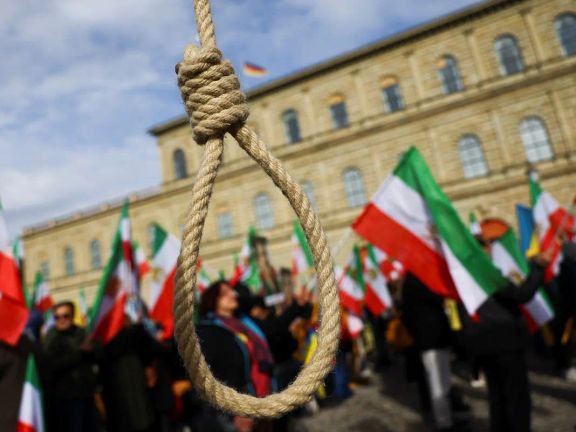
Iran sentenced 14 political prisoners to death in November and executed at least 135 convicts, the second-highest monthly total in 2024, rights groups say, condemning capital punishment as means to quell dissent.

The executions included 127 men, 4 women, and a juvenile, with 11 Afghan nationals among those put to death, US-based rights group Human Rights Activists News Agency (HRANA) reported on Monday. Additionally, 37 individuals were sentenced to death, including 68 for drug-related offenses.

Fourteen fresh death sentences in political cases last month also indicated the ruling theocracy was determined to make a strong example of participants in the Woman, Life, Freedom protests which began in 2022.

166 people were executed in October in the deadliest month of 2024 so far, rights groups say.

Of those executed in November, one man was executed after surviving a previous execution in April.

On November 13, Iran put Ahmad Alizadeh to death in a prison outside Tehran for the second time on a murder charge. According to Oslo-based Iran Human Rights, Alizadeh, who was charged with murder, had previously been hanged for 28 seconds but was resuscitated at the plaintiffs' request.

Earlier in the month, Iran executed the first member of its Jewish minority in 30 years, Arvin Ghahremani, for the alleged murder of another man following a monetary dispute.

Woman Life Freedom activists sentenced to death

Six political prisoners were sentenced to death by Tehran’s Revolutionary Court in a joint case on charges of "armed rebellion" for allegedly belonging to "anti-regime groups," HRANA reported Monday.

The defendants — Akbar Daneshvar Kar, Mohammad Taghavi Sang-Dehi, Babak Alipour, Pouya Ghobadi Bistoni, Vahid Bani-Amerian, and Abolhassan Montazer — were sentenced to death.

In the same case, two other prisoners — Ali and Mojtaba Taghavi Sang-Dehi — were sentenced to prison, bringing the total prison term for all eight defendants to 54 years, along with 20 years of exile.

In northeastern Iran, prisoner Mohammad Mehdi-S was sentenced to death for allegedly fatally stabbing Basij member Rasoul Doost-Mohammadi during the 2022 protests in the city of Mashhad, HRANA said.

Mehdi-S, whose full name has not been disclosed, denied the charges. The court also sentenced him to 74 lashes, payment of blood money and two-and-a-half years in prison for possessing explosives.

Iran’s 2022 protests, sparked by the death of Mahsa Amini in police custody in September 2022, led to the detention of thousands.

In a high profile case in mid-November this year, Tehran’s Criminal Court sentenced six individuals connected to the 2022 protests in the Ekbatan neighborhood to death.

The defendants — Milad Armoon, Alireza Kafaei, Amir Mohammad Khosheghbal, Navid Najaran, Hossein Nemati, and Alireza Barmarzpournak — were accused of allegedly participating in the killing of Basij member Arman Ali Verdi during the Women Life Freedom uprising.

Similarly, political prisoner Mehrab Abdollahzadeh has been sentenced to death by the Revolutionary Court in Urmia, Hengaw reported on Friday.

The rights group said the sentence stems from allegations linking Abdollahzadeh to the killing of another Basij member during the 2022 Woman, Life, Freedom protests and added that he was tortured during his detention.

Women's rights activist Varisheh Moradi was also sentenced to death by Tehran's Revolutionary Court on charges of "armed rebellion." The court cited her alleged affiliation with the Free Life Party of Kurdistan (PJAK) as the basis for the sentence.

Rights groups have condemned the judicial process in these cases, citing a lack of due process, confessions coerced through torture and the targeting of political prisoners and protesters.

November's high number of executions and death penalties underscores the ongoing repercussions of the 2022 Woman, Life, Freedom protests and authorities' efforts to silence dissent through capital punishment.

This surge in executions is part of a broader trend. Last year, Iran executed at least 853 individuals, marking the highest number in eight years according to Amnesty International.

Most Viewed

Ghalibaf defends Iran-US talks amid hardline backlash
1
INSIGHT

Ghalibaf defends Iran-US talks amid hardline backlash

2
ANALYSIS

From instability to influence: Pakistan’s pivotal role in US-Iran diplomacy

3
ANALYSIS

100 days on: why Iran’s January protests spread across social classes

4

War-hit homeowners feel abandoned as Iran’s reconstruction aid fades

5

Iran says no decision yet on talks as Pakistan prepares to host US team

Banner
Banner

Spotlight

  • The politics of pink: how Iran uses cuteness to rebrand violence
    ANALYSIS

    The politics of pink: how Iran uses cuteness to rebrand violence

  • Bread shortages, soaring prices strain households in Iran, residents say
    VOICES FROM IRAN

    Bread shortages, soaring prices strain households in Iran, residents say

  • War-hit homeowners feel abandoned as Iran’s reconstruction aid fades

    War-hit homeowners feel abandoned as Iran’s reconstruction aid fades

  • 100 days on: the anatomy of Iran’s January crackdown
    INSIGHT

    100 days on: the anatomy of Iran’s January crackdown

  • Ghalibaf defends Iran-US talks amid hardline backlash
    INSIGHT

    Ghalibaf defends Iran-US talks amid hardline backlash

  • From instability to influence: Pakistan’s pivotal role in US-Iran diplomacy
    ANALYSIS

    From instability to influence: Pakistan’s pivotal role in US-Iran diplomacy

•
•
•

More Stories

Tehran, Moscow pledge support for Assad as rebels gain in Syria

Dec 2, 2024, 16:05 GMT+0

Iranian president and his Russian counterpart discussed the situation in Syria during a phone call on Monday with both leaders expressing their commitment to supporting the Syrian government amidst escalating rebel offensives.

“The focus was on the escalating situation in the Syrian Arab Republic,” the Kremlin said, adding that “unconditional support was expressed for the actions of the legitimate authorities of Syria to restore constitutional order and to restore the political, economic and social stability of the Syrian State.”

Russia and Tehran reaffirmed their support for Syrian President Bashar al-Assad following significant territorial losses to rebel groups, including Hay’at Tahrir al-Sham (HTS) and the Turkey-backed Syrian National Army.

Kremlin spokesman Dmitry Peskov said Monday, “We continue to support Bashar Al-Assad. Contacts are continuing at the appropriate levels. We are analyzing the situation and a position will be formed on what is needed to stabilize the situation.”

President Masoud Pezeshkian also reaffirmed Iran’s readiness to bolster Syria in what he called combating terrorism.

“The Islamic Republic is ready to provide all kinds of support to Syria to eradicate terrorism and thwart the goals of its sponsors,” he said during a during a phone call with Bashar al-Assad on Monday.

Meanwhile, Iranian Foreign Minister Abbas Araghchi met with Turkish Foreign Minister Hakan Fidan in Ankara to discuss Syria.

Iran's FM Abbas Araghchi (left) held talks with his Turkish counterpart Hakan Fidan in Ankara on December 2, 2024.
100%
Iran's FM Abbas Araghchi (left) held talks with his Turkish counterpart Hakan Fidan in Ankara on December 2, 2024.

Araghchi acknowledged differences with Turkey over its backing of the Syrian National Army but emphasized a commitment to dialogue.

“We have decided to engage in closer discussions to collaboratively manage the regional situation toward peace and stability,” Araghchi said.

Fidan also expressed readiness to mediate between the Syrian government and opposition factions. However, he maintained that the Syrian conflict stems from unresolved issues over the past 13 years.

Rebel advances and humanitarian concerns

The UK-based Syrian Observatory for Human Rights reported 446 deaths over five days of intense clashes in northern Syria, including 244 rebel fighters, 61 civilians, and numerous Syrian army personnel.

Airstrikes conducted by Syrian and Russian forces targeting Aleppo and Idlib were blamed for the majority of civilian casualties, with several children among the dead.

The official Syrian news agency SANA confirmed that Russian and Syrian airstrikes in Aleppo’s eastern countryside had killed dozens of insurgents.

Assad has vowed to crush the rebels, describing the coalition of HTS and other groups as a threat to Syria’s sovereignty.

Regional and international reactions

Israel has been closely monitoring the developments in Syria. IDF spokesperson Rear Adm. Daniel Hagari said Monday that the military has observed Iran sending reinforcements to Syria.

He warned that Israel would act to prevent arms transfers to Hezbollah via Syrian territory.

“We need to make sure that we are not threatened. We are a sovereign country and we will make sure that Iranian weapons are not smuggled to Hezbollah,” he added.

“Hezbollah was defeated in the campaign and it is necessary to make sure that it does not receive weapons from Iran through Syria.”

Israel’s Foreign Minister Gideon Sa’ar earlier said that his country does not want to take sides in the Syrian conflicts.

"There is no good choice between the Syrian regime and the jihadist rebels," he said Sunday.

On the other hand, Iran’s ministry of foreign affairs blamed the US and Israel for exacerbating the situation in Syria.

US, UAE weigh lifting Assad sanctions to curb Tehran ties

Dec 2, 2024, 14:18 GMT+0

Discussions to lift sanctions on Syria’s long-time president to lure him away from Tehran are underway between the US and UAE, according to Reuters.

Leaders from the two nations have been in discussions for several months, according to the report, long before last week’s offensive which saw rebel Islamist groups take control of Syria’s second city, Aleppo.

The talks aim to cut Syrian President Bashar al-Assad’s ties to Tehran, and help stem the flow of weapons to Iran’s ally Hezbollah in Lebanon through Syria.

This development comes ahead of the potential expiration of US sanctions on Syria, known as the 'Caesar' sanctions, on December 20, and amid Israel's ongoing conflict with Iran’s allies—Hamas in Gaza and, until last week’s ceasefire, Hezbollah in Lebanon.

The UAE, which branded the Muslim Brotherhood a terrorist organization after the Arab Spring in a bid to crack down on Islamic extremism sweeping the region, has been playing the diplomatic card with Syria for the last two years in a bid to bring the long-serving leader to the table.

In 2022, Assad visited UAE for the first time in 11 years, and before the Arab League reinstated his membership, as back door diplomacy began to take a more public role.

However, the talks could still stall if Syria decides to exploit potential Iranian support for a counter-offensive in the face of possibly the biggest threat to Assad during his rule.

Groups of Iran-backed militia have entered Syria from Iraq as Iran fears losing its grip on the country which is a critical smuggling route for weapons to Hezbollah in addition to acting as an outpost for the Islamic Revolutionary Guards Corps.

There has been no official comment on the developments, but the UAE’s official news agency said President Mohammed bin Zayed spoke to Assad on Sunday, expressing support for Syria, urging a peaceful resolution.

In 2011, the US placed heavy sanctions on Syria after Assad crushed protests against him during the Arab Spring. Those got tougher as time went on, including in the wake of the 2013 chemical weapons attack in which the Assad government launched rockets carrying the deadly nerve agent sarin into the Ghouta district of Damascus, killing more than 1,400 people.

The US placed Syria on its inaugural list of state sponsors of terrorism 45 years ago in the wake of the 1973 War when Washington was unable to woo President Hafez al-Assad away from Palestinian extremist groups and toward Arab-Israeli peace.

The Trump administration sanctioned 113 members of government in the six months after the Caesar sanctions were implemented in June 2020, all of which were subject to mandatory secondary or derivative sanctions against regime facilitators. The Biden administration has only designated a handful but with Trump’s return, a revisit of the sanctions could be likely.

In September, David Adesnik from the NGO Foundation of the Defense of Democracies, the FDD, said “the Biden White House opted for a policy of quietly encouraging Arab allies to normalize relations with Assad, which culminated in Syria’s readmission to the Arab League in 2023. Biden’s policy included token enforcement of the Caesar Act, which led to bipartisan criticism from Congress.”

The chairman of the Senate Foreign Relations Committee, Sen. Ben Cardin (D-MD), proposed a late amendment to the National Defense Authorization Act on September 11 that included a four-year extension of Caesar Act sanctions on Assad's government while expanding the criteria for designation under the act.

In an analysis, Adesnik said: “Though Cardin’s amendment signals bipartisan support on Capitol Hill for expanding sanctions against the Assad regime, it also includes problematic wording that could create unintentional but broad loopholes in the full range of US sanctions on Syria. Congress approved the Caesar Syria Civilian Protection Act of 2019 by overwhelming margins.”

New hijab law criticized by Iranians as economic exploitation

Dec 2, 2024, 12:22 GMT+0
•
Azadeh Akbari

Iranian citizens warn the country’s new hijab law will tighten restrictions on personal freedoms while also serving as a tool for state-driven financial exploitation.

In response to Iran International’s inquiry about how the new "Hijab and Chastity" bill will affect daily life in Iran, hundreds of voice messages from within the country reveal widespread frustration. Many of the respondents connected the legislation to broader grievances about the government’s misplaced priorities.

The 'Hijab and Chastity' bill has been approved by both Parliament and the Guardian Council and is now awaiting formal enactment by key officials, including the President. Meanwhile, enforcement of existing hijab regulations has intensified, with high-profile cases highlighting the state’s continued focus on regulating women’s public behavior.

To protect respondents from potential retaliation by Iranian authorities, their names have been withheld.

Many respondents accused the Islamic Republic of using the new law to deflect attention from its domestic failures. They also condemned the state’s financial and military support for allies like Syrian President Bashar al-Assad and groups labeled as terrorist organizations, including Hezbollah and Hamas, saying that prioritizing these entities has long neglected the urgent and enduring needs of Iranian citizens.

The new hijab law imposes fines for repeated violations. Women receiving two text message warnings may face fines up to $213 (150 million rials). Fines escalate to $2,347 (1.65 billion rials) for severe breaches. Those who fail to pay may be barred from accessing administrative, financial, and social services.

One individual alleged the government exploits women through these hijab fines to fund its proxy forces, telling Iran International: "You fired the missiles, Hezbollah used up the ammunition, Hamas’s entire weapons system was destroyed, and its warehouses were wiped out. Now, you’ve put all of it on the tab of Iran’s women and girls. This is not a hijab law—this is outright theft from the people, plain and simple, in broad daylight, and through women."

State officials have long maintained that the current hijab law, as well as the new one, is essential for upholding Islamic values and preserving societal morality. Mandatory hijab regulations were first enforced following the 1979 Islamic Revolution, with formal implementation beginning in 1983.

Another individual connected the law to frustrations over Iran’s domestic and foreign policies, describing it as a distraction from the government’s failures. They asserted, "The Islamic Republic has lost Syria and Lebanon, has nothing else left, and has been humiliated in the global community. Now, it wants to take out its frustration on the people of Iran. The disgraceful hijab bill was passed by representatives who are not representatives of the people. Half of the society did not vote for them, and they represent the corrupt system of the Islamic Republic. This bill has been written based on the governments and laws of extremist regimes like the Taliban and ISIS. They claim to be separate from them, but they are the same—part of those cursed and condemned extremists."

In several voice messages, Iranians described the financial penalties as a cynical attempt to extract revenue from citizens. They argued that the fines are simply a means for a financially struggling government to generate income.

"The real issue here is money. They are only interested in extorting people by any means possible. Just look at these past few years—they have tried to extract money from people in every way imaginable…Now, they have realized that the women and girls of Iran are standing firm and will not surrender, they thought to pass some ridiculous laws to at least make some profit out of this," one individuals said.

With average monthly salaries in Iran ranging between $170 and $200, respondents also criticized the fines as unrealistic and infeasible.

"Look at the situation of the Iranian people today—thanks to the system they have created, how many of them even have that amount in their accounts? How do they expect people to pay such fines? Even those who might have this money will not give it to them," one respondent said.

Another Iranian pointed out the challenges of imposing fines in a context where economic hardships prevent many from affording basic necessities, arguing: "These actions regarding hijab are not laws. This is coercion. They realized they could not enforce it with the morality police, violence, and all the other measures. Now they have resorted to imposing fines. They have involved themselves in such matters while ignoring more critical issues. By God, they should care about the people's food and medicine.Yesterday, I went to the pharmacy, and I swear there was hardly any medicine available... People are crushed under the weight of this unbearable cost of living."

For many respondents, the new hijab law seemed to reflect the state’s continued emphasis on social control over addressing urgent issues such as inflation, medicine shortages, and declining living standards.

According to the law, vehicles involved in hijab violations can be impounded for up to a week. For individuals who rely on their vehicles for their livelihood, this has devastating consequences.

"The hijab and chastity law is just one of the things that has severely affected me. For a week now, they have impounded my car in the parking lot. They have taken away my livelihood. I am a driver who can no longer afford my expenses," one citizen said.

The law encourages and allows citizens to report hijab violations through a police-managed platform, raising concerns for some Iranians about its broader societal impact.

Some Iranians also argued that the law’s divisive and oppressive nature is yet another tool by the state to suppress dissent.

“The people will not tolerate oppression, nor will they betray one another. Why would they? These authorities think freedom is just about hijab, but they fail to understand that the freedom we demand is also about ending inflation and making life affordable,” said one respondent.

Despite the law's provisions, many citizens told Iran International that they will resist its enforcement.

One individual emphasized the need for collective action: "We, the people, must oppose this disgraceful bill in any way we can—through hashtags, phone calls, strikes, protests—whatever means we have."

Others warned that the government’s focus on such laws could backfire: "Even the Islamic Republic knows that with this bill, and just one week of its implementation, it has dug its own grave. Enough is enough."

Many Iranians argued the government is increasingly disconnected from its people's priorities, while it is increasingly reliant on coercion to maintain control. Some also suggested that the enforcement of the law could potentially become a catalyst for further dissent.

The law is scheduled to be referred to President Masoud Pezeshkian on December 13, who will have five days to sign and implement it.
Iran says insecurity in Syria will spread beyond borders

Dec 2, 2024, 11:04 GMT+0

Iran has cautioned that insecurity in Syria could have far-reaching consequences, intensifying instability across the region if not quashed.

In a press briefing in Tehran on Monday, Foreign Ministry Spokesperson Esmail Baghaei said external influences in Syria exacerbate the situation, not acknowledging the influence Iran has wielded since the civil war of 2011.

“Any insecurity in Syria will not remain confined to that country,” Baghaei said, indirectly highlighting Turkey’s involvement without naming it explicitly. Meanwhile, Russia has also had a profound influence in the country since the civil war, as the countries all vie for power.

Baghaei described the continued presence of external actors, including the United States, as a major destabilizing factor.

“The US presence in Syria is an act of aggression that has only fueled the resurgence of terrorist activity,” he said.

The comments follow Syria's most significant rebel offensive in years. Hay'at Tahrir al-Sham (HTS), an Islamist militant group, led an operation that seized large portions of Aleppo, Syria's second-largest city. The offensive also extended into neighboring Hama province, marking the Assad government's most significant territorial loss in years. The government is backed by Iran and Russia.

In response, Syrian forces, supported by Russian airstrikes, launched a counteroffensive to reclaim the lost territories. The Russian defense ministry confirmed that its air force had been targeting rebel positions, describing the situation as the most substantial challenge to Syrian government forces in recent years.

Kremlin spokesperson Dmitry Peskov reaffirmed Russia's support for Bashar al-Assad during his routine Monday morning press conference.

At least 25 people were killed in northwestern Syria in airstrikes conducted by the Syrian government and Russia, according to the White Helmets, a rescue service operating in opposition-held areas, early Monday.

Military sources reported that Russian and Syrian jets targeted the rebel-held city of Idlib on Sunday.

Smoke billows in the aftermath of what the White Helmets say is a strike, in Idlib, Syria, released December 1, 2024, in this still image taken from a handout video.
100%
Smoke billows in the aftermath of what the White Helmets say is a strike, in Idlib, Syria, released December 1, 2024, in this still image taken from a handout video.

Baghaei also called Iran's archenemy Israel a benefactor of the chaos, saying that “the main beneficiary of insecurity in Syria and the region is Israel.” It comes as Israel remains at war with Iran's allies including Hamas in Gaza and until last week's ceasefire, Hezbollah in Lebanon.

The spokesperson reaffirmed Iran’s “advisory presence” in Syria, insisting it is at the invitation of the Assad government, in spite of the presence of the Islamic Revolutionary Guards Corps in Syria.

“This is not new; we’ve been there since the Syrian people faced terrorism,” he said, dismissing speculation that Iran might scale back its role.

The IRGC's involvement extends beyond advisory functions, encompassing direct military engagement and the mobilization of allied militias.

The IRGC, deemed a terrorist organization by countries including the US and Canada, has been instrumental in organizing and commanding various militia units within Syria, contributing significantly to the Assad regime's efforts to regain and maintain control over contested regions.

Iran's Foreign Minister Abbas Araghchi (right) upon arrival in Turkey on December 2, 2024.
100%
Iran's Foreign Minister Abbas Araghchi (right) upon arrival in Turkey on December 2, 2024.

Baghaei, speaking about Foreign Minister Abbas Araghchi's consultations in Syria and Turkey, said: "In Syria, the goal was to convey Iran's message of support for Syria and the resistance to Syrian officials and to conduct a precise assessment of the latest situation in Syria.”

Araghchi arrived in Turkey early Monday morning as the second destination of his regional tour. Upon his arrival, he commented on his upcoming meeting with Turkish officials, saying: "I will have an extensive meeting with the Turkish foreign minister. There are mutual concerns that need to be discussed."

"Our consultations with Turkey have always addressed various issues. While there are often points of agreement, there are also occasional differences, which is natural and requires dialogue. I hope to reach a unified understanding and agreement on regional issues that will lead to regional stability, preventing Syria or the region from becoming a hub for terrorists again."

Regarding his meeting with Bashar al-Assad, the President of Syria, Araghchi said that he conveyed Iran’s comprehensive support for Assad, the Syrian government, and the army.

Amid civil war in Syria, Iran's allies come to Assad's aid

Dec 2, 2024, 10:47 GMT+0

As Syria’s political stability crumbles amid civil war in one of the biggest threats to President Bashar al-Assad since he took power in 2000, Iran-backed militias entered Syria overnight from Iraq.

Ready to support Assad's forces battling Islamist insurgents, they were heading to northern Syria according to Reuters, who spoke to two Syrian army sources.

Chris Doyle, director of the Council for Arab British Understanding in London, told Iran International: “The whole situation is extremely fluid but Iran will be sure to shore up its position as it’s very conscious of losing ground across the region after Hezbollah has been politically and military degraded.”

In recent months, Israel has taken out swathes of the group's leadership in targeted strikes as well as at least 1,500 operatives in two days of synchronized explosions of the group's pagers and walkie-talkies.

Reuters reported that dozens of Iran-aligned Iraqi Hashd al Shaabi fighters from Iraq also crossed into Syria through a military route near Al Bukamal crossing.

"These are fresh reinforcements being sent to aid our comrades on the front lines in the north," a senior Syrian army source told Reuters, adding the militias included Iraq's Kataib Hezbollah and Afghan Fatemiyoun groups sent by Iran.

Doyle noted that this aligns with Iran's typical approach, leveraging its regional allies to bolster its influence and support.

“They prefer to do that than use uniformed Iranian military,” he added. “It will be a contest now between regional actors such as Iran and Turkey, Russia and the US and Israel. What will get lost in this is the agenda of the Syrian people.”

During the Syrian war, along with Russia, Iran sent thousands of Shi'ite militias to support Assad. However, the attack by multiple Islamist groups in recent days has shown the void left, resulting in the Syrian army retreating from Aleppo, where Iranian-backed militias led by Hezbollah, had a strong presence.

“The Syrian regime has been in close contact with the Iranians and it will want to recapture Aleppo. It’s negotiating by fighting, trying to change the front lines which were frozen for five or so years, to suit your allies and regional interests.

"Turkey has an interest in trying to push back against the Syrian regime and the Kurdish groups, and Iran will want to shore up Syria because it won’t want to lose out to external powers. Iran’s interest is maintaining the corridor from Iran to Lebanon and not having that interrupted by losing control and influence in Syria," Doyle said.

Amid the war in Gaza and ground offensive against Hezbollah in southern Lebanon, recent months have seen Israel step up its strikes on Iranian bases in Syria.

On Sunday, Israel forced an Iranian Mahan Air plane suspected of containing weapons for Hezbollah and destined to land in Syria to U-turn after an Air Force operation saw fighter planes circle the plane, according to Israel’s YNet.

It comes amid the US-France-brokered 60-day ceasefire between Israel and Lebanon’s Hezbollah, Iran’s largest regional ally. Israel has vowed that any efforts to rebuild and re-arm would be met with force.

The Iranian plane forced to turn around was in Syrian territory, believed to be delivering weapons for Hezbollah, which uses Syria as one of its major smuggling routes.

In the ceasefire agreement, it was stated that "the US is committed to cooperating with Israel to curb Iran's destabilizing activities in Lebanon, including preventing the transfer of weapons, affiliates and others from Iranian territory”.

In spite of the ceasefire, both sides continue to claim violations, with the Israeli military having carried out multiple air strikes on terror targets since last week.






