• العربية
  • فارسی
Brand
  • Iran Insight
  • Politics
  • Economy
  • Analysis
  • Special Report
  • Opinion
  • Podcast
  • Iran Insight
  • Politics
  • Economy
  • Analysis
  • Special Report
  • Opinion
  • Podcast
  • Theme
  • Language
    • العربية
    • فارسی
  • Iran Insight
  • Politics
  • Economy
  • Analysis
  • Special Report
  • Opinion
  • Podcast
All rights reserved for Volant Media UK Limited
volant media logo

Israelis warned to avoid UAE after killing of Moldovan-Israeli rabbi

Nov 24, 2024, 08:56 GMT+0Updated: 15:18 GMT+0
Zvi Kogan, a Chabad supervisor of kosher kitchens in the UAE, June 29, 2021 (Times of Israel))

A young rabbi residing in the United Arab Emirates was confirmed dead on Sunday in what appears to be a targeted killing. If confirmed as a political assassination, it could signal a broader threat of attacks against Israelis abroad.

A statement by the Israeli foreign ministry and Prime Minster’s office, said: “The UAE intelligence and security authorities have located the body of Zvi Kogan, who has been missing since Thursday, November 21.

"The Israeli mission in Abu Dhabi has been in contact with the family from the start of the event and is continuing to assist it at this difficult time; his family in Israel has also been updated.“

The statement called the incident "an abhorrent act of antisemitic terrorism".

"The State of Israel will use all means and will deal with the criminals responsible for his death to the fullest extent of the law," the statement added.

Kogan, a young rabbi who once served in Israel's Givati Brigade, an elite unit of the army, worked in Dubai at the kosher supermarket which has since been closed temporarily. It was one part of the growing Jewish life which has been a byproduct of the 2020 US-brokered Abraham Accords facilitating diplomatic ties between Israel and countries including the UAE.

The community, which is now hundreds strong including Israelis and Jews from around the diaspora, is in shock after the event which comes amid already heightened security in the wake of the Gaza war.

Israel had listed the UAE as a level three, or medium threat, reiterating the warnings in the wake of the killing, advising it is a destination for essential travel only.

“This also serves as a reminder that for a while, per the recommendations of the National Security Council (NSC), there has been a level 3 – moderate travel warning issued for the UAE, with a recommendation to avoid any non-essential travel to the country, and for those who are in the country – take extra precautions,” a statement said Sunday from Israel’s Prime Minister’s office.

While there has so far been no official mention of Iran, Israeli media reported it is a suspected Iran-backed attack, similar to those of 2020 and 2014.

German-Iranian Jamshid Sharmahd was abducted by Iranian agents from his hotel in Dubai while on a layover in 2020. He was later transferred to Iran and sentenced to death. On November 5, a spokesman for the Iranian judiciary said Sharmahd died in custody on October 28 before he could be executed.

Israel’s Channel 12 reported that Israeli and Emirati security agencies suspect the young rabbi was murdered by three Uzbek citizens. who kidnapped and murdered him, and then fled the country.

In announcements regarding the search for the missing resident, the UAE did not announce that Kogan was Israeli, only mentioning his Moldovan nationality.

Planned attacks on Israelis and Jews around the world have been stepping up over the last year amid the war, with multiple plots inside and outside Israel foiled, including against high level targets such as the Prime Minister, Benjamin Netanyahu.

Since 2020, Reuters reported that there have been at least 33 assassination or abduction attempts in the West in which local or Israeli authorities allege an Iran link, according to court documents and public statements by government officials.

Among recent alleged targets was a Chabad center in Athens, the same organization Kogen was affiliated with as a rabbi, which has hundreds of centers around the world.

Israeli President Isaac Herzog said on Sunday: "I mourn with sorrow and outrage the murder of Rabbi Zvi Kogan. This vile antisemitic attack is a reminder of the inhumanity of the enemies of the Jewish people.”

It comes amid the ongoing war in Gaza in which Iran’s allies around the region have joined Iran-backed Hamas and fired on Israel from Yemen, Lebanon, Syria and Iraq. Iran has also launched two attacks on Israel. The latest retaliation by Israel took out swathes of Iran’s air defenses.

Most Viewed

100 days after carnage: Iran economy reels from war, inflation, unemployment
1
INSIGHT

100 days after carnage: Iran economy reels from war, inflation, unemployment

2
INSIGHT

Ghalibaf defends Iran-US talks amid hardline backlash

3
INSIGHT

A nation in limbo: 100 days after the massacre, has the world moved on?

4
ANALYSIS

From instability to influence: Pakistan’s pivotal role in US-Iran diplomacy

5
ANALYSIS

100 days on: why Iran’s January protests spread across social classes

Banner
Banner

Spotlight

  • War-hit homeowners feel abandoned as Iran’s reconstruction aid fades

    War-hit homeowners feel abandoned as Iran’s reconstruction aid fades

  • 100 days on: the anatomy of Iran’s January crackdown
    INSIGHT

    100 days on: the anatomy of Iran’s January crackdown

  • Ghalibaf defends Iran-US talks amid hardline backlash
    INSIGHT

    Ghalibaf defends Iran-US talks amid hardline backlash

  • 100 days on: why Iran’s January protests spread across social classes
    ANALYSIS

    100 days on: why Iran’s January protests spread across social classes

  • From instability to influence: Pakistan’s pivotal role in US-Iran diplomacy
    ANALYSIS

    From instability to influence: Pakistan’s pivotal role in US-Iran diplomacy

  • A nation in limbo: 100 days after the massacre, has the world moved on?
    INSIGHT

    A nation in limbo: 100 days after the massacre, has the world moved on?

•
•
•

More Stories

Enough on our plates: Iranians with no tears for Palestine

Nov 24, 2024, 07:13 GMT+0
•
Tehran Insider

Iranian perspectives on the conflicts in the Middle East are mostly dominated by the prevailing resentment toward their own rulers.

“The enemy of my enemy is my friend” is a prevailing logic vis-a-vis the Israeli-Palestinian conflict, overshadowing political, even humanitarian, sentiments.

Across Tehran, banners urging support for Palestinian and Lebanese war victims have become a common sight. One banner calls on citizens to sponsor displaced Lebanese families. On state TV, women are featured donating their gold and jewelry for Gaza and Lebanon. But this is not the whole story—far from it, in fact.

“These campaigns to support Gaza and Lebanon are sickening. They target people who can’t even afford bread. Money that could help Iranians escape poverty is funneled into Gaza and Lebanon.” This is my friend Safoora, a 38-year-old graphic designer. She jumps in when I ask our rideshare driver what he thinks about the pro-Palestinian billboards. The driver nods in agreement, half-glancing at Safoora in the rear-mirror.

“I agree with every word,” he joins in. “The government pours oil revenues into Gaza and Lebanon while our own people suffer. They wanted a Shiite crescent in the region, but look at what happened to the IRGC commanders and the leaders of Hamas and Hezbollah. They spent our money for nothing.”

No reliable data exists on Iranians’ view of regional politics. But anecdotal evidence suggests the views shared by Safoora and Kamran the driver are typical.

Iran’s strategy of backing armed groups against Israel and the United States has not sat well with much of the Iranian population. The discontent is evident in everyday conversations. And it’s cried out in almost every collective act of protest in recent years: “No to Gaza, no to Lebanon, (I give) my life for Iran”.

The laws of the Islamic Republic criminalize travel to Israel or expressing support for it. Iranian athletes are barred from competing against Israelis in international events.

Until recently, even using the word “Israel” in publications (instead of the “Zionist regime”) could mean serious trouble. Then there's the annual, state-sponsored Quds Day rally in solidarity with the Palestinian cause.

This one-sided approach has alienated many Iranians, who increasingly link the country’s economic woes to its regional policies.

Apathy and resentment are prevalent. Those feeling differently—those sympathetic to Palestinians and critical of Israel— often keep quiet to avoid “pro-regime” and “apologist” labels.

“The regime has monopolized and corrupted the Palestinian issue,” says Roya, a 34-year old activist from Iran’s Kurdish region. “It’s almost impossible to express support for Palestinians when the public is so hostile or indifferent at best."

"People who oppose Israel’s killing of civilians feel trapped. We want to protest these atrocities, but we don’t want to be associated with the regime and its propaganda,” she added.

Last month, more than 400 Iranian academics, writers, and activists inside and outside Iran signed a letter condemning Israel’s actions in Gaza.

The letter sparked backlash on social media. The signatories were called hypocrites for not criticizing the Islamic Republic equally. They responded that Iran’s stance was irrelevant to their concern about what they called genocide.

“Why do they condemn Israel but not Hamas? Why are they not so vocal when the regime executes protesters?” said Alireza, 29, works in a tech-support company. He believes it’s “stupid at best” to be concerned about Palestinians. “We have enough injustice to deal with at home,” he added.

His coworker, Babak, snaps at him. “So I’m stupid if I’m mad about kids being killed by Israel?” He turns to me, “I often think we’re blinded by our hatred for the Islamic Republic. We happily ignore or condone any crime if we think it’s somehow against our government.”

The debate surrounding Israel and Palestine is a microcosm of Iran’s internal struggles. For many Iranians, animus toward the Islamic Republic overshadows everything, including humanitarian sentiments. Life is tough here—too tough, often, for empathy to get the better of cynicism.
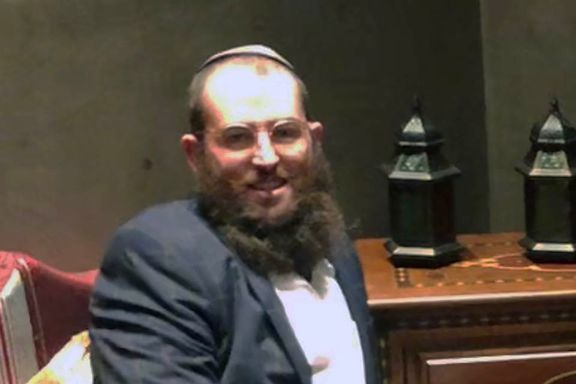
Israeli rabbi kidnapped in UAE, sparking fears of Iran's involvement

Nov 23, 2024, 18:03 GMT+0

An Israeli rabbi has been kidnapped in the United Arab Emirates, according to Israeli officials, giving rise to suspicions that his abduction may be related to Tehran's plan to avenge Israel's October 26 air strikes on Iranian military targets.

The rabbi, identified by the Israeli government as Zvi Kogan, was a Chabad emissary who may have been followed by the Iranian intelligence, according to Israeli media reports.

The Israeli Prime Minister’s Office confirmed that the Mossad intelligence service is investigating Kogan's disappearance on Thursday.

The office said the incident is being treated as terrorism. A dual Israeli-Moldovan national, Kogan has been part of the Abu Dhabi Chabad chapter since Israel normalized its relations with the United Arab Emirates in late 2020.

Walla News, citing Israeli officials, said he has been abducted in Dubai. Ynet also cited security sources as saying that the rabbi was likely abducted from the kosher supermarket he managed in Dubai.

Israel's Channel 11 reported that the rabbi has been kidnapped by a cell directed by Iran, which apparently managed to escape to Turkey. The Ynet report also confirmed that the perpetrators are believed to have fled to Turkey.

Senior Israeli officials told Walla News that the focus of investigations was "a terrorist squad of Uzbek origin that operated in Dubai on behalf of Iran and allegedly carried out the abduction and then fled to Turkey."

The Mossad and the Israeli National Security Council say Israel's intelligence indicated "he may have been under surveillance by terrorist elements," the Walla report added.

While Israel has not yet accused Iran of involvement in the abduction, Western officials believe Tehran runs intelligence operations in the UAE and keeps tabs on the hundreds of thousands of Iranians living across the country, according to the Associated Press.

In one of the most recent cases in 2020, German-Iranian citizen Jamshid Sharmahd was abducted by Iranian agents from his hotel in Dubai while on a layover. He was later transferred to Iran and sentenced to death.

On 5 November 2024, a spokesman for the Iranian judiciary said Sharmahd died in custody on October 28 before he could be executed.

Kogan's abduction comes as Iran has been threatening to retaliate against Israel over the October 26 air strikes, which according to Israeli and US officials, knocked out Iran's last three Russian-provided S-300 air defense missile systems and left the country "naked".

Iran still determined to retaliate after Israeli strikes, top diplomat says

Nov 22, 2024, 08:50 GMT+0

Foreign Minister Abbas Araghchi asserted that the Islamic Republic will respond to an October 26 series of airstrikes by Israel but said the retaliation will be calculated and executed under the right circumstances.

Araghchi was speaking with the Tehran-affiliated Al-Mayadeen television as Iran was censured at the meeting of the International Atomic Energy Agency for its lack of cooperation with the UN nuclear watchdog.

The foreign minister asserted that “Israel is well aware that the Islamic Republic poses the most significant threat to its regime.” Clearly linking Tehran and its proxies, he added, “The Resistance is not merely an organizational structure or an institution comprised of leaders and fighters; it is an ideology and a school of thought with broad social foundations.”

The Islamic government in Iran has yet to conduct a military response to Israel’s October 26 airstrikes on its air defenses and military installations. The attack marked the latest in a series of tit-for-tat exchanges between the two arch-enemies in the Middle East, following over a year of conflict between Israel and Iranian proxies; Hamas, Hezbollah, Yemeni Houthis and a variety of militia groups in Syria and Iraq.

Araghchi further emphasized that the Hamas movement remains steadfast, and that halting the war would represent a major defeat for the Zionist regime, which is why it opposes all ceasefire proposals. He added, "I have no doubt that the end of this battle will be a victory for the Resistance."

On Friday, chief commander of the Revolutionary Guard, Hossein Salami warned that the continuation of regional conflict can only result in Israel’s destruction.

Speaking at the venue of large drills by the IRGC’s Basij forces in southwestern Iran, Salami said, “Israeli officials are unsettled and demoralized, their army is exhausted, while, in contrast, Hezbollah and the resistance front have been energized.”

Salami is notorious for frequently issuing threats and declaring victories, a tactic some observers believe is intended to bolster morale among the government’s military and security ranks. Since September, Iran and its allies have suffered significant setbacks from Israel, which has launched an offensive against Hezbollah in Lebanon and carried out a series of targeted assassinations of key leaders.

Salami reassured supporters in his speech that Israel’s destruction is a certainty and stressed that Iran’s allies remain strong, facing a weakened Israel.

At the same time, Israel’s Prime Minister Benjamin Netanyahu sharply criticized the International Criminal Court for issuing his arrest warrant, calling it an antisemitic act.

“No outrageous anti-Israel decision will prevent us — and it will not prevent me — from continuing to defend our country in every way,” Netanyahu said, referring to the Islamic Republic in a video statement. “We will not yield to pressure,” he declared.

Deadliest ever Israeli attacks in Syria kill scores of Iran-linked fighters - monitor

Nov 21, 2024, 13:20 GMT+0

Israel launched its deadliest attack yet in Syria on Wednesday, the UK-based Syrian Observatory for Human Rights said, killing 79 people in airstrikes targeting militiamen linked to Iran in Palmyra in central Syria.

53 of those killed were Syrian members of armed groups allied with Iran, while 22 others were non-Syrians, primarily members of Iraq’s al-Nujaba militia, the rights group said on Thursday. Four Hezbollah operatives were also among the dead and 34 people were injured, including seven civilians.

The attacks, which the Syrian Observatory attributed to Israel, targeted three sites in Palmyra, including an arms depot in the Al-Jam’iya neighborhood, another location near an industrial area, and a meeting place for leaders of pro-Iranian militias, including al-Nujaba members and a Hezbollah commander.

Some of the locations were near Palmyra’s famed Roman-era archaeological sites, according to initial reports.

The Syrian Ministry of Defense said 10 Syrian soldiers were killed in the strike, which caused significant damage to infrastructure and buildings in the surrounding area.

Syria’s state-run SANA news agency, which also attributed the strike to Israel, said residential buildings, an industrial area, and a militia headquarters were among the targets.

The Israeli military has not commented on the airstrike, consistent with its usual policy on such operations. However, the attacks have been ongoing for several years as the Jewish state continues to target Iranian-backed groups in Syria and Iranian military infrastructure.

The attack follows strikes by the US Central Command (CENTCOM) earlier this month on nine targets linked to Iran in Syria. The strikes were intended to limit the operational capacity of Iran-affiliated groups accused of targeting US and coalition forces.

“Our message is clear. Attacks against US and coalition partners in the region will not be tolerated,” CENTCOM commander Army Gen. Michael Erik Kurilla said in a statement on the strikes on November 12. “We will continue to take every step necessary to protect our personnel and coalition partners and respond to reckless attacks.”

The Syrian Observatory for Human Rights, a UK-based monitoring group known for its opposition to the Assad regime. highlight the roles of foreign-backed groups operating in Syria’s ongoing conflict, including those supported by Iran.

Iran conducts 1,500 surgeries for Hezbollah operatives

Nov 21, 2024, 11:14 GMT+0

Iran’s health minister said nearly 500 injured Hezbollah operatives were treated in Iran, with around 1,500 surgeries conducted to address eye and hand injuries in the wake of pager and walkie-talkie explosions carried out by Israel.

Speaking to student Basij leaders from medical universities, Mohammadreza Zafarghandi detailed Iran’s medical response to the recent Israeli operation in Lebanon targeting communication devices used by Hezbollah, the most devastating attack to the group since it was founded in 1982.

“The pager system was designed in such a way that, upon explosion, one or both hands of the victims would be severed, and in many cases, both eyes would be blinded,” Zafarghandi said.

He explained Iran’s efforts to provide comprehensive treatment to those affected by the blasts, which killed at least 49 people and injured around 3,000 more.

It was only this month that Israel confirmed it was responsible for the two-day operation in September.

In Iran, critics accused the government of prioritizing treatment for Hezbollah operatives over Iranian citizens blinded during the crackdown on protests in 2022.

“The Islamic Republic blinded Iranian protesters and didn’t allow them treatment, but treats Hezbollah's wounded in Iran,” one citizen said in a video sent to Iran International.

In the aftermath of the explosions, Pirhossein Kolivand, the head of Iran’s Red Crescent Society, announced that 95 members of Hezbollah, Iran's largest military ally in the region, had been transferred to Iran for advanced medical treatment.

Kolivand further confirmed that two teams of Iranian doctors, including eye specialists, were sent to Lebanon. In a separate interview, he mentioned that 12 doctors, along with nurses and paramedics from the Red Crescent, were also dispatched to provide assistance on the ground in Lebanon.

It comes while Iran is grappling with a severe health crisis, marked by a critical shortage of medicine and an exodus of healthcare professionals seeking better working conditions and higher salaries abroad.






