• العربية
  • فارسی
Brand
  • Iran Insight
  • Politics
  • Economy
  • Analysis
  • Special Report
  • Opinion
  • Podcast
  • Iran Insight
  • Politics
  • Economy
  • Analysis
  • Special Report
  • Opinion
  • Podcast
  • Theme
  • Language
    • العربية
    • فارسی
  • Iran Insight
  • Politics
  • Economy
  • Analysis
  • Special Report
  • Opinion
  • Podcast
All rights reserved for Volant Media UK Limited
volant media logo

Iran denies missile transfers to Russia as domestic criticism points to Moscow

Oct 15, 2024, 10:54 GMT+1Updated: 15:38 GMT+0
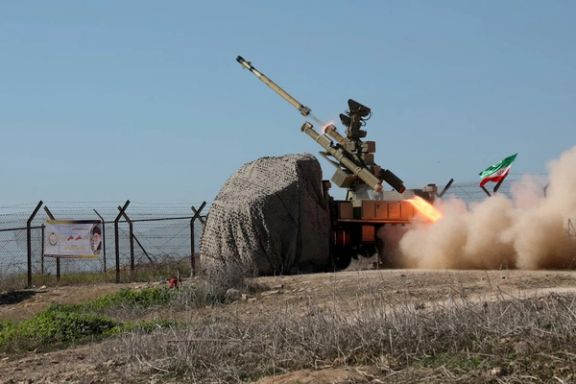
A missile is launched during a military exercise in an undisclosed location in the south of Iran

On the back of new sanctions, Iran has denied supplying ballistic missiles to Russia as domestic media blames Moscow for exacerbating Tehran's challenges while offering no support in return.

"Iran is bearing the cost due to Russia's actions, while Moscow, prioritizing its national interests and its dependency on the UAE, aligns with them on the issue of Iran's three islands," Rouydad24 wrote on Tuesday.

On Monday, the European Union imposed a fresh round of sanctions on Iran, specifically targeting Iran Air and several other entities, citing Tehran's involvement in supplying missiles and drones to Russia. The measures target individuals and organizations facilitating the transfer of military technology.

Rouydad24 also noted that if Iran is truly not complicit, Russia could assist in proving this to the international community, yet it remains silent. "Iran has borne a significant burden as a result of the Russia-Ukraine war despite deriving no benefit from the conflict. The recent reimposition of sanctions on Iran Air, which were painstakingly lifted during the JCPOA, directly impacts the Iranian people," it added.

On Sunday, Iranian Foreign Minister Abbas Araghchi posted on X that during a meeting in New York with Josep Borrell and Enrique Mora, he had reiterated Iran's denial of providing ballistic missiles to Russia.

"I clearly said, and reiterate once again: we've not provided ballistic missiles to Russia. If Europe needs a case to appease Israel's blackmail, better find another story," he wrote.

His remarks followed a report from The Wall Street Journal, in which EU reporter Laurence Norman claimed that during a meeting in New York with EU foreign policy chief Josep Borrell, Araghchi acknowledged that Iran had sent short-range missiles with a range of 250 kilometers to Russia.

Norman wrote, “Senior EU official says Araghchi acknowledged in NY that Iran had sent missiles to Russia of less than 250km range. He claimed they were not 'ballistic' missiles.”

The European Union's latest decision follows earlier warnings from March 2024, when the European Council stated that any transfer of ballistic missiles by Iran to Russia would lead to further sanctions.

In September, following the United States' announcement of sanctions against Iran Air for allegedly delivering ballistic missiles to Russia, the United Kingdom, Germany, and France quickly followed suit, imposing their own sanctions on the airline.

In response, even conservative media outlets acknowledged the situation, attributing the blame to Russia for the resulting consequences. In a commentary titled "New Sanctions for the Sake of Russia," the conservative Nameh News website remarked, "Iran is paying a high cost for Russia's war against Ukraine. Iran has not been gaining anything from Russia's war against Ukraine."

The article directly blamed the missile sales to Russia as the cause of fresh sanctions, including those reimposed on Iran Air, which had been lifted following the 2015 nuclear agreement. Nameh News also stressed that the sanctions directly affect the Iranian people, underscoring the broader consequences of Iran's involvement in Russia's conflict.

Araghchi criticized the move, stating, "Western countries still do not understand that sanctions are a failed tool and have not proven their effectiveness in practice."

Iran Air had been operating direct flights to several major European cities, including Frankfurt, Hamburg, Paris, and London, before the sanctions.

Iran has faced widespread criticism for its deepening military ties for Russia, particularly for supplying drones and missiles, which has also triggered global sanctions.

Most Viewed

Iran negotiators ordered to return after internal rift over Islamabad talks
1
EXCLUSIVE

Iran negotiators ordered to return after internal rift over Islamabad talks

2
ANALYSIS

US blockade enters murky phase as tankers spoof signals and buyers hesitate

3
ANALYSIS

Why the $100 billion Hormuz toll revenue is a myth

4

US tightens financial squeeze on Iran, warns banks over oil money flows

5
ANALYSIS

US blockade targets Iran oil boom amid regional disruption

Banner
Banner

Spotlight

  • Hardliners push Hormuz ‘red line’ as US blockade tests Iran’s leverage
    INSIGHT

    Hardliners push Hormuz ‘red line’ as US blockade tests Iran’s leverage

  • Ideology may be fading in Iran, but not in Kashmir's ‘Mini Iran'
    INSIGHT

    Ideology may be fading in Iran, but not in Kashmir's ‘Mini Iran'

  • War damage amounts to $3,000 per Iranian, with blockade set to add to losses
    INSIGHT

    War damage amounts to $3,000 per Iranian, with blockade set to add to losses

  • Why the $100 billion Hormuz toll revenue is a myth
    ANALYSIS

    Why the $100 billion Hormuz toll revenue is a myth

  • US blockade targets Iran oil boom amid regional disruption
    ANALYSIS

    US blockade targets Iran oil boom amid regional disruption

  • Iran's digital economy battered by prolonged blackout
    INSIGHT

    Iran's digital economy battered by prolonged blackout

•
•
•

More Stories

Iran's state TV briefly shows Qa'ani after two-week disappearance

Oct 15, 2024, 07:42 GMT+1

In the early hours of Tuesday, October 15, Iran’s state television briefly showed Esmail Qa’ani sitting in silence among mourners who received the body of Abbas Nilforoushan’s, the IRGC’s deputy operations commander.

The broadcast did not disclose Qa’ani’s whereabouts over the past two weeks, but it implied that he had returned to Tehran with Nilforoushan’s body. Nilforoushan, who assumed responsibility for Lebanon after Mohammad Reza Zahedi’s death in an April attack on the Iranian consulate in Damascus, was killed alongside Nasrallah and other senior Hezbollah figures during the October 7 Israeli strike on Hezbollah’s command center in southern Beirut.

During Qa'ani's absence from public view rumors began to circulate that the commander of the Quds Force was also killed in an Israeli air strike while visiting Beirut. Then, reports alleged that he was arrested in Tehran on suspicions of being an Israeli mole. During this time, Iran’s government and the IRGC evaded any explanation about his whereabouts and his fate.

Qa’ani was last seen in public on October 1, two days after Hassan Nasrallah, the Secretary-General of Hezbollah, was killed in an Israeli airstrike on the group’s command center in Dahiya, southern Beirut. At that time, Qa’ani was reported to have visited Hezbollah's representative office in Tehran.

In the aftermath of multiple high-profile assassinations of Hezbollah's top leadership, fingers were pointed at a deep and pervasive Israeli infiltration within the organization or among Iranian officials.

Last week, Middle East Eye reported that Esmail Qa'ani, commander of Iran’s Quds Force, had been detained and was under interrogation as Tehran sought to uncover how Israel managed to penetrate Hezbollah, its key Lebanese ally, and execute the killings of its senior figures.

Sky News Arabia, citing Iranian sources, further alleged that Qa'ani had suffered a heart attack during questioning. According to the report, Iranian investigations were increasingly focused on his chief of staff, Ehsan Shafiqi, and his potential ties to Israel.

Media speculation suggested Qa'ani may have been present at a subsequent meeting with his designated successor, Hashem Safieddine, when another bombardment occurred on October 3. However, an advisor to the commander-in-chief of the Islamic Revolutionary Guard Corps (IRGC) dispelled these claims on Wednesday, asserting that Qa'ani was "in perfect health" and would soon be decorated with a military medal of honor by Supreme Leader Ali Khamenei.

Iran's regional diplomatic efforts fall short in rallying support

Oct 15, 2024, 06:02 GMT+1
•
Behrouz Turani

Iran officially declared on Monday an end to its "indirect" negotiations with the United States, which were seemingly aimed at lifting US sanctions and restraining Israel from pursuing the defeat of Hamas and Hezbollah.

Iranian Foreign Minister Abbas Araghchi told reporters on Monday that "The indirect talks between Iran and the United States with Oman's mediation has been stopped due to the situation in the region." He added that "Currently we do not see any reason for continuing the talks."

The main reason for the talks that apparently stopped long ago while President Ebrahim Raisi was in office in Tehran was reportedly Iran's unwillingness to discuss matters other than the Iranian nuclear program and the sanctions, while the United States insisted that there was no point in following the discussions without including Iran's regional ambitions and its contribution to international terrorism in the agenda.

Throughout last week, Araghchi and Parliament Speaker Bagher Ghalibaf traveled to key capitals in the Middle East and beyond, seeking to prevent Israel from launching a retaliatory strike against Iran following the October 1 missile barrage on Israel.

Israel's anticipated retaliation has sparked a deep sense of insecurity within the Iranian government and among the public. On the streets and across social media, Iranians are expressing fears of sleepless nights, anxiously awaiting Israel's response as both sides continue to exchange threats. The international media's coverage of Israeli attacks on Lebanon and renewed strikes on Gaza has only heightened the anxiety, leaving ordinary Iranians increasingly alarmed.

Araghchi's statement came a day after he issued two threats against the United States during a speech in Iraq. He warned that the US was endangering the lives of its soldiers by deploying the THAAD air defense system to Israel, which will be operated by US troops. He further added that there are no red lines preventing Iranian forces from targeting those who threaten Iran's interests.

He also wrote in a post on X: "The US has been delivering record number of arms to Israel. It is now also putting lives of its troops at risk by deploying them to operate US missile systems in Israel. While we have made tremendous efforts in recent days to contain an all-out war in our region, I say it clearly that we have no red lines in defending our people and interests."

Prominent conservative politician Heshmatollah Falahatpisheh commented on Araghchi's statement on X, writing: "After visiting six regional capitals, Araghchi’s remarks signal the failure of Iran’s delayed diplomacy. Nations are now bracing for a war that will bring nothing but regret for all sides."

During Araghchi's tour of the Middle East, it appeared that Iran was signaling to Israel and the United States that its retaliation could be minimal if Israel's strikes on Iranian targets remain controlled and limited. Meanwhile, Israeli officials ramped up their rhetoric after media reports revealed that Iran's recent attack had caused significant damage. To make matters worse, a Hezbollah drone strike on an Israeli military base killed several servicemen and wounded around 40.

Speaker Ghalibaf's visit to Beirut was aimed at demonstrating that Iranians are unfazed by Israel's military power. Videos circulating on social media showed him in the cockpit of an airliner, which his supporters used as a major publicity stunt to restore his tarnished image, following heavy criticism during Iran's recent elections.

However, aviation experts on social media said the aircraft was on autopilot and there was another pilot in charge while Ghalibaf pretended to be bravely landing in Beirut, looking out of the window “like a truck driver.” The former IRGC general is a trained pilot but not for civilian airliners.

Iran reports over 7,000 tuberculosis cases, partly fueled by dust storms

Oct 14, 2024, 22:10 GMT+1

More than 7,000 tuberculosis cases were reported across Iran last year, according to the Ministry of Health, with the highest concentrations in the provinces of Sistan-Baluchistan in the southeast and Golestan in the northeast.

Speaking to the semi-official ILNA news agency, the head of the Ministry’s Tuberculosis and Leprosy Division, Mahshid Nasehi, noted that other provinces with significant case numbers included Gilan, Khuzestan, Khorasan Razavi, Qom, and Yazd.

Nasehi also stated that there is no province without reported tuberculosis cases and added that, in Tehran province, the incidence rate of tuberculosis relative to the population is higher than the national average.

The official noted that among the 7,261 identified cases, 44% were women, and 25% were non-Iranians. Pulmonary tuberculosis, primarily affecting the lungs, was the most common form, accounting for over 80% of all cases.

At Zabol University of Medical Sciences in Sistan-Baluchistan, the program head reported in August that dust storms in the Sistan region are contributing to an increase in serious diseases, including tuberculosis.

Higher tuberculosis rates, like those in Sistan-Baluchistan and Golestan, are usually driven by a combination of factors. Proximity to high-tuberculosis countries increases exposure through cross-border movement, while limited healthcare access delays diagnosis and treatment. Environmental challenges, such as frequent dust storms, weaken respiratory health, making people more vulnerable. Socioeconomic factors, including poverty and overcrowded living conditions, further facilitate its spread.

Nasehi emphasized Iran’s overall relative success in managing the disease but cautioned that the high rates in neighboring countries pose a risk that could potentially compromise these achievements.

According to World Health Organization estimates, Iran’s annual tuberculosis incidence stands at 11 cases per 100,000 people, equating to roughly 10,000 new cases each year.

In comparison, Pakistan reports 258 cases per 100,000 people (around 600,000 cases annually), while Afghanistan reports 185 cases per 100,000 (approximately 76,000 cases per year).

Tuberculosis, a contagious infectious disease, can affect many parts of the body, including the bones, joints, brain, kidneys, and skin. However, it most commonly targets the lungs due to the bacterium's high need for oxygen. It primarily spreads through the air, making it possible for anyone to contract the disease simply by inhaling airborne particles.

In Western countries, tuberculosis rates are significantly lower than in many parts of Asia and Africa. The highest incidence in the West is generally seen in countries with higher rates of immigration from tuberculosis-endemic regions or where certain vulnerable populations – those with HIV or in close living quarters like homeless shelters and prisons) have higher exposure risks.

Treating drug-resistant tuberculosis, Nasehi said, is far more challenging and costly than treating drug-sensitive tuberculosis.

Drug-sensitive tuberculosis treatment costs around 1 million tomans with a high recovery rate (over 95%) and lasts about six months. In contrast, drug-resistant tuberculosis treatment is significantly more expensive at approximately 500 million tomans, has a lower recovery rate (around 60%), and requires 18 to 24 months of treatment.

She emphasized that incomplete or irregular treatment can lead to drug resistance, a risk that’s heightened by the lengthy treatment period, which makes adherence more difficult. The Ministry of Health says it provides tuberculosis medications free of charge through Iran’s national healthcare system.

In Iran, October 15 is designated as National Tuberculosis Awareness Day.
Iran sees no point in US talks amid escalating tensions with Israel

Oct 14, 2024, 19:06 GMT+1

Amid rising tensions with Israel, Iran has stated it sees no reason to continue indirect talks with the US at this time, citing the escalating Middle East crisis as a major obstacle to renewed negotiations.

Iranian Foreign Minister Abbas Araghchi made the statement during a visit to Oman, which had previously facilitated indirect talks with the US.

"We do not see a basis for these talks until the current crisis is resolved. Afterward, we will decide whether to resume negotiations and in what form they should continue," Araghchi said.

Iran’s latest declaration comes as the state and country brace for an anticipated counter-retaliation from Israel following a missile barrage earlier this month.

Tehran launched over 180 ballistic missiles at Israel, in response to an Israeli air strike in the southern suburbs of Beirut that killed Hezbollah leader Hassan Nasrallah and Brig-Gen Abbas Nilforoushan, the operations commander of the Islamic Revolutionary Guards’ (IRGC) overseas arm, the Quds Force. The Israel Defense Forces (IDF) says the majority of missiles were "intercepted by Israel and a defensive coalition led by the United States".

Despite that escalation, Tehran has since – including the Iranian Foreign Minister's visit to Oman – appeared to signal its effort to avoid an all-out war with Israel.

“We are not seeking war, although we are fully prepared for it. We believe that diplomacy must work to prevent a major crisis in the region,” Araghchi said.

Meanwhile, reports suggest that Israel has narrowed down what it will target in their response to Iran’s attack early this month. Some officials have described the targets as Iranian military and energy infrastructure.

It remains uncertain whether Kharg Island, Iran’s primary oil export terminal in the Persian Gulf, is among Israel's potential targets. However, recent data obtained by Iran International indicates that Iran's oil loadings have plummeted by nearly 70% in early October.

Reports suggest that after Iran’s large-scale missile attack on Israel on October 1st, Tehran immediately withdrew its tankers from the Kharg Island to prevent them from being targeted by Israeli retaliatory strikes. Since then, Iran's oil loadings have significantly dropped.

The Pentagon announced on Sunday that the US is deploying the advanced Terminal High Altitude Area Defense (THAAD) missile defense system to Israel, accompanied by approximately 100 American troops to operate it.

This marks the first deployment of US forces to Israel since the Hamas-led attacks on October 7, 2023. The move comes amid escalating tensions, following Iran's launch of around 200 missiles at Israel on October 1, as the situation in the Middle East continues to deteriorate.

While Israel currently shows no signs of targeting nuclear facilities or conducting assassinations, US officials have emphasized that Israel has not made a final decision on its course of action, and no assurances have been given that it won't strike Iran's nuclear sites.

Iran’s Misery Index highlights economic hardship in key provinces

Oct 14, 2024, 17:43 GMT+1

A report by the Statistical Center of Iran reveals that the provinces of Kermanshah and Isfahan are facing the most economic challenges, topping the nation’s Misery Index. after five years of high inflation.

The index, which combines inflation and unemployment rates, is widely used to assess economic distress.

In Kermanshah, the Misery Index reached around 51%, while in Isfahan, it exceeded 49%, according to the report.

The high Misery Index figures show that Kermanshah and Isfahan had the highest combined rates during the summer, with inflation and unemployment more severe there than in other provinces. Isfahan’s situation is puzzling, given its status as an industrial hub.

While the exact reasons behind its high index ranking remain unclear, experts point to summer power shortages and an escalating water crisis as potential factors. These issues may have contributed to job losses in industrial and agricultural sectors, worsening the overall economic situation.

Reza Gheibi, an economic journalist, told Iran International that the economic hardship in Isfahan, an industrial hub, "rings an alarm for the entire Iranian economy".

He said: "The lack of foreign investment has led to decreased production and higher unemployment in the province."

U.S. sanctions imposed since 2018 have not only slashed Iran's oil export revenues and foreign trade but also undermined confidence needed for foreign investment.

The economic struggles are also evident in the inadequate minimum wage for the current year, which is set at around 109 million rials (over $170). This amount covers only 29.62% of the estimated cost of living for a typical household, calculated recently at about 368 million rials ($584) based on the official data.

The rising costs of essentials such as food, housing, healthcare, and education have made it increasingly difficult for workers to make ends meet.

Labor sociologist Pedram Ebadi describes the situation as a shift from poverty to absolute poverty for many workers. In his interview with Taadol website, he highlighted that most workers now live below the absolute poverty line, facing not only economic hardship but also job and income insecurity.

Ebadi argues that the government has failed to take meaningful action to address the growing poverty and has instead continued policies that do little to alleviate workers' struggles.

“Neglecting workers' livelihoods can lead to many other crises in society, including higher divorce rates, an increase in petty crimes, loss of work motivation—which could inflict irreparable damage on the country's growth and development—and countless other issues that cannot all be listed here,” he added.

Sanctions have played a significant role in elevating Iran's Misery Index. International sanctions, particularly targeting the oil sector, banking, and trade, have restricted Iran's access to global markets. It has resulted in reduced revenues and foreign currency shortages, sparking a weakening of the national currency, skyrocketing prices for essential goods, and increased inflation.