• العربية
  • فارسی
Brand
  • Iran Insight
  • Politics
  • Economy
  • Analysis
  • Special Report
  • Opinion
  • Podcast
  • Iran Insight
  • Politics
  • Economy
  • Analysis
  • Special Report
  • Opinion
  • Podcast
  • Theme
  • Language
    • العربية
    • فارسی
  • Iran Insight
  • Politics
  • Economy
  • Analysis
  • Special Report
  • Opinion
  • Podcast
All rights reserved for Volant Media UK Limited
volant media logo

IAEA MIA on Israeli nuclear strike threats, Iranian outlet argues

Oct 9, 2024, 17:00 GMT+1Updated: 15:41 GMT+0

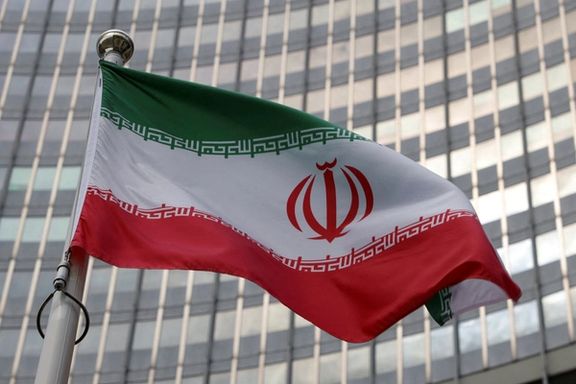
As anticipation mounts over a potential counterstrike by Israel on Iran which could target nuclear sites, an Iranian media outlet has faulted the UN nuclear watchdog's silence on the issue.

The relatively moderate Iranian news site Rouydad24 wrote in an editorial on Wednesday that despite the possibility of attacks on Iran's nuclear infrastructure, the International Atomic Energy Agency’s (IAEA) silence was perplexing.

“Should this silence be interpreted as tacit approval for such an attack, or does it imply the IAEA sees no reason for concern on this issue?” the editorial asked, suggesting that the agency's silence could be interpreted as either passive endorsement or indifference to the potential threat.

The website characterized Western and Israeli discussions about the possibility Israel will destroy Iran's nuclear capabilities as a warning sign that the IAEA should intervene.

Publication of such articles in the tightly controlled Iranian media may indicate that the government's top policy bodies have agreed or prompted a particular point of view to be made public.

The article may be an attempt by Iran to raise the issue of an IAEA intervention to stop a possible Israeli attack on its nuclear sites, especially since the US government has also voiced opposition to such a move.

Historically, the IAEA has remained neutral on political matters while stressing the importance of nuclear facility safety. Its statements generally focus on the consequences of strikes such as a potential radioactive release rather than on endorsing or opposing any party in a conflict.

Following Russia's invasion of Ukraine the IAEA took an unusually vocal stance on nuclear safety, especially around the Zaporizhzhia Nuclear Power Plant. Director-General Rafael Grossi has repeatedly warned of the severe risks from military actions near nuclear reactors and has called for a protective zone around ZNPP to prevent a potential radioactive disaster.

The outlet went on to posit that the IAEA's silence on a possible Israeli strike on Iranian nuclear sites could be seen as an indication that the agency perceives Israel’s threats not as imminent actions but as strategic moves aimed at influencing Iran’s stance and pressuring the US to meet certain demands.

Last year, Grossi condemned what he called Iran's "disproportionate and unprecedented" move to bar multiple inspectors assigned to the country, hindering the UN nuclear watchdog’s oversight of Tehran's atomic activities.

The editorial may highlight a catch-22: by barring inspectors, Iran itself has limited the IAEA’s influence and capacity to respond effectively to the looming threat of a possible strike by Israel on nuclear targets.

Tehran’s removal of inspectors not only limits the IAEA’s influence but also isolates Iran further from the international system, complicating any calls for international intervention to prevent Israeli strikes.

As a threshold nuclear state, Iran has accumulated highly enriched fissile material for producing a nuclear weapon, though it has not yet taken the final step toward weaponization.

Although Tehran has consistently argued that its nuclear program is meant for peaceful purposes, the current state of its nuclear program, experts say, could act as a deterrent against Israeli aggression.

Some military analysts argue that Israel would require US assistance to effectively strike Iran's nuclear targets. Despite this, the Biden administration has not received any assurance from Israel that targeting Iran’s nuclear facilities is off the table, according to a senior US State Department official who spoke to CNN last week.

Most Viewed

Ideology may be fading in Iran, but not in Kashmir's ‘Mini Iran'
1
INSIGHT

Ideology may be fading in Iran, but not in Kashmir's ‘Mini Iran'

2
INSIGHT

Hardliners push Hormuz ‘red line’ as US blockade tests Iran’s leverage

3
VOICES FROM IRAN

Hope and anger in Iran as fragile ceasefire persists

4

Iran International says it won’t be silenced after London arson attack

5

US sanctions oil network tied to Iranian tycoon Shamkhani

Banner
Banner

Spotlight

  • Hardliners push Hormuz ‘red line’ as US blockade tests Iran’s leverage
    INSIGHT

    Hardliners push Hormuz ‘red line’ as US blockade tests Iran’s leverage

  • Ideology may be fading in Iran, but not in Kashmir's ‘Mini Iran'
    INSIGHT

    Ideology may be fading in Iran, but not in Kashmir's ‘Mini Iran'

  • War damage amounts to $3,000 per Iranian, with blockade set to add to losses
    INSIGHT

    War damage amounts to $3,000 per Iranian, with blockade set to add to losses

  • Why the $100 billion Hormuz toll revenue is a myth
    ANALYSIS

    Why the $100 billion Hormuz toll revenue is a myth

  • US blockade targets Iran oil boom amid regional disruption
    ANALYSIS

    US blockade targets Iran oil boom amid regional disruption

  • Iran's digital economy battered by prolonged blackout
    INSIGHT

    Iran's digital economy battered by prolonged blackout

•
•
•

More Stories

Israeli fire may boost Hezbollah's popularity

Oct 9, 2024, 14:20 GMT+1

As Israel continues to bombard Iran’s biggest proxy, Hezbollah, and steps up its ground invasion, experts warn it could push support for the designated terror group in Lebanon.

Amid an ongoing economic crisis, compounded by challenges from the 2019 Beirut port disaster to the pandemic, Lebanon is already on its knees.

Prior to the war, only one third of the country, mainly Shiites, had confidence in Hezbollah, but as the destruction of Israel’s bombardment of the Iranian proxy continues, Dr Michael Robbins from the Arab Barometer warns it could sway the balance.

“In times of war, it is very difficult to know for sure how public opinion will change,” he said. “In Arab Barometer’s last survey of Lebanon in the spring, just 30% of Lebanese had confidence in Hezbollah. However, this was deeply divided by sect. The vast majority of Shiites in Lebanon had confidence in Hezbollah compared with a small minority of Christians, Sunnis, or Druze.

“However, when we asked if it was good the Arab region that Hezbollah is getting involved in regional politics, Christians, Sunnis, or Druze were more likely to agree in spring 2024 than they were in late 2021 to early 2022. Hezbollah’s attacks on Israel after October 7 are the most likely explanation for this increase.”

As the Israeli offensive now leaves around one million Lebanese displaced, the risk of allegiance to Hezbollah grows.

“While many in the Shiite community turned to Hezbollah for protection and social services, Hezbollah’s inability to protect them or provide for them may have driven down support for this organization, at least in the short term. The broader question is really the longer-term effects. If Hezbollah is able to successfully resist the Israeli invasion, as it did in 2006, then Lebanese attitudes may once again become more favorable toward the group as it did when it repelled Israel in 2006. So, it is too soon to say what will be the ultimate effect on views of Hezbollah.”

Huge swathes of southern Lebanon have been turned to rubble, in addition to Hezbollah strongholds in Beirut, the group buried deep within and underneath the civilian infrastructure.

Targeted killings have reached the top levels of the group, including the once seemingly immune Hassan Nasrallah. Over 1,500 operatives were also taken out of action in a mass pager and walkie-talkie attack, which Israel has not claimed responsibility for.

However, for Iran, the group is a key asset and experts say the support from Iran will only strengthen in the face of such destruction by Israel.

“Iran would likely replenish Hezbollah’s material losses and provide financial support to help the group recover, as it did in 2006,” according to the Center for Strategic and International Studies. “Iran has also increasingly signaled its willingness to directly attack Israel in response to the Israeli threat to Hezbollah, and the Israeli response to Iran’s October 1 ballistic missile attack will risk further escalation between the two regional powers.”

Before the latest escalation, the worst since the last war in 2006, many Lebanese, especially those who were not Shiite, were deeply opposed to Hezbollah and many wanted it destroyed, said Dr Robbins. “Yet, at a time of war, the situation often changes. Confronted with the realities of an Israeli invasion, it is possible that there has been a “rally-around-the-flag” effect where Lebanese, despite their differences, band together against a foreign force. Surveys conducted after October 7 in the Palestinian Territories showed increased levels in support for Hamas. It’s possible that the same is happening today in Lebanon but it is difficult to say without new survey data on this topic.”

Before the strike on Nasrallah, non-Shia Lebanese were longing for Israel to take action against the group which has hijacked the country’s political and economic systems. But now, as destruction continues, the feelings are changing.

George Khoury, a Christian from Beirut, told Iran International: “This is not Gaza, we didn’t ask for this and this is not a way for us to live. We are all being punished for Hezbollah. Yes, we want the end of this terror group, but this is a huge price we are all paying now.”

The future of Hezbollah is now in question, but killing its ideology is harder still. “Even if Israel were successful in destroying Hamas, it is unclear what would fill the resulting vacuum. ISIS filled such a vacuum in parts of Syria and Iraq while ISIS and al-Qaeda affiliates have done the same in the Sahel region just south of the Sahara in recent years," Dr Robbins said.

“It is impossible to bomb away an ideology and generally such tactics lead to the destruction of lives and growing resentment. Most likely, this is what will happen in Lebanon just as it has in Gaza. Although Israel might be able to destroy the operational capacity of Hezbollah or Hamas, the events of the last year indicate no clear plan for the day after. Very likely, these same groups would reconstitute or new organizations with a similar ideology would emerge instead.”


Iran MPs call for nuclear deterrence amid tensions with Israel

Oct 9, 2024, 10:35 GMT+1

Thirty-nine Iranian lawmakers have called on Iran's Supreme National Security Council to review the country's defense doctrine and consider adopting nuclear weapons as the risk of escalation with Israel continues to grow.

The MPs argue that Iran's supreme leader Ali Khamenei can reconsider his religious ban on nuclear weapons on the grounds that the circumstances have changed.

“To create deterrent capability and ensure national security, the ability to develop nuclear weapons is necessary,” Iranian MP Mohammad Reza Sabaghian said Wednesday. “While having nuclear weapons is possible for Israel, Iran must pursue nuclear weapons for self-defense.”

Iranian officials have repeatedly asserted that the country's nuclear program is peaceful, referring to a religious ruling by Khamenei prohibiting weapons of mass destruction, including nuclear bombs.

But growing tensions between Iran and Israel has led some hardliners in Tehran to push for stronger measures, questioning the permanence of that ruling.

"In the context of jurisprudence, time and place can influence the modification of rulings, and secondary rulings can replace primary ones," another Iranian MP Hassanali Akhlaghi Amiri said on Tuesday.

The ruling, or fatwa, is not a legal document but an advisory opinion on Islamic law offered by a high-ranking cleric. It is not set in stone and can be changed at any time.

Iran's Supreme Leader Ali Khamenei during his visit to the IRGC Aerospace Force achievements exhibition in Tehran, November 19, 2023
100%
Iran's Supreme Leader Ali Khamenei during his visit to the IRGC Aerospace Force achievements exhibition in Tehran, November 19, 2023

His remarks come as the hardline Javan newspaper, closely aligned with Iran's ultra-conservative factions, has recently called for a shift in Iran’s nuclear doctrine. Following Iranian missile attacks on Israel earlier this month, the outlet argued for an immediate "transformation" in the Islamic Republic’s nuclear program.

Javan also questioned whether Israel, if facing an existential threat, might issue threaten Iran with a nuclear attack. "Is the possibility of Israel issuing a clear or secret nuclear ultimatum out of the question?" the article asked, hinting at the possibility of nuclear escalation between the two adversaries.

Tehran’s stockpile of uranium, currently enriched to 60%, could potentially be refined to weapons-grade 90% in as little as two weeks. The shift in doctrine would likely be a signal of Iran's willingness to develop nuclear weapons if Israeli military actions threaten its core interests.

Former Israeli Prime Minister Naftali Bennett recently urged Israel to seize the opportunity to cripple Iran’s nuclear program after last week's attack in which 181 ballistic missiles were sent by Iran to the Jewish state.

Iran’s ultra-hardliners have been increasingly vocal on social media, advocating for retaliatory actions against Israel and pushing for the development of a nuclear bomb.

Supporters of former nuclear negotiator Saeed Jalili have been particularly critical of Iran's current leadership, accusing President Masoud Pezeshkian of failing to adequately respond to Israeli airstrikes in Gaza and Lebanon, a result of the October 7 Hamas-backed attacks on Israel.

In May, an adviser to Iran's supreme leader stated that Iran would reconsider its nuclear doctrine if Israel threatens its existence.

In April, amid rising tensions with Israel, which is widely believed to possess nuclear weapons, a senior Iranian Revolutionary Guards commander also warned that Israeli threats could lead Iran to alter its nuclear policy.

The head of UN nuclear watchdog has warned that Iran may be weeks away from having enough weapons-grade nuclear material.

Iran reportedly warns Arab states against Israeli use of airspace for attacks

Oct 9, 2024, 08:16 GMT+1

Tehran warned Persian Gulf Arab states it would be "unacceptable" to allow use of their airspace or bases against Iran, threatening a response if they do, Reuters reported a senior Iranian official saying Wednesday.

The comments come amid growing concern over possible Israeli retaliation for last week's Iranian missile attack, as Iran's Foreign Minister Abbas Araghchi headed to Saudi Arabia and other Persian Gulf states for talks on Wednesday.

They followed discussions between Iran and Arab capitals last week on the sidelines of an Asia conference in Qatar, when Persian Gulf states sought to reassure Iran of their neutrality in any conflict between Tehran and Israel.

"Iran made it clear that any action by a Persian Gulf country against Tehran, whether through the use of airspace or military bases, will be regarded by Tehran as an action taken by the entire group, and Tehran will respond accordingly," the senior Iranian official told Reuters.

"The message emphasized the need for regional unity against Israel and the importance of securing stability," he said.

"It also made clear that any assistance to Israel, such as allowing the use of a regional country’s airspace for actions against Iran, is unacceptable."

The role of Persian Gulf Arab states will become more significant if an Israeli attack leads to US military involvement, as Bahrain, Kuwait, Qatar, Saudi Arabia and the United Arab Emirates all host US military facilities or troops.

US Navy vessels in the Persian Gulf Hormuz Strait. File photo
100%
US Navy vessels in the Persian Gulf Hormuz Strait. File photo

Meanwhile Israel’s Channel 12 reported on Tuesday that the United States and Arab states have launched covert talks with Iran for a comprehensive ceasefire aimed at calming all war fronts at once.

The report said Israel isn’t currently involved in the initiative but added that senior Israeli officials have been informed about it.

The network noted that it isn’t clear how the efforts would affect Gaza, which is more complex than the rest of the fronts due to Israel’s desire to continue fighting even after a potential hostage deal and Hamas’s demand for an Israeli withdrawal in any deal.

One of the senior Israeli officials was quoted by Channel 12 as saying: “We are currently in a position of power, a ceasefire will be on our terms, including a [Hezbollah] withdrawal beyond the Litani [River] and the dismantling of all military Hezbollah sites in areas near the border.”

US President Joe Biden is expected to hold a telephone call on Wednesday with Israeli Prime Minister Benjamin Netanyahu that will include discussion of any plans to strike Iran, according to a person familiar with the matter who spoke with Reuters.

The official said Iran did not discuss the issue of Persian Gulf Arab oil producers raising output if Iranian production was disrupted during any escalation.

The likelihood of Israel targeting Iran’s oil sector has been widely discussed since Jerusalem made its intention of retaliation clear. However, Israel can target Iran’s export capacity or the domestic energy sector by targeting refineries.

Biden has said he would think about alternatives to striking Iranian oil fields if he were in Israel's shoes. Any such attack would drive up global oil prices just weeks before the US presidential election that can hurt Vice President Kamala Harris’s chances.

The Organization of Petroleum Exporting Countries, OPEC, which is de-facto led by Saudi Arabia, has enough spare oil capacity to make up any loss of Iranian supply if an Israeli retaliation knocks out some of the country's facilities.

Much of OPEC's spare capacity is in the Persian Gulf region. Iran has not threatened to attack the oil facilities of its Arab neighbors but has previously warned that if "Israel supporters" intervene directly their interests in the region would be targeted.

Top oil exporter Saudi Arabia has had a political rapprochement with Tehran since 2023, which has helped ease regional tensions, but relations remain difficult.

Saudi Arabia has been wary of an Iranian strike on its oil facilities since a 2019 attack on its key refinery at Abqaiq briefly shut down more than 5% of global oil supply. Iran denied involvement.

A Western diplomat in the Persian Gulf told Reuters that during Thursday's meeting in Doha, Iran made clear that Tehran had called for regional unity in the face of an Israeli attack and that it considered neutrality of Gulf states a bare minimum.

The diplomat said Iran had made clear that Tehran would keep a close eye on how each Persian Gulf country responded in the case of an Israeli attack, and also how US bases housed in their countries were used.

'Distrust' between US and Israel: juvenile nonsense or opportunity?

Oct 9, 2024, 07:11 GMT+1
•
Negar Mojtahedi

The Biden administration is reportedly losing trust with Israel’s government as strikes on Iran loom. That apparent distrust comes with risks and possibly some benefits, according to experts Iran International spoke with.

The alleged mistrust is related to Israel's military and diplomatic plans in the Middle East, according to the Axios, which has quoted unnamed US officials.

That friction has only intensified, according to reports, over how Israel intends to strike back against Iran after Tehran launched nearly 200 ballistic missiles at Israel on October 2.

“Our trust of the Israelis is very low right now and for a good reason,” said one of the four US officials who spoke with Axios.

Two of the officials told the outlet about a private conversation between White House National Security Adviser Jake Sullivan and Strategic Affairs Minister Ron Dermer on Friday. The US reportedly wants “clarity and transparency” from Israel in relation to a potential attack on Iran.

The US is not opposed to Israeli’s retaliation but wants it to be “measured”, one US official reportedly said.

This comes as legendary journalist Bob Woodward’s new book offers a candid, behind the scenes look at US President Joe Biden’s profanity-laced interactions with world leaders like Israeli Prime Minister Benjamin Netanyahu.

“That son of a bitch, Bibi Netanyahu, he’s a bad guy. He’s a bad fucking guy!” Biden declared privately about the Israeli prime minister to one of his associates in the spring of 2024 as Israel’s war in Gaza intensified, Woodward wrote.

Jason Brodsky, the policy director of United Against Nuclear Iran (UANI) said he’s finding these stories “tedious” and that he’s “tired of them.” He called it "juvenile nonsense."

“I think they're very harmful to U.S. national security. I think they're very harmful to Israeli security. This is a very important moment as Israel considers its response to an unprecedented attack on the state of Israel by the Islamic Republic of Iran, a common enemy that the United States and Israel share,” he told Iran International.

These types of conversations, which have leaked in recent weeks to various outlets, should be left behind closed doors in private, according to Brodsky who said airing it could only cause harm to security.

“The enemy reads the media and the press. We don't have time for these juvenile Washington insider baseball, gossipy books. Our adversaries read them as well. We have to also think about the message that this sends to us enemies."

Axios is also reporting the US wasn’t notified about Israel's plans to detonate pagers and walkie-talkies used by Hezbollah operatives in Lebanon and the assassination of the Iran-backed proxy leader Hassan Nasrallah in Beirut.

When these leaks occur, a degree of trust is undermined, and that trust runs both ways, said Brodsky, who wasn’t surprised Israel was holding back.

“You can't expect a partner like Israel to want to or be ready to inform the United States with a lot of lead time ahead of significant operations that it wants to undertake.

Meantime, Israel's Channel 12 news reports that US and Arab countries have initiated secret negotiations with Iran to reach a comprehensive ceasefire aimed at simultaneously calming all fronts of the Mideast war. Israel is currently not involved in this initiative, but senior Israeli officials have been informed about it, the report said.

Daniel Pipes, the President of the Middle East Forum, sees some potential benefits in what he called “friction” between the long-time partners.

The ties between the two nations go far back with the US being the first country to recognize Israel as a state in 1948.

Pipes called US and Israel relations as the “family relationship of international relations.”

“Each side intervenes in the other. Each side has opinions about the other. Each side gets upset by the other. It's constant. It just never stops. It's not your usual relationship. And there's a pettiness to it. There's a grander to it and there's surprising things,” Pipes told Iran International in an interview.

He believes the ties between the US and Israel go far beyond the relationship between its leaders, but he still prefers a tense relationship, saying it gives Israel an advantage.

“Because when they get along beautifully...the Americans ask, and Israelis give things which aren't wise. And when there is this certain friction, the Americans don't ask, or if they ask, they don't get what they want. I'm fine with the current situation where Joe Biden is not happy with Benjamin Netanyahu.”

As we draw closer to the US elections, that is top of mind for American officials. Piper said the Harris campaign would dread a war in the Middle East over the impact it could have on a spike in oil prices in conjunction with people headed to the polls.

US national interest is to “keep things quiet,” said Pipes whereas it's in Israel's benefit to deal with a host of issues: defeating Hamas, dismantling Hezbollah, dealing with Iran’s nuclear infrastructure and political dissident against Netanyahu as well as keeping ultra ring-wing members in the Israeli Prime Ministers coalition content.

Both Mideast experts agree that Israel's lack of response to Iranian missiles has nothing to do with its current relations with the White House, but rather an attack of large-scale magnitude takes time and planning. They also both agree that Israel and US relations is based on strong institutional ties that supersede the personalities of its leaders.

Despite the tensions and reported lack of trust between the White House and Israel, there’s no doubt that American support is present, it’s just a matter of how far the US government will back Israel in attacking Iran.
Netanyahu says Israel killed Nasrallah's successor

Oct 8, 2024, 20:03 GMT+1

Israeli Prime Minister Benjamin Netanyahu on Tuesday suggested Israel had killed Hezbollah's most senior figure Hashem Safieddine, according to a video message he addressed to the Lebanese people.

If confirmed, it would represent represent another major blow to the Iran-backed group as Israel steps up its invasion of southern Lebanon.

Safieddine, a cousin of slain Hezbollah leader Hassan Nasrallah and deemed his likely successor, was not present at the underground site where Nasrallah and several top Hezbollah commanders were killed in an Israeli airstrike.

"We have degraded Hezbollah's capabilities. We took out thousands of terrorists, including Nasrallah himself, and Nasrallah's replacement, and his replacement's replacement," Netanyahu said in his video address Tuesday. He did not name Safieddine.

“Today, Hezbollah is weaker than it has been for many, many years. Now, you, the Lebanese people, you stand at a significant crossroads. It is your choice. You can take back your country, you can return it to a path of peace and prosperity,” Netanyahu said.

Israel has repeatedly killed top Hezbollah leaders in air strikes after maiming and killing hundreds of its rank and file members in explosions targeting their pagers and walkie talkies.

The Israeli military said that it had targeted Safieddine had been killed in an airstrike on Beirut. Hezbollah has yet to comment on his fate.

Safieddine led Hezbollah's executive council. His brother, Abdullah, is Hezbollah's representative in Iran, and his son Redha is married to the daughter of Iran's Revolutionary Guards commander Qasem Soleimani, who was killed by a US drone strike in 2020.

Over 1,000 Lebanese have been killed since Israel stepped up its attacks last month - a death toll that is already higher than that of a 34-day war the foes last fought in 2006.