• العربية
  • فارسی
Brand
  • Iran Insight
  • Politics
  • Economy
  • Analysis
  • Special Report
  • Opinion
  • Podcast
  • Iran Insight
  • Politics
  • Economy
  • Analysis
  • Special Report
  • Opinion
  • Podcast
  • Theme
  • Language
    • العربية
    • فارسی
  • Iran Insight
  • Politics
  • Economy
  • Analysis
  • Special Report
  • Opinion
  • Podcast
All rights reserved for Volant Media UK Limited
volant media logo

EU ponders new sanctions on Iran over missile transfers to Russia
Sep 13, 2024, 13:17 GMT+1Updated: 15:54 GMT

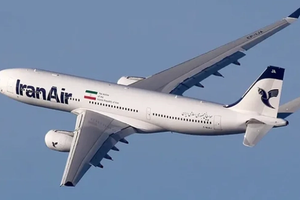
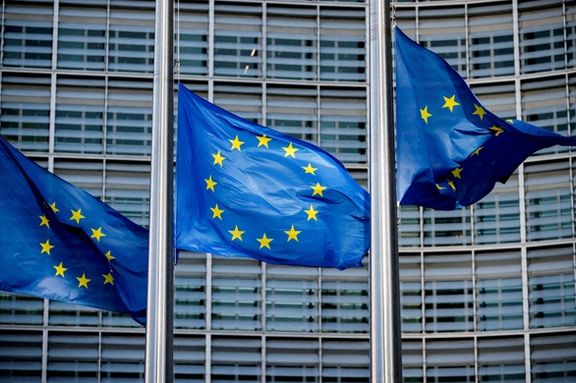
The European Union is weighing sanctions on Iran's aviation sector in response to Tehran's supply of ballistic missiles to Russia for use in the conflict in Ukraine.

EU foreign policy chief Josep Borrell underscored the bloc's resolute position on the issue, stating, "The European Union has repeatedly strongly cautioned Iran against transfers of ballistic missiles to Russia." He further mentioned that the EU would "respond swiftly and in coordination with international partners."

Borrell suggested that the EU’s response would likely include substantial new sanctions aimed at individuals and entities connected to Iran's ballistic missile and drone programs. This action comes on the heels of similar sanctions imposed earlier this week by France, Germany, and the UK.

The escalation follows US Secretary of State Antony Blinken's claim that Russia has received ballistic missiles from Iran, which could be deployed in Ukraine within weeks. In response, Iran denied these allegations and summoned the envoys of Britain, France, Germany, and the Netherlands, heightening the diplomatic standoff.

Iran's Foreign Minister Abbas Araghchi reiterated Tehran's denial, stating on social media, "Once again, US and E3 act on faulty intelligence and flawed logic - Iran has NOT delivered ballistic missiles to Russia. Period - Sanction addicts should ask themselves: how is Iran able to make & supposedly sell sophisticated arms? Sanctions are NOT a solution, but part of the problem."

The situation reflects broader geopolitical tensions, with Iran, North Korea, and Russia increasingly coordinating in support of Moscow's war in Ukraine, according to British Foreign Secretary David Lammy. He noted this emerging "entente" on Wednesday, following the announcement of new Western sanctions against Iran.

This alliance is seen as part of a larger "axis of upheaval" that includes Russia, China, Iran, and North Korea, which the chief of Britain’s army warned in July could necessitate readiness for confrontation within the next three years.

Adding to the tensions, Reuters reported on Friday that Russia started manufacturing a new long-range attack drone last year using Chinese engines and components, which has already been deployed in the Ukraine conflict. According to sources from a European intelligence agency and documents reviewed by Reuters, this development underscores Russia’s continued efforts to bolster its military capabilities.

Meanwhile, Russia's FSB security service announced on Friday that it had revoked the accreditation of six British diplomats in Moscow, accusing them of espionage and sabotage, a move reflecting the Kremlin’s frustration with what it perceives as London’s significant role in supporting Ukraine.

These developments highlight the growing alignment between Iran, Russia, and North Korea against Western interests. Iran's potential pursuit of nuclear capabilities and Russia's aggressive military actions in Ukraine further exacerbate security threats on the global stage.


Most Viewed

Worst outcome is Islamic Republic’s survival, ex-CIA official says
1
PODCAST

Worst outcome is Islamic Republic’s survival, ex-CIA official says

2
ANALYSIS

Iran brings unusually broad team to US talks to blunt future blame

3
INSIGHT

Tehran sends tough message but keeps diplomacy door open

4

Zoroastrian religious figure arrested in Iran

Banner
Banner

Spotlight

  • What the US naval blockade would mean for Iran’s economy
    INSIGHT

    What the US naval blockade would mean for Iran’s economy

  • Tehran sends tough message but keeps diplomacy door open
    INSIGHT

    Tehran sends tough message but keeps diplomacy door open

  • Worst outcome is Islamic Republic’s survival, ex-CIA official says
    PODCAST

    Worst outcome is Islamic Republic’s survival, ex-CIA official says

  • Why the Iran-US truce is more likely to buy time than peace
    ANALYSIS

    Why the Iran-US truce is more likely to buy time than peace

  • Engaged but uncommitted: China watches Iran and US fight and talk
    ANALYSIS

    Engaged but uncommitted: China watches Iran and US fight and talk

  • A truce for the world, a reckoning for Iran’s economy
    ANALYSIS

    A truce for the world, a reckoning for Iran’s economy

  • Iran's nuclear program has no peaceful justification, US tells IAEA

    Iran's nuclear program has no peaceful justification, US tells IAEA

  • Iran Air hit by Western sanctions over missile transfer to Russia

    Iran Air hit by Western sanctions over missile transfer to Russia

•
•
•

More Stories

US to charge Iranian operatives for hack-and-leak of Trump campaign - reports

Sep 13, 2024, 12:01 GMT+1

US federal authorities are moving to charge individuals allegedly connected to the Iranian government for a hack-and-leak operation against Donald Trump’s presidential campaign, the Washington Post reports.

Citing sources familiar with the matter, the news outlet reported that the charges could come in a matter of days.

The Washington Post reports that the FBI investigation has focused on an online persona known as "Robert," suspected of acting on behalf of the Iranian government. This “individual” is accused of distributing stolen data from Trump advisers' email accounts to news organizations.

Last month, the FBI and US intelligence agencies confirmed that Iran was responsible for recent attempted hacks into the Trump and Biden-Harris presidential campaigns.

According to AP, which is also reporting the impending criminal charges by the Justice Department, the aim of the hack was to influence or interfere with the outcome of the November presidential election.

On Tuesday, Assistant Attorney General Matthew Olsen, the Justice Department’s top national security official, told reports on Thursday in New York City that Iran “is making a greater effort to influence this year’s election than it has in prior election cycles and that Iranian activity is growing increasingly aggressive as this election nears.”

Last month, the head of DisinfoWatch told Iran International that as Iran appears to have stepped up its targeting of both presidential campaigns, there also seems to be coordination between Tehran and Moscow's information operations.

“The US and all western democracies need to be paying close attention and exposing them. The combined information and influence operations of Iran, Russia and China represent a serious threat to all western democracies - which we cannot afford to ignore,” Marcus Kolga said.

Trump’s campaign shared last month that it had been hacked and alleged that Iranian actors had stolen and distributed sensitive internal documents.

In August, Meta reported potential hacking attempts on the WhatsApp accounts of US officials by Iranian actors amidst growing concerns over Tehran’s interference in US elections. These officials were associated with both President Joe Biden and former President Donald Trump. The company attributed these attempts to APT42, an Iranian hacker group widely believed to be linked to an intelligence division within Iran's military. This group has a history of conducting invasive surveillance operations, often targeting political figures and activists abroad.

In relation to the latest hack-and-leak attack, Politico, The New York Times, and The Washington Post were reportedly given access to confidential material from inside the Trump campaign, with Politico reporting that that it began receiving emails on July 22 from an anonymous account.

The AOL email account, identified as "Robert," sent what looked like a research dossier that appeared to have been compiled by the campaign on Ohio Senator JD Vance, who became the Republican vice-presidential nominee. The document, dated February 23, was created almost five months before Trump announced Vance as his running mate.

So far, the AP reports, each outlet has refused to reveal any details about what it received.

Three border guards killed in attack in Iran’s restive southeast

Sep 13, 2024, 10:46 GMT+1

Three border guards were killed in an attack in southeastern Iran on Thursday, an assault claimed by the Sunni Islamist militant group Jaish al-Adl, according to Iran's state news agency.

The attack took place in Mirjaveh, a city in Sistan-Baluchestan province near the Pakistani border.

According to IRNA, gunmen in a car opened fire on a border regiment vehicle, killing two soldiers and an officer. A civilian was also wounded in the attack.

This incident is part of a broader pattern of violence in Sistan-Baluchestan, a province that has witnessed numerous attacks attributed to Jaish al-Adl.

Earlier this year, Iran launched missiles at targets in Pakistan claiming to have retaliated against Jaish al-Adl. Pakistan, resenting the violation of its territory, conducted airstrikes in Iran against alleged bases of its own Baluch insurgents. These cross-border operations heightened tensions between the two countries, even as they insisted that their primary targets were Baluch separatist factions.

Jaish al-Adl has a history of conducting ambushes, bombings, and other violent operations, leading to the deaths of both civilians and security personnel. In April, at least 22 Iranian policemen were killed in two separate clashes in the province.

The militant group has been designated a terrorist organization by both Iran and the United States, along with several international bodies.

The group has been involved in a series of cross-border attacks, including the abduction of border guards and security personnel, as well as bombings targeting Iranian military forces, particularly the Islamic Revolutionary Guard Corps (IRGC).

Last month, Jaish al-Adl claimed responsibility for the killing of a deputy chief of the Public Security Police Department in Khash, another city within the same province. Over the years, the group has carried out numerous attacks, aiming to highlight the plight of the Baluch minority, who they argue suffer from systematic discrimination, poverty, and lack of political, economic, and social empowerment.

The UN Special Rapporteur has previously highlighted that the Baluch community in Iran faces systemic marginalization and severe socio-economic hardships. The region is one of the poorest in the country, leaving its residents particularly vulnerable to both man-made and natural disasters, which deepens their sense of disempowerment and lack of representation.

Critics brand Iran’s €10 airport fee profiteering

Sep 13, 2024, 08:29 GMT+1

The Iranian government has introduced a new €10 fee on international flights from Imam Khomeini International Airport in Tehran leading to allegations of government profiteering.

Saeed Chalandari, CEO of Imam Khomeini Airport City, estimated that the newly imposed fee could generate up to twenty trillion rials (over 33 million dollars). Chalandari defended the move as a step towards implementing Iran's Seventh Development Plan, insisting that it is common practice in airports across the world.

The fee targets travelers over the age of two. Hormatollah Rafiei, head of the Association of Iranian Travel Agencies condemned the latest attempt at revenue generation, calling it “reaching into people’s pockets.” He accused the government of enabling "systematic extortion" in the travel industry, warning that this will only empower airlines and travel agencies to raise prices, further burdening Iranian travelers.

“This decision is opening the door to even more profiteering in the tourism sector,” Rafiei noted, pointing out that in addition to this new charge, Iranians are already paying departure taxes, airport fees, and inflated ticket prices.

Imam Khomeini International Airport in Tehran (Undated)
100%
Imam Khomeini International Airport in Tehran

It is not the first time Iranians have been forced to contend with excessive travel fees as a pipeline of funds. In 2019, the Iranian Parliament imposed a departure tax meaning citizens would pay 5,200,000 rials ($9) for their first trip abroad, and between 7,800,000 ($13) and over ten million rials ($16) for subsequent trips. 

The government's defenders argue that these fees are necessary for development, with Chalandari comparing them to charges imposed in airports across Europe amid Iran’s crumbling infrastructure, inefficient bureaucracy, and rampant corruption.

Social media platforms have become the battleground for a public response. Many Iranians mockingly referred to the fee as "forced payment," highlighting the absurdity of funding "development" in a country where mismanagement has brought nearly all aspects of life to a standstill. One frustrated user on X remarked, “Who doesn’t know there’s no development?” Another sarcastically commented, "Soon enough, they’ll pass a law requiring everyone traveling abroad to bring gifts for parliament members."

The Iranian government’s attempt to draw parallels with practices at airports in countries like Turkey or Saudi Arabia rings hollow for many. "Exactly which development are they talking about?" asked one social media user, alluding to the country's lack of progress in providing basic services.

This new fee comes at a time when travel for most Iranians is already a luxury as inflation and unemployment skyrocket and the currency’s value continues to plummet. One in three Iranians now live below the poverty line, meaning many of those who travel are among the country's wealthy elite.

Turkey’s Ministry of Culture and Tourism recently reported that over 438,000 Iranians entered Turkey as tourists in the first two months of 2024, where they can enter visa free. According to GlobalData’s 2023 Travel & Tourism in Iran report, the most popular destinations for Iranians include Turkey, the UAE, Azerbaijan, Armenia and Georgia.

But traveling abroad is increasingly unaffordable for tens of millions of Iranians, many of whom have taken to social media to call this €10 fee “the final straw” amid the worst economic times since the founding of the Islamic Republic.

Putin hosts Iran's security chief as West sanctions Tehran over missile transfer

Sep 12, 2024, 19:58 GMT+1

Russian president Vladimir Putin and senior defence official Sergei Shoigu received Iran’s national security council chief Ali Akbar Ahmadian in St. Petersburg on Thursday in a sign of deepening ties between the heavily sanctioned powers.

The Russian leader praised Iran’s Supreme Leader for boosting relations according to a readout of the meeting carried by Russian state media, two days after the United States and European allies hit Iran with new sanctions for alleged transfer of missiles to Russia.

Putin credited Ali Khamenei for expanding relations between the countries and thanked new president Masoud Pezeshkian for committing to closer relations with Russia.

Iran and Russia have deepened their ties in the years since Moscow’s full-scale invasion of Ukraine in 2022, in which Russian forces have unleashed hundreds of Iranian drones on military and civilian targets.

Both countries are heavily sanctioned by the West and appear to be edging towards a “strategic partnership” pact mooted by Russian Foreign Minister Sergey Lavrov earlier this month.

Ahmadian was hosted on the sidelines of a meeting among top national security officials from BRICS countries ahead of the group’s 2024 summit in Kazan, Russia in October.

Pezeshkian is due to attend the summit and hold bilateral meetings with Putin in Moscow to sign the bilateral treaty, Iranianian media reports say.

Earlier this week, the US and the E3 (Britain, France, Germany) said they had evidence, which they did not immediately release publicly, that Iran had shipped missiles to Russia and sanctioned Iranian individuals and entities including state carrier Iran Air.

Iran and Russia have denied any missile shipments. Reports of an Iranian missile transfers are inaccurate, Kremlin's spokesperson Dimitry Peskov said on Wednesday.

Iran's foreign ministry on Thursday summoned the envoys of Britain, France, Germany and the Netherlands to protest the sanctions according to Mizan, the news agency of Iran’s judiciary.

Israeli forces reportedly raid IRGC weapons plant in Syria

Sep 12, 2024, 16:44 GMT+1

Israeli ground forces reportedly conducted a raid on an IRGC weapons facility in Syria earlier this week, marking the first known operation by Israeli troops in the country, according to news reports.

The target of the mission was believed to be an Islamic Revolutionary Guard Corps (IRGC) site responsible for the development of ballistic missiles and drones, as well as providing logistical support to Iran's terror proxies including Hezbollah, wrote the Times of Israel.

The operation saw a series of Israeli airstrikes that targeted military sites in central Syria late Sunday, leaving at least 14 people dead and 43 others wounded. Fires erupted at several locations, with local Syrian media initially reporting that a scientific research center in Masyaf had been hit, a site long linked to the Syrian regime's manufacture of chemical weapons and precision missiles in collaboration with Iranian forces.

A poster depicting Syria's President Bashar al-Assad is seen at a damaged area in the aftermath of what Syrian state media reported was an Israeli strike in Hama, Syria September 9, 2024.
100%
A poster depicting Syria's President Bashar al-Assad is seen at a damaged area in the aftermath of what Syrian state media reported was an Israeli strike in Hama, Syria September 9, 2024.

The recent reports suggest that Israeli ground forces were involved for the first time in the operation. According to the opposition-affiliated Syria TV network, Israeli helicopters hovered above Syrian soil as special forces rappelled down ropes to the ground. Violent clashes reportedly ensued, leading to the deaths of several Syrian troops, and the capture of two to four Iranian personnel. On Thursday, IRGC-affiliated Tasnim news agency denied reports that any Iranians have been captured in Syria.

Channel 12 news cited researcher Eva J. Koulouriotis, who reported via Twitter that Israeli forces not only engaged in combat but successfully entered the facility, seizing critical equipment and documents.

Before retreating, they reportedly planted explosives, ensuring the complete destruction of the plant. Koulouriotis also stated that roads leading to the facility were targeted with airstrikes to prevent Syrian reinforcements from arriving in time.

In addition to the Iranian weapons facility, a Russian communications center was reportedly targeted during the operation. Al Hurra, a US-owned network, echoed the reports, noting the intensity of the strikes and the unusually high death toll.

The Masyaf region, located west of Hama, has long been associated with Iranian forces and pro-Iranian militias, and has been the site of numerous airstrikes attributed to Israel in recent years.

Home to the Scientific Studies and Research Center (CERS or SSRC), it is a facility Western officials believe is used to manufacture chemical weapons, including sarin gas. Syria has consistently denied the accusations.

A view shows burnt area in the aftermath of what Syrian state media reported was an Israeli strike in Masyaf, Hama province, Syria September 9, 2024.
100%
A view shows burnt area in the aftermath of what Syrian state media reported was an Israeli strike in Masyaf, Hama province, Syria September 9, 2024.

While the precise details of the raid remain unconfirmed and Israel has yet to comment on the reports, the operation aligns with Israel's ongoing strategy of targeting Iranian military infrastructure in Syria.

Israel has been vocal about its intent to prevent Iran from establishing a permanent military presence in Syria, and strikes on IRGC-linked sites are seen as part of this broader strategy.

The raid also underscores the growing complexity of the conflict in Syria, where multiple actors—including the Syrian regime, Iran, Hezbollah, and Russia—maintain overlapping interests and military assets.