• العربية
  • فارسی
Brand
  • Iran Insight
  • Politics
  • Economy
  • Analysis
  • Special Report
  • Opinion
  • Podcast
  • Iran Insight
  • Politics
  • Economy
  • Analysis
  • Special Report
  • Opinion
  • Podcast
  • Theme
  • Language
    • العربية
    • فارسی
  • Iran Insight
  • Politics
  • Economy
  • Analysis
  • Special Report
  • Opinion
  • Podcast
All rights reserved for Volant Media UK Limited
volant media logo

Iran's uranium enrichment rolls on, key issues stalled - IAEA report

Aug 29, 2024, 20:05 GMT+1Updated: 16:02 GMT+0
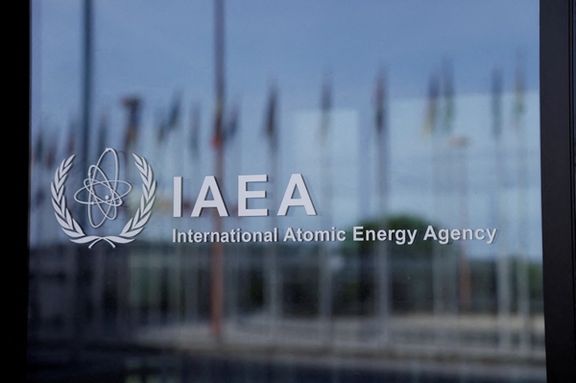
The logo of the International Atomic Energy Agency (IAEA) at their headquarters in Vienna, Austria, April 11, 2024

Iran continues to produce highly enriched uranium, and Tehran has not enhanced its cooperation with the UN nuclear watchdog, despite a resolution urging it to do so at the agency's last board meeting, according to the IAEA .

Despite the resolution passed at the last quarterly meeting of the International Atomic Energy Agency's 35-nation Board of Governors in June, nuclear diplomacy has largely been on hold with the election last month of Iranian President Masoud Pezeshkian and the US presidential election due in November.

"The (IAEA) Director General (Rafael Grossi) expresses the hope that his initial exchange with President Pezeshkian will be followed by an early visit to Iran and the establishment of a fluid, constructive dialogue that swiftly leads to concrete results," said one of the two confidential, quarterly IAEA reports sent to member states on Thursday, according to Reuters.

There has been no progress in the past quarter on several long-standing issues that have soured relations between the IAEA and Tehran, including Iran's barring of IAEA inspectors specialized in enrichment and Iran's failure to explain uranium traces at undeclared sites, the reports showed.

Iran decided in December 2020 to expand its uranium enrichment and reduce cooperation with the IAEA, demanding the lifting of US sanctions. This step followed the election of President Joe Biden, who had publicly pledged to return to the 2015 JCPOA nuclear agreement. Year-long multilateral talks that followed in Vienna failed to bring about an agreement on the revival of the deal.

At the same time, the Islamic Republic has added cascades, or clusters, of centrifuges, machines that refine uranium, at its main enrichment sites in Natanz and Fordow, according to the latest IAEA reports seen by news agencies on Thursday.

It has installed eight more cascades of advanced IR-6 centrifuges at Fordow, a site dug into a mountain, bringing the total there to 10, although the new ones had not yet been brought online, meaning they are not yet enriching uranium hexafluoride (UF6) gas, one report showed.

Iran's stock of uranium in UF6 form enriched to up to 60% purity, close to the roughly 90% of weapons grade, grew by an estimated 22.6 kg to 164.7 kg, one of the reports said.

According to an IAEA yardstick, that is 2 kg short of being enough, in theory, if enriched further, for four nuclear bombs.

By the same measure Iran now has enough uranium enriched to up to 20% purity, if enriched further, for six bombs.

In July, US Secretary of State Antony Blinken remarked that Iran's nuclear breakout time—the period required to produce sufficient amount of 90% enriched uranium for a bomb—has likely been reduced to "one or two weeks."

Iran is reportedly intensifying efforts on its secretive nuclear weapons program, bringing the country closer than ever to developing a nuclear bomb—a threat that has loomed for over two decades.

Earlier in the month, Abbas Araghchi, the newly appointed Iranian Foreign Minister, declared that the revival of the 2015 JCPOA nuclear deal with the six major world powers is "untenable in its current form."

(Reporting by Reuters)

Most Viewed

Iran negotiators ordered to return after internal rift over Islamabad talks
1
EXCLUSIVE

Iran negotiators ordered to return after internal rift over Islamabad talks

2
ANALYSIS

US blockade enters murky phase as tankers spoof signals and buyers hesitate

3
ANALYSIS

Why the $100 billion Hormuz toll revenue is a myth

4

US tightens financial squeeze on Iran, warns banks over oil money flows

5
ANALYSIS

US blockade targets Iran oil boom amid regional disruption

Banner
Banner

Spotlight

  • Hardliners push Hormuz ‘red line’ as US blockade tests Iran’s leverage
    INSIGHT

    Hardliners push Hormuz ‘red line’ as US blockade tests Iran’s leverage

  • Ideology may be fading in Iran, but not in Kashmir's ‘Mini Iran'
    INSIGHT

    Ideology may be fading in Iran, but not in Kashmir's ‘Mini Iran'

  • War damage amounts to $3,000 per Iranian, with blockade set to add to losses
    INSIGHT

    War damage amounts to $3,000 per Iranian, with blockade set to add to losses

  • Why the $100 billion Hormuz toll revenue is a myth
    ANALYSIS

    Why the $100 billion Hormuz toll revenue is a myth

  • US blockade targets Iran oil boom amid regional disruption
    ANALYSIS

    US blockade targets Iran oil boom amid regional disruption

  • Iran's digital economy battered by prolonged blackout
    INSIGHT

    Iran's digital economy battered by prolonged blackout

•
•
•

More Stories

Iran's president mocks 'Thai woman' instructor's short stature

Aug 29, 2024, 18:35 GMT+1

In a Thursday speech, Iran's President Masoud Pezeshkian recounted feeling displeased during a management course in Thailand citing his displeasure for being instructed by "a short Thai woman."

In remarks that some netizens labeled as racist and misogynistic, Pezeshkian recounted: "We arrived, and a woman approached us. Our appearances contrasted with those around us, as we had traveled to the East, to Thailand, for management training."

He continued, "To be honest, we felt quite offended. There we were, nine university presidents in Thailand, being instructed on leadership. We led a revolution with aspirations to change the world, and yet they sent us here. To make matters worse, a woman—of short stature, no less—was expected to tell us what to do."

During the farewell and introduction ceremony for the outgoing and incoming ministers of Science, Research, and Technology—an event aired live on state television (IRIB)—Pezeshkian, in a disparaging tone, recounted that the woman assigned to train them had reacted to the large number of universities in Iran with a curious remark:

In what appeared to be a reference to the abundance of universities in Iran, the instructor asked Pezeshkian, "Are you planning to eat your own students?" She explained that economics addresses four key questions: What to produce, at what quality, in what quantity, and where to distribute it. She added, "We have failed to answer these four questions properly."

His speech caused a backlash on social media. One user, sarcastically referring to violence by security forces against students told Pezeshkian: "You should have told her, 'No, we want to imprison and torture them [the students], and then claim they committed suicide by hitting themselves with a hard object."

Another user wrote on X: "this speech hints at a comparison between Pezeshkian and Raisi; an educated fool is more foolish than an uneducated one."

"Because the instructor was a woman and short, he was offended. Of course, it’s not surprising that someone whose mindset is shaped by Nahj al-Balagha [Shiite religious book] would have such a view of a 'short woman.' His leader has said that women are deficient in intellect. Naturally, the shorter ones must be even more deficient in intelligence!" wrote a critic on social media.

Since the presidential campaign, Pezeshkian's frequent references in Arabic to Nahj al-Balagha—a centuries-old compilation of sermons often perceived as misogynistic—have drawn considerable scrutiny.

Pezeshkian has consistently expressed a disregard for formal protocols, openly admitting his reluctance to adhere to prepared scripts. He has come across as an unusual Islamic Republic politician who makes off-the-cuff candid remarks.

While his supporters interpret these actions as evidence of "simplicity, authenticity, and being of the people," they are likely to provoke more controversy.

However, in the role of President, Pezeshkian's remarks concerning citizens of foreign countries could carry significant diplomatic consequences.

With the United Nations General Assembly's annual meeting less than a month away, he is poised to deliver a speech and likely engage in additional interviews on the sidelines.

Israel accuses Iran of building terrorist infrastructure in West Bank

Aug 29, 2024, 14:58 GMT+1

An Israeli official, speaking to Iran International, revealed that "terrorists, with the support of the Islamic Republic," have established military bases in cities and refugee camps across the West Bank.

The official emphasized that Israel's ongoing operation, aimed at dismantling this Iranian-backed network, has no set end date.

The senior Israeli official outlined the extent of Iran's involvement in the West Bank, accusing Tehran of being the driving force behind the growing militant presence in the region. "Tehran has been involved in equipping, planning, and building terrorist infrastructure in the West Bank for more than two and a half years," the official stated.

"Officials of the Islamic Republic have provided money, weapons, and military training to Palestinian militants, and this [Israeli] operation aims to disrupt and destroy their capabilities."

Ambulances respond, as an Israeli military vehicle takes part in a raid, in Jenin, in the West Bank, August 28, 2024.
100%
Ambulances respond, as an Israeli military vehicle takes part in a raid, in Jenin, in the West Bank, August 28, 2024.

Tensions have flared up between Tehran and Jerusalem in recent months, with Iran launching an unprecedented missile and drone attack on April that Israeli air defenses and allied air forces were able to fend off.

The official noted that the operation has already resulted in the deaths of 18 people, two of whom were civilians. "The military is currently investigating the circumstances surrounding these civilian deaths, but the focus remains on dismantling the terrorist networks that Iran has helped establish," he added.

The ongoing military operation, which began early Wednesday, is one of the largest attacks on the West Bank in months. It spans the flashpoint cities of Tulkarm, Jenin, and the Jordan Valley, involving hundreds of troops, drones, helicopters, and armored vehicles.

This campaign, as Israeli officials have made clear, is not just a reaction to local unrest but a broader strategy to counter Iranian influence in the region. Israel's UN Ambassador Danny Danon has been vocal about Iran's role, stating, "Since October 7th, Iran has been actively working to smuggle sophisticated explosive devices into Judea and Samaria, intended for use in suicide bombings in the heart of Israeli cities."

On October 7, 2023, Hamas militants launched a large-scale surprise attack on Israel from the Gaza Strip. This unprecedented assault involved the firing of thousands of rockets into Israel, along with coordinated ground operations where Hamas fighters breached the border and infiltrated Israeli towns and military bases. The attack resulted in the deaths of approximately 1,200 Israelis, including both civilians and soldiers, and led to the capture of over 250 hostages, who were taken back to Gaza by the militants.

Israeli Foreign Minister Yisrael Katz has described the situation as "a war in every sense," highlighting Iran's attempts to destabilize the region by arming and funding militant groups. "The IDF is operating with force since the night, in the refugee camps of Jenin and Tulkarm to thwart Islamic-Iranian terror infrastructure that was set up there," Katz wrote on Wednesday. He suggested that Israel might need to consider "temporary evacuations" of Palestinian neighborhoods to minimize civilian casualties, a tactic that has already been employed extensively in Gaza.

Tehran's support for militant groups in the West Bank is viewed by Israel as part of a broader effort to encircle and weaken the Jewish state, much like the ongoing tensions with Hezbollah on Israel's northern border.

Despite these concerns, Israel remains resolute in its mission. "The State of Israel will not sit idly by and wait for scenes of buses and cafes exploding in city centers," ambassador Danon asserted, emphasizing Israel's determination to confront the threats.

Arbaeen pilgrimage ‘manifestation of Shia soft power’

Aug 29, 2024, 14:00 GMT+1
•
Maryam Sinaiee

Iranian authorities and state media describe the Arbaeen Walk to religious sites in Iraq, which saw the participation of over 3.6 million Iranians this year, as a demonstration of “Shia soft power.”

In an article entitled “Shia Soft Power in the Light of Arbaeen Diplomacy” last week, Defa Press, the news agency of Iran’s Armed Forces, argued that the annual millions-strong gathering of Shia in Iraq serves as an “effective tool to bolster the soft power of these [Shia] communities against the cultural and social assaults from regional and extra-regional enemies.”

“In my view, Arbaeen goes beyond a religious ceremony and plays a crucial role in public and cultural diplomacy,” the author stated. “This event allows Shia communities worldwide to forge stronger communication and cultural networks, ultimately reinforcing their collective identity and enhancing their soft power in the face of foreign threats,” the author argued.

Iran's clerical regime holds various events to discuss and promote the idea. Last week, the International Culture Convergence Institute, Tehran University’s Theology Faculty, and a think tank called Zharfa held a webinar called “Arbaeen, Manifestation of Soft Power in Global Equations,” in which figures from several countries, including Pakistan, Iraq, and Lebanon, participated.

Supreme Leader Ali Khamenei has on many occasions referred to the Arbaeen Walk as a manifestation of Shia power and a “great and astonishing combat rehearsal”. Some pundits believe Khamenei recognized the political potential of the event as an alternative to the pilgrimage to Mecca (hajj) where the Shia are only a minority.

The Arbaeen ceremony, which marks the end of the 40-day mourning period following Ashura—the religious ritual commemorating the death of the third Shia Imam, Hussain ibn Ali, the grandson of the Prophet Muhammad, in 680 AD—is the world's largest annual gathering.

Some Shias have traditionally gathered every year to mark Arbaeen in Karbala, Iraq, where the Imam is buried. Many walk long distances, even hundreds of kilometers, to the shrine of Imam Hussein and other Shia shrines providing ample opportunities for Iranian propaganda among other pilgrims during the ceremonies.

Participation in the ceremonies held in Iraq has hugely grown over the past decade thanks to Iranian government's propaganda, and huge expenditures on infrastructures such as roads, healthcare for pilgrims, and security.

Small numbers of Shia Iranians had always privately taken the pilgrimage in the years following the fall of Saddam Hussein in 2003. The number of pilgrims grew from 40,000 in 2010, when it was first recorded, to three million in 2019, then hugely dropped during the pandemic.

In 2022, three million traveled to Iraq, and the number grew to four million in 2023. However, this year, according to the Arbaeen Central Headquarters, over 3.6 million Iranians participated in the walk. This was almost a million and a half less than officials’ forecasts.

Pundits suggest the decline may be attributed to the extreme summer heat or the fading novelty of the pilgrimage for those who have already participated once or even several times.

The current year’s budget included allocations of 1.24 trillion rials (around $2m) to several government bodies including the Ministry of Interior, Arbaeen Central Headquarters, and Islamic Propaganda Organization to “provide infrastructure and support” to hold the walk. However, this was in reality a tiny fraction of what the government spent. By some estimates, up to $500 million was spent.

Government organizations and state-affiliated charities as well as municipalities and city councils often allocate considerable budgets to organize the Arbaeen Walk as well and offer various services, including free Wi-Fi, along the way and in Karbala to hold the event as “gloriously” as possible.

The new government continued to support the event. The very first action that Vice-President Mohammadreza Aref took after his appointment was ordering 4 trillion rials (around $650,000) to be paid for the prevention of unforeseen incidents, contagious diseases, and other similar health-related issues among pilgrims.

Several newly appointed officials, including Farzaneh Sadegh-Malvajerd, rushed to the border area to inspect the infrastructure and services offered to pilgrims.
Germany orders deportation of Iran-linked cleric in Hamburg

Aug 29, 2024, 10:05 GMT+1

The head of the Islamic Center of Hamburg (IZH), Mohammad Hadi Mofatteh, has been ordered to leave Germany after the center and its affiliates were banned for promoting radical Islamist goals.

The Hamburg Interior Department issued a deportation notice to Mofatteh, 57, mandating his departure within two weeks, German media reported Thursday.

If he fails to comply, he will be forcibly expelled from Germany at his own expense by September 11. He is also prohibited from re-entering or residing in Germany, with a penalty of up to three years in prison if he disobeys the order.

This action follows the deportation of Nasir Niknejad, the Iran-linked Imam of the Islamic Center in Berlin in late June, highlighting the German government's ongoing efforts to counter Iranian influence within its borders.

The closure of the Hamburg Islamic Center, known to be under the control of Iran's Supreme Leader, has provoked a retaliatory response from Tehran. Last week, Iranian security forces stormed and shut down a German Embassy-affiliated language school in Tehran in what appears to be a response to the closure of the Islamic Center of Hamburg and the Blue Mosque.

Germany's federal police had raided the Islamic Center on suspicions of support for the Lebanese militant group Hezbollah, accused of terrorism, in November. Germany banned Hezbollah activities in 2020.

Documents obtained by Germany’s Interior Ministry reveal that Mofatteh received direct instructions from Iran's Supreme Leader Ali Khamenei. The documents, part of a 220-page closure and activity ban order issued by Germany’s Federal Ministry of the Interior, showed continuous communication between Mofatteh and Mehdi Mostafavi, a senior official in Khamenei’s office.

According to Der Spiegel, over 650 WhatsApp messages were exchanged between late 2021 and late 2023, covering topics ranging from ideological messaging to the center’s future activities.

The directives from Khamenei’s office included specific instructions on framing narratives around significant events, such as the October 2023 Hamas attack on Israel, which resulted in approximately 1,200 deaths.

Days after the attack, Mofatteh was instructed to portray the incident as a necessary act of resistance against alleged Israeli crimes, emphasizing the bravery of Palestinian youth and framing the attack as a turning point in the decades long Israel-Palestine conflict.

The revelations went beyond ideological influence, exposing financial links between the Islamic Center of Hamburg and Hezbollah, the Lebanese organization classified as a terrorist group by countries including the US, UK, Germany and the European Union.

Inspectors found documents bearing Khamenei’s personal stamp and signature, indicating financial endorsements for operations in Yemen, proving clear links that the center was not only disseminating Tehran’s ideology but also acting as a financial conduit for Iran’s militant proxies.

Five police officers arrested for torture and death of Iranian man

Aug 29, 2024, 09:05 GMT+1

Following the circulation of shocking images of a tortured man's body on Iranian social media, authorities announced the arrest of five police officers implicated in the detainee's death.

The arrest comes amid growing outrage after a video surfaced showing the severe injuries inflicted on Mohammad Mir Mousavi while in custody, intensifying concerns about the systemic use of violence and torture by Iranian security forces.

On August 24, Mir Mousavi was arrested by police officers in northern Iran from a special unit during a local altercation. He was subsequently taken to a police station in Lahijan district, where he was subjected to torture, resulting in his death.

The Lahijan prosecutor has confirmed that five police officers from the area have been temporarily detained on charges of involvement in Mir Mousavi's death. However, many believe this action appears to be a superficial attempt to mitigate public outrage rather than a genuine effort to seek justice.

On Wednesday, a horrifying video surfaced, showing the lifeless body of Mir Mousavi. The video, recorded during the ritual washing of his body, revealed severe signs of torture, including deep wounds on his back and waist.

According to reports, security officials and the prosecutor exerted pressure on Mir Mousavi's family to prevent them from publicizing the murder. This tactic of silencing victims and their families is all too common in Iran, where the government has consistently demonstrated its willingness to go to any lengths to cover up its crimes and avoid international scrutiny.

Despite these efforts, the truth about the circumstances surrounding Mir Mousavi's death has come to light. However, this case is not an isolated incident. According to the Hengaw Human Rights Organization, Mir Mousavi is the seventh person to die under torture while in the custody of Iranian security forces since the beginning of 2024 alone.

Mohammad Mir Mousavi (Undated)
100%
Mohammad Mir Mousavi

Amnesty International has reported that between January 2010 and September 2021, at least 72 deaths occurred in Iranian prisons and detention centers due to torture or other forms of physical mistreatment by intelligence and security agents or prison officials. Iranian authorities have consistently refused to take responsibility for these deaths.

In April 2022, Amnesty International released another report, "In death’s waiting room: Deaths in custody following deliberate denial of medical care in Iran’s prisons," which detailed the deaths of 96 people in Iranian prisons since 2010 due to deliberate denial of medical services. The report emphasized that the actual number of such deaths is likely much higher, pointing to the Islamic Republic's systematic negligence and abuse of those in its custody.