• العربية
  • فارسی
Brand
  • Iran Insight
  • Politics
  • Economy
  • Analysis
  • Special Report
  • Opinion
  • Podcast
  • Iran Insight
  • Politics
  • Economy
  • Analysis
  • Special Report
  • Opinion
  • Podcast
  • Theme
  • Language
    • العربية
    • فارسی
  • Iran Insight
  • Politics
  • Economy
  • Analysis
  • Special Report
  • Opinion
  • Podcast
All rights reserved for Volant Media UK Limited
volant media logo

Iran's former FM makes push for 'diversity' in cabinet selection

Majid Mohammadi

Contributor

Jul 23, 2024, 09:33 GMT+1Updated: 16:20 GMT

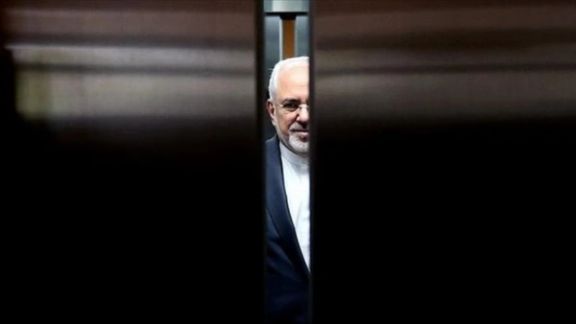
Last week, former Iranian Foreign Minister Javad Zarif advocated for diversity in selecting the new cabinet, despite the Islamic Republic's history of repressing dissent and even internal critics.

Appointed to propose a list of candidates for each ministry in newly elected President Masoud Pezeshkian’s administration, Zarif spoke about a kind of affirmative action, in favor of prioritizing youth, women, ethnic groups, and religious minorities in the selection process.

"If the candidate is a man, he does not get points, but if she is a woman, she gets 10 points. Likewise, if you are from other religions, you will get points, and if you are a Shia Muslim, you will not get points here... We want to give points so that we can use other ethnic groups and groups that have less presence in the cabinets, including women and youth," he said.

This criterion faced serious opposition from Supreme Leader Ali Khamenei's representative in the state-run newspaper Kayhan, as well as from "revolutionary" outlets such as Javan and Hamshahri. Additionally, several Friday prayer worshipers expressed their disapproval, some even resorting to using profanity against Zarif.

However, beyond this opposition, is this type of affirmative action a feasible possibility in the Islamic Republic?

Realities

While Zarif spoke of social diversity in the presidential administration, the Islamic Republic has systematically, and sometimes brutally, eliminated not only opponents of the clerical regime but also its own internal critics. The pool of people eligible for even mid-level positions is limited to a few hundred insiders.

When Zarif talks about diversity, he means allowing a relatively broader range of fully loyal individuals to the clerical system and Supreme Leader Ali Khamenei to be appointed.

In addition to the ideological and political impediments however, certain groups are subject to systemic discrimination in the ruling system.

In the past 45 years, since the inception of the Islamic Republic, only one woman has served in the cabinet, and this was not even in administrations claiming to be “moderate” or “reformist.” Marzieh Dastjerdi was appointed as the Minister of Health during the second term of Mahmoud Ahmadinejad's administration (2009-2013).

Over the past decades, there have been no non-Shia ministers, and few relatively high-level officials.

The ratio of women to men in the Strategic Council for determining Pezeshkian's cabinet candidates (run by Zarif) is 2 to 21, with efforts to increase the representation of women and other minorities. Only one Sunni Kurd was added to this council after a Shia Kurd protested.

Possibilities

Pezeshkian wants to appoint younger people to cabinet positions, a quest which enjoys consensus among political factions in Iran, as the revolutionary generation from the 1970s is aging and there is a need for fresh blood in the system.

Regarding female cabinet members, there is no principled opposition from Khamenei or the factions against Pezeshkian's administration. Opposition from the "Revolutionary Islamic Assembly" loyal to Khamenei would likely be directed at the specific individual proposed, rather than the concept itself.

Historically, a Shia Kurd was promoted to the position of administration spokesperson in Mohammad Khatami's cabinet, but no Sunni Kurd has held such a role.

The Islamic Republic has consistently refused to grant high political and judicial positions to Sunnis due to its official Shia religion. The likelihood of a Sunni Baluch or Kurd joining the cabinet remains very low, as Shia sources of emulation in Qom and Najaf oppose it. This would only change if Khamenei were willing to accept the risk of their opposition, which is highly unlikely.

Subtle risk

Zarif's stance on assigning negative scores to "Shia men" in the cabinet selection process challenges the established norms of the Islamic Republic.

This has resulted in strong reactions to his interview.

Unlike defending his proposed cabinet composition on the grounds of meritocracy—which could potentially appeal to public opinion or at least mitigate opposition—Zarif bases his argument on a policy of discrimination against Shia men.

This approach not only contradicts the traditional limits but also fails to present a compelling rationale that aligns with the broader values and expectations of the political landscape.

Showing off diversity in a discriminatory system

The Islamic Republic is characterized by systemic legal and institutional discrimination against various segments of its population. High judicial and legal authorities, along with the appointment of future leaders, are officially reserved for clerics and jurists. This preference extends even to public school teacher appointments, where clerics are favored over non-clerics.

Women face formal barriers to roles such as the presidency, judgeship, and membership in the army. Non-Shiites are effectively excluded from influential bodies like the Assembly of Experts, the Expediency Council, and most military, security, and diplomatic organizations. Additionally, wealth, power, and status are concentrated among a small group loyal to the Guardian Jurist.

The representation of women in the Islamic Assembly (Majles) has fluctuated between 1% and 6% over its 12 terms. Despite women occupying over 50% of university seats, their employment rate has remained between 11% and 15%. The economic contribution of Iranian women is estimated based on these employment levels.

Even if a female, Kurdish, or Sunni minister were appointed to the cabinet, it would likely serve a symbolic and deceptive purpose in a system where discrimination against women, ethnic and religious minorities, and citizens disloyal to the regime is both functional and structural.

Zarif's actions may deceive Western observers and those adhering to "woke" ideology in their so-called advocacy for social justice, but only a small percentage of Iranian citizens are likely to be convinced by this performative statement.

If the new administration is genuine in its diversification efforts, it should start by appointing Sunni governors for regions like Kurdistan and Sistan-Baluchestan, where Sunni populations are significant.

Most Viewed

Worst outcome is Islamic Republic’s survival, ex-CIA official says
1
PODCAST

Worst outcome is Islamic Republic’s survival, ex-CIA official says

2
ANALYSIS

Iran brings unusually broad team to US talks to blunt future blame

3
INSIGHT

Tehran sends tough message but keeps diplomacy door open

4

Zoroastrian religious figure arrested in Iran

Banner
Banner

Spotlight

  • What the US naval blockade would mean for Iran’s economy
    INSIGHT

    What the US naval blockade would mean for Iran’s economy

  • Tehran sends tough message but keeps diplomacy door open
    INSIGHT

    Tehran sends tough message but keeps diplomacy door open

  • Worst outcome is Islamic Republic’s survival, ex-CIA official says
    PODCAST

    Worst outcome is Islamic Republic’s survival, ex-CIA official says

  • Why the Iran-US truce is more likely to buy time than peace
    ANALYSIS

    Why the Iran-US truce is more likely to buy time than peace

  • Engaged but uncommitted: China watches Iran and US fight and talk
    ANALYSIS

    Engaged but uncommitted: China watches Iran and US fight and talk

  • A truce for the world, a reckoning for Iran’s economy
    ANALYSIS

    A truce for the world, a reckoning for Iran’s economy

•
•
•

More Stories

Iran’s government fears social media's power to mobilize dissent

Jul 23, 2024, 07:30 GMT+1
•
Behrouz Turani

Iran's outgoing ICT Minister Issa Zarepour has tried to mislead President-elect Masoud Pezeshkian about the reason why Iranians are unhappy about the slow Internet speed.

IT Iran account on social media platform X reported on July 19 that Zarepour told Pezeshkian during a meeting with him on Thursday that Internet speed in Iran is slow because Iranian netizens use filter-breakers (VPNs). He further claimed that "most Iranian users complain that the oppressive sanctions by the West are responsible for Iranians' difficulty in accessing the Internet."

In fact, Iranians use VPNs in order to circumvent the Iranian government's ideological filtering of the Internet. The government in Iran has been censoring the Internet at least since 2003 when social media were limited to weblogs. Tens of thousands of websites were blocked initially and then social media platforms, such as Facebook, You Tube and Twitter.

Prominent Iranian journalist Saeed Arkanzadeh Yazdi wrote in a post on X that "Zarepour himself is the main culprit for the slow Internet speed in Iran. Nonetheless, he is just the tip of an iceberg and a front for the technological, economic and ideological apparatus that is behind the filtering of the Internet in Iran."

During the past years, particularly following the 2009 disputed presidential election, the government gradually banned all social media platforms. At the same time, it introduced homegrown platforms that not many Iranians use, partly out of concern that their activities can be monitored by intelligence services.

Despite the ban and filtering, millions of Iranians use foreign social media platforms for networking or for business. When Instagram was filtered during the 2022 protests, Iranians complained that tens of thousands of them were kicked out of their online businesses. Based on statistics released by government officials, more than 40 million Iranians including state officials maintain active accounts on Telegram and the number of Iranian accounts on Instagram surpassed 25 million in 2021.

Although most Iranians use social media for personal or business networking, Iranian intelligence and security organizations fear that dissidents might use them for organizing protests and mobilizing protesters.

A report on Didban Iran website on July 18 quoted the Research center of the Iranian parliament as saying that "Restrictions on the Internet is directly linked to the accrued anger of Iranian Internet users.

A study on the variables affecting the challenging situation for Iranian Internet users observed: "A high percentage of the Iranian population has access to social media [albeit using filter-breakers]; however, the low quality of connections, disruptions, limitations on Internet access, and security breaches are significant challenges."

By "security breaches," the report alluded to the constant monitoring of citizens' online activities by the Iranian government. During the latest protests in Iran, the government arrested dozens of social media users simply for "liking" political activists' posts.

One of the most frequently voiced demands of Iranians is easy access to the Internet, where they can connect with others and market their goods or intellectual property.

During his campaign for the latest presidential election in Iran, Pezeshkian promised to facilitate this. Although the President is officially the head of the Supreme Council of Cyberspace in Iran, he does not have the final say on the matter.

Before Pezeshkian, former President Ebrahim Raisi also promised to ease Internet access, particularly for online businesses. However, Internet access became more restricted under his presidency.

Pezeshkian may recall what one of his rivals said during the presidential debates: "To bring about real change for passengers, changing the train driver is not enough. The train manager, or even the track, may need to be changed as well."

Outgoing UN rapporteur urges int'l probe into 1980s atrocities in Iran

Jul 22, 2024, 22:10 GMT+1

The outgoing UN special human rights rapporteur Iran called for a comprehensive international investigation into the systematic human rights violations committed by Iranian authorities during the early 1980s and the 1988 massacres.

Thousands of dissidents, including members of minority groups like Baha'is, Kurds, and those affiliated with organizations such as the Mojahedin-e-Khalq (MEK) and other leftist groups, were executed in the 1980s, particularly during the summer of 1988. Political prisoners were executed following a fatwa issued by Iran's then-leader, Ruhollah Khomeini, with the approval of a four-member death committee.

Javaid Rehman's detailed report presents damning findings on human rights violations in Iran during 1981-1982 and 1988, highlighting systematic "atrocity crimes" and grave human rights abuses committed by Iranian authorities, including extrajudicial executions, torture, and enforced disappearances of political opponents.

The report focuses on the summary, arbitrary, and extrajudicial executions of thousands of political prisoners, which Rehman categorizes as crimes against humanity.

"The high-ranking state officials connived, conspired, and actively engaged to plan, order, and commit crimes against humanity and genocide against the nationals of their own state," the report said.

Historical context and continued relevance

The atrocities detailed in the report occurred during two critical periods in Iran’s history: immediately following the 1979 revolution and during the 1988 massacres. The 1981-1982 period saw mass arrests and executions as the newly-established Islamic Republic sought to consolidate power by eliminating opposition.

Rehman’s findings connect these historical atrocities to ongoing human rights violations in Iran. He notes that many officials implicated in the crimes remain in power, benefiting from a culture of impunity.

“Notwithstanding the availability of overwhelming evidence, those with criminal responsibility for these grave and most serious violations of human rights and crimes under international law remain in power and control,” he asserts.

Specific crimes and victims

The report meticulously documents various crimes, including torture, rape, and other forms of sexual violence against women and girls. It highlights the persecution of ethnic, linguistic, and religious minorities, including the Bahá'í community. Rehman emphasizes the enduring impact of these crimes on survivors and their families, who continue to suffer from psychological trauma and are often denied closure.

One poignant testimony in the report states, “Our suffering stems directly from the permanent crimes committed by the Islamic Republic, and these government-sanctioned atrocities persist to this day.”

Calls for international action

The outgoing special rapporteur who will be replaced by Mai Sato called on the international community to establish an investigative and accountability mechanism to address these crimes. He urged prompt, impartial, and thorough investigations into the crimes committed during the specified periods, focusing on the mass executions and enforced disappearances.

“The proposed international accountability mechanism must investigate the ‘atrocity crimes’ committed during 1981-1982 and in 1988 against thousands of political opponents," the report says.

Rehman also highlighted the need for universal jurisdiction, urging individual states to initiate criminal investigations against those responsible for the crimes. He points out the structural obstacles within Iran's judicial system, which make it incapable of addressing these violations.

Connection to recent protests

The report draws a direct line from the historical atrocities to the recent "Woman, Life, Freedom" protest movement, which began in September 2022. This movement, sparked by resistance to enforced veiling, mirrors the earlier resistance to oppressive measures following the 1979 revolution. Rehman underscores that the oppressive structures established during the early years of the Islamic Republic continue to facilitate human rights abuses today.

Rehman finally calls for comprehensive measures to ensure justice and accountability, including the establishment of an international investigative mechanism, demanding truth and reparations for victims, encourage states to exercise universal jurisdiction over the crime, and supporting the establishment of justice and accountability within Iran.

The UN mandate to examine Iran human rights came into effect in 1984 - the first Special Rapporteur Andres Aguilar resigned after two years because of the lack of cooperation from the Iranian authorities.

Things haven’t improved since then: the mandate has never been recognized by the Islamic Republic, which refuses entry into the country by the Special Rapporteur. But Iran has so far failed to get the mandate itself blocked, which it was able to do from 2002 until 2011 by exploiting the country's voting system within the Human Rights Council.

Chinese tanker in collision linked to years of illicit Iranian oil shipments

Jul 22, 2024, 19:48 GMT+1
•
Dalga Khatinoglu

A Chinese tanker linked to Iranian oil smuggling activities, was located after it was involved in a collision with a Singaporean ship on Friday.

Over the weekend, Malaysia's coast guard said it had located and intercepted Ceres I, which had collided with another vessel off Singapore, causing a fire and injuring at least two crew members. The Sao Tome and Principe-flagged supertanker was also believed to have turned off its tracking system, the coast guard said.

Despite its connection to smuggling, oil analytics firm Vortexa said that at the time of the collision, the Ceres I tanker was in ballast, indicating it was not carrying any cargo.The Iranian government also stated about a day after the collision that neither vessel had been carrying any Iranian oil at the time.

The Ceres I, a large crude-carrying supertanker with a capacity to hold 2 million barrels, controlled by China, has previously transported millions of barrels of Iranian oil.

Claire Jungman, Chief of Staff at United Against Nuclear Iran (UANI) and a specialist in monitoring suspicious oil tankers, said that since 2019, the tanker has transported at least 8 million barrels of Iranian oil and, since 2021, an additional 7.5 million barrels of Venezuelan oil.

Experts have also noted that the area where the vessel had been anchored is known to be used by so-called dark fleet ships for the illicit transfer of Iranian oil in contravention of US sanctions.

Singapore, a crucial hub for oil trading and bunkering, oversees waters essential to global trade routes linking Asia, Europe, and the Middle East.Despite international sanctions, Iran continues to export large volumes of oil, primarily through the waters of Malaysia and Singapore using illicit ship-to-ship transfers, with China being a major recipient.

The collision occurred approximately 55 km northeast of Pedra Branca, an island on the eastern approach to the Singapore Straits, according to the Maritime and Port Authority of Singapore (MPA).

In 2023, Iran shipped 670,000 barrels of oil per day to Malaysian waters, destined for Chinese refineries, according to Kpler, a leading trade intelligence firm. This volume increased to 800,000 b/d in 2024, representing over half of Iran’s total oil exports to China.

Crude oil imports from Malaysia to China surged to over 1.1 million barrels per day (mb/d) last year, a sixfold increase compared to pre-sanction levels in 2018, according to Chinese customs data.

Iran’s ‘dark fleet’

Experts say the particular vessel has a practice of turning off its tracking transponder to evade sanctions.

"The Ceres I has been a boat that has gone dark many times over the years," Matt Stanley, head of market engagement for Europe, the Middle East, Africa, and the Asia-Pacific regions at Kpler, said.

Stanley stated that the vessel's last Automatic Identification System (AIS) signal, transmitted around March, indicated it was carrying Iranian crude oil – which the US has sought to restrict by imposing sanctions on the involved ports, vessels, and refineries.

The insurance coverage for the Ceres I remains uncertain, as none of the major international P&I clubs, which collectively insure a significant portion of global maritime tonnage, provide coverage for the vessel.

Jungman estimated that around 400 foreign tankers have been involved in illegal Iranian oil shipments since the US imposed sanctions in 2018, resulting in substantial revenue losses for Iran from its oil exports. This revenue loss encompasses costs related to middlemen, clandestine operations, and discounts offered to Chinese refineries.

Referred to as "ghost ships" or "dark fleets," these vessels disguise their ownership and movements to facilitate breaches of sanctions. They engage in the risky practice of ship-to-ship transfers in the open ocean and turn off Automatic Identification System (AIS) transponders to obscure their identity. According to German insurer Allianz, these vessels have been involved in at least 50 incidents to date, including fires, engine failures, collisions, loss of steerage, and oil spills.

As a result of assistance from ghost ships, Iran's oil exports rose by about 30% to approximately 1.6 million barrels per day in the first half of 2024 compared to the same period last year, according to statistics from Kpler and Vortexa.

However, despite these efforts to circumvent sanctions, Iran lost more than one-fifth of its oil revenues in 2023, amounting to up to $6 billion, as calculated by Iran International.

Iran's IRGC intercepts UAE-managed tanker, Ambrey says

Jul 22, 2024, 16:54 GMT+1

Iran's Revolutionary Guards (IRGC) have intercepted a Togo-flagged, UAE-managed products tanker carrying 1,500 tons of marine gas oil, British security firm Ambrey said on Monday.

The vessel had loaded marine gas oil off the coast of Iraq and was destined for UAE's Sharjah when it was intercepted on Sunday 61 nautical miles southwest of Iran's port of Bushehr, Ambrey said.

Ambrey added that the incident is unlikely to be politically motivated and is not assessed as a 'war' event.

The interception was likely a counter-smuggling operation by the IRGC, as the vessel's "trading behavior was consistent with previous IRGC target profile", Ambrey said.

Iran's Revolutionary Guards' Navy confirmed seizure of the tanker in a statement quoted by Iran's state news agency, saying "the tanker was systematically engaged in fuel smuggling ... and was seized in the depths of Bushehr's coast by judicial order."

"The Betelgeuse vessel, along with its 12 crew members of Indian and Sri Lankan nationality, has been transferred to Bushehr anchorage and is under supervision," the agency quoted the statement as saying.

Iran, which has some of the world's cheapest fuel prices due to heavy subsidies and the plunge in the value of its currency, has been fighting rampant fuel smuggling by land to neighboring countries and by sea to Persian Gulf Arab states.

No further information was provided regarding the fate of the vessel.

(Reporting by Reuters)

As Harris launches her campaign, what is her stance on Iran?

Jul 22, 2024, 15:06 GMT+1

As some of the top Democrats rally behind Vice President Kamala Harris following President Joe Biden's exit from the 2024 presidential race, questions arise about how a Harris presidency would tackle the complex challenges posed by Iran.

Iran Nuclear Deal

Experts and observers have suggested that the growing threat of "weaponization" of Iran's nuclear program could be a key challenge early on for a potential Harris administration—particularly if Tehran decides to test the new US president.

With respect to the Iran nuclear deal (JCPOA), Harris is widely expected to closely follow Biden's foreign policy strategy.

When US President Donald Trump pulled out of the deal in 2018, Harris called the decision both "reckless" and that it jeopardized national security.

While acknowledging that the nuclear deal is not perfect, then-California Senator Harris asserted that it was the best available tool for the US to prevent Iran from developing nuclear weapons and to avoid military conflict in the Middle East.

When she was running for the presidency over a year later, in August 2019, Harris said that if elected, she "would plan to rejoin the JCPOA, so long as Iran also returned to verifiable compliance."

Harris has also frequently highlighted what she sees as the Obama-Biden administration's success in pushing the agreement with Iran through.

“Joe Biden actually took historic steps as Vice President to prevent Iran from obtaining a nuclear weapon. The Obama-Biden administration imposed what were described as crippling multilateral sanctions which brought Iran to negotiations, paving the way for the JCPOA and preventing a nuclear-armed Iran,” she said in 2020.

Tougher stances on Israel

While Harris is there is little doubt that she would maintain Washington's longstanding commitment to Israel’s security, it is not entirely clear whether her rhetoric will match -- should she become the 47th President.

As far back as 2016, Harris insisted that lasting peace could only take place if the Palestinians not only uphold their recognition and security guarantees to Israel, but explicitly recognize Israel as “Jewish state.”

She has shown her support of a two-state solution, and now some experts argue that her narrative and tone may shift to be outwardly more sympathetic to the plight of Palestinians and Palestinian statehood.

Aaron David Miller, a former Middle East negotiator, notes that Harris could adopt a more sympathetic tone towards Palestinian issues, although her policy actions are unlikely to deviate significantly from Biden's.

“When it comes to Israel, she has very moderate views," Miller told Reuters. "To the left of what Biden is prepared to do but way to the right of those who argue we need to impose costs and consequences on Israel to make it clear we’re the superpower and they’re not.”

Human rights and support for Iranian protestors

Regarding the Iranian state's human rights violations, particularly in response to the 2022 protests, Harris condemned the authorities' crackdowns.

"The United States continues to stand with the brave women of Iran as they protest peacefully for their fundamental rights and basic human dignity. All people in Iran must have the right to freedom of expression and assembly, and Iran must end its use of violence against its own citizens simply for exercising their fundamental freedoms," she said in a statement in 2022.

She also called for the removal of Iran from the UN Commission on the Status of Women and condemned the violent crackdown on protestors after the death in custody of Mahsa Amini over the mandatory hijab.

“Iran has demonstrated through its denial of women’s rights and brutal crackdown on its own people that it is unfit to serve on this Commission; Iran’s very presence discredits the integrity of its membership and the work to advance its mandate,” she stated in November 2022.

Regional stability and security

On regional security, Harris has shown a willingness to take a firm stance against Iran’s destabilizing activities, but her stance aligns with her party's policies without showing significant independent views.

In 2020, Harris criticized Trump for the assassination of Iranian Commander Qassem Soleimani, who headed the Islamic Revolutionary Guard's Quds Force.

She appeared to advocate for a more cautious approach when dealing with the IRGC’s proxies in the Middle East, stating in a post on X that "Soleimani was an enemy of the US, but President Trump's actions put more American lives at risk and could lead to a new war in the Middle East.”

During periods of heightened tension, she issued direct warnings to Iran, repeating Biden’s rhetoric. In a message, she issued a one-word warning to Iran regarding its potential involvement in the Israel-Gaza conflict: "Don’t," echoing Biden's earlier statement.

While Harris has garnered endorsements from notable figures, her official nomination won't occur until the Democratic National Convention in August. Meanwhile, key leaders such as former House Speaker Nancy Pelosi and former President Barack Obama have yet to publicly endorse her.