• العربية
  • فارسی
Brand
  • Iran Insight
  • Politics
  • Economy
  • Analysis
  • Special Report
  • Opinion
  • Podcast
  • Iran Insight
  • Politics
  • Economy
  • Analysis
  • Special Report
  • Opinion
  • Podcast
  • Theme
  • Language
    • العربية
    • فارسی
  • Iran Insight
  • Politics
  • Economy
  • Analysis
  • Special Report
  • Opinion
  • Podcast
All rights reserved for Volant Media UK Limited
volant media logo

Officials say Interior Ministry's pro-vote texts lower Iran turnout

Jul 5, 2024, 17:23 GMT+1
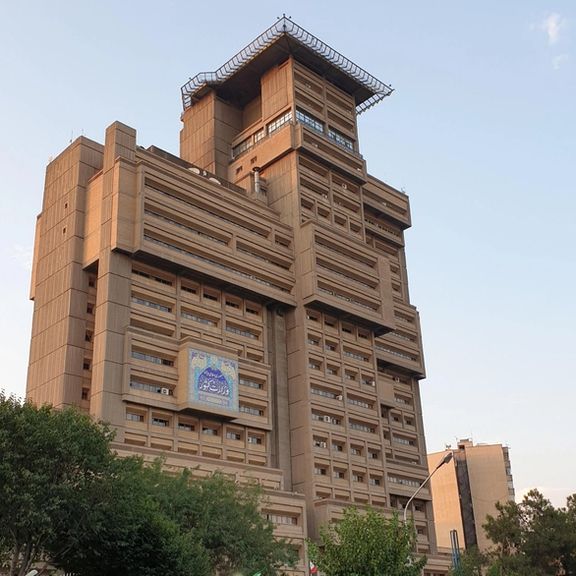
Iran's Interior Ministry building

Some former and current officials and politicians have criticized the Interior Ministry for sending text messages urging citizens to vote in the presidential election, arguing that these messages are counterproductive and may actually lower turnout.

Their criticism implicitly acknowledges that many who do not support the Islamic Republic will be turned off from voting.

An example of the Ministry's messages blamed by officials includes: “Supreme Leader: those who love Islam and the Islamic Republic should vote.”

Mohammad-Javad Azari-Jahromi, who served as the Minister of Communications in Hassan Rouhani's government, quoted Supreme Leader Ali Khamenei in a tweet, saying, “Even the people who don’t believe in the establishment, should vote,” adding, “For Interior Ministry’s information.”

Azari-Jahromi criticized this approach, tweeting, "Mass messaging should aim to increase participation, not decrease it!"

Ali Gholhaki, a journalist close to Iran's hardliners, wrote on X: “One of the surveys explicitly states that 'text messages from the Ministry of Interior' have had a negative effect (albeit a small one). So, please don't send text messages! Those who are committed to vote don't care about your messages; those who are undecided become more uncertain because of them!”

Reformist political activist Rahmatollah Bigdeli didn't hold back his criticism of the Ministry's messages. In a plea on X, he wrote, "Dear Ministry of Interior, if you truly want broad public participation in the elections, please stop encouraging people to vote! If you don't invite people, participation will definitely be higher! Please stop sending text messages!"

Reformist activist Emad al-Din Baghi highlighted the significant impact of the Ministry's messages. He recounted the experience of a local shopkeeper who had initially planned to vote at 6 o'clock but changed his mind after receiving a message from the Ministry of Interior that tied voting to support for the establishment. Baghi emphasized, “The votes of millions of citizens are for determining their own and their country's future, not for supporting the system. Do not tie the right to vote to your policies or the regime.”

Most Viewed

Ghalibaf defends Iran-US talks amid hardline backlash
1
INSIGHT

Ghalibaf defends Iran-US talks amid hardline backlash

2
ANALYSIS

From instability to influence: Pakistan’s pivotal role in US-Iran diplomacy

3
ANALYSIS

100 days on: why Iran’s January protests spread across social classes

4

War-hit homeowners feel abandoned as Iran’s reconstruction aid fades

5

Iran says no decision yet on talks as Pakistan prepares to host US team

Banner
Banner

Spotlight

  • Iran diplomacy wobbles as factions compete to avoid looking soft on US
    INSIGHT

    Iran diplomacy wobbles as factions compete to avoid looking soft on US

  • The politics of pink: how Iran uses cuteness to rebrand violence
    ANALYSIS

    The politics of pink: how Iran uses cuteness to rebrand violence

  • Bread shortages, soaring prices strain households in Iran, residents say
    VOICES FROM IRAN

    Bread shortages, soaring prices strain households in Iran, residents say

  • 100 days on: the anatomy of Iran’s January crackdown
    INSIGHT

    100 days on: the anatomy of Iran’s January crackdown

  • Ghalibaf defends Iran-US talks amid hardline backlash
    INSIGHT

    Ghalibaf defends Iran-US talks amid hardline backlash

  • From instability to influence: Pakistan’s pivotal role in US-Iran diplomacy
    ANALYSIS

    From instability to influence: Pakistan’s pivotal role in US-Iran diplomacy

•
•
•

More Stories

Surge in executions expected post-election, warns Iran rights group

Jul 5, 2024, 15:37 GMT+1

The Iran Human Rights Organization (IHRNGO) based in Norway has warned of a likely surge in executions following the presidential election in Iran.

Mahmood Amiry-Moghaddam, the director of IHRNGO, cautioned that Iranian authorities historically reduce executions "to encourage people to participate in the elections" and then sharply increase them immediately afterward.

“The people of Iran and the international community must prepare now to counter and respond appropriately to the potential wave of executions,” Amiry-Moghaddam stated.

IHRNGO’s latest figures show 249 executions have occurred over the past six months. The report indicates a 30% decrease in executions compared to last year, attributing this decline to the parliamentary and presidential elections. The organization's 15-year statistical analysis shows a consistent decline in executions in the two weeks leading up to elections, believed to be a tactic to boost voter turnout.

The report also details that 14 people were executed for security and ideological reasons, including five who were hanged on charges of spying for Israel. Additionally, it was noted that 35 of the executed individuals were Baluchis, who, despite making up only 2-6% of Iran's population, accounted for 14% of all executions.

In December, the UN Special Rapporteur on Iran highlighted the "shocking" levels of killings, torture, and brutality against the Baluch minority, noting that Baluchis are disproportionately targeted and executed within the Iranian criminal justice system.

In Iran's eastern Sistan-Baluchistan province, the predominantly Sunni Baluch community has faced severe persecution over the past 44 years, enduring the highest execution rate in the country.

Regardless of the winner, tough challenges await Iran’s new president

Jul 5, 2024, 14:03 GMT+1
•
Behrouz Turani

Iran will have a new president by Saturday, July 6. However, two factors have badly damaged the status of the President, whoever he might be, and even the institution of the presidency.

First, the two finalists engaged in serious mudslinging toward the end of their campaigns, damaging each other's credibility. Second, at least 60 percent of voters refused to go to the polls, exposing a significant rupture in the legitimacy of the Islamic Republic.

The relatively moderate Masoud Pezeshkian and hardliner Saeed Jalili have accused each other of lying, hypocrisy, inefficiency and corruption several times during this week’s debates. Neither had even the chance to respond to the allegations because of the chaotic nature of the debates aired on Iran's state television.

All the candidates, particularly the final two, have seriously undermined the status of Iranian Presidents, both past and future. They repeatedly emphasized that presidents are unable to bring about any change in the country's rigid political system. They also pointed out that there are areas, such as hijab enforcement and internet filtering, where Iranian presidents have no influence.

The debates aired on national TV revealed to voters that the two men, one of whom will certainly be the country's next president, are incapable of engaging in a healthy dialogue. They frequently interrupted each other and displayed visible irritation, undermining their credibility.

Numerous programs aired on state TV showed that both politicians, along with their aides and supporters, were unable to control their anger. They proved incapable of handling challenges and disputes diplomatically and calmly. None of their interactions could be characterized as civilized debate, often ending in unresolved conflict.

All that said, the winner has to face serious international challenges starting with the saber rattling in the Middle East and the prospects of political changes in Europe and the United States that are likely to affect Iran's place in the international equilibrium.

There is also the ongoing war in Ukraine and allegations about Iran's involvement in the conflict. Tough decisions and compromises are needed to balance Tehran's interests, especially considering China’s and Russia's interactions with Iran's southern neighbors.

Hard decisions in terms of foreign policy need to be made to lift crippling sanctions on the country’s oil exports imposed by the United States to rein in its nuclear program. Tehran is in desperate need of dollars to finance its essential imports and make at least minimal investments in its aging oil and gas industry.

Responding to allegations about Iran's regional ambitions and its involvement in international terrorism may be even more challenging than routine diplomatic transactions. Additionally, these challenges are compounded by a significant portion of the population that chose not to vote in the first round, driven by lingering resentment from the violent crackdown on the 2022 protests and ongoing financial problems that have worsened over the past three years under an ultraconservative government.

Addressing hunger, providing jobs to the unemployed, and pacifying disgruntled youths and women should be the new president's priorities within the country. Achieving these goals requires overcoming the ideological barriers between the people and the state.

Beyond these immediate concerns are the systemic challenges that have hindered the country's development since 1979. Regardless of who wins the election on Saturday, the pressing question remains: Given the significant damage to both candidates' reputations during the debates and the diminished status of the presidency, will either be able to accomplish even half of what is expected?

Slain protesters' families urge Iran election boycott

Jul 5, 2024, 13:05 GMT+1

The families of slain protesters have denounced the Iranian authorities for taking advantage of their loved ones’ names in political campaigns and have advocated for an election boycott.

Amir Shahidi, the father of Mehrshad Shahidi, a 20-year-old chef killed by Islamic Revolutionary Guard Corps (IRGC) forces in October 2022, wrote on his X account: "Some political factions have attempted to take advantage of the good name of our dear Mehrshad... The Shahidi family does not support any political factions or presidential candidates and considers the use of Mehrshad's name as immoral." The lawyer of the Shahidi family also stated that if Mehrshad Shahidi's name is taken advantage of during election campaigns, they will take legal action against the individuals and parties involved.

Fatemeh Mohajerani, the former Deputy Minister of Education, mentioned Mehrshad Shahidi in her speech during an election campaign in the central city of Arak in support of Masoud Pezeshkian, a presidential candidate. She stated that, as a mother, she could not permit "another Mehrshad Shahidi to fall. We will not allow a few totalitarians to saturate our streets with the blood of our youth."

This is not the first time Pezeshkian’s campaign has faced backlash. During the run-up to the first round of the presidential elections, Pezeshkian visited the graves of some of the victims of Flight PS752, downed by IRGC missiles in 2020, which outraged their families.

Additionally, Pezeshkian's use of an iconic song from Iran's nationwide protests in his presidential campaign sparked backlash on social media. Critics assert that while Pezeshkian condemned the protests dubbed Woman, Life, Freedom, he appropriated the movement's song, “Baraye,” for political gain.

The demonstrations, lasting for months, began after the death of 22-year-old Mahsa Amini while in police custody, resulting in over 550 deaths. In 2022, Pezeshkian condemned the demonstrations as orchestrated acts of hostility, blaming the US and Europe for igniting Iran's largest uprising since the founding of the Islamic Republic.

Meanwhile, several families who lost their loved ones during protests in Iran emphasized boycotting the elections by posting on social media.

Mahsa Amini's father stated that his family is boycotting the presidential elections. “We are not endorsing any specific candidate in this election, and we have little hope for the realization of justice in the future," Amjad Amini wrote on Instagram.

Saeed Afkari, the brother of Navid Afkari, who was executed in September 2020 after participating in protests and being accused of killing a government employee, posted several texts about this on X.

Fatemeh Heydari, the sister of Javad Heydari, killed during the crackdown on the 2022 protests in Qazvin, wrote on X: "Although we lack media coverage and financial resources, we will not allow this treacherous minority to amplify their hollow voices over ours, the majority of the Iranian people."

Shabnam Eskandari, the sister of Mohammadreza Eskandari, a victim of the nationwide protests of 2022, described the last moments of her brother’s life and addressed the voters by saying: "They shot him with a military-grade bullet at the corner of the street: amidst heavy gunfire, no one could even take him to the clinic."

The brother of Erfan Khazaei, killed during 2022 nationwide protests, wrote on X, “Choose the right side of history.”

Iranians await to see turnout in Friday's presidential runoff

Jul 5, 2024, 09:35 GMT+1
•
Maryam Sinaiee

Whether the 60% who refused to vote in Iran on June 28 will abstain from voting in Friday’s runoff remains to be seen. However, many believe the majority has unequivocally demonstrated its demand for change.

The finalists, hardliner Saeed Jalili and a centrist Masoud Pezeshkian, both are seen by many Iranians as regime insiders, who seem unable to garner the trust of the majority.

Mohsen Renani, a prominent professor of economics and commentator, described Iranians' behavior in last week's elections as politically "mature," regardless of whether they chose to vote or abstain.

"Our nation no longer fears, nor can it be easily influenced. It is not swayed by tempting promises of gold subsidies or free housing, as some candidates have offered. Nor is it influenced by the analyses and solicitations of intellectuals, activists, and academics to take political action,” he wrote.

The Iranian nation "acts according to its own discernment, which represents significant progress in our national pursuit of democracy since the Iranian Constitutional Revolution of 1906," Renani wrote earlier this week. "They know when to act and what to do: when to protest in the streets and when to return home, when to remain silent and when to cry out, when to vote and when to abstain."

For the first time, unlike in any previous presidential elections, Supreme Leader Ali Khamenei remained conspicuously silent until Wednesday. When he finally spoke, he did not refer to the election as "an epic," a term he typically uses. Instead, he acknowledged that the turnout was "less than expected." However, he insisted that the low turnout was not due to popular dissatisfaction or opposition to clerical rule.

Turnout dropped to 39.92 percent in the first round according to official figures. This turnout rate was the lowest in the four decades since the Islamic Revolution of 1979. Only 48 percent voted in 2021 elections which set an earlier record of low turnout. Turnout had not dropped to below 59.7 percent since 2005 and had even been as high as 84.8 percent in 2009.

“There is still not too much enthusiasm to vote in the second round or even to discuss it among those who did not vote earlier,” Farhad, 48, an engineer, told Iran International.

“Of the people I know, family and acquaintances, some people are posting stories on Instagram condemning the vote comparing participation in the elections as betrayal of the blood of the victims of the past few years’ crackdowns on protesters. Others say they are voting to save Iran from the total dominance of ultra-hardliners,” he added.

“But there is also the core Jalili supporters who are enthusiastically campaigning for their candidate to win and to make a statement about the legitimacy of the ruling establishment,” Farhad said. “They are all over social media platforms.”

Of the two candidates, only Pezeshkian has unequivocally acknowledged that the low turnout was a result of popular dissatisfaction, calling it a "meaningful message to the government, society, and political groups." He has repeatedly stated in campaign speeches, films, and televised debates that he wants to represent the 60 percent who did not vote.

Rather than denouncing those who participated in the Woman, Life, Freedom protests of 2022-23 known as Mahsa Protests and calling them “rioters” as hardliners do, Pezeshkian has been criticizing the government for violence against Mahsa and others for hijab as he had done in a tweet a day after her death in custody in September 2020.

Pezeshkian’s supporters in the past few days have expressed their support for the Mahsa movement at campaign meetings. At his campaign gatherings including a gathering at Heydarnia Stadium in Tehran Wednesday, his supporters chanted Woman, Life, Freedom.

At the same time, he agreed with denying internet service to people during times of unrest, which the government did in November 2019 when security forces killed at least 1,500 civilians. He has also pledged to fully follow Supreme Leader Ali Khamenei's policies, exhibiting contradictory signals to voters who are highly mistrustful of regime politicians.
Iran's exiled prince calls for election boycott, foresees end to 'Mafia-like corruption'

Jul 5, 2024, 08:49 GMT+1

In a renewed call for the boycott of presidential elections, Iran’s exiled prince Reza Pahlavi has emphasized that once the current establishment is ousted, the country will be free of “entrenched mafia-like corruption.”

Pahlavi stated Thursday on X that with the current authorities gone, "there will be a truly healthy open economy," and all forms of "gender, sexual, and religious discrimination" will be eliminated.

“I firmly believe this is achievable, and I am confident that the primary resources to accomplish it are largely within Iran, ready to fill this void swiftly,” Pahlavi said.

Pahlavi urged Iranians to "join the families of the martyrs of Iran's national revolution from December 2017 to November 2019 to the Mahsa uprising" and to stand by political prisoners from various backgrounds.

He warned against the clerical establishment's use of citizens' names and “votes to support terrorists and criminals in Gaza, Lebanon, Syria, Iraq, and Yemen,” which “drags the region and the world into war and chaos.”

Furthermore, he highlighted the regime's misuse of national wealth and the rising costs of essentials like water, bread, and gasoline.

Pahlavi's call for an election boycott resonates with numerous other Iranian activists who have similarly boycotted Iran's presidential elections, making voter turnout a central theme of this campaign.