• العربية
  • فارسی
Brand
  • Iran Insight
  • Politics
  • Economy
  • Analysis
  • Special Report
  • Opinion
  • Podcast
  • Iran Insight
  • Politics
  • Economy
  • Analysis
  • Special Report
  • Opinion
  • Podcast
  • Theme
  • Language
    • العربية
    • فارسی
  • Iran Insight
  • Politics
  • Economy
  • Analysis
  • Special Report
  • Opinion
  • Podcast
All rights reserved for Volant Media UK Limited
volant media logo

Concerns rise about Iran's future ahead of runoff
Jul 4, 2024, 14:44 GMT+1Updated: 16:27 GMT+0
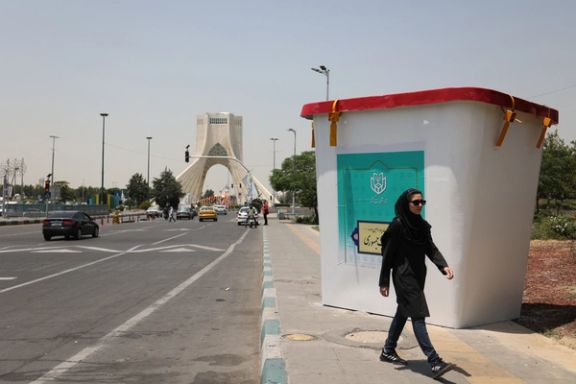
A large replica of a ballot box in Tehran to encourage voting. June 2024

As criticism of Iranian state television grows over perceived bias against reform-oriented candidate Massoud Pezeshkian, snippets of the debate have gone viral on social media.

Meanwhile, concerns are rising within Iranian society about the ability of both candidates to tackle the country's problems. Another heated discussion centers on the reaction of those who boycotted the election or abstained, who make up more than 60 percent of eligible voters. The key question is whether some of them will support Pezeshkian in the runoff on Friday.

This concern was evident in the remarks of Prince Reza Pahlavi, who called for a national boycott and Supreme Leader Ali Khamenei, who acknowledged the low participation rate in what some observers dubbed a humiliating admission.

Pro-reform politicians and social media users have suggested that ultraconservative candidate Saeed Jalili's brother, who heads the state television, may have used his influence to shape the debate's questions and answers.

Mohsen Hashemi, the chairman of the central council of the pro-reform Executives of Construction Party, charged in an interview with Khabar Online that the questions asked by the state TV presenter were designed to tarnish Pezeshkian's image and create doubts about his integrity.

Hashemi added that Jalili's influence on state television is deep-rooted, thanks to his brother's position as the head of the country's sole broadcaster.

Meanwhile, he dismissed accusations that members of the Rouhani administration are running Pezeshkian's campaign and that his possible government would be a continuation of former President Hassan Rouhani's presidency.

Hashemi claimed that the questions were given to Jalili beforehand to better prepare him for the debate. Nonetheless, he opined that the two rounds of debates between the runoff candidates are likely to boost election participation by 10 percent.

Like many others, Hashemi noted that both candidates were more polite in the first debate, while the second debate was marked by agitation and anger from both sides.

Khabar Online wrote in another report that Jalili used the same tactics as former President Mahmoud Ahmadinejad, i.e., trying to make his opponent angry and at the same time smile at him.

The report added that the state TV and its presenters clearly favored Jalili and nearly all of the staff members present on the set supported the ultraconservative candidate. The website characterized, particularly the second debate, as quarrels rather than a conversation.

The website noted that Jalili was utterly nervous and even hysteric during the debate and raised his vice at several points and frequently interrupted Pezeshkian. At times, both candidates clenched their fists, noted the website.

A point made by other observers was that none of the candidates showed any interest in the key issue of the environment in the two debates.

Some observers continued to express concern for the perils of the possible election of hardliner Jalili as Iran's next president. One of them was Abdolreza Faraji Rad, Iran's former ambassador to Norway and Hungary, who said Jalili's possible win will be too costly for Iran's foreign policy.

On the same note, Hamid Hosseini an expert on energy has also warned that a country of 80 million population cannot be run on barter trade involving sheep and mango. He was referring to a recent transaction between Iran and Pakistan.

The concern is also evident among the public. Journalist Roozbeh Bolhari quoted pro-government reformist activist Saeed Laylaz as saying that Iran's reformists were hoping that another 10 million would vote to finish the election in the first round, but they did not. As a result, Laylaz pointed out,

Most Viewed

Ghalibaf defends Iran-US talks amid hardline backlash
1
INSIGHT

Ghalibaf defends Iran-US talks amid hardline backlash

2
ANALYSIS

From instability to influence: Pakistan’s pivotal role in US-Iran diplomacy

3
ANALYSIS

100 days on: why Iran’s January protests spread across social classes

4

War-hit homeowners feel abandoned as Iran’s reconstruction aid fades

5
INSIGHT

100 days on: the anatomy of Iran’s January crackdown

Banner
Banner

Spotlight

  • Bread shortages, soaring prices strain households in Iran, residents say
    VOICES FROM IRAN

    Bread shortages, soaring prices strain households in Iran, residents say

  • War-hit homeowners feel abandoned as Iran’s reconstruction aid fades

    War-hit homeowners feel abandoned as Iran’s reconstruction aid fades

  • 100 days on: the anatomy of Iran’s January crackdown
    INSIGHT

    100 days on: the anatomy of Iran’s January crackdown

  • Ghalibaf defends Iran-US talks amid hardline backlash
    INSIGHT

    Ghalibaf defends Iran-US talks amid hardline backlash

  • 100 days on: why Iran’s January protests spread across social classes
    ANALYSIS

    100 days on: why Iran’s January protests spread across social classes

  • From instability to influence: Pakistan’s pivotal role in US-Iran diplomacy
    ANALYSIS

    From instability to influence: Pakistan’s pivotal role in US-Iran diplomacy

•
•
•

More Stories

Iran's 'reformists' bet on a candidate under Khamenei's watchful eye

Jul 4, 2024, 11:24 GMT+1
•
Majid Mohammadi

The Iranian presidential election has demonstrated yet another attempt by Iran's "reformists" to try to change the Islamic Republic gradually instead of either accepting the status quo or agreeing with a revolution.

Ostracized from politics by hardliner followers of Supreme Leader Ali Khamenei since 2020, pro-reform political factions were beginning to show impatience in the face of the ongoing monopolization of power by ultraconservatives. The pressure of public anger over a declining economy and more repression were pushing reformist leaders such as former President Mohammad Khatami to sound more defiant than ever.

Khatami surprised many in February when he announced his abstention from highly manipulated parliamentary elections, and fewer observers were expecting him to endorse the presidential vote to replace Ebrahim Raisi who was killed in a helicopter crash in May. In fact little had changed since February as the un-elected Guardian Council disqualified key presidential contenders from entering the race.

Gambling Reformers

By participating in the 2024 elections with Masoud Pezeshkian, a relatively moderate politician, as their candidate, the so-called reformist faction perhaps squandered a significant opportunity to rebuild its credibility with voters who appeared to have lost confidence in the political system. A large majority had just abstained from the March 1 parliamentary elections.

The first round of voting did not bode well for those who hoped a majority will bless the election with their participation. More than 60% abstained from voting on June 28.

Previously, they had allowed the regime's hardliners, to employ brutal crackdowns on the 2017 and 2019 protests due to their backing of the Rouhani administration, even urging severe suppression of protesters.

During the 2022 Woman, Life, Freedom movement, some members stood in solidarity with the protesters, but it seemed too little and too late.

Yet, when the Guardian Council qualified their third-ranking candidate, Pezeshkian, they swiftly reverted to supporting the regime's “enforcers”.

In this way, they – once again – they missed the chance to appease two-thirds of the population who boycotted the elections, achieving no significant victories.

The costs of having a candidate participate in the debates far outweighed any potential benefits.

Three Models of Reformism in the Islamist Government

The Islamic Republic has so far witnessed two models of "reformism."

The first model was ushered in by President Mohammad Khatami and his allies between 1997 and 2005. They aimed for political development by strengthening civil society, empowering elected institutions over appointed ones, and expanding press freedom.

They were ultimately defeated by Khamenei and the Islamic Revolutionary Guards in all three areas.

The second model was led by President Hassan Rouhani and his team between 2013 and 2021, who aimed to end the oil and banking embargoes by de-escalating tensions with the West through the JCPOA agreement – hoping to improve everyday life alongside the operation of nuclear centrifuges.

But, when the Biden administration sought to return to the JCPOA, Khamenei’s loyalists in the parliament, with his support, passed the Strategic Action Law to Cancel the Sanctions, effectively hardening Tehran's position in nuclear talks and blocking any chance of a quick agreement.

If Pezeshkian secures the presidency, we’ll see the dawn of a third model of reformism, based on his campaign platform.

Learning from their previous two defeats, the reformists have adopted a new approach towards Ali Khamenei and his government, conveying two clear messages: first, they have no intention of challenging Khamenei or the institutions under his control and are willing to cooperate with his loyalists; second, they claim they can execute his policies more effectively and better justify the government's corruption and repression. Naturally, Khamenei desires both efficient and loyal executors.

Khamenei's Preference

From Jalili and Pezeshkian's statements in the debates, it is clear that Jalili is the candidate who will prioritize the full implementation of Ali Khamenei's policies.

Jalili's platform is solely focused on defending the “resistance front” policies in the Middle East, with the consequence of economic isolation. He also fully endorses a national internet network with filtering and slow speeds, mandatory hijab, severe suppression of opposition, and a strategic pivot towards the East.

If, however, Khamenei seeks to improve relations with the West, reduce sanctions through negotiations and de-escalate tensions with regional countries, and minimize the possibility of mass protests domestically, he would prefer Pezeshkian.

The possible election of Donald Trump has apparently rattled nerves in Tehran and some argue that Khamenei may be hedging his bets by allowing a non-hardliner to become president. The fact that former foreign minister Javad Zarif has become the most visible face of the Pezeshkian campaign could also be a signal of his return to the diplomatic arena, where the Islamic Republic finds itself more isolated than ever.

The opinions expressed by the author are not necessarily the views of Iran International.

Family of murdered Mahsa Amini boycotts elections

Jul 4, 2024, 11:01 GMT+1

The father of Mahsa Amini, whose death in Iran's morality police custody sparked a nationwide uprising, stated his family is boycotting the sham presidential elections.

“We are not endorsing any specific candidate in this election, and we have little hope for the realization of justice in the future," Amjad Amini wrote on Instagram.

Since Mahsa’s death in September 2022, her family has been under considerable pressure from the government, including being faced with travel bans. Her father has faced multiple summons to the Intelligence Office in Saqqez since her death.

Mahsa’s uncle has also been detained by security forces, and threats have been levied against Mahsa's brother.

In December, the family's lawyer, Saleh Nikbakht, was sentenced to prison, charged with "engaging in propaganda against the Iranian regime."

The national and global outrage over Mahsa's death is one of the most significant challenges to Iran's clerical establishment since the Islamic Republic was established in 1979.

In March, a UN fact-finding mission declared that Tehran's crackdown on the 2022 protests—including killings, imprisonment, torture, and sexual violence—constitutes crimes against humanity.

The Fact-Finding Mission was established by the UN Human Rights Council in November 2022, two months after the Woman, Life, Freedom protests erupted across the country in response to the death of 22-year-old Iranian-Kurd, Mahsa.

The team concluded that Iran is responsible for "physical violence" leading to Amini's death. The Iranian authorities have denied responsibility, attributing her death to a childhood medical condition following surgery.

However, the UN report dismissed this explanation, confirming "evidence of trauma to Ms Amini's body, inflicted while in the custody of the morality police."

Iran intensifies media clampdown amid presidential election runoff

Jul 4, 2024, 08:42 GMT+1

As Iran’s presidential election runoffs approached this week, the government intensified its media crackdown to control the narrative amid historically low voter turnout in the first round on June 28.

Tehran Prosecutor's Office issued a "warning" to the management of the Tehran-based economic newspaper Jahane Sanat over "publishing an article about the election results," according to a report by Iran’s judiciary news agency, Mizan, on Tuesday.

"The judicial case of this newspaper will be investigated in this regard," added Mizan.

In April, a case was opened against Jahane Sanat for “compromising national security" for coverage of Iran’s April 13 missiles and drone attack against Israel.

Earlier in June, Iran's Press Supervision Board issued strict guidelines for media coverage of the upcoming election emphasizing that disseminating material that promotes "the boycott of elections and lower participation" and "organizing unauthorized protests, strikes, or sit-ins" constitutes a crime. These guidelines also prohibit media from publishing the results of opinion polls.

According to non-profit rights group Defense of the Free Flow of Information (DeFFI), 17 newspapers in total have received warnings. DeFFI noted that the judiciary is attempting to mitigate the negative public perception associated with terms like "declaring a crime" and "filing a judicial case." To this end, the judiciary is increasingly using less charged terms like "warning" without actually altering the level of repression or the underlying legal processes. This approach follows extensive extralegal actions against media and journalists, aiming to soften the language while maintaining strict control over the press.

Additionally, the Iranian Ministry of Interior denied press credentials to four journalists from Shargh Newspaper hours after voting began in the presidential election, effectively barring them from covering the process. Officials abruptly canceled credentials for ‘reformist’ newspapers Shargh and Hammihan reporters, according to IranWire.

Last week, Iran’s security and intelligence forces sealed the studio of the liberal-leaning Fardaye Eghtesad (Economy's Future) media outlet.

DeFFI further noted that in June 2024, security and judicial incidents against Iranian media increased ninefold to 27 in comparison to the previous month. This marked the highest level of media suppression in a single month since the beginning of 2024.

The Islamic Republic has restricted press freedom since the early 1980s. Hundreds of journalists have been arrested over the years and some have spent long years in detention.

Meanwhile, most government-controlled media associated with the regime's 'reformist' and hardliner factions continued urging people to vote in the second round on Friday. They all prominently highlighted Supreme Leader Ali Khamenei's call on Wednesday to make up for the low turnout last week.

Why should the US not allow Iranian polling stations?

Jul 4, 2024, 06:00 GMT+1
•
Navid Mohebbi

In the midst of the second round of presidential elections in Iran, which saw a historic low turnout by the majority of voters, the issue of ballot boxes in Western countries sparked widespread protests among the Iranian diaspora.

These protests were particularly significant in the United States, home to the largest Iranian community outside of Iran.

The Biden administration has inexplicably allowed Tehran to establish over 30 polling stations across the United States, and it seems that the polls will continue for the second round. This decision is fundamentally flawed, as it legitimizes an undemocratic process, ignores robust opposition from Iranian democracy activists, and disregards US values and security interests.

Iranian elections are notoriously undemocratic. The US State Department has openly admitted that it does not expect the upcoming election to be "free or fair." In Iran, the electoral process is tightly controlled by the Guardian Council, which vets candidates to ensure they align with Supreme Leader Ayatollah Ali Khamenei's ideology. This leaves no real choice for the Iranian people, as only those loyal to the core of the regime are allowed to run. Even within Iran, there is significant apathy and distrust towards the electoral process.

From the outset, even government surveys revealed that over 73% of Iranians did not watch the first presidential debate, highlighting the populace's distrust and disengagement. This was later corroborated by the results of the first round, where the government announced a 39.92 percent turnout, prompting both candidates, Masoud Pezeshkian and Saeed Jalili, who advanced to the second round, to admit during their first one-on-one debate.

Khamenei views high voter turnout as a source of legitimacy for his regime. He has stated that every vote "increases the credibility and immunity" of the Islamic Republic. However, this so-called legitimacy is built on a foundation of repression and violence and denying the Iranian people the right to elect their leaders freely. Over the past six years, nearly 3,000 protesters have been killed, and tens of thousands have been arrested. The regime employs brutal tactics, such as blinding protesters with shotgun birdshots and carrying out chemical attacks on girls' schools, to maintain control.

Many Iranian Americans maintain that the US should stand with the Iranian people, who have repeatedly expressed their desire for change through protests and boycotts of sham elections. Many groups in Iran, including the Mourning Mothers, political activists, student and civil society organizations, and political prisoners, have called for a boycott of these elections, risking their safety to do so. By allowing these polling stations, the U.S. is inadvertently legitimizing a fraudulent system and ignoring the struggles of the Iranian people.

The Islamic Republic uses the participation of expatriates to whitewash its crimes and justify its rule. Former Foreign Minister Javad Zarif has pointed to voter turnout, including from those abroad, as evidence of the regime's legitimacy. This is deceptive, as the regime is desperate for legitimacy. According to their own statistics, the majority of Iranians abstained in the last four elections since 2020. Furthermore, the regime's international image has suffered significantly due to its involvement in the Russia-Ukraine war, the nuclear program crisis, and repression at home.

Canada has set a precedent by refusing to allow the Iranian government to set up polling stations on its soil for the past three elections. Despite not having formal diplomatic relations or an embassy, Canada has taken a principled stand in support of its Iranian-Canadian population and against the regime's propaganda. The US should follow Canada’s example and deny the Islamic Republic this platform.

Tehran has a history of using its embassies and consulates as bases for soft power expansion, propaganda dissemination, and monitoring of dissidents. Recently, a staff member at the Iranian Interests Section in Washington, DC, threatened an Iranian dissident with death, illustrating the regime's dangerous activities on US soil. Allowing polling stations could provide cover for further such activities.

The decision to allow polling stations in the United States is misguided and dangerous. The Biden administration responded to criticism by stating that both the Trump and Biden administrations granted permissions in recent elections, implying that this is not a new practice. However, past practices do not justify continued wrongs, especially given the changing realities in Iran. The uprisings of 2017, November 2019, and the 2021 "Women, Life, Freedom" movement, where people chanted "Reformist, principlist, the game is over," calling for the regime's overthrow, illustrate a clear shift in the Iranian people's stance.

Allowing these polling stations lends undue legitimacy to a repressive regime and poses security risks. The US must reconsider this decision and take a firm stand against Tehran’s efforts to exploit American soil for its propaganda and control. By doing so, the US would not only uphold its democratic values but also support the Iranian people's quest for freedom and justice.

The opinions expressed by the author are not necessarily the views of Iran International

Iranian officials make last efforts to rally voters for Friday runoff

Jul 4, 2024, 01:00 GMT+1

As the runoff race of the presidential election in Iran approaches, the government and its media are trying to create the illusion of a contested political atmosphere, to attract disillusioned voters.

With over 60% of the electorate abstaining in the first round on June 28th, the Islamic Republic faces a crisis of legitimacy. The boycott and abstention by a sizeable majority has highlighted public disillusionment with both 'revolutionary' and 'reformist' factions, which many Iranians view as two sides of the same coin. The two handpicked candidates have engaged in a series of provocative statements and what many observers call "theatrical infighting" to reignite public interest.

Supreme Leader Ali Khamenei, in his speech on Wednesday, tried to downplay the significance of the low turnout. He suggested that the lack of participation was not an indication of opposition to the Islamic Republic, but rather a sign that people were preoccupied with their personal lives. Yet, this attempt to save face seems to have done little to mask the regime's growing insecurity. Khamenei's directives to both political factions—who, as critics point out, cannot make a move without his approval—are clear: they must rally the disillusioned masses back to the ballot box to restore the government's “dignity."

Adding to the electoral maneuvering, Ali Akbar Salehi, former Foreign Minister and ex-head of the Atomic Energy Organization, entered the fray with comments about Saeed Jalili, the hardline presidential candidate. Responding to allegations that Jalili obstructed the revival of the JCPOA (Joint Comprehensive Plan of Action) during President Ebrahim Raisi's administration, Salehi revealed that “the agreement was nearly finalized and that former Foreign Minister Hossein Amir-Abdollahian was poised to sign it.”

The revelation was an implicit nudge to the electorate: a vote for Masoud Pezeshkian might revive the nuclear deal, although the real obstacle, as everyone knows, is Khamenei himself.

Salehi didn't stop there. He disclosed that the Supreme National Security Council had proposed an additional demand in the last moment that derailed the agreement. Jalili, as leader’s man in the council, he claimed, misrepresented Khamenei’s stance on secret negotiations with the United States. The narrative paints Jalili not just as an obstructionist but as someone who viewed possible diplomatic successes by others as personal competition rather than national imperatives.

The tensions within the government's ranks were further highlighted by Mohammad Javad Zarif, the former foreign minister who has been campaigning for Pezeshkian.

In an Instagram live session, Zarif criticized Jalili, questioning the origins of his "falsehoods" and suggesting they might “come from Israel.” Zarif, who was once criticized for glossing over government policies during Hassan Rouhani’s presidency, is now trying to get more people to vote, accusing Jalili of dishonesty and being responsible for brining on sanctions.

Zarif's plea to the public to reject Jalili on Friday might seem like a genuine call to action. However, many remain skeptical, seeing Zarif's efforts as yet another maneuver orchestrated to lure voters back to the polls. The fear voiced on social media is that, regardless of the election's outcome, the cycle of betrayal will continue—citizens' demands and freedoms will be forgotten, much like during the terms of presidents Rouhani and Mohammad Khatami.

As the second round of voting looms, the government's attempts to stage-manage the election underscore its vulnerability. The Iranian public, increasingly aware of the manipulations, faces a stark choice: participate in what many see as a sham process or continue to express their discontent through abstention. One thing is clear—the facade of electoral democracy in Iran is wearing thin, exposing the government's struggle to maintain its grip on power.



