• العربية
  • فارسی
Brand
  • Iran Insight
  • Politics
  • Economy
  • Analysis
  • Special Report
  • Opinion
  • Podcast
  • Iran Insight
  • Politics
  • Economy
  • Analysis
  • Special Report
  • Opinion
  • Podcast
  • Theme
  • Language
    • العربية
    • فارسی
  • Iran Insight
  • Politics
  • Economy
  • Analysis
  • Special Report
  • Opinion
  • Podcast
All rights reserved for Volant Media UK Limited
volant media logo

Australia's Criminal Code Bars Listing IRGC as Terrorist Organization, Official Says

Jun 21, 2024, 11:43 GMT+1

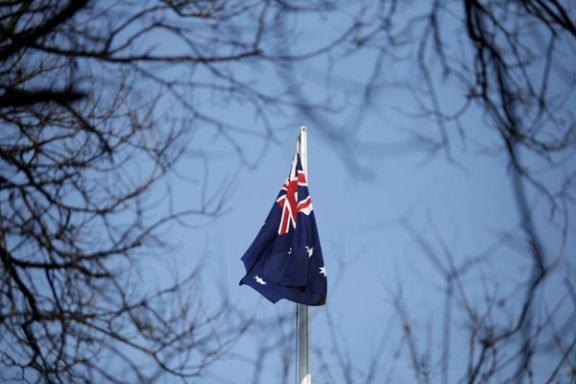
The terrorist organization framework within Australia’s Criminal Code does not allow for the listing of the Islamic Revolutionary Guard Corps (IRGC), an Australian official told Iran International.

“The Australian Government has used the tools available to it to take meaningful action against the IRGC, including through the imposition of targeted financial sanctions,” an Australia's Department of Foreign Affairs spokesman told Iran International's Alireza Mohebbi.

“The Government has sanctioned more than 80 IRGC-linked individuals and entities since Iran’s violent suppression of protests in September 2022, including the Commander of the IRGC Quds Force and the IRGC Navy,” the official further explained.

Following Canada's government decision on Wednesday, Australia is facing increasing pressure to follow suit as Australian senators and rights groups have rebuked their government's reluctance to take similar action.

"The Canadian Government's decisive action contrasts sharply with the inaction of the Albanese Government, which has failed to designate the IRGC as a terrorist organization in Australia," read a joint statement by lawmakers Claire Chandler, Simon Birmingham, and James Paterson.

Australian-Iranian rights group Ausiran urged Foreign Minister Penny Wong to acknowledge IRGC's role in terrorism, citing threats to global security and Australian citizens.

"Ausiran calls on the Government to prioritize Australian citizens' safety and global peace by joining allies in designating the IRGC as a terrorist organization," the letter emphasized.

The Australian Jewish Association (AJA) reiterated its call for IRGC designation, citing its global terrorist activities, including recent plots against Jewish and Israeli targets.

"The IRGC is the largest sponsor and facilitator of terrorism worldwide, impacting victims from Yemen to Ukraine. They coordinate hostility against Israel," stated AJA CEO Robert Gregory. "Their actions result in casualties among our allies, including US soldiers in the Middle East, while they oppress and imprison the Iranian people."

Kylie Moore-Gilbert, a former detainee in Iran, also joined the call for Australia to designate the IRGC as a terrorist organization, asserting, "Australia has no more excuses." She argued that since the US and Canada have taken such steps, Australia should follow suit to address the plight of "thousands of Iranian Australians and other victims of IRGC terror."

Moore-Gilbert was arrested by the IRGC in 2018 and sentenced on espionage charges before being released in a 2020 prisoner exchange.

Most Viewed

Worst outcome is Islamic Republic’s survival, ex-CIA official says
1
PODCAST

Worst outcome is Islamic Republic’s survival, ex-CIA official says

2
ANALYSIS

Iran brings unusually broad team to US talks to blunt future blame

3
INSIGHT

Tehran sends tough message but keeps diplomacy door open

4

Zoroastrian religious figure arrested in Iran

Banner
Banner

Spotlight

  • What the US naval blockade would mean for Iran’s economy
    INSIGHT

    What the US naval blockade would mean for Iran’s economy

  • Tehran sends tough message but keeps diplomacy door open
    INSIGHT

    Tehran sends tough message but keeps diplomacy door open

  • Worst outcome is Islamic Republic’s survival, ex-CIA official says
    PODCAST

    Worst outcome is Islamic Republic’s survival, ex-CIA official says

  • Why the Iran-US truce is more likely to buy time than peace
    ANALYSIS

    Why the Iran-US truce is more likely to buy time than peace

  • Engaged but uncommitted: China watches Iran and US fight and talk
    ANALYSIS

    Engaged but uncommitted: China watches Iran and US fight and talk

  • A truce for the world, a reckoning for Iran’s economy
    ANALYSIS

    A truce for the world, a reckoning for Iran’s economy

•
•
•

More Stories

Iran's Energy Crisis: Power Cuts Hit Industrial Sector Hard

Jun 21, 2024, 11:05 GMT+1
•
Dalga Khatinoglu

Iran is grappling with a severe energy deficit crisis, exacerbated by the summer heat and the government's failure to meet natural gas and electricity production targets.

Recently, Iran's Deputy Minister of Industry, Mines and Trade announced drastic measures, revealing that electricity supply to the industrial sector will be halved during the summer months.

In a letter addressed to the government, Reza Mohtashmipour highlighted significant shortages. The steel manufacturing sector, demanding 5,500 MW, will receive only 2,400 to 3,800 MW. Similarly, the cement industry, requiring 1,000 MW, will be allocated just 500 to 650 MW.

Before delving into Iran's electricity deficit situation, it's crucial to note an error in Mohtashmipour's official letter where units were incorrectly stated as "Watt hour" instead of "Watt". This elementary error reveals the often criticized lack of expert knowledge among top officials and their assistants.

For example, he erroneously indicated that the steel manufacturing sector requires "5,500 MWh power". However, the correct unit is watt, not watt hour. If we measure the steel sector's electricity need based on watt hour, it is approximately 45 million MWh annually, 3.75 million MWh monthly, or 120,000 MWh per day.

Power deficit

Although the nominal capacity of Iran's power plants is 90,000 MW, many of these plants have been worn out for years. To inflate the numbers, Iranian officials include decommissioned power plants in the statistics for nominal power generation capacity.

According to the statistics of the Ministry of Energy, the "actual" power generation capacity is about 75,000 MW. In addition to worn out and decommissioned fossil fuel power plants, the country's hydropower plants have generated electricity less than the nominal capacity due to the drought. The shortfall peaks at 14,000 MW or 20% during summer.

Despite government plans to launch over 6,000 MW of new power plants last year, only a fraction materialized (about 30%), underscoring persistent challenges. This summer, the government has adjusted the working hours of the public sector and implemented electricity cuts in dozens of offices due to high electricity consumption from cooling systems.

It's notable that the government bureaucracy consumes only 2,000 MW of electricity even at peak demand using all cooling systems, representing just 3% of the country's total electricity demand. Even if the entire public sector, including offices, banks, hospitals, schools, and universities, were closed and street lighting completely cut off, it would only mitigate half of Iran's summer electricity deficit.

According to statistics from the Ministry of Energy, Iran's electricity consumption is distributed as follows: public and road lighting sector 10%, household sector 32%, industrial sector 36%, agriculture 14.5%, and commercial sector 7.5%.

World Bank estimates

The World Bank recently reported a slowdown in Iran's GDP growth, projecting moderation for the fiscal years March 2024-March 2025. This is attributed to subdued global demand, ongoing international sanctions, and domestic energy shortages, which exacerbate Iran's severe electricity deficit in summers and substantial gas deficit in winters.

To prioritize residential energy needs, the government has imposed limits on energy supplies to the industrial sector, causing annual losses estimated at $6-8 billion. The International Monetary Fund also forecasts continuous GDP deceleration in Iran between 2024 and 2026.

Instead of addressing the fundamental energy imbalance, authorities have resorted to cutting off electricity and gas to industries—a short-term solution that fails to resolve the country's energy deficit.

Official statistics reveal that 13% of Iran's generated electricity is lost during transmission and distribution due to an outdated grid. This is equivalent to the total electricity consumption of the steel industry, which generates export revenues. Moreover, many of Iran's power plants are inefficient gas or steam types. Rather than modernizing the grid or converting to more efficient combined-cycle plants, the government has opted for measures like adjusting office hours or imposing restrictions on industrial power supply.

Iran boasts ideal conditions for solar energy production, with 300 sunny days annually, yet renewables contribute only 1% to the country's electricity generation. Last year, the government aimed to launch 2,800 MW of solar and wind power plants but achieved only 2% of the target.

Compounding these challenges is the government's burgeoning debt to private power plants, now amounting to 900 trillion rials ($1.5 billion), a 300% increase since 2021, which has become a significant crisis.

Former Iranian President Seeks Airtime to Address Debate Accusations

Jun 21, 2024, 10:30 GMT+1

Iran's former president Hassan Rouhani has demanded airtime on Iranian state television for the second time this week to address what he says are "accusations" against him by some presidential debates.

Drawing from Supreme Leader Ali Khamenei's earlier call for contenders to avoid "slander and refrain from smearing each other," Rouhani's office asserted that these actions have been directed towards him.

During debates, conservative candidates frequently criticized Rouhani's 'reformist' tenure, with Alireza Zakani, Tehran's Mayor and a presidential candidate, remarking, "Rouhani's eight-year tenure was a dark era that worsened the country's situation."

His letter, cited by Iranian media, criticized certain candidates for allegedly “flouting moral and legal standards”, urging the Islamic Republic of Iran Broadcasting (IRIB) to “honor its commitment to provide equitable airtime”.

Hardliners have been accusing Rouhani for Iran's current economic crisis that worsened after the United States withdrew from the 2015 nuclear deal six years ago and imposed economic sanctions.

The former president also lodged a complaint following the broadcast of the first debate on Monday.

After his initial complaint, IRIB urged Rouhani to clarify the precise nature of the allegations and specify when they were made during the debates. Despite this, his subsequent complaint, like the first, lacked specific details.

US Backs Canada's Terrorist Designation of IRGC, Offers Global Support

Jun 21, 2024, 08:40 GMT+1

US State Department spokesman on Thursday welcomed Canada's decision to designate the Iran's Revolutionary Guard (IRGC) as a terrorist group, pledging support for other countries considering similar actions.

“The IRGC’s terrorism and lethal plotting threaten the entire world, and we stand ready to provide support as other countries consider designating the IRGC as a terrorist organization,” stated Matthew Miller.

The spokesman elaborated that the US is prepared to supply information to other countries regarding IRGC activities, emphasizing the regular practice of sharing intelligence and other pertinent information with allies and partners about the actions of terrorist supporters globally.

Following years of campaigning by activists, Canada's recent designation of the IRGC as a terrorist group comes after uncovering plots where the entity raised funds and recruited agents within Canada.

The US designated the IRGC in 2019, and Canada had already imposed multiple rounds of sanctions on terrorist entities supported by the IRGC, such as Hezbollah, Hamas, the Palestinian Islamic Jihad, and the Taliban, which further Iran’s interests and foreign policy.

This designation has reignited calls for global action, with senators in Australia urging their government to follow Canada's lead.

What Does Canada's IRGC Terror Listing Really Mean?

Jun 21, 2024, 07:55 GMT+1
•
Negar Mojtahedi

There's been a lot of reaction after the Canadian government designated the Islamic Revolutionary Guard Corps (IRGC) as a terror entity, but what does it entail and how will it be implemented?

Canada is a favorite destination for Iranians who want to emigrate to free countries where they can build better lives. One reason is the relative ease of obtaining visas, while it is much tougher to enter the United States. But among tens of thousands who immigrate there are also former member of the IRGC and Iranian government officials with ties to the now terror-listed entity. The question is what will happen to people who still maintain ties to the regime in Iran, especially financial and political connections.

It may be months before Canada sees the impact of the designation in terms of any potential deportation, but one aspect that is immediate and far reaching is financial, according to policing and financial crime expert Gary Clement.

Clement, a former RCMP Superintendent, who spent 30 years with the Mounties, told Iran International the terror designation has teeth.

"It opens the door to look at going after any of the finances or freezing bank accounts and everything from the terrorist group. So I think that's going to be a tremendous benefit and enables the fact that any money cannot be collected for the benefit of this group in any way, " said Clement.

The listing process stems from the Anti-Terrorism Act of 2001, and is set out in section 83.05 of the Criminal Code.

According to the law, entities can only be listed as terrorists, but an entity can be a person, group, partnership, fund or an unincorporated association or organization.

Canada's criminal code specifies that it’s a crime to provide property or financial services that could benefit a terrorist group.

That aspect of the criminal code is what leads to consequences, said Clement on why the designation has serious implications.

"Anyone that's deemed to be part of this or trying to get individuals on board, can lead to terrorist charges," said Clement.

Clement said it's now up to banks, brokerages, and other financial institutions to report if they hold terrorist property and freeze it.

Clement, who managed the national police force's financial crime program, said the terror listing allows various Canadian institutions to share more information with law enforcement.

"Anything that came in from FINTRAC [The Financial Transactions and Reports Analysis Centre of Canada] that relates to this group or may have related to this group, that information can now be shared with law enforcement because they're a terrorist group."

Jonathan Wilkinson, the Liberal Member of Parliament (MP) for North Vancouver, BC, which is a predominately Iranian-Canadian riding, has been advocating for the IRGC terror listing for several years.

"I was very pleased. I think it's very important for us to be able to go after the financial, assets that may exist in this country. I think it's very important for us to be able to go after some of the folks that are tied to the IRGC that may be living in this country," Wilkinson said.

A Global News Investigation uncovered more than 700 regime-linked associates operating in Canada, threatening and intimidating Iranian-Canadian dissidents on Canadian soil. That investigation also revealed that Masih Alinejad, an American human rights activist was warned by the FBI not to travel to Canada because she would not be safe from the long arm of the Iranian regime.

Wilkinson said on a political level, Canada's Minister of Public Security, would be responsible for overseeing how they determine who is an IRGC agent, working in conjunction with intelligence and law enforcement like the RCMP and Canadian Security Intelligence Service (CSIS).

If someone is a family member of the IRGC, Wilkinson said, they would only be impacted if they "knowingly" aided an IRGC agent, but that is something that is yet to be determined in the coming months. Just being related to an IRGC does not lead to any charges.

When it comes to the deportation of IRGC members, Wilkinson said it would a lot less complicated for those who are not full Canadian citizens, but "in the context of Canadian citizens, that is something that we are going to be working through the Immigration Department, it is more complicated," he said.

Independent Toronto area MP Kevin Vuong has been advocating for the Iranian-Canadian community, and the victims families of flight PS752 that was shot down by the IRGC over Tehran in 2020 killing 176 people onboard.

He's been fighting alongside the families for justice and to enlist the IRGC as a terrorist entity.

One of the those victims was a student Vuong taught at the University of Toronto who later became his friend, Mohammad Amin Jebelli.

While he welcomes the decision to enlist the IRGC, he questions why now?

"This is more than just symbolic. There is real teeth behind this, which kind of begs the question, why did the Trudeau government refuse to take this definitive, concrete action for so long?"

Vuong said instead of speculating 'why', he chooses to focus on ensuring that actions will be taken to carry out the proscription.

"What's key for me now is now that they are a listed a terror group, that actions will be taken to ensure that Iranian Canadians are safe, but also that all Canadians are safe. And that means prosecuting the IRGC and kicking out their operatives from from being able to operate on Canadian soil," he said.

With the designation, Vuong said, anyone supporting the terror group would be charged and prosecuted under Canada's judicial system.

Vuong believes the issue is one of national security for all Canadians - but especially for the Iranian and Jewish communities who have been most impacted.

"It was the IRGC that train and equip Hamas to be able to commit those unspeakable atrocities of October 7th. Unfortunately, all these terrorist groups are linked and they work with one another," said Vuong.
Iran Summons Italian Envoy to Protest Canada’s Listing of IRGC as Terrorist

Jun 20, 2024, 22:55 GMT+1

Iran’s Foreign Ministry on Thursday summoned the Italian ambassador in Tehran, who is responsible for protecting Canada's interests in Iran, to lodge the Islamic Republic’s protest at Ottawa’s designation of the IRGC as a terrorist entity.

The Foreign Ministry said the it expressed Tehran’s “strong protest” against the “unlawful and internationally illegal” action of the Canadian government.

”In addition to warning about the consequences of this action, Iran's right to take necessary measures and reciprocal actions was emphasized,” a statement by Iran’s Foreign Ministry said.

The Italian ambassador vowed to promptly convey the message to the Canadian government, the statement added.






