• العربية
  • فارسی
Brand
  • Iran Insight
  • Politics
  • Economy
  • Analysis
  • Special Report
  • Opinion
  • Podcast
  • Iran Insight
  • Politics
  • Economy
  • Analysis
  • Special Report
  • Opinion
  • Podcast
  • Theme
  • Language
    • العربية
    • فارسی
  • Iran Insight
  • Politics
  • Economy
  • Analysis
  • Special Report
  • Opinion
  • Podcast
All rights reserved for Volant Media UK Limited
volant media logo

Ex-FM Zarif's Office Rebuts Hardliner Candidate's Claims on JCPOA Secrecy
Jun 17, 2024, 08:44 GMT+1
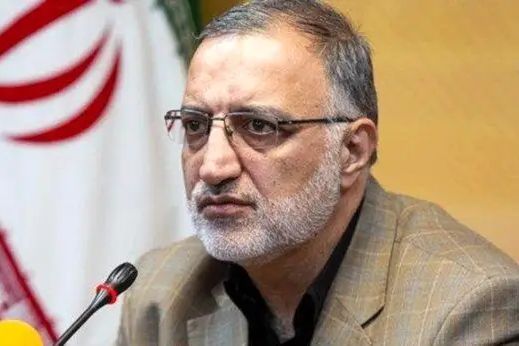
Presidential candidate Alireza Zakani

Iran’s former Foreign Minister has responded to criticism of allegations of secrecy surrounding the 2015 nuclear deal amid the presidential race war of words.

Presidential candidate Alireza Zakani accused Mohammad Javad Zarif, along with former President Hassan Rouhani and former Parliament Speaker Ali Larijani, of “clandestinely” handling the Joint Comprehensive Plan of Action (JCPOA) document.

Zakani claimed that the trio withheld the JCPOA from other vital Iranian officials, including then-Secretary of the Supreme National Security Council, Admiral Ali Shamkhani, and the special advisor to the Supreme Leader, Ali Akbar Velayati, under "utmost confidentiality."

The response from Zarif's office denounced Zakani's claims as “baseless”, highlighting that the JCPOA text and its Persian translation were publicly posted on the Ministry of Foreign Affairs' official website immediately after the deal's conclusion, debunking the notion of secrecy.

Furthermore, Zarif’s office also defended the JCPOA's “legitimacy”, noting its ratification by various Iranian governmental bodies and its alignment with the will of the Islamic regime, as recognized by the Supreme Leader.

The Joint Comprehensive Plan of Action (JCPOA), commonly referred to as the Iran nuclear deal, was a landmark agreement reached in July 2015 between Iran and the P5+1 group, comprising the United States, United Kingdom, France, Russia, China, and Germany.

The core objective of the JCPOA was to curb Iran's nuclear capabilities to ensure they remained strictly for peaceful purposes, in exchange for lifting economic sanctions that had impacted Iran's economy. Under the agreement, Iran agreed to reduce its stockpile of uranium, limit its level of uranium enrichment, and decrease the number of its centrifuges in return for relief from sanctions.

However, the US withdrew from the accord in 2018 under President Donald Trump, which led to the re-imposition of US sanctions. Since then, Iran's uranium enrichment has reached levels which the UN's nuclear chief says allows Iran to be "weeks not months" away from a nuclear weapon.


Most Viewed

Ghalibaf defends Iran-US talks amid hardline backlash
1
INSIGHT

Ghalibaf defends Iran-US talks amid hardline backlash

2
INSIGHT

A nation in limbo: 100 days after the massacre, has the world moved on?

3
ANALYSIS

From instability to influence: Pakistan’s pivotal role in US-Iran diplomacy

4
ANALYSIS

100 days on: why Iran’s January protests spread across social classes

5

War-hit homeowners feel abandoned as Iran’s reconstruction aid fades

Banner
Banner

Spotlight

  • War-hit homeowners feel abandoned as Iran’s reconstruction aid fades

    War-hit homeowners feel abandoned as Iran’s reconstruction aid fades

  • 100 days on: the anatomy of Iran’s January crackdown
    INSIGHT

    100 days on: the anatomy of Iran’s January crackdown

  • Ghalibaf defends Iran-US talks amid hardline backlash
    INSIGHT

    Ghalibaf defends Iran-US talks amid hardline backlash

  • 100 days on: why Iran’s January protests spread across social classes
    ANALYSIS

    100 days on: why Iran’s January protests spread across social classes

  • From instability to influence: Pakistan’s pivotal role in US-Iran diplomacy
    ANALYSIS

    From instability to influence: Pakistan’s pivotal role in US-Iran diplomacy

  • A nation in limbo: 100 days after the massacre, has the world moved on?
    INSIGHT

    A nation in limbo: 100 days after the massacre, has the world moved on?

•
•
•

More Stories

Ghalibaf Urges Conservative Unity Ahead of June 28 Election

Jun 17, 2024, 08:03 GMT+1

Iranian presidential candidate and parliament speaker Mohammad Bagher Ghalibaf urged other conservative contenders to step down in his favor before the June 28 snap election.

Citing his "greater readiness," Ghalibaf called for “unity” among the five conservative candidates in a TV address Sunday.

He stated on state TV, "I am among those who reminded my campaign staff of two points yesterday: first, to maintain ethics, and second, that the ‘Revolution Front’ must rally behind one candidate before June 28. There is certainly rationality, selflessness, and kindness within the Revolution Front."

With five of the six candidates coming from the conservative ranks, there is little choice for Iran when it goes to the polls later this month following the sudden death of former president Ebrahim Raisi.

As Iran endures its worst economic crisis since the founding of the Islamic Republic and sees the biggest challenge to government legitimacy in its history, he presented himself as the leading candidate. "I stepped forward after the death of Ebrahim Raisi because the country is at a critical juncture, and I felt I was more prepared than the others," he said.

Raisi and his entourage lost their lives in a helicopter crash in East Azarbaijan province on May 19, triggering this month's snap elections which are expected to see a record low turnout.

Also on Sunday, Mahmoud Nabavian, a member of parliament and a prominent member of the ultraconservative Paydari Front dismissed reports of Saeed Jalili withdrawing from the presidential race as "electoral lies" and labeled their dissemination as "a religious sin."

Nabavian asserted, "As someone who is part of his campaign and accompanies him, I completely deny this claim."

Iran Bans Sunni Cleric from Leading Prayers Amid Crackdown

Jun 17, 2024, 06:16 GMT+1

Sunni cleric Mowlavi Abdulahad Parsa has been removed from his position as leader of Friday prayers as the Iranian government continues to oppress the Sunni community.

The decision, issued in absentia by the Special Clergy Court of Mashhad, also bans Mowlavi Parsa from delivering speeches within the province, according to rights group Haalvsh’s report on Saturday.

Security agencies have threatened the residents of Taghan village with severe consequences if they protest the decree or support Parsa. A source told the rights group that security agencies also threatened the residents that they would be deprived of all government services and allocation of construction funds to the village.

Parsa was previously arrested and interrogated for a week in October 2022 amid the nationwide uprising in which his sermons addressed government cruelty.

He especially spoke out against Zahedan’s brutal Bloody Friday massacre when security forces opened fire on peaceful protestors on 30 September 2022, killing over 100 people. Security forces fired shots at protestors from rooftops near the Grand Mosalla prayer hall and the Makki Mosque, Zahedan's main Sunni mosque.

The cleric also supported the stance of the famed preacher, Mowlavi Abdolhamid, a prominent Sunni cleric and outspoken critic of the Iranian government, who serves as the Sunni Friday prayer Imam in Zahedan, the provincial capital of Sistan-Baluchestan.

Sunni clerics have continued to endure legal harassment in the wake of the protests as the Shia government continues to suppress the minority which constitutes around 10 percent of Iran's population.

Sweden Admits Failure in Iran Travel Advisory Amid Costly Hostage Release

Jun 16, 2024, 18:54 GMT+1
•
Azadeh Akbari

Sweden's Minister of Foreign Affairs, Tobias Billstrom, has publicly acknowledged a significant oversight in travel advisories concerning Iran, following the recent controversial prisoner swap deal with Tehran.

Sweden's Minister of Foreign Affairs has publicly acknowledged a significant oversight in travel advisories concerning Iran, following the recent controversial prisoner swap deal between Iran and Sweden.

The exchange involved a convicted war criminal, Hamid Nouri, who was serving a life sentence in Sweden for his role in the 1988 mass execution of prisoners serving their sentences in Iran, released in exchange for Swedish EU diplomat Johan Floderus and Swedish-Iranian citizen Saeid Azizi.

"A travel advisory to Iran was not in place when Johan Floderus went there," Billstrom admitted in a statement released on the platform X on Sunday.

"A decision to advise against all non-essential travel to Iran was made only on April 28, 2022, which was eleven days after Johan Floderus was detained in Iran. Subsequently, on June 23, 2022, a broader advisory against all travel to Iran was issued," Billstrom added.

(From left) Former Iranian official Nouri, Swedish diplomat Johan Floders and Iranian-Swedish dual-national Saeed Azizi
100%
(From left) Former Iranian official Nouri, Swedish diplomat Johan Floders and Iranian-Swedish dual-national Saeed Azizi

This admission highlights a critical lapse in Sweden's official guidance, particularly concerning the safety and security of its citizens traveling to Iran. The error was especially costly in light of the detention of Swedish dual nationals in Iran in previous years including the arbitrary arrest of Ahmadreza Djalili’s in 2016, who was also left out of the prisoner swap deal.

Djalili was arrested in 2016 while visiting Iran as a scholar and accused of espionage. He was later tried on trumped-up charges and sentenced to death, without due process of law.

This oversight has raised broader questions about the Swedish authorities' negligence, as they delayed issuing a warning against all travel to Iran until June 2023, despite clear threats from Iranian officials in May 2022 in retaliation for Nouri’s trial in Sweden. On May 19, 2022, Amnesty International issued a public statement warning of Iran's threats to execute Ahmadreza Djalali in response to Hamid Nouri's prosecution.

Most Western countries have strict travel warnings for their citizens urging them not to visit Iran, which has routinely arrested ordinary travelers and held them as de fact hostages to force Western countries to make concessions.

Amnesty International highlighted in its statement, “State media articles published on May 4, 2022, provide further evidence that the Iranian authorities are using Ahmadreza Jalali’s life as a bargaining chip to pervert the course of justice in Sweden and compel Swedish authorities to release Hamid Nouri.”

Yet, Sweden failed to issue a warning to its citizens until it was too late. Johan Floderus, an individual working for the Swedish foreign service decided for personal reasons to visit Iran and was arrested by the notorious intelligence organization of the Revolutionary Guard.

Khamenei Says Children's Toys Constitute ‘Cultural Invasion’

Jun 16, 2024, 15:34 GMT+1

Iran's Supreme Leader Ali Khamenei has branded children's toys a 'cultural invasion' as the reach of Iran's theocratic dictatorship deepens further.

Khamenei has declared the toy industry as "future-making," arguing that foreign toys do not conform to Iranian culture and suggesting that even children's playthings can be tools of Western influence.

Mohammad Mehdi Baradaran, Deputy Minister of Industry, revealed Sunday that despite a reduction in the smuggling of foreign toys amid the regime's crackdown, to less than half of previous levels, Khamenei continues to express concerns over their presence in Iran.

It is yet another example of the regime's intrusion into the country's private lives, which extends from internet bans and dress codes, to children's entertainment. Dolls such as Barbie have been blacklisted.

Over the years, Iran has unofficially banned a range of things from unveiled mannequins to wearing Western neck ties in court or government offices.

Meanwhile, as the focus remains on controlling the country's citizens, the regime remains locked in the worst economic crisis since the founding of the Islamic Republic and at the heart of the Middle East's most turbulent times for decades.

Iranian Presidential Candidate Outlines Hardline Foreign Policy

Jun 16, 2024, 15:21 GMT+1

In the lead-up to Iran's presidential election, candidate Mohammad Bagher Ghalibaf has laid out a foreign policy that continues to bear the hallmark of Tehran's war-mongering.

Parliament speaker Ghalibaf, building on policies from the Ebrahim Raisi administration, insisted in a televised debate that "regional authority" is the cornerstone of Iran’s foreign relations, a stance that may further isolate Iran internationally amidst an ongoing war led by Iran's proxies.

He said, "Our issue is Iran and Iran's positioning in international relations," suggesting a focus on strengthening the so-called 'axis of resistance, Iran's terror proxies such as Hezbollah in Lebanon and the Houthis in Yemen.

With Hezbollah currently at war with Israel and the Houthis blockading the Red Sea region in support of Iran-backed Hamas's war with Israel in Gaza, his campaigning shows a certain continuation of Iran's warmongering.

Iran's Supreme Leader, Ali Khamenei, founded the proxies in a bid to fight Iran's archenemy Israel and the West and any presidential hopeful must be sure to align with the theocratic dictator's policies in order to succeed in the upcoming June 28 poll.

Though he did not give details of how he proposed this, the former military officer also promised to leverage negotiations to ensure the lifting of global sanctions in a way which is "real and measurable," focusing on revitalizing oil sales, banking operations, and foreign trade.

”Given that we are under sanctions, priority should be given to small companies to lift the sanctions, as they provide us with good capacities," he said, as Iran continues to find ways to evade international sanctions. Iran has been sanctioned for its ongoing nuclear program, human rights abuses and support of Russia's war on Ukraine.

The upcoming elections follow the sudden death last month of President Ebrahim Raisi who was killed in a freak helicopter crash along with his delegation.