• العربية
  • فارسی
Brand
  • Iran Insight
  • Politics
  • Economy
  • Analysis
  • Special Report
  • Opinion
  • Podcast
  • Iran Insight
  • Politics
  • Economy
  • Analysis
  • Special Report
  • Opinion
  • Podcast
  • Theme
  • Language
    • العربية
    • فارسی
  • Iran Insight
  • Politics
  • Economy
  • Analysis
  • Special Report
  • Opinion
  • Podcast
All rights reserved for Volant Media UK Limited
volant media logo

Iran's Proposed Hijab Bill Tightens Surveillance Measures
May 27, 2024, 07:59 GMT+1Updated: 16:43 GMT+0
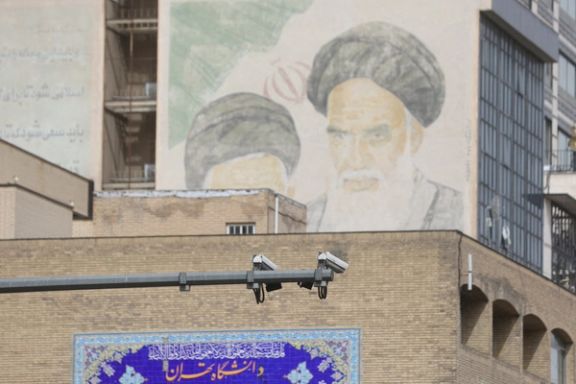
A CCTV camera is seen in a street in Tehran, Iran, April 9, 2023.

Iran has set forth stringent measures under the proposed Hijab and Chastity Bill to enforce mandatory hijab laws, utilizing surveillance cameras as a key tool in monitoring compliance.

Amir Hossein Bankipour, a member of the Supreme Council of Cultural Revolution and the Iranian parliament, revealed that under the Bill, individuals failing to adhere to hijab regulations will face identification by using cameras.

In cases where women refuse to be photographed, an immediate arrest is mandated, with individuals handed over to authorities for identification.

Bankipour detailed the Bill's provisions in an interview with Fars News Agency, affiliated with Iran’s Revolutionary Guard Corps (IRGC), on Saturday. He emphasized the requirement for all including the private sector to provide access to their CCTV cameras to Iran’s Law Enforcement Command (FARAJA) forces for hijab enforcement.

“We mandate that all entities, including the private sector to provide their cameras to FARAJA. All cameras must be connected to FARAJA,” Bankipour stated.

Bankipour added that once photographed, individuals' identities will be confirmed through "trusted observers," and fines will be issued via text messages.

Addressing scenarios where a person's face might be obscured by a mask or technical systems are offline, Bankipour emphasized:

“In fact, we added an article requiring the use of identification or documents in situations where it is not possible to identify a person. The individual must be identified directly.”

Bankipour's statement adds to growing concerns regarding undocumented women who defy mandatory hijab laws, as they would face an elevated risk of being arrested.

Furthermore, Bankipour outlined punitive measures for hijab non-compliance, including financial fines, social exclusion, exile, closure of social media pages, passport confiscation for up to two years, and arrest.

Regarding the Bill currently under review by the Guardian Council, Bankipour expressed confidence in its approval. He cited its alignment with the country's legislative system and potential implications for Iran's economic stability, referencing a letter from Sadegh Amoli Larijani to Ayatollah Ahmad Jannati, Secretary of the Guardian Council.

Although as part of Iran’s Nour Plan, initiated in April, Iranian authorities have been increasingly cracking down on women defying hijab laws, the apparatus for enabling the use of surveillance technology has been in the works for some time. In June last year, Ahmad-Reza Radan, Iran's police chief, announced that President Ebrahim Raisi had allocated funds to install additional cameras to combat defiance against hijab rules.

The use of CCTV to enforce hijab regulations has previously raised concerns about women's privacy and the potential exploitation of surveillance for monetary purposes through fines. Rights groups such as Article 19 have warned against the use of facial recognition software and AI-assisted technology to enforce mandatory hijab laws.

More recent examples of such invasive technology including the use of drones to enforce hijab laws at Tehran’s Book Fair this month also sparked outrage and concern. 

Articles of the Proposed Hijab and Chastity Bill on Use of CCTV Surveillance

Although not yet approved, below are some of the Articles that will allow Iran to freely use invasive surveillance technology against women who defy hijab laws:

Article 30 states that to fulfill the law, the police command must:

“Create and strengthen intelligent systems for identifying perpetrators of illegal behavior using tools such as fixed and mobile cameras.”

Article 61 requires the private sector including “non-governmental banks”, “passenger transport companies”, “business owners”, “stores”, and “officials of complexes” to “upload their camera footage and provide them to the police command of the Islamic Republic of Iran (FARAJA) in order to identify those who violate this [hijab] law, and further requires them to keep the footage for at least twenty days.

The article additionally mentions that failure to comply with this ruling could lead to a suspension from government and public services ranging from six months to five years. Furthermore, business owners and professionals might face a monetary penalty equivalent to two to six months' worth of profits from their business activities.

Article 36 allows “certified individuals”, including all officers trained by FARAJA, to report instances of hijab law non-compliance or “inappropriate clothing” by sending photos to the dedicated system established by FARAJA.



Most Viewed

Ideology may be fading in Iran, but not in Kashmir's ‘Mini Iran'
1
INSIGHT

Ideology may be fading in Iran, but not in Kashmir's ‘Mini Iran'

2
INSIGHT

Hardliners push Hormuz ‘red line’ as US blockade tests Iran’s leverage

3
VOICES FROM IRAN

Hope and anger in Iran as fragile ceasefire persists

4

US sanctions oil network tied to Iranian tycoon Shamkhani

5

Iran International says it won’t be silenced after London arson attack

Banner
Banner

Spotlight

  • Hardliners push Hormuz ‘red line’ as US blockade tests Iran’s leverage
    INSIGHT

    Hardliners push Hormuz ‘red line’ as US blockade tests Iran’s leverage

  • Ideology may be fading in Iran, but not in Kashmir's ‘Mini Iran'
    INSIGHT

    Ideology may be fading in Iran, but not in Kashmir's ‘Mini Iran'

  • War damage amounts to $3,000 per Iranian, with blockade set to add to losses
    INSIGHT

    War damage amounts to $3,000 per Iranian, with blockade set to add to losses

  • Why the $100 billion Hormuz toll revenue is a myth
    ANALYSIS

    Why the $100 billion Hormuz toll revenue is a myth

  • US blockade targets Iran oil boom amid regional disruption
    ANALYSIS

    US blockade targets Iran oil boom amid regional disruption

  • Iran's digital economy battered by prolonged blackout
    INSIGHT

    Iran's digital economy battered by prolonged blackout

•
•
•

More Stories

Iran Cracks Down on Internet Access After President's Fatal Crash

May 27, 2024, 07:24 GMT+1

Iran has continued internet crackdowns in the wake of the death of President Ebrahim Raisi as the country is now plunged into a leadership crisis with many Iranians celebrating the death openly online.

Monitoring data from Cloudflare reveals that Iran’s Ministry of Communications imposed restrictions at 19:10 local time on May 19, shortly after the news of the helicopter crash that killed the president and his delegation was reported.

Writing on X, Iranian cybersecurity expert Nariman Gharib compared the current state of internet access in Iran to previous periods during Iran's protests when internet access was at its most restricted. He said the situation has worsened since Friday amid a domestic leadership crisis in which snap elections have been called for June 28.

Criticism of the crackdown has come from all corners, including Iran-based conservative website Tabnak, which described Iran's internet over the past week as “almost intranet”.

Internet crackdowns have become a standard tool for the government to quash dissent over the years. Assessments by Iran-based digital rights group Filterbaan suggest that the ongoing disruptions result from government policies aimed at deliberately not developing external bandwidth in proportion to user expansion, along with a policy to repeatedly increase internet prices.

It is believed to be part of a broader strategy, Filterbaan says, to establish a comprehensive national information network that forces users to rely on domestic platforms while restricting access to VPNs which have been widely used to bypass bans on the likes of global social media platforms in Iran.

The Economic Legacy of Iran’s Raisi; Facts and Figures

May 26, 2024, 22:11 GMT+1
•
Dalga Khatinoglu

As citizens' living conditions continue to worsen, pro-government Iranian media have intensified their praise for the late President Ebrahim Raisi's "successes" following his death in a helicopter crash.

During Ebrahim Raisi's presidency, Iran's economic indicators indeed changed; some appear positive, but there are many caveats and uncertainties even within these positive figures.

A precise economic evaluation of Raisi's government is complicated due to a lack of transparency. However, a combination of various economic indicators provides a general picture of the situation.

One key indicator is the level of government budget realization.

Raisi's predecessor, Hassan Rouhani, had instructed the Central Bank to stop publishing state budget realization reports since 2018, citing the need to keep government information confidential due to US sanctions.

However, the Central Bank recently released details of the annual budgets for 2017-2020, revealing a 30% annual deficit. Despite this, the Central Bank continues to withhold reports on the state of budget realization during Raisi's administration.

Given the Central Bank’s reports indicating a doubling of state debts to the banking system during Raisi’s presidency, it appears that the government’s budget deficit level has been worsened.

People's livelihood

The statistics of the Food and Agriculture Organization of the United Nations, FAO, show that the consumption of red meat by Iranians declined to 732 thousand tons in 2023, 32% less than in 2020. Raisi assumed the presidency in August 2021.

Even official statistics show that the daily calorie intake per capita in Iran has declined by 22% to 2,100 calories since the 2010s, with the situation worsening year by year. This is a direct reflection of rising inflation, starting in 2018, when the United States withdrew from the JCPOA nuclear deal and imposed “maximum pressure” sanctions on Iran’s oil exports and international banking. Annual inflation soared to 40%, and by some accounts, it is around 50% in 2024.

The highest jump in prices occurred in the food sector, when in 2023, prices registered an increase of between 60-100% for essential food items compared to the previous year.

The pro-government media are attempting to present Raisi’s success by highlighting the 5% GDP growth in 2023, but the details of the Statistic Center’s report show that the only reason of last year’s relatively higher GDP growth was a 21.8% oil production increase and a 16.7% growth in state expenses expenditures (based on 2010 fixed prices).

None of the mentioned GDP drivers have had a positive effect on people's livelihoods, nor are they sustainable. First, the growth was insufficient in generating sufficient revenues for the government that had to continue printing money. Second

The International Monetary Fund has put Iran’s GDP growth at 4.7% for 2023, but predicted only 3.3% growth for 2024 and 3.1% growth for the following year.

Unemployment and inflation

Pro-government media also touts a decrease in the unemployment rate, from about 12% in 2020 to 8.1% in April 2024. However, detailed reports from the Statistical Center of Iran (SCI) reveal that this drop is primarily due to a decline in the number of unemployed individuals actively seeking work. In simple terms, the only reason for the decreasing unemployment rate is that about 3.5 million Iranians have become discouraged from seeking employment and have exited the labor force. Consequently, the labor force participation rate has declined from 44.5% to 41% in recent years, artificially pushing the unemployment rate down.

It should also be noted that the government considers one hour of work per week as employment and this leads to a much lower unemployment rate than the prevailing reality.

Regarding inflation, the statistics provided by Iran's own institutions are contradictory. While SCI reported last year's inflation rate at 41%, the Central Bank of Iran recently released a report calculating "payment of debt and dowry" based on a 52.3% inflation rate in 2023. This discrepancy suggests that Iran's actual inflation rate is significantly higher than what official figures indicate.

German Think Tank Under Fire for Hosting Former Iranian Official

May 26, 2024, 18:55 GMT+1
•
Benjamin Weinthal

A Berlin-based think tank slammed for hosting a former Iranian ambassador accused of terror ties, has deleted the public announcement of the event after backlash.

The Körber Foundation, founded by a former Nazi, had hosted Princeton academic Hossein Mousavian at a May breakfast event, but after a tide of criticism, the think tank deleted its X post.

Mousavian, who served as Tehran's ambassador to Germany from 1990 to 1997, is accused by activists of having reportedly played a crucial role in the assassinations of at least 24 Iranian dissidents in Europe during the 1990s. 

One of the notable incidents was an attack on Berlin restaurant in the 1990s. Four Iranians were assassinated at the Mykonos restaurant by two masked gunmen in a plot sanctioned by the clerical regime’s then-president Rafasanjani, according to a Berlin court.

Lawdan Bazargan who oversees the organization, Alliance Against Islamic Regime of Iran Apologists (AAIRIA), wrote on X, “Deleting your tweet, @KoerberIP does not solve the issue. The fact still remains that you invited Seyed Hossein Mousavian, former ambassador of a brutal gender-apartheid Islamic Regime, who has the blood of many Iranians on his hands, and bragged about it. 

Bazargan is leading a campaign to secure Mousavian’s dismissal from his academic job at Princeton University and after having taken a screenshot of the now-deleted Körber Foundation X post, exposed the think tank for hosting the controversial figure linked to the highest echelons of Iran's government. 

Körber embedded four photographs of people at the breakfast, including pictures from Mousavian.

Shortly before Körber scrubbed its X post of the Mousavian event, Bazargan wrote “Shame on you @KoerberIP for meeting with Mousavian who at least has the blood of 24 Iranians on his hand. Fire Mousavian.”

The British-American actress and opponent of the clerical government in Tehran, Nazanin Boniadi, posted on X for her over 591,000 followers about the Körber event: “Mousavian was the Islamic Republic’s ambassador to Germany from 1990-97, during which time beloved Iranian dissident Fereydoun Farrokhzad was murdered in Bonn, and Kurdish-Iranian opposition leaders were assassinated in Berlin. Stop platforming him.”

When asked why Körber deleted the X post and for a copy of Mousavian’s talk, Julian Claaßen, a spokesman for Körber, told Iran International, “Dr. Hossein Mousavian was invited to background discussions at Körber-Stiftung in Berlin and Hamburg. Since its inception, Körber-Stiftung has been committed to dialogue, in line with the motto of our founder Kurt A. Körber ‘Talking to each other, not about each other’. Our aim is to explore the scope for political action and to contribute to international understanding, especially in times of acute crisis and conflict.”

Claaßen said discussions take place within Chatham House Rules, meaning the content and statements of individual participants are not disclosed. However, he added, “The discussions last Thursday and Friday centred on Iran's role in regional politics and domestic political developments in the Islamic Republic," claiming that he was also interviewed by staff for the in-house magazine, ‘The Berlin Pulse Express Edition’, which will be published next week.

When pressed about Mousavian’s alleged role in assassinations, his endorsement of the fatwa to murder the British writer Salman Rushdie and his support of the German-designated terror organizations, Hamas and Hezbollah, Claaßen said “we do not comment on political statements made by our guests.” The Körber spokesman also refused to comment on Mousavian’s alleged antisemitism, Mousavian having compared Israel with Nazi Germany on X.

According to the German government’s definition of antisemitism---based on the International Holocaust Remembrance Alliance concept of modern Jew-hatred—Mousavian expressed an antisemitic comparison.

Bazargan told Iran International that “Körber must apologize and change its policy toward the Iranian regime, and start supporting the Woman-Life-Freedom movement led by the youth in Iran. Several Iranians who were shot with pellet bullets and lost their eyes or hands in the recent uprising in Iran are now living in Germany. Körber should invite them and amplify their stories to highlight the true impact of the regime's brutality.”

The think tank was founded by Kurt A. Körber, a member of the Nazi party who worked for Universelle-Werke J. C. Müller & Co. which advanced Hitler’s war goals.

According to the Köber Foundation website, “Up to 3,000 foreign and forced laborers were used for this purpose…He is actively involved in the company’s armaments production.”

Iran International reported in March that Dr. Narges Eskandari, the mayor of Frankfurt in Germany, and a former Iranian political prisoner, said “Seyed Hossein Mousavian, Iran's ambassador at the time, is considered one of the key masterminds behind the attack. He had prior knowledge of the assassination attempt, and evidence implicates the Iranian embassy in the attack. To date, there have been no consequences for Seyed Hossein Mousavian. “

Mousavian is a Middle East Security and Nuclear Policy Specialist in the Program on Science and Global Security at Princeton University where he has been employed since 2009.

In April, over 70 Iranian-Americans, including the Germany-based Parviz Dastmalchi, a survivor of the 1992 Mykonos terrorist attack in Berlin, demonstrated at Princeton against Mousavian. The pro-Iran regime academic lashed out at the dissidents on X for calling on Princeton to fire him.

Körber has hosted Mousavian frequently over the years, including in 2018 and 2017.

Mousavian declined to respond to numerous Iran International requests for comment.

Iran's Exiled Crown Prince Calls for Action Against Iranian Violence in UK

May 26, 2024, 18:19 GMT+1

Iran's exiled Crown Prince issued a call for British and Western governments to protect their citizens from “violence perpetrated by supporters of the Iranian regime" after the latest attack in London.

Iranians in the UK, demonstrating against a memorial service for the late president Ebrahim Raisi on Friday were targeted by possible Iranian state agents, resulting in injuries to four people, as reported by the Metropolitan Police who confirmed the arrest of one suspect.

Prince Reza Pahlavi said, "What happened in London on Friday must not happen again," the latest in a string of incidents against dissidents in the UK since 2022.

Journalist and political activist Masih Alinejad who has also been the target of Iranian death threats through government agents in the UK and US, said the British authorities must act against the "thugs of the Islamic Republic."

In a show of defiance, Iranians in the UK rallied the following day in front of Iran's embassy in London to protest the violence. Pahlavi said, "Your coming together at this short notice to defend our compatriots is commendable," Pahlavi stated.

In March, Iran International host Pouria Zeraati, was stabbed by unknown attackers outside his home in London, suspected to be Iranian agents. In November 2022, threats were made against two of the channel's London-based journalists before the offices were forced to close temporarily last year after UK security services, MI5, said it could no longer guarantee the safety of Iran International staff.


Iranian Hardliner Saeed Jalili Declares Presidential Candidacy

May 26, 2024, 16:36 GMT+1

Saeed Jalili, Ali Khamenei's representative in the Supreme National Security Council, is set to run in the upcoming presidential election after having run in both 2013 and 2020, as Khamenei lines up his staunchest allies.

Jalili received a delegation of four representatives from Mashhad at his office to invite him to enter the presidential race as Khamenei ensures a line-up of hardliners in the upcoming elections in the wake of the sudden death of President Ebrahim Raisi in a helicopter crash last week.

Jalili, who has held significant diplomatic and security roles within the Iranian government, served as the secretary of the Supreme National Security Council from 2007 to 2013 and is currently a member of the Expediency Discernment Council.

Known for his hardline stance, Jalili was Iran's chief nuclear negotiator and has previously served as the deputy foreign minister for European and American Affairs. Despite his positions, his bids for presidency have yet to secure him the office, with a third-place finish in the 2013 elections and a withdrawal in favor of Ebrahim Raisi in the 2021 elections.

Jalili's return to the presidential race comes amidst whispers of political maneuvering, with some suggesting that recent shifts in leadership, including the rumors of assassination of Raisi by Khamenei’s son Mojtaba, might be clearing the way for new power alignments. 

A hardline ballot of clerics and military figures are among the politicians who look set to stand for the June 28 snap elections, with candidates likely to include Parviz Fattah, a former IRGC officer and currently the head of the multi-billion-dollar economic empire controlled by Iran's Supreme Leader.

Also likely is Mehrdad Bazrpash, the current transport minister who was aboard one of the other helicopters flying with Raisi's doomed delegation, and Alireza Zakani, the current mayor of Tehran, who, like Jalil, dropped out of the 2021 presidential race to back favorite, Raisi.




