• العربية
  • فارسی
Brand
  • Iran Insight
  • Politics
  • Economy
  • Analysis
  • Special Report
  • Opinion
  • Podcast
  • Iran Insight
  • Politics
  • Economy
  • Analysis
  • Special Report
  • Opinion
  • Podcast
  • Theme
  • Language
    • العربية
    • فارسی
  • Iran Insight
  • Politics
  • Economy
  • Analysis
  • Special Report
  • Opinion
  • Podcast
All rights reserved for Volant Media UK Limited
volant media logo

Amnesty’s 2023 Report Highlights Rampant Rights Abuses In Iran
Apr 24, 2024, 17:16 GMT+1Updated: 23:33 GMT+1
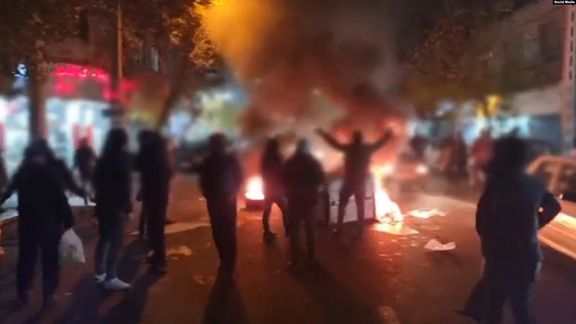
A scene of protests in Iran (2022)

Amnesty International’s 2023 report on Iran details extensive human rights violations following the 2022 “Woman, Life, Freedom” uprising including unlawful arrests and physical abuse.

The report, published Wednesday, highlights the Iranian authorities’ intensified suppression of freedom of expression, association, and peaceful assembly, particularly targeting women and girls defying compulsory hijab laws.

According to the report, security forces employed unlawful force and mass arrests to quell protests.

“Thousands were subjected to interrogation, arbitrary detention, unjust prosecution, and imprisonment for peacefully exercising their human rights.

“Enforced disappearances, and torture and other ill-treatment were widespread and systematic. Women and girls, LGBTI people, and ethnic and religious minorities were subjected to systemic discrimination and violence,” read the report.

It also criticized the continued use of cruel and inhuman punishments including flogging and an increase in executions, which were described as a tool of political repression.

The Iranian government also censored media, jammed satellite channels, and blocked or filtered numerous mobile apps and social media platforms, significantly restricting freedom of information.

Moreover, the authorities continue to ban independent political parties, civil society organizations, and trade unions, and have retaliated against workers and labor rights activists for participating in peaceful gatherings.

The judiciary played a pivotal role in entrenching impunity for torture, enforced disappearances, and other human rights violations.

Amnesty's report sheds light on the severe conditions and abuses faced by detainees, including denial of adequate healthcare, suspicious deaths in custody, and the implementation of torturous legal punishments such as flogging, amputation, and blinding.

The systemic discrimination and violence extended to women and girls, with the authorities intensifying the crackdown on those who defy the compulsory hijab laws. Punitive policies severely violated their social, economic, cultural, civil, and political rights, restricting their freedom of movement.

The US State Department on Monday also released its annual report on Iran's human rights situation, stressing that the country's "already severe restrictions on human rights worsened in a number of areas" during 2023.



Most Viewed

US blockade enters murky phase as tankers spoof signals and buyers hesitate
1
ANALYSIS

US blockade enters murky phase as tankers spoof signals and buyers hesitate

2
INSIGHT

Ideology may be fading in Iran, but not in Kashmir's ‘Mini Iran'

3
INSIGHT

Hardliners push Hormuz ‘red line’ as US blockade tests Iran’s leverage

4
VOICES FROM IRAN

Hope and anger in Iran as fragile ceasefire persists

5

US sanctions oil network tied to Iranian tycoon Shamkhani

Banner
Banner

Spotlight

  • Hardliners push Hormuz ‘red line’ as US blockade tests Iran’s leverage
    INSIGHT

    Hardliners push Hormuz ‘red line’ as US blockade tests Iran’s leverage

  • Ideology may be fading in Iran, but not in Kashmir's ‘Mini Iran'
    INSIGHT

    Ideology may be fading in Iran, but not in Kashmir's ‘Mini Iran'

  • War damage amounts to $3,000 per Iranian, with blockade set to add to losses
    INSIGHT

    War damage amounts to $3,000 per Iranian, with blockade set to add to losses

  • Why the $100 billion Hormuz toll revenue is a myth
    ANALYSIS

    Why the $100 billion Hormuz toll revenue is a myth

  • US blockade targets Iran oil boom amid regional disruption
    ANALYSIS

    US blockade targets Iran oil boom amid regional disruption

  • Iran's digital economy battered by prolonged blackout
    INSIGHT

    Iran's digital economy battered by prolonged blackout

•
•
•

More Stories

Saudi Reinstates Pilgrimage Flights To Iranians After Detente

Apr 24, 2024, 15:56 GMT+1

Since last year's detente between Saudi Arabia and Iran, Saudi has reinstated pilgrimage flights, enabling 90,000 Iranians to participate in this year's Hajj pilgrimage.

The revival of Hajj comes after nearly a decade, following a bilateral agreement mediated over a year ago, which led to the reopening of embassies and the exchange of ambassadors.

On Monday the first group of Iranian Umrah pilgrims departed from Tehran’s main airport, attended by dignitaries from both nations.

The breakdown in relations reached a nadir in 2016 when Saudi Arabia cut ties following the storming of its embassy in Tehran. The tensions escalated with Iran-backed Houthi militia's missile and drone attacks on Saudi oil assets and shipping in the Persian Gulf.

The current détente has facilitated the operation of two daily flights, as per the Iranian regime, each carrying 260 passengers, from various Iranian cities, continuing until May 12. A total of 44 round trips are scheduled to transport 5,610 Iranian pilgrims to Saudi Arabia for the Umrah, an Islamic pilgrimage that can be undertaken at any time of the year, unlike the Hajj which is held annually as per the Islamic lunar calendar.

Despite attempts to mend their relationship, including high-level meetings and agreements on diplomatic and security cooperation, Saudi Arabia and Iran have not yet achieved significant breakthroughs in their dealings.

Although there have been talks about potential cooperation areas, such as Saudi investments in Iran's economy, significant disagreements on regional issues remain unresolved. It is compounded by Iran's ongoing nuclear enrichment and support for terror proxies such as Yemen's Houthi militia which Saudi has been at war with for a decade as the oil-rich nation continues to lead a coalition in Yemen's civil war.


Iranian Lawmaker Claims Attack on Israel Will Boost Foreign Investment

Apr 24, 2024, 14:54 GMT+1

One of the few female members of the Islamic Republic parliament has said that the April 13 missile attack on Israel will unify Iranians and help attract foreign investments.

Fatemeh Mohammad Beigi, a medical doctor by training, belongs to the hardliner faction of the outgoing parliament and has been re-elected for the next four years.

“Undoubtedly, the significant feat by the Revolutionary Guard’s aerospace force against Israel has brought people's hearts closer together. In the light of this solidarity, other challenging issues in the country…can also be resolved,” Beigi told a local website. As one of the challenges, she mentioned the declining legitimacy of the Islamic government.

However, her reference to a potential increase in foreign investment contradicts recent decisions by the United States and Europe to expand sanctions on individuals and entities helping the Islamic Republic in its weapons proliferation activities and support for militant networks.

Also, contrary to her claim about stronger solidarity among the people, Many Iranians criticized the attack against Israel. Even some regime insiders and commentators warned of dire economic and security consequences.

Beigi is known for odd statements and actions. In February, during the electoral campaign for parliamentary elections she wrote a letter to the governor in her local constituency, reminding him that she is known by nice different names, and this should be considered during the counting of write-in ballots.

She provided a list of these nine names to the governor in a letter. One of these names was “Ms. Doctor”. Beigi said that if a voter simply writes “Ms. Doctor”, that would be a vote for her.


Iranian Dissident Rapper Sentenced To Death

Apr 24, 2024, 14:06 GMT+1

Iranian dissident rapper Toomaj Salehi, who was among the icons of Iran’s 2022 protests, has been sentenced to death on charge of “spreading corruption on earth.”

A revolutionary court in Isfahan (Esfahan) has issued the verdict, Amir Raisian told SharghDaily on Wednesday. “Spreading corruption on earth,” along with "Moharebeh," is the highest crime in Islamic Republic's version of Sharia law and it is punishable by death. 

He had been sentenced to one year imprisonment, two years passport annulment, and participation in a behavioral management course for 'propaganda against the system' before the death sentence was announced.

Salehi, initially released on bail on November 18 after enduring 252 days in prison, found himself back in custody just 12 days later. This followed the release of a video in which Salehi detailed the torture he endured during his imprisonment. The rapper, in the video, cited the experiences as the basis for his complaints against prison officials and government-affiliated media.

Salehi's social media account reported on December 14 that he suffered "severe damage to the eyes and face" during his latest arrest by government forces, contradicting official statements and raising concerns about the adherence to the law during the violent incident in Babol.

Salehi gained fame for his protest songs that tackled social issues and government injustices in Iran. His first arrest in October 2022 was a component of a wider crackdown on political dissidents of the regime, a response to the protests triggered by the death of Mahsa Amini in morality police custody.

In October, Salehi received the 2023 Arts Freedom of Expression Award from Index on Censorship, an organization dedicated to advocating for freedom of expression.

Protesters Secure Release Of Woman Arrested In Tehran Over Hijab

Apr 24, 2024, 13:50 GMT+1

Protesters gathered at the Haft-e-Tir metro station in Tehran following the arrest of a woman over her defiance against Iran's mandatory hijab, successfully securing her release.

Eyewitnesses reported to BBC Persian that the incident began when metro security personnel stopped the woman for not adhering to the hijab law. Despite her refusal to comply with the officers' orders, a growing protest from bystanders after she was taken to a nearby room pressured the officers to release her within twenty minutes.

Political activist Mahdieh Golroo shared footage of the incident on her X account, stating that the woman was "confined in a room at the station until the public's protest led to her release."

The event comes amid renewed governmental efforts to enforce hijab regulations more strictly. On April 13, the Iranian government announced the reactivation of morality police, alongside the implementation of the Plan Noor, aimed at curbing what it deems "immodesty."

The renewed enforcement drive follows directives from Supreme Leader Ayatollah Ali Khamenei, who recently emphasized the necessity of adhering to "religious decrees" concerning the hijab, labeling non-compliance as "religious norm-breaking" activities.

The intensification of hijab enforcement in the wake of the death of Mahsa Amini in morality police custody for the inappropriate wearing of her hijab, has been met with further rebellion across society. Increased confrontations and heightened tensions across various Iranian cities have followed the uprising as the government fails to quash the nationwide refusal to be subjected to religious doctrine.

Amini's death ignited a widespread movement against the regime, marking one of the most significant challenges to the Islamic Republic since its establishment in 1979. Ongoing laws to oppress women's right to choose what to wear have been dubbed 'gender apartheid by the UN'.

The government crackdown on the uprising which followed Amini's death resulted in the deaths of at least 500 civilians and the arrest of thousands, as reported by human rights organizations. Since then, record numbers of Iranians have been executed as the regime cracks down on dissent.

Iran's Supreme Leader Says Hamas 'Defending Their Home'

Apr 24, 2024, 12:43 GMT+1

Iran's Supreme Leader Ali Khamenei reiterated his support for Palestinian terror groups and militant proxies just days after the country's aerial bombardment aimed at Iran's archenemy Israel.

"Is a Palestinian defending his home a terrorist? Are we, the resistance front, terrorists?" he said.

The comments come amid the ongoing Gaza war, triggered by Iran-backed Hamas when on October 7 thousands of its militants invaded Israel killing 1,200 mostly civilians and kidnapping over 250 more.

Iran has long funded, armed and trained Hamas and other Palestinian militant groups, spearheaded by the supreme leader in his mission to annihilate the Jewish state. Iran has proxies across the region in which the regime invests billions of dollars each year.

In his Wednesday speech, he also defended Iran's backing of Hezbollah, which is currently waging war on Israel's northern front. Over 100,000 Israelis are currently displaced after more than 3,100 projectiles have been fired into Israeli territory since October 7 in support of Hamas in Gaza.

During his speech on Wednesday, Khamenei also responded to the intensified sanctions on Iran from the EU, UK and US in the wake of the aerial bombardment, which saw over 350 drones and missiles fired towards Israel, most of which were intercepted by Israel and a US-led coalition.

"The sanctions will not bring down the Iranian nation because it does not rely on external help," he stated, in spite of the fact that over one third of Iranians now live below the poverty line as the regime funds war over feeding its people.

On Monday, EU foreign policy chief Josep Borrell announced that the new sanctions would expand the catalog of prohibited items related to drone and missile production, a move building on measures connected to Iran's role in supplying drones to Russia.

Iran claims the aerial assault was a move of self defense after an alleged Israeli air strike earlier this month on Iran's consulate in Damascus in which one senior Quds Force commander was assassinated along with several other IRGC personnel.