• العربية
  • فارسی
Brand
  • Iran Insight
  • Politics
  • Economy
  • Analysis
  • Special Report
  • Opinion
  • Podcast
  • Iran Insight
  • Politics
  • Economy
  • Analysis
  • Special Report
  • Opinion
  • Podcast
  • Theme
  • Language
    • العربية
    • فارسی
  • Iran Insight
  • Politics
  • Economy
  • Analysis
  • Special Report
  • Opinion
  • Podcast
All rights reserved for Volant Media UK Limited
volant media logo

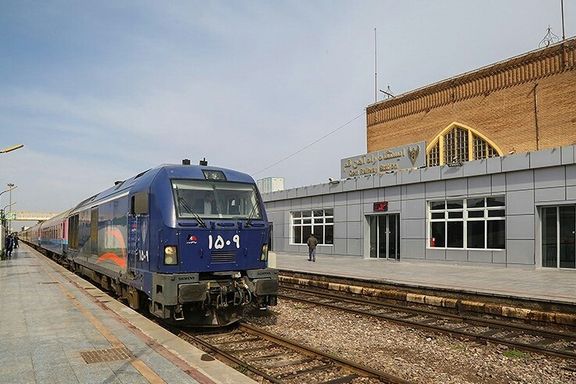
Cyber Attack On Iran's Railway Network

Mar 24, 2024, 16:58 GMT+0

Hacker group APT Iran has infiltrated the cyber infrastructure of Iran's Railway Company in the latest such attack on government networks, with documents revealing mandates for female employees to wear Islamic attire.

The Cyberban News Agency confirmed the hack from the anti-government group though the agency downplayed the extent of the breach, dismissing reports of an attack on the main railway infrastructure as propaganda.

APT Iran claimed the breach aimed to alert railway officials about security lapses after previous breaches of the IranCell Communication Services Company and State Organization for Registration of Deeds and Properties.

Among the leaked documents is a directive signed by Mohsen Tabatabaei Atabak, the Director General of Planning and Monitoring of Passenger Services, outlining guidelines for employee conduct, including adherence to mandatory hijab for female staff.

The guidelines specify attire requirements, emphasizing "loose and long garments made of thick fabrics" and complete hair coverage.

The hackers also exposed identity documents, internal reports, and wagon maps.

The incident is the latest in a series of cyber-attacks targeting Iran's government institutions, including its Railway Company. In July 2021, the hacker group Gonjeshk-e-Darande disrupted railway operations by infiltrating the Ministry of Roads and Urban Development and forcing a switch to manual train management.

Last month, the hacktivist group Edalat-e Ali disclosed a major breach in the servers of the Iranian judiciary, boasting access to a vast repository comprising millions of files and a treasure trove of confidential documents.

Cyber expert Amin Sabeti recently told Iran International that hacks on government facilities are likely to continue amid the ongoing unrest. Last month, a major hack of the parliament’s servers brought to light troves of documents, including the income of lawmakers and US sanctions evasions.

Most Viewed

Ghalibaf defends Iran-US talks amid hardline backlash
1
INSIGHT

Ghalibaf defends Iran-US talks amid hardline backlash

2
INSIGHT

100 days after carnage: Iran economy reels from war, inflation, unemployment

3
INSIGHT

A nation in limbo: 100 days after the massacre, has the world moved on?

4
ANALYSIS

From instability to influence: Pakistan’s pivotal role in US-Iran diplomacy

5
ANALYSIS

100 days on: why Iran’s January protests spread across social classes

Banner
Banner

Spotlight

  • War-hit homeowners feel abandoned as Iran’s reconstruction aid fades

    War-hit homeowners feel abandoned as Iran’s reconstruction aid fades

  • 100 days on: the anatomy of Iran’s January crackdown
    INSIGHT

    100 days on: the anatomy of Iran’s January crackdown

  • Ghalibaf defends Iran-US talks amid hardline backlash
    INSIGHT

    Ghalibaf defends Iran-US talks amid hardline backlash

  • 100 days on: why Iran’s January protests spread across social classes
    ANALYSIS

    100 days on: why Iran’s January protests spread across social classes

  • From instability to influence: Pakistan’s pivotal role in US-Iran diplomacy
    ANALYSIS

    From instability to influence: Pakistan’s pivotal role in US-Iran diplomacy

  • A nation in limbo: 100 days after the massacre, has the world moved on?
    INSIGHT

    A nation in limbo: 100 days after the massacre, has the world moved on?

•
•
•

More Stories

Low Incomes Contribute To Stagflation In Iran's Housing Market

Mar 24, 2024, 16:55 GMT+0
•
Maryam Sinaiee

Real estate experts anticipate a significant rise in housing prices in Iran due to factors such as further depreciation of the national currency, but they also foresee continued stagnation in the market.

Sellers refuse to lower prices as the national currency loses value, and inflation drives rents higher, putting further pressure on tens of millions of people.

Iran's housing market has experienced stagflation over the past two years due to various factors, including high inflation of at least 40 percent, which has substantially increased construction costs. Additionally, repeated turbulence in the foreign currency market, a notable decrease in liquidity available to developers, and political uncertainties have all contributed to the market's challenges.

Even before Norouz (March 20), typically a period of high property sales, Iran's housing market remained stagnant. Factors such as the fasting month of Ramadan, traditionally a quiet period for most markets, and exorbitant prices beyond the reach of many wage-earners have contributed to this situation.

Experts do not anticipate a significant uptick in the housing market's activity even after Ramadan, even if economic indicators such as the monthly inflation rate, typically announced by the central bank in late April, show improvement.

The rial has fallen more than 20 percent since January and now stands at more than 610,000 against the US dollar. Fearing further depreciations in the new calendar year, many rush to buy foreign currencies to protect their cash and investments. Real estate and homes are the most important savings for the middle class and people are reluctant to sell for worthless rials. Sellers calculate the price of their real estate in dollars when they set a price.

The figures released by the Statistics Center of Iran in February indicated an annual inflation rate of nearly 40 percent in the housing market in the preceding twelve months.

The average cost of one square meter of apartments in Tehran and most other major cities is currently above 700 million rials (over $1150) whereas the average monthly earnings of civil servants barely exceed $200 after taxes and other deductions. Ordinary workers earn less than $200 a month.

Unaffordability of properties for sale is a major factor in driving rents up in the capital and other major cities where the cost constitutes around half of the consumer living cost.

Similar to populist promises made by former President Mahmoud Ahmadinejad, President Ebrahim Raisi pledged during his 2021 presidential campaign to address Iran's housing crisis by constructing one million affordable apartments annually. So far there is no sign of any new housing having even started.

The ambitious Mehr Housing scheme launched by Ahmadinejad during his tenure, from 2005 to 2013, also aimed at building over 4 million housing units. The project was never completed and the apartments that were eventually delivered to some of the buyers lacked amenities. This was during time period when Iran was earning more than $100 billion a year from oil exports and the government was awash with cash. Now, amid US sanctions, and lower prices, Iran earns a fraction of that income.

Architect and university professor Beytollah Sadeghi, a vocal critic of excessive government interference in housing projects, emphasized that constructing one million residential units constitutes approximately 4% of all urban development. He underscored the need for double-digit economic growth to support such a massive undertaking.

Sadeghi questioned why Iran's private sector struggles to achieve similar feats compared to neighboring countries, which not only thrive but also create markets for others. He raised concerns about potential obstacles hindering Iran's private sector, such as lack of resources or expertise.
Cleric Killed In Southern Iran In ‘Suspicious Murder’

Mar 24, 2024, 14:31 GMT+0

The Deputy of the Mahshahr Seminary was found dead in what has been called a ‘suspicious murder’.

The seminary's news agency identified the victim as Hamzeh Akrami, a professor at the seminary.

The director of the Khuzestan Seminary labeled the cleric's death as a "suspicious murder."

On Monday, Ali Dehghani, the chief of judiciary in Khuzestan, announced the arrest of a suspect linked to the murder case.

He stated, "The suspect has been apprehended along with the stolen car belonging to the victim in Bushehr Province," as reported by Khabar Online.

Although the judiciary refrained from providing further details, reports indicate that Akrami was allegedly killed by thieves, with his body discovered near Mahshahr's railway.

The incident adds to a trend of violence against clerics in Iran amid a nationwide uprising against the Islamic Republic since its founding, sparked in 2022 by the death in morality police custody of Mahsa Amini.

In May, Abbasali Soleimani, a member of the Assembly of Experts and former representative of the Supreme Leader in Sistan and Baluchestan Province, was fatally shot by a bank guard in Babolsar, Mazandaran province. The perpetrator was later executed by the judiciary of the Islamic Republic.

In another incident in May, a 35-year-old cleric was reportedly struck by a passenger car on Marzdaran Boulevard in Tehran, as reported by Tehran police. Additionally, there were reports of attacks on Friday prayer leaders near Saveh and Tehran during the same period.

Iranian Cleric Calls For Nuclear Arms

Mar 24, 2024, 13:06 GMT+0

Mohammad Faker Meybodi, a faculty member at the Center for Islamic Sciences, has sparked controversy with his recent remarks advocating for the possession of nuclear arms.

Speaking on the historical context of military weaponry as outlined in the Quran, Meybodi emphasized the need for contemporary armaments to deter adversaries effectively.

"At the time when the verse related to military weapons was revealed in the Quran, the weapon of that era was the swords and spears... Today, it may be necessary for us to possess nuclear weapons to intimidate the enemy. We must equip ourselves with modern weapons," Meybodi stated.

His statements contrast with the stance previously expressed by Iran's Supreme Leader, Ali Khamenei, who feigned to denounce the acquisition and use of nuclear weapons, citing religious prohibitions. Khamenei's fatwa against nuclear arms dates back to the mid-1990s and has been reiterated on numerous occasions, emphasizing Iran's commitment to “peaceful nuclear endeavors.”

Despite Iran's assertions that its program is for civilian purposes, UN inspectors last year claimed Iran has accelerated its nuclear enrichment program.

In December, the UN's atomic weapons watchdog agency, the IAEA, sounded alarm bells regarding Iran's illicit enrichment of uranium. Tehran was reported to have reversed a months-long slowdown in the rate of uranium enrichment, reaching levels of up to 60-percent purity, approaching the approximately 90-percent threshold for weapons-grade uranium.

The Joint Comprehensive Plan of Action (JCPOA), an agreement reached in 2015, aimed to address these concerns by limiting Iran's nuclear capabilities in exchange for sanctions relief. However, the withdrawal of the United States from the JCPOA in 2018 reignited tensions and cast uncertainty over the agreement's future.


Iran Suffers From Lack Of Airliners Due To Sanctions

Mar 24, 2024, 11:25 GMT+0

Amid sanctions, Iran's aviation industry is struggling to meet operational aircraft targets with only 180 aircraft currently in service, falling short of the planned 250 by the end of last year.

Led by Mohammad Mohammadi-Bakhsh, the head of the Civil Aviation Organization, officials stressed the need to expand the fleet to accommodate the country's population, estimated to require 550 aircraft.

However, with only 330 aircraft in the fleet and less than 200 actively utilized, the industry faces a considerable deficit in the face of global sanctions for Iran's nuclear program, human rights abuses and support of Russia's invasion of Ukraine.

Mohammadi-Bakhsh previously reported a surge in operational aircraft before Norouz, with grounded planes returning to service, boosting operational numbers to 178 during the festive season. Last year he claimed that procurement efforts had resulted in over 50 aircraft and helicopters being added to the fleet, but the target of 250 operational aircraft by year-end remained unmet.

However, last month, he admitted operational challenges such as delays in customs clearance for aircraft parts, remained a significant hurdle.

Amidst repair initiatives, domestic production limitations, and import restrictions, Iran's aviation industry faces additional challenges. Reports of flight delays and safety concerns within Iranian airlines further compound the industry's woes.

Israel Strikes Hezbollah Stronghold In Eastern Lebanon

Mar 24, 2024, 10:05 GMT+0

Israel conducted an airstrike on Baalbek, Hezbollah's stronghold in eastern Lebanon, early Sunday, injuring at least three fighters, as reported by a local official.

The airstrike near Baalbek comes amidst a recent surge in attacks targeting the area. According to Baalbek’s mayor, Bachir Khodr, the strike occurred shortly after midnight, resulting in casualties.

"It was a terrifying moment. The strike wounded three people," Mayor Khodr stated, sharing the news on social media platform X.

In response to the Baalbek airstrike, Hezbollah retaliated by targeting an Israeli missile and artillery base in Yoav, along with the Kaila barracks, using over 60 Katyusha rockets, as stated in their official communication.

The precise target of the airstrike remains unclear. However, the incident follows Hezbollah's claim of launching two explosive-laden drones targeting an Israeli Iron Dome missile defense system in Kfar Blum, northern Israel. Since October's Hamas invasion of Israel in the south, Hezbollah has fired over 3,000 projectiles into northern Israel in support of fellow Iran-backed proxy Hamas.

The Israeli military claimed the strike targeted a Hezbollah workshop. Subsequently, around 50 rockets were fired from Lebanon towards Israel, with some intercepted and others landing in uninhabited areas, the military reported. Over 100,000 Israelis have been displaced in northern Israel since October amid the worst tensions since the second Lebanon war.

Meanwhile, Syrian media reported explosions rocked the Damascus capital region, with some sources alleging an "Israeli attack" near the Qalamoun Mountains.

The Syrian Observatory for Human Rights (SOHR), a war-monitoring group associated with the opposition, stated that the explosions occurred simultaneously with the activation of air defense systems. Additional accounts suggested that the targeted area held strategic significance, serving as smuggling routes and storage facilities for weapons used by Iranian military forces.







