• العربية
  • فارسی
Brand
  • Iran Insight
  • Politics
  • Economy
  • Analysis
  • Special Report
  • Opinion
  • Podcast
  • Iran Insight
  • Politics
  • Economy
  • Analysis
  • Special Report
  • Opinion
  • Podcast
  • Theme
  • Language
    • العربية
    • فارسی
  • Iran Insight
  • Politics
  • Economy
  • Analysis
  • Special Report
  • Opinion
  • Podcast
All rights reserved for Volant Media UK Limited
volant media logo

Iran Tried To Buy Malware From Russian Cybercrime Forums
Iran International Newsroom
Mar 14, 2024, 20:15 GMT+0Updated: 10:56 GMT+0

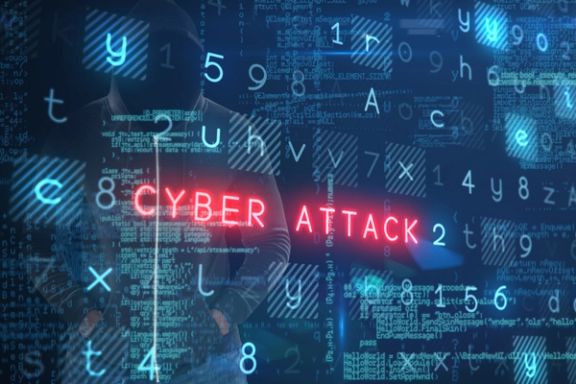
Iran has tried to purchase wiper malware from Russian underground forums that can help hackers irreversibly remove computer data.

Sergey Shykevich, threat intelligence expert at cyber security company Check Point said in an interview with digital magazine Computer Weekly, “Nation states understand that to pretend to be involved in hacktivism allows them deniability … They don’t want to be accused, even if everyone knows it’s Russia or Iran”.

According to the expert, Russian cybercrime forums are often frequented by state-sponsored hacking groups, including those linked to Iran, which can spend large sums of money on buying malwares as “their budgets are unlimited.”

Russian underground forums have long been one of the main sources of buying and selling malware on the Internet. Launched in 2000, “Exploit” is one of such forums which includes around one million messages regarding more than 200,000 different subjects.

“They offer everything you could imagine … It starts with software vulnerabilities. You can rent malware, ransomware as a service and spam as a service to distribute fake phishing emails and currently even AI-related services, and deep fake platforms,” Shykevich added.

Running cybercrime forums has turned into a lucrative business in Russia. According to reports, one of the administrators of these forums recently enjoyed a $500,000 wedding ceremony in Moscow.

Iranian President Ebrahim Raisi meets with Russian President Vladimir Putin in Tehran, Iran, July 19, 2022.
100%
Iranian President Ebrahim Raisi meets with Russian President Vladimir Putin in Tehran, Iran, July 19, 2022.

Computer Weekly said that Russian underground forums are “strictly members only”, fees varying from around $60 to several thousand. The forums also employ a vetting process before admitting new members in an attempt to block the access of security forces or researchers.

In recent years, Tehran and Moscow have strengthened their political, military, communication, and cyber ties, prompting concerns among Western countries and their allies.

In December, the Iranian parliament approved a bill dedicated to information and intelligence cybersecurity cooperation between Tehran and Moscow.

Microsoft disclosed in February that state-backed hackers from Iran, Russia and China have been leveraging tools developed by Microsoft-backed OpenAI to enhance their cyber espionage capabilities.

It followed revelations in November that Microsoft’s Threat Analysis Center (MTAC) had issued a warning that Iran, Russia and China are likely to plan to influence the upcoming elections in the United States and other countries later this year.

Moreover, police in the UK announced in January that they have launched a new unit to deal with threats posed by Tehran, Moscow and Beijing ahead of the UK’s general election. “We will be the most overt part of the UK security community stepping up its response to those hostile state actions,” said Assistant Commissioner Matt Jukes, the UK’s head of counter-terrorism policing.

Iran-backed hackers have particularly stepped up their activities following the Israel-Hamas conflict. According to American cybersecurity company CrowdStrike, in the second half of 2023, “Iran-nexus adversaries and Middle East hacktivist adversaries were also observed pivoting cyber operations in alignment with kinetic operations stemming from the 2023 Israel-Hamas conflict.”

In December 2023, Iran-linked hackers targeted a water facility in the rural area of County Mayo in Ireland, leaving the residents without water for two days. The attack was carried out by pro-Iran Cyber Av3ngers group which claimed that the facility was attacked because it used an Israeli-made piece of equipment.

Most Viewed

Ghalibaf defends Iran-US talks amid hardline backlash
1
INSIGHT

Ghalibaf defends Iran-US talks amid hardline backlash

2
INSIGHT

100 days after carnage: Iran economy reels from war, inflation, unemployment

3
INSIGHT

A nation in limbo: 100 days after the massacre, has the world moved on?

4
ANALYSIS

From instability to influence: Pakistan’s pivotal role in US-Iran diplomacy

5
ANALYSIS

100 days on: why Iran’s January protests spread across social classes

Banner
Banner

Spotlight

  • War-hit homeowners feel abandoned as Iran’s reconstruction aid fades

    War-hit homeowners feel abandoned as Iran’s reconstruction aid fades

  • 100 days on: the anatomy of Iran’s January crackdown
    INSIGHT

    100 days on: the anatomy of Iran’s January crackdown

  • Ghalibaf defends Iran-US talks amid hardline backlash
    INSIGHT

    Ghalibaf defends Iran-US talks amid hardline backlash

  • 100 days on: why Iran’s January protests spread across social classes
    ANALYSIS

    100 days on: why Iran’s January protests spread across social classes

  • From instability to influence: Pakistan’s pivotal role in US-Iran diplomacy
    ANALYSIS

    From instability to influence: Pakistan’s pivotal role in US-Iran diplomacy

  • A nation in limbo: 100 days after the massacre, has the world moved on?
    INSIGHT

    A nation in limbo: 100 days after the massacre, has the world moved on?

•
•
•

More Stories

US Educators Urge Princeton University To Dismiss Iranian Professor

Mar 14, 2024, 19:31 GMT+0

The National Association of Scholars (NAS) in the US has issued a call for Princeton University to terminate the employment of Iranian government official Seyed Hossein Mousavian.

The demand comes in the wake of mounting concerns over Mousavian's alleged ongoing connections to the regime after years as a key advisor to the government. 

Last November, the US House of Representatives Committee on Education and the Workforce launched an investigation into Mousavian's role at Princeton University. The inquiry stems from his prior tenure as a nuclear negotiator for the Iranian regime, a position he held until 2009.

During that time, Mousavian also served as an ambassador to Germany, where the embassy was allegedly linked to numerous terrorist activities targeting Iranian dissidents.

Former Iranian Foreign Minister Mohammad Javad Zarif further fueled apprehensions when he suggested in a 2016 interview that Mousavian might still be operating in service of Tehran's interests. The assertions have been echoed by the Alliance Against Islamic Republic of Iran Apologists, an organization advocating for the dismissal of Mousavian due to his purported ties to terrorism.

The NAS asserts that Mousavian's continued presence at Princeton University poses a threat to national security and compromises the institution's academic integrity. His role as an expert in Middle East and nuclear policy, the association argues, provides him with a platform to shape public opinion and policy towards Iran's nuclear program, potentially advancing the agenda of a regime implicated in human rights abuses and acts of terrorism.


Audi Denies Return To Iranian Market

Mar 14, 2024, 18:15 GMT+0

German car maker Audi has denied claims by Iran's Nadin Khodro Company that the cars will soon be on sale again in Iran.

“AUDI AG has not had any sales activities in Iran since 2017. There is no official contractual partner - neither an importer nor a dealer," Audi stated when approached by Iran International.

Nadin Khodro recently made headlines by announcing the importation of the first electric Audi car into Iran, a move widely covered by Iranian media, culminating in the unveiling of the vehicle in Tehran. The company's website asserts its status as the “premier importer of Audi vehicles in Iran.”

The development comes against the backdrop of Iran's automotive industry grappling with the ramifications of Western sanctions. Following the United States' withdrawal from the JCPOA and the subsequent reinstatement of sanctions against Iran, Western automotive companies, including Audi, withdrew from the Iranian market.

Amidst the challenges, the Iranian automotive landscape has witnessed a significant surge in car prices in recent years, accompanied by growing criticisms regarding the quality of domestically manufactured vehicles.


Trump's Possible Return Shakes Iran Currency Market

Mar 14, 2024, 15:37 GMT+0
•
Iran International Newsroom

The results of Iran’s recent elections along with growing concerns about Donald Trump’s possible return to the US presidency have led to an alarming fall in the value of the Iranian rial.

Since early January the rial has fallen by almost 20 percent, adding to its steep devaluation since 2018, when Donald Trump withdrew from the Obama-era JCPOA nuclear deal and imposed crippling sanctions on Iran.

Concern has spiked following the announcement of yet more hardliners coming into power in Iran's parliament in the wake of the recent low-turnout kangaroo elections.

Meanwhile, Trump’s successive victories in the Republican primaries and his eventual candidacy for the upcoming elections also significantly shook Iran’s currency market, the US dollar surging to 600,000 rials last week, hitting an all-time record.

Referring to the composition of lawmakers in Iran’s next parliament, economic journalist Reza Gheibi told Iran International that Iranians have concluded there is no hope of improving domestic economic conditions and thus resorted to different markets, including that of currency, to avoid the rapid depreciation of their cash.

A session of the Iranian parliament on March 10, 2024
100%
A session of the Iranian parliament on March 10, 2024

Also, Stockholm-based economist Ahmad Alavi told Iran International that Iran’s economy is severely impacted by widespread corruption, international sanctions, banking isolation, nepotism and squandering foreign currency resources.

“The future parliament lacks the required competency and eligibility to legislate in the field of economy and this will certainly lead to wasting more currency resources,” he said.

Over the past decades, the regime has provided huge financial and military support to its proxies in the region such as Yemen's Houthis and Lebanese Hezbollah while Iranians increasingly face poverty and a bleak economic future.

According to Gheibi, the prospect of Trump’s re-election as the US President has fueled concerns about the possibility of increased sanctions against Iran, more restrictions on the flow of foreign currency into the country, and a decline in oil sales.

Since early 2018 when Trump withdrew from the JCPOA nuclear deal, the rial has fallen 15-fold as the United States employed “the maximum pressure” policy and imposed economic sanctions against Tehran.

A review of recent years’ statistics indicates that the currency market often fluctuates in the final weeks of the Iranian year as the demand for currency in the import sector increases.

Moreover, the small sector of Iranian society who can afford to travel abroad during the New Year (Nowruz) holidays, also increases the demand for currency.

However, the psychological pressure of Trump’s prospective victory has accelerated the upward trend in the currency rate in the final days of the current year.

Alavi said there are many factors needed to create stability in the economy including a more effective government and repairing the budget deficit. 

Over recent days, the Iranian government has tried to prevent the currency rate increase by means of injecting dollars to the market and tightening security measures.

However, the impact of such measures are expected to be limited and temporary, and the government needs to consider a major policy overhaul to control the dollar rate in the next Iranian year (starting March 20).

According to estimates, the dollar will be exchanged at a rate of 590,000 to 600,000 rials in the next few days. However, the coming year is predicted to be much tougher for Iran.

Analysts believe that the oil market will suffer. The decline in China’s economic growth as the largest oil buyer means that Iran’s oil revenues in turn, will not increase, Tehran selling 90 percent of its oil to Beijing.

As protests and unrest show no sign of abating, Iran faces another tough year ahead.

21-Year-Old Woman Latest Victim Of Iranian Security Forces

Mar 14, 2024, 14:17 GMT+0

Iran's security forces have killed a 21-year-old woman in what law enforcement claims was a case of mistaken identity as she and her family drove home from a funeral in the early hours of Saturday.

Negar Karimian sustained injuries when law enforcement officers mistakenly fired at their moving car on Saturday and later died in hospital with severe internal bleeding.

US-based Human Rights Activists News Agency (HRANA) news agency reported that officers suspected the family's vehicle was carrying narcotics and opened fire.

According to Hengaw Human Rights Organization, a Kurdish rights group, Karimian was so badly wounded that her organs were even too damaged to donate.

The incident is the latest in a series of deaths by Iran's security forces. In a similar incident on June 9, a nine-year-old child lost his life after law enforcement officers fired at a van without warning. In January, Iranian security forces shot at a car and killed 20-year-old student Anahita Amirpour, also in Lorestan province.

According to HRANA, a total of 402 citizens were victims of military forces' shootings in 2023, with 120 deaths reported.


Iran Confirms Indirect Talks With US Over Nuclear Program

Mar 14, 2024, 12:59 GMT+0

The Iranian state news agency has confirmed rumors that indirect negotiations between Tehran and Washington are taking place regarding Iran’s nuclear program.

However, IRNA claims there have been no discussions regarding the developments in the Red Sea, where Iran-backed Houthi rebels have imposed a blockade and are directly targeting US-owned vessels in the wake of the Gaza war.

The Yemeni militia is not only targeting Israel in allegiance with Iran-backed Hamas in Gaza, but claims it is punishing the US for supporting Israel's right to defend itself in the wake of the Iran-backed Hamas attacks of October 7.

The regime continues to put distance between itself and the blockade, instigated by Iran's supreme leader.

Iran hopes the talks will ease international sanctions over Tehran’s nuclear program, IRNA admitted, though sanctions continue over Iran's human rights abuses and support of Russia's invasion of Ukraine.

Reports of recent negotiations come against the backdrop of mounting criticisms against US President Joe Biden over his policies towards Tehran, Iranian activists and opposition figures, as well as American politicians, accusing the administration of being too lenient towards Iran.