• العربية
  • فارسی
Brand
  • Iran Insight
  • Politics
  • Economy
  • Analysis
  • Special Report
  • Opinion
  • Podcast
  • Iran Insight
  • Politics
  • Economy
  • Analysis
  • Special Report
  • Opinion
  • Podcast
  • Theme
  • Language
    • العربية
    • فارسی
  • Iran Insight
  • Politics
  • Economy
  • Analysis
  • Special Report
  • Opinion
  • Podcast
All rights reserved for Volant Media UK Limited
volant media logo

Voices Warn Of Authoritarian Minority's Grip On Iran's Future
Iran International Newsroom
Feb 12, 2024, 04:27 GMT+0Updated: 11:04 GMT+0
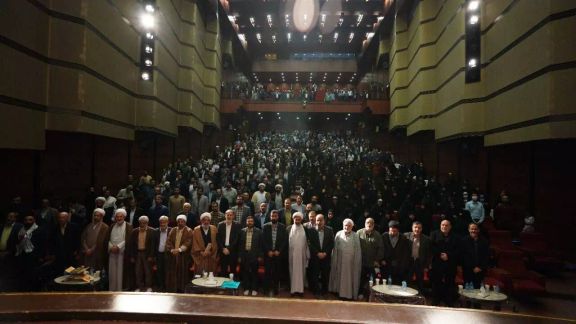
An event of Iran’s Paydari Party in Tehran

A Reformist politician in Tehran highlights a concerning trend where a hardliner minority wields disproportionate influence over the fate of the entire Iranian nation.

Gholamreza Zarifian, a prominent political activist, underscored in an interview with Rouydad24 website that this authoritarian minority poses a significant political challenge by promoting radical agendas, ultimately undermining the government's social capital.

Zarifian asserted that four decades post the 1979 Islamic Revolution, Iranian conservatives persist in disregarding historical lessons. They cling to the belief that they are divinely ordained to dictate the course of Iran's destiny. This mindset instills a sense of inferiority among the populace, shifting Iran from a nation that propelled the constitutional Revolution in 1905 to one devoid of influence over its own future, largely due to the conservative elite's monopolization of power.

As parliamentary election approach on March 1, there is general apathy among the population, especially after hundreds of regime loyalist candidates were banned from running for no clear reason. In the absence of real competition at least among regime politicians, everyone is aware that hardliners will win the vote.

Zarifian argued that the public mood resembles the same feeling of inferiority among the people that led to the downfall of monarchy and the coming to power of the Islamic Republic in Iran in 1979. He explained: Under the monarchy, the appearance of a modern society existed in Iran as the three powers of the government had been separated from each other, but the people's vote were ignored in furthering the political dynamics of the society. At that time, a minority undermined the interests of the nation and a chosen few imposed their will on the whole society.

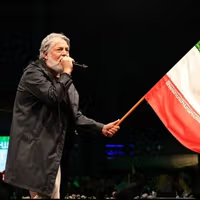
Gholamreza Zarifian, a prominent political activist (undated)
100%
Gholamreza Zarifian, a prominent political activist

Forty-five years after the revolution, the Iranian nation is once again back to the same situation, Zarifian said, adding that the difference is that this time the ruling class of the Islamic Republic uphold none of the rights of the society.

Addressing the flawed electoral process, another reformist figure, Rasoul Montajabnia, urged the government to either ensure free and fair elections or rename the Islamic Republic to reflect its religious governance. He criticized the biased vetting of candidates, emphasizing the stark disparity between the people's expectations and the government's archaic election practices.

He said that Iranians are way ahead of their government and laugh at the backward way the elections are being held. Referring to the lies officials have told the people during the past 45 years. "We have treated the people in a way that if we tell them it is daylight, they would become convinced that it is definitely the nighttime," he said. The cleric said that the arbitrary vetting of candidates by the Guardian Council has left no trace of democracy in Iran.

Montajabnia argued that in some of the constituencies there is no competition as the number of candidates endorsed by the Guardian Council is exactly the same as the number of seats in that constituency.

As an example of how this method of governance affected individuals in the Iranian society, Tehran City Councillor Zahra Nezhad Bahram told the press that some 67 percent of highly educated personnel of the country's knowledge-based companies are planning to leave Iran for good and have already started their emigration process.

This systemic flaw exacerbates frustrations among Iran's educated populace, as evidenced by the significant exodus of skilled professionals seeking opportunities abroad. She emphasized the urgent need for policy reforms to retain and harness the potential of Iran's intellectual capital for sustainable progress.


Most Viewed

Ghalibaf defends Iran-US talks amid hardline backlash
1
INSIGHT

Ghalibaf defends Iran-US talks amid hardline backlash

2
ANALYSIS

From instability to influence: Pakistan’s pivotal role in US-Iran diplomacy

3
ANALYSIS

100 days on: why Iran’s January protests spread across social classes

4

War-hit homeowners feel abandoned as Iran’s reconstruction aid fades

5

Iran says no decision yet on talks as Pakistan prepares to host US team

Banner
Banner

Spotlight

  • The politics of pink: how Iran uses cuteness to rebrand violence
    ANALYSIS

    The politics of pink: how Iran uses cuteness to rebrand violence

  • Bread shortages, soaring prices strain households in Iran, residents say
    VOICES FROM IRAN

    Bread shortages, soaring prices strain households in Iran, residents say

  • War-hit homeowners feel abandoned as Iran’s reconstruction aid fades

    War-hit homeowners feel abandoned as Iran’s reconstruction aid fades

  • 100 days on: the anatomy of Iran’s January crackdown
    INSIGHT

    100 days on: the anatomy of Iran’s January crackdown

  • Ghalibaf defends Iran-US talks amid hardline backlash
    INSIGHT

    Ghalibaf defends Iran-US talks amid hardline backlash

  • From instability to influence: Pakistan’s pivotal role in US-Iran diplomacy
    ANALYSIS

    From instability to influence: Pakistan’s pivotal role in US-Iran diplomacy

•
•
•

More Stories

Iranians Worldwide Protest On Islamic Revolution Anniversary

Feb 11, 2024, 23:59 GMT+0

Iranians in many European and North American cities took to the streets to protest against human rights abuses in Iran, and against the Islamic Republic on the anniversary of the 1979 Revolution.

Demonstrations took place in Belgium, Sweden, Australia, Germany, France, the United States, Britain, and Denmark.

In Belgium, a group of Iranians gathered in Antwerp, chanting slogans demanding justice. Similar rallies took place in Copenhagen, Denmark, and in front of Iran's embassy in Brussels. Protesters in Brussels displayed banners featuring images of Toomaj Salehi, a jailed dissident rapper.

Meanwhile, Iranians and Israelis in Sydney called for designating the Islamic Revolutionary Guard Corps as a terrorist organization by Australia. Iranians in Cyprus also held a demonstration in front of Iran's embassy in Nicosia. In Bern, Switzerland, protesters gathered in front of the Iranian embassy to denounce human rights violations.

In the United States, a rally was held in Washington DC, on Saturday, protesting against the anniversary of the revolution. In Paris, France, Iranians marched towards Iran's embassy, demanding justice for Mahsa Amini and chanting slogans for women's rights and freedom.

Reports from Iran indicated limited participation in government-organized rallies on February 11, despite relaxing enforcement of compulsory hijab and providing recreational activities on the streets.

Prominent Iranian Religious Singer Assassinated In Esfahan Province

Feb 11, 2024, 21:42 GMT+0

Rasoul Shahriari, a prominent 'maddah' or religious eulogist in Iran close to the Islamic government, was gunned down in Esfahan province by unidentified assailants.

Government media reported that the motive for the murder is unknown and is currently being investigated by intelligence agencies.

The event echoes a similar incident from the previous year when another Iranian religious singer, Habil Afaq-Azar, met a similar fate in Tabriz, East Azarbaijan province.

Afaq-Azar's lifeless body, bearing gunshot wounds, was discovered in a city neighborhood, hinting at a premeditated act. Like Afaq-Azar, Shahriari’s ties to the regime and his role in promoting its propaganda domestically and abroad raise questions about the motives behind his assassination.

Meanwhile, in recent years maddahs, once known for their poignant lamentations in cemeteries and during the mourning month of Muharram, transitioning into influential political figures in Iran's clerical regime.

Under the guise of religion, some maddahs have been involved in subversive activities, prompting neighboring countries like Azerbaijan to take action against Iranian espionage networks.

During election seasons, eulogists' associations emerge as key players in propaganda campaigns, with fees escalating based on their perceived closeness to Iran's Supreme Leader Ali Khamenei.

Figures like Mahmoud Karimi, one of Tehran's wealthiest and most renowned eulogists, exemplify this trend, with their endorsements carrying substantial weight in political circles.

Lies And Sham Elections Dominate On Iran’s Revolution Anniversary

Feb 11, 2024, 20:36 GMT+0
•
Majid Mohammadi

In the lead-up to the 45th anniversary of the 1979 revolution and the March 1 elections, Iranian officials have escalated their rhetoric, resorting to outrageous statements and unfounded claims.

This surge in exaggeration and falsehoods appears directly correlated with the regime's mounting desperation to achieve its short-term objectives. As the engineered parliamentary and Assembly of Experts elections draw near, the regime has intensified its assertions of remarkable achievements, inflated claims of popularity reaching as high as 97 percent, and exaggerated portrayals of economic and scientific advancements.

Mass production of nonsense

During election season, an abundance of superlatives and claims of "firsts" flood the discourse:: Iran is the most independent country in the world, Iran is the first in the production of science, and Iran is the most important global power. Facing a serious economic crisis and lack of popularity, authorities are turning to such statements on a daily basis.

"Today, Iran is among the top 20 countries in the world in terms of economy, and according to statistics, the people of Iran today have good purchasing power," said the Interior Minister.

"More than 97 percent of the people accept the regime and the revolution and will never abandon it," said the Judiciary Minister.

"The people still adhere to the ideals of the regime and the revolution after 45 years," said the Sports Minister.

"Islamic Iran is the most independent country in the world and the whole world accepts this," said the Fars Province governor.

"The Islamic revolution after the Prophet's mission... was the most important event in the history of mankind... the enemies know that no country is as important as Iran," said the deputy commander of IRGC.

These are clear signs of self-aggrandizement, delusion, and living in a self-made bubble in these statements. According to a Goman Institute poll, in response to the question if a free referendum was held today with the inquiry "Islamic Republic: Yes or No?", %75 answered "No to the Islamic Republic" and only 16% said that their answer was positive.

These statements are indicative of self-aggrandizement, delusion, and a detachment from reality. According to a Gamaan Institute poll published on Sunday, when asked in a hypothetical free referendum whether they support the Islamic Republic, 75 percent of respondents answered "No," while only 16 percent expressed support for it.

People taking photos during regime-sponsored demonstrations to mark the 45th anniversary of Islamic Republic establishment, Tehran, February 11, 2024
100%
People taking photos during regime-sponsored demonstrations to mark the 45th anniversary of Islamic Republic establishment, Tehran, February 11, 2024

Heating the election oven

To draw parallels with the 1979 revolution, officials invited people to come to the rooftops on Saturday evening, which was the anniversary of the revolution and chant “Allahu Akbar.” Also, on this night, they set off fireworks all over the country, which met with a cold reaction from the people.

Seizing the moment, many people took to the balconies and behind the windows to shout slogans of the Mahsa movement. Notably, the voices of women and young girls resonated prominently among these chants, underscoring their active participation in the opposition's message.

Despite relentless calls for public participation in the anniversary march, the photos and videos circulated depict a significantly limited turnout. Figures ranging from several thousand to tens of thousands of attendees are exaggerated to portray figures in the millions or tens of millions. But evidently, even the use of Qasem Soleimani’s name to bring out a million people did not succeed.

For the 86 seats in the Assembly of Experts elections, only 144 candidates have been allowed to run. It is clear that the elections are a sham and people are aware of this fact. 

Nihilist regime

Waiving the hijab requirement during the anniversary march was a surprising deviation also observed last year during the anniversary of the occupation of the American embassy. This move was even reported by hardline media as a good initiative. Additionally, earlier this month and American adult film actress was allowed to visit the country and tour important landmarks. As the founder of the Islamic Republic Ruhollah Khomeini famously stated, "To protect the regime, even Islamic rulings could be suspended."


Iran-Russia Arms Trade: Geopolitics And Global Implications

Feb 11, 2024, 16:01 GMT+0
•
Umud Shokri

The military collaboration between Iran and Russia has significantly intensified since the invasion of Ukraine, with Tehran delivering offensive weapons used against civilian targets.

The recent revelation by the Prana Network of Iran's clandestine arms deal with Russia, valued at $1.75 billion, has sparked concerns about its implications on global security and regional stability. Additionally, Iran's acquisition of the Russian S-300 air defense system in 2016, along with its forthcoming procurement of advanced Russian military aircraft, signals a significant milestone in their evolving defense partnership.

It's worth noting that under Resolution 2231, which endorsed the 2015 nuclear deal known as the Joint Comprehensive Plan of Action (JCPOA), Iran was prohibited from importing and exporting certain missiles, drones, and related technologies without prior UN Security Council approval. However, this resolution expired in October 2023.

This growing alliance has raised concerns about the possibility of Iran supplying precision-guided ballistic missiles to Russia following the expiration of UN sanctions. However, some analysts remain doubtful about Iran's willingness to provide Russia with cutting-edge weaponry, citing concerns about preserving its own military capabilities and its desire for international recognition as a responsible arms trader. Nevertheless, the covert arms agreement between Russia and Iran, alongside their deepening military cooperation, underscores the need for vigilance regarding their actions and their potential impact on both regional and global security dynamics.

Regarding Leaked documents. Theodore Karasik, Senior Advisor from Gulf State Analytics, believes that "This data reveals details of the Russia-Iran relationship regarding weapon systems, despite budget constraints. Despite differences, they collaborate closely, as evidenced by the recent meeting between Russian National Security Advisor Nikolai Patrushev and his counterpart Ali Akbar Ahmadian."

Russian President Vladimir Putin and Iranian President Ebrahim Raisi during a meeting in Moscow, Russia, December 7, 2023
100%
Russian President Vladimir Putin and Iranian President Ebrahim Raisi during a meeting in Moscow, Russia, December 7, 2023

The impact of the arms deals between Russia and Iran on the Middle East

The arms agreement between Iran and Russia has the potential to escalate tensions in the Middle East, leading to increased regional military spending and arsenals. This heightened militarization not only threatens regional stability but also poses risks to American and allied forces when engaging with Tehran's proxies. Additionally, by bolstering Iran's ballistic missile capabilities and potentially supporting Russia's operations in Ukraine, the arms transfer raises concerns about international security and the likelihood of further destabilization. Moreover, the agreement could fuel a regional arms race, undermining efforts towards peace.

Dr. Ariel Cohen, Managing Director of the energy, growth, and security program at the International Tax and Investment Center, and a Senior Fellow at The Atlantic Council, has underscored the economic implications of Iran's arms sales to Russia, raising questions about Tehran's motives and the impact on the Iranian people. Concerns persist regarding the involvement of nuclear weapon technology, potentially further destabilizing the Middle East. Additionally, the exchange of advanced weaponry between Iran and Russia poses a significant threat to global security, necessitating careful international monitoring and regulation to prevent escalating conflicts and instability worldwide.

Challenges and Opportunities

Understanding the challenges of Iran's covert arms trade, particularly with Shahed-136 drones and Russian weaponry, is essential for assessing its impact and requires a nuanced understanding of geopolitical dynamics and risks. These challenges include the potential escalation of war, violations of international law and sanctions, threats to regional stability, and reputational risks for Iran as an arms dealer. However, there are also opportunities for economic gains and the growth of Iran's military industry, as well as the strengthening of the Iran-Russian strategic partnership.

In conclusion, the Iran-Russia arms trade underscores geopolitical maneuvers, with Russia deploying inexpensive drones like the Shahed-136 against Ukrainian forces. This highlights the need for international collaboration to regulate the arms trade and ensure accountability, mitigating the destructive effects of conflict and fostering peace in affected regions. Questions about Iran's responsibility for the harm caused by these weapons emphasize the importance of international oversight in managing arms transfers and addressing broader conflict ramifications, advancing principles of transparency, accountability, and peace in conflict zones.


Iranian MP Claims Disqualification Stemmed From Criticism Of Russia

Feb 11, 2024, 14:03 GMT+0

A former Iranian parliamentarian has claimed his disqualification for the upcoming March elections was a consequence of his outspoken criticism of Russia's policies.

Nader Ghazipour, among the former members of parliament whose qualifications were not approved by the Guardian Council for the impending elections, said, "I was the only representative who spoke publicly in the parliament against Russia and said that Russia is after our waters, [a] divided Azerbaijan, [has] imposed shameful treaties of Golestan and Turkmenchay on us, and didn’t sell even one barrel of Iranian oil during sanctions and took its money several times."

Iran's clerical watchdog, the Guardian Council, has invalidated the qualifications of approximately one in every ten current lawmakers aspiring to run in the March parliamentary elections.

The mass disqualification of candidates, particularly those perceived as regime insiders with relatively moderate tendencies, echoes previous instances such as the 2020 legislative elections and the 2021 presidential vote.

Ghazipour’s comments come as in 2016 he stirred controversy by asserting that women should not be permitted to serve in parliament, stating, "We didn't easily win control over the country to send every fox, kid, and donkey there. The parliament is not a place for donkeys."

Ghazipour has served on the parliament's Mine and Industry Commission and reportedly fought during the 1980-88 war with Iraq. He worked as Khamenei's campaign manager in 1981 and 1985, according to the website of the parliament's research center.