• العربية
  • فارسی
Brand
  • Iran Insight
  • Politics
  • Economy
  • Analysis
  • Special Report
  • Opinion
  • Podcast
  • Iran Insight
  • Politics
  • Economy
  • Analysis
  • Special Report
  • Opinion
  • Podcast
  • Theme
  • Language
    • العربية
    • فارسی
  • Iran Insight
  • Politics
  • Economy
  • Analysis
  • Special Report
  • Opinion
  • Podcast
All rights reserved for Volant Media UK Limited
volant media logo

Another IRGC Man In Syria Killed In Airstrike Attributed To Israel
Feb 2, 2024, 11:43 GMT+0Updated: 14:27 GMT+0
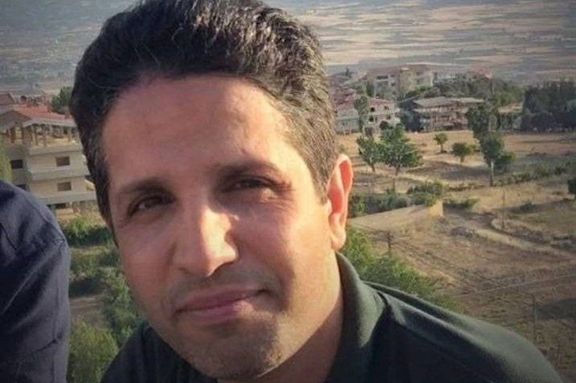
A photo of IRGC “advisor” Saeid Alidadi killed in Syria released by Iranian state media on February 2, 2024

An Iranian Revolutionary Guards officer was killed on Friday in an Israeli missile strike that targeted a southern district of the Syrian capital Damascus.

According to Iran’s state-run media, IRGC “advisor” Saeid Alidadi was killed in the airstrikes. Iranian news sites did not give his rank. Iranian and Syrian sources claim the attack was launched by Israel, but there is no official acknowledgement about who was behind the missile strike.

Earlier in the day, Syria's state news agency SANA, citing a Syrian military source, said the country's military had downed a number of Israeli missiles launched from the Golan Heights at southern Damascus. 

Israel has for years carried out attacks on what it has described as Iran-linked targets in Syria, where Tehran's influence has grown since it began supporting President Bashar al-Assad in a civil war that started in 2011.

Since the October 7 attack on Israel by Palestinian militant group Hamas from Gaza, Israel has escalated its strikes on Iranian-backed militia targets in Syria and has also struck Syrian army air defenses and some Syrian forces.

Iran's Revolutionary Guards have started scaling back deployment of their senior officers in Syria due to concerns about Tehran being sucked into a wider regional conflict, sources have told Reuters.The Guards will instead rely more on allied Shiite militia to preserve their sway there, the sources said. Three of the sources said the Guards were once again recruiting Shiite fighters from Afghanistan and Pakistan to deploy to Syria, echoing earlier phases of the war when Shiite militias played a part in turning the tide of the conflict.

Mohammad Ebadi, an international relations researcher, described the withdrawal of Iranian Revolutionary Guard officers from Syria as merely a "tactical move," aimed at protecting the lives of its commanders. He claimed that Iran cannot afford to lose its ranking commanders.

Iran International reported last week that some in Tehran suspect an Israeli infiltration in tracking and pinpointing the whereabouts of senior IRGC officers in Syria.

In one of Israeli attacks, on January 20, five members of the Guards were killed, Iranian state media reported, including a general who ran intelligence for the Quds Force, which is responsible for the Guards' overseas operations. Another, on December 25 outside Damascus, killed a senior Guards adviser responsible for coordinating between Syria and Iran.

Gregory Brew, an analyst with Eurasia group, a political risk consultancy, told Reuters the failure to protect Iranian commanders had "clearly undermined Iran's position" but Tehran was unlikely to end its commitment to Syria to preserving its role in Syria.

Moreover, after a January drone attack by an Iranian-backed Iraqi group in Jordan that killed three US soldiers, Washington has vowed to retaliate against targets, that could include IRGC assets in Syria. CBS News, citing US officials, reported on Thursday that the United States had approved plans for multi-day strikes in Iraq and Syria against multiple targets, including Iranian personnel and facilities in those countries.

NBC also reported Thursday that The Biden administration hasn’t yet finalized targets, but it is preparing a “campaign” that could last “weeks.” Citing unnamed officials, NBC said the targets are expected to include Iranian targets outside Iran, and the campaign will involve both strikes and cyber operations.

Earlier in the week, an attack on the headquarters of the IRGC in the "Sayyidah Zainab" area in southern Damascus also killed "a number of Iranian advisers." Al-Arabiya network has identified the targeted location in Syria as the command center of forces affiliated with the Islamic Republic. Reuters, citing a source close to Iran, reported that the attack targeted a base used by the IRGC. Later, Iran's ambassador to Syria denied that the IRGC headquarters was hit, while Tasnim news agency in Tehran affiliated with the Revolutionary Guards did confirm the target.

(With reporting by Reuters)

Most Viewed

Iran negotiators ordered to return after internal rift over Islamabad talks
1
EXCLUSIVE

Iran negotiators ordered to return after internal rift over Islamabad talks

2
ANALYSIS

US blockade enters murky phase as tankers spoof signals and buyers hesitate

3
ANALYSIS

Why the $100 billion Hormuz toll revenue is a myth

4

US tightens financial squeeze on Iran, warns banks over oil money flows

5
ANALYSIS

US blockade targets Iran oil boom amid regional disruption

Banner
Banner

Spotlight

  • Hardliners push Hormuz ‘red line’ as US blockade tests Iran’s leverage
    INSIGHT

    Hardliners push Hormuz ‘red line’ as US blockade tests Iran’s leverage

  • Ideology may be fading in Iran, but not in Kashmir's ‘Mini Iran'
    INSIGHT

    Ideology may be fading in Iran, but not in Kashmir's ‘Mini Iran'

  • War damage amounts to $3,000 per Iranian, with blockade set to add to losses
    INSIGHT

    War damage amounts to $3,000 per Iranian, with blockade set to add to losses

  • Why the $100 billion Hormuz toll revenue is a myth
    ANALYSIS

    Why the $100 billion Hormuz toll revenue is a myth

  • US blockade targets Iran oil boom amid regional disruption
    ANALYSIS

    US blockade targets Iran oil boom amid regional disruption

  • Iran's digital economy battered by prolonged blackout
    INSIGHT

    Iran's digital economy battered by prolonged blackout

•
•
•

More Stories

Iran Claims To Have Identified Israeli Spies In 28 Countries

Feb 2, 2024, 10:51 GMT+0

Iran's Ministry of Intelligence has claimed that it has identified an undisclosed number of “spies” in 28 countries across Asia, Africa, and Europe, amid a high level of tensions with Israel.

In its 700-word statement released on Friday, the ministry did not provide any specific details about the so-called spies but claimed that the identities of some of the spies active in countries maintaining intelligence sharing treaties with Iran have been provided to the respective governments.

The statement also said some of these agents have volunteered to work for Mossad, which made them “carry out various treacherous operations against the interests of their countries and the security of their fellow citizens” as a measure to test their sincerity.

The intelligence ministry also claimed that some spies in Tehran and a few provinces have been identified and either faced legal action on charges of spying for Israel or placed under security surveillance.

“Additionally, a number of Iranian spies residing outside the country have been identified, and decisions will be made based on the circumstances of each and the level of relationships between the ministry and the intelligence agencies of the countries where the spies reside," read the statement. This raises concerns that Iran could take action against dissidents of Iranian origin living abroad, alleging collaboration with Israel as a pretext.

Iranian intelligence organs often claim success in identifying or arresting "terrorists" or "spies" but rarely produce any concrete evidence or follow up the initial news with public trials.

Iran's President Says 'We Can' And 'The Enemy Cannot'

Feb 2, 2024, 09:00 GMT+0

Iranian President Ebrahim Raisi during a visit to an IRGC naval exhibition on Friday said the message from what he observed is that “We can,” but the enemy “will never be able to.”

Raisi who has been visiting Hormozgan Province on the Persian Gulf, added: "The enemy cannot take any action against us because it knows that our forces are powerful and capable."

According to Fars news website affiliated with the IRGC, Raisi, apparently referring to the United Stated added , "Previously...they used to talk with threats and military options on the table. But now, there are no such talks, and they say they have no intention of conflict with the Islamic Republic. It is the strength of our people and our armed forces that has created this deterrence."

Raisi’s remarks follow a deadly drone attack on US forces in Jordan last Sunday that killed three American soldiers and led to the Biden administration vowing retaliation. However, after six days no military action has been taken against Iran and its proxy forces who launched the attack.

Iranian media on Friday carried headlines that the United States will not directly attack Iran, based on reports in Western media. Also, information by Reuters and others indicates that senior Revolutionary Guard officers and their affiliated bases in Iraq and Syria are being evacuated due to an expectation of US strikes.

The Biden administration is reportedly contemplating a prolonged retaliatory campaign, although several reports quoting officials on Thursday appear to show that Iran is being given the benefit of doubt about its role in the attack in Jordan and elsewhere.

As fears begin to subside in Tehran about direct US retaliation, Iran's currency has regained some stability after falling more than 10 percent since the deadly attack on US troops.

Riyadh Pushes For US Defense Pact Ahead Of Presidential Election

Feb 2, 2024, 07:45 GMT+0

Saudi Arabia is reportedly willing to accept a political commitment from Israel to create a Palestinian state rather than a binding agreement to normalize relations, according to Reuters.

Riyadh is seeking a defense pact with the United States, and this approach is seen as a way to move forward after months of diplomatic attempts to normalize relations between Saudi Arabia and Israel were halted due to mounting Arab anger over the war in Gaza. The Saudi government is eager to enhance its security and counter threats from Iran while advancing its economic transformation plan.

Saudi officials have conveyed to the US that they would accept a political commitment to a two-state solution, providing some flexibility in negotiations. A defense pact between Saudi Arabia and the US could reshape the Middle East by bringing the most influential Arab state closer to Israel, and potentially bolstering Israel's defense against Iran. However, achieving such an agreement faces political and diplomatic challenges.

Israel's Prime Minister Benjamin Netanyahu has resisted Palestinian statehood, complicating negotiations. Saudi officials have urged the US to press Israel to end the Gaza conflict and commit to a "political horizon" for a Palestinian state. The US sees Riyadh's strong desire for a defense pact as an opportunity for flexibility on Israel's commitment to Palestinian statehood.

The Biden administration is keen on reaching an agreement, and Riyadh is eager to secure a deal while the Democrats are in power. Still, obstacles remain, including Netanyahu's position on Palestinian statehood. The clock is ticking for achieving this mega-deal, as US officials hope that tying defense guarantees to normalization could gain congressional support, but timing is crucial, with the upcoming US presidential election adding uncertainty to the situation.

US Senators Urge Biden To Enforce Iran Oil Sanctions Amid Attacks

Feb 2, 2024, 07:40 GMT+0
•
Iran International Newsroom

A bipartisan group of US Senators are pushing the Biden administration for stricter enforcement of Iran’s oil sanctions, as the country’s exports reach a five year high.

In a letter to President Biden Thursday, 18 Senators from both parties demand maximum efforts to “prevent illicit trade in Iranian oil,” which provides the regime with funds necessary to support its proxies.

“In the wake of the October 7 terror attacks and subsequent attacks by Iran-backed proxies on U.S. forces in the Middle East, we urge you to work harder to stop Iran’s funneling of lucrative oil exports to finance terror,” the Senators told President Joe Biden.

The letter comes right after a similar initiative by 62 House members, who stressed that ongoing attacks on US troops in the Middle East clearly show whatever is being done is not enough and more pressure must be applied on Tehran.

Significantly, both letters have been signed by some Democrats, as well as the more critical Republicans.

Senate Democrats seem to have lost patience with Biden’s unwillingness to effectively enforce sanctions on Iran’s oil exports. They have joined their Republican colleagues to suggest immediate sanctions against ships and even foreign ports that carry Iranian oil.

They point out that the Iranian regime has taken in at least $88b from their oil exports since February 2021, compared to just $5b when former president Trump’s “maximum pressure” was still in place.

Iran now exports oil more than any time in the past five years, according to Japan’s influential daily Nikkei, with as much as 90% of the total exports going to China. This is confirmed also by United Against Nuclear Iran (UANI), which tracks Iranian oil exports.

"While global supply routes have been seriously affected by the Houthi attacks, Iran’s oil trade, especially to its number one importer, China, has continued unabated,” reads UANI’s latest report.

President Biden has been under growing pressure to reverse its policy on Iran since Hamas’ rampage of Israel –which many believe would have not been possible without the backing of the Iranian regime. The pressure has grown even further after last weekend’s deadly attack on American soldiers by Iran-backed militia Iraq.

“You cannot continue to embolden Iran,” Senator Marsha Blackburn said in an interview with Fox News Thursday. “You cannot continue to let them sell their oil and make billions of dollars, and then put that money into building nuclear warheads through uranium enrichment and through funding terrorism.”

Officials from the Biden administration say no Iran sanction has been lifted under their watch. But “enforcement” is as important as the actual sanctions. And it’s on the question of enforcement that the current administration seems to have disappointed many, even Democratic senators.

But what Biden critics want from him may not be readily achievable –not in 2024, at least.

"[Biden] prioritizes low oil prices, especially in an election year," says Robert McNally, president of Rapidan Energy Group and a former senior White House policy official. "If [Biden] did crack down, it would impact global balances and prices, especially if Iran retaliated by threatening [Persian] Gulf production and export flows."

And then there’s China: Iran’s main customer which happens to be a global superpower. China can always find a way to get around the sanctions. It needs to: to keep feeding its gargantuan economy.

“Ultimately, China has and will continue to develop sanctions-proof entities which are not connected to the US financial system and won't be hurt (much) by sanctions,” former state department advisor on Iran Gabriel Noronha posted on X. “Leverage has to come from other files - as with recent China negotiations, find pressure everywhere."

Iran Executes At Least 28 People In Ten Days As Executions Continue

Feb 1, 2024, 23:31 GMT+0

Iran's record-breaking year of executions continued into 2024 with at least 28 people known to have been executed in just 10 days during January as the regime's killing spree surges forward in the face of a crumbling autocracy.

Statistics from the Iran Human Rights Organization reveal that since the beginning of 2024, at least 71 people have been executed in prisons across Iran. Of those, 28 were killed between January 21 and 31 alone, at least six of whom were political prisoners, and 22 others killed on charges including drugs and murder, according to rights groups.

It comes as dissent rises to record levels in Iran amidst the most dire social and economic conditions since the formation of the Islamic Republic in 1979. Executions have offered the regime a way to warn those unwilling to comply with Tehran's leadership, not least the powerful figures of entertainment, sport and celebrity who have defied the regime in support of protests.

The Human Rights Activists News Agency (HRANA) claimed that in 2023, at least 791 citizens, including 25 women and two child offenders, were executed in Iran, marking an increase of over 33% compared to the previous year.

In a separate report, UN experts said Iran executed at least 834 people, eight of whom were linked to nationwide protests which began in 2022, sparked by the death in morality-police custody of Mahsa Amini, arrested for not wearing her hijab properly.

In a report to the United Nations General Assembly highlighting human rights violations in Iran, UN Secretary-General Antonio Guterres emphasized the rate and scale of executions, urging action to address the trend.

Just this week, the Australian Department of Foreign Affairs and Trade spoke out against the record numbers of executions, telling Iran International,
"The Australian government is deeply disturbed by Iran’s extensive and persistent use of the death penalty, including against ethnic minorities and protesters".






